Biology
Advising and How to Apply
A Degree In Biological Sciences is Central to Your Future
We look forward to working with you to achieve your educational goals!
If you are interested in pursuing a biology major at Central Washington University, begin by connecting with College of the Sciences Advising Office, who will assign you a Biological Sciences Academic Advisor to help you stay on track with your university and general education requirements.
You are also assigned a Major Advisor, who is a member of the biology faculty. Please see your Major Advisor regularly for mentoring on topics such as the major specializations, biology coursework, research opportunities, and career aspirations. Student hours are drop-in times that faculty and advisors have scheduled as available for you to meet with them on one-on-one without needing to first make an appointment. Biology and Craft Brewing Academic Advisor and Major Advisor / faculty student hours are updated quarterly.
Contact the Science and Mathematics Education Department regarding the STEM Teaching Program if you are interested in a career as a high school biology teacher.
- Please see our Health Career Resources webpages for information on health degrees and prerequisite coursework offered through CWU, as well as advising and faculty mentor contact information for specific health career fields.
- Please also see our advising page for transfer students if you are a transfer student coming to Central and want to major in Biology.
Major Declaration
-
Ready to Declare a Biology Major?
Before declaring your major you should:
1. Research the Biology programs and major specializations (listed below).
2. Talk with any of the Biology Major Advisors if you have questions about how a specific major or specialization will work best with your goals.
3. Request the appropriate major and specialization using the myCWU Portal following these instructionsProgram Codes
When declaring your major in myCWU, you must enter one of the program codes listed below:[BIOLBS] Biology B.S. ( with a B.S., you must also pick one of the following specialization codes):
- B.S., Biomedical Science Specialization [BISC]
- B.S., Ecology and Evolutionary Biology Specialization [ECOL]
- B.S., Molecular and Cell Specialization [CAMB]
- B.S., General Specialization [GEBI]
[BIOLBA] Biology B.A. (does not have specializations)
[BIOLMIN] Biology Minor (does not have specializations)
Once you declare a Biology major, you will be matched to our Biology Major Advisor who can guide you on your specific major specialization, course selection, and career options. Together, your Academic Advisor and Major Advisor (biology faculty member) can help you set a plan geared toward your individual goals.
2026 Fall Quarter Advising Hours -
Ready to Declare a Biology Minor?
We offer a Biology minor for students majoring in other fields. Meet with your major advisor to decide if this is right for you, and request the minor using the myCWU Portal following these instructions.
The program code is [BIOLMIN].
Once you declare a biology minor, you will be matched with our Biology Minor Advisor, a biology faculty member who you can contact for guidance regarding elective selection or any questions you have on the minor. Please also complete the Biology Minor Course of Study Worksheet to have elective credits approved by your assigned Biology Minor Advisor, and then submit the worksheet by email to the Biological Sciences Department biology@cwu.edu for processing.
Also, students in approved teaching endorsement programs (e.g., Chemistry B.A.) may take this minor with certain approved electives to add a supporting endorsement in biology. Teaching students should contact scied@cwu.edu to connect with the Science and Mathematics Education Department for advising regarding the STEM Teaching Program, identify a Major Advisor and choose electives.
2026 Fall Quarter Advising Hours -
Want to Change or Drop Your Biology Major, Specialization, or Minor?
- If changing your specialization: Please do NOT drop the major and start over in the myCWU self-service system. Instead, please email the change request to biology@cwu.edu and request a change from your current specialization to your new preferred specialization. Please include (cc: copy) your Biology Major Advisor in this email.
- If changing a BIOL B.S. to a B.A. (or a B.A. to a B.S.): please email the change request to biology@cwu.edu and include (cc: copy) your Major Advisor in this email.
- If dropping your BIOL Major or Minor: please log into the myCWU Add/Drop Portal and follow the steps in these instructions. If the new major or minor is not in the Biological Sciences Department, go to that department’s website for instructions on how to declare. We advise that you declare and confirm a new major showing on your plan before dropping an old major. This helps avoid issues that may arise with no major listed.
Program Codes:
When declaring your major in myCWU, you must enter one of the program codes listed below:
[BIOLBS] Biology B.S. (you must also pick one of the following specialization codes):
- B.S., Biomedical Science Specialization [BISC]
- B.S., Ecology and Evolutionary Biology Specialization [ECOL]
- B.S., Molecular and Cell Specialization [CAMB]
- B.S., General Specialization [GEBI]
[BIOLBA] Biology B.A. (does not have specializations)
[BIOLMIN] Biology Minor (does not have specializations)
2026 Fall Quarter Advising Hours -
Have You Already Declared Your Major?
- Save a copy of the recommended electives for your chosen major and career
- Meet with your assigned Biology Major Advisor. Consult the quarterly Advising Hours Schedule for their set drop in times to see them. If these times do not work with your schedule, please email them to schedule an appointment with them.
- Review the Current Course Requirements Chart to quickly see all the requirements of Biology specializations.
- Course of Study Worksheets are available for you to fill out and save as a quarterly planning tool.
- Health Career Resources website contains resources for students interested in health careers, including recommended coursework and advising contact information.
- Check out the rest of the biology website pages for course rotation lists and schedules, research opportunities and funding, scholarships, student clubs and organizations, internships and jobs, and information about our graduate program.
- The Office of the Registrar website posts current forms for Individual Study, Course Substitution, Change of Schedule/Overload, Graduation, etc.
-
Biology Major Degree Options and Requirements
Students pursuing an undergraduate Biology degree at CWU can earn a Bachelor of Science major (Biology B.S.), Bachelor of Arts major (Biology B.A.), or a Biology minor. Those pursuing a Biology B.S. major must pick one of the four B.S. specializations. We recommend that students meet with the Biology Academic Advisor and (faculty) Biology Major Advisor and, if applicable, a Health Careers Advisor for help with picking their major.
- Consult the Advising Hours Schedule (updated quarterly) to find a time to meet with your faculty mentor directly or to contact them with questions. If their drop-in office hours do not work with your schedule, please email them to make an appointment.
- The Current Course Requirements Chart compares the requirements of all Biology majors.
- Course of Study Worksheets are available for you to fill out and save as a quarterly planning tool.
- Recommended electives by major careers
- See also: Health Career Resources website also has resources for students interested in health careers, including recommended coursework and advising contact information.
Biology major courses are organized into five groups (see the Current Course Requirements Chart, above, for specific courses within these groups):
- Structure/Function
- Ecology
- Evolution
- Molecular and Cell
- Diversity
All courses in these groups can be used as electives in the B.S. specializations and the Biology minor.
2026 Fall Quarter Advising Hours
All courses in the groups, the Variable Credit Courses, and the General Biology Electives can also be used for electives in the B.S. specializations and Biology minor, as can some non-biology courses (at least 50% of your electives must come from Biology). -
Bachelor of Science Degree (B.S.) and Specializations
The B.S. Biology Major offers undergraduate students a degree program with depth of training in the biological sciences and supporting fields. This program prepares students for immediate entrance into careers in biological sciences or for graduate work. The Biology B.S. has four specializations. The selected specialization will be indicated on a student's transcript.
B.S., General Specialization
This is the broadest BS specialization. You can take courses from all five course groups and select from a large range of electives. This specialization prepares you for immediate entrance into careers in biological sciences or for some graduate and professional schools, such as veterinary school (see Health Career Resources for more information).
B.S., Biomedical Science Specialization
The Biomedical Science Specialization serves students that are interested in pursuing careers in human health (medicine, dentistry, optometry, physical therapy, pharmacy) and veterinary medicine. This specialization allows for the study of human biology, together with a core of fundamental physical science principals (chemistry and physics). Students apply these physical principals to the study of biological systems, which is an essential requirement of professional health programs in medicine, dentistry, optometry, physical therapy, pre-pharmacy and physician assistant programs.
B.S., Ecology and Evolutionary Biology Specialization
Ecology is the study of how organisms interact with their physical and biological environment. Evolution considers how populations change over time to generate the rich diversity of life on earth and is the unifying theory of biology. The Ecology and Evolution Specialization is designed for students broadly interested in basic and applied biology, natural resource management, agriculture, ecological restoration, conservation biology, disease dynamics, animal behavior, and biological research. Students following this specialization will gain experience in natural history, field research, and experimental design. Potential careers may be found in federal, state, and tribal agencies, private environmental consulting firms, research laboratories, and natural history museums. Students interested in graduate study should work closely with their advisor and faculty mentor to tailor this specialization to their particular field of interest.
B.S., Molecular and Cell Biology Specialization
Molecular and Cell Biology is the study of fundamental processes that form the basis of biological life and the techniques used to study these processes. The study of molecular and cell biology facilitates understanding of a wide variety of disciplines, including genetics, developmental biology, physiology, and evolution of organisms. The goal of the MCB emphasis is to prepare graduates to be competitive in applications for entry into graduate degree programs, professional programs in the biomedical fields, or jobs in biomedical/agricultural research labs in government and industry.
2026 Fall Quarter Advising Hours -
Bachelor of Arts (B.A.) Degree & Teaching Endorsement
The B.A. Biology major is designed for students preparing to incorporate biology into broader careers such as teaching, health sciences (PA, nursing, pre-PT), business, or law. It is also the appropriate major for students seeking endorsement in teaching high school biology.
Students seeking a Biology B.A. must complete one year of college/university study or two years of high school study of a single world language.
A Biology B.S. is recommended for students who anticipate pursuing a graduate degree in biology, health programs (MD, DO, DVM, DDS, Pharm D.) or biology careers that might require training in a greater depth of biological sub-disciplines.
- Teaching Endorsement:
The B.A. in Biology partially satisfies the criteria for a teaching endorsement in Biology (5-12), qualifying students to teach biology at the high school, middle, or junior high levels. Students who successfully complete the Biology B.A. and STEM Teaching Program Major are eligible to apply for Washington State teacher certification. Teacher certification candidates must receive a C grade or higher in all major and STEM Teaching Program courses, have a GPA of at least 3.0 for either the last 45 graded quarter credits or overall CWU / transfer cumulative, and meet all Washington State teacher certification requirements.
Although most students pursuing high school biology teaching complete the Biology B.A., students may also do any of the Biology B.S. degrees with the STEM Teaching Program Major for teaching certification and endorsement in biology.
Teaching endorsement students should set up an appointment with a STEM Teaching Advisor as soon as possible. - Email the Science and Mathematics Education Department at scied@cwu.edu for assistance.
- Current Course Requirements Chart
- Recommended group courses for Biology B.A. with STEM Teaching
- CWU Teach STEM
- Teaching Endorsement:
Forms
The Office of the Registrar website posts current forms for Individual Study, Course Substitution, Change of Schedule/Overload, Graduation, etc. Seek assistance from your major advisor if you have questions about these forms.
Questions?
Contact the biology academic advisor, your major advisor or biology@cwu.edu with questions.
The biology website also has information on course rotation lists and course schedules, research opportunities and funding, and scholarships.
CWU News

New faculty help advance CWU Construction Management’s record of success
October 21, 2026 by Rune Torgersen
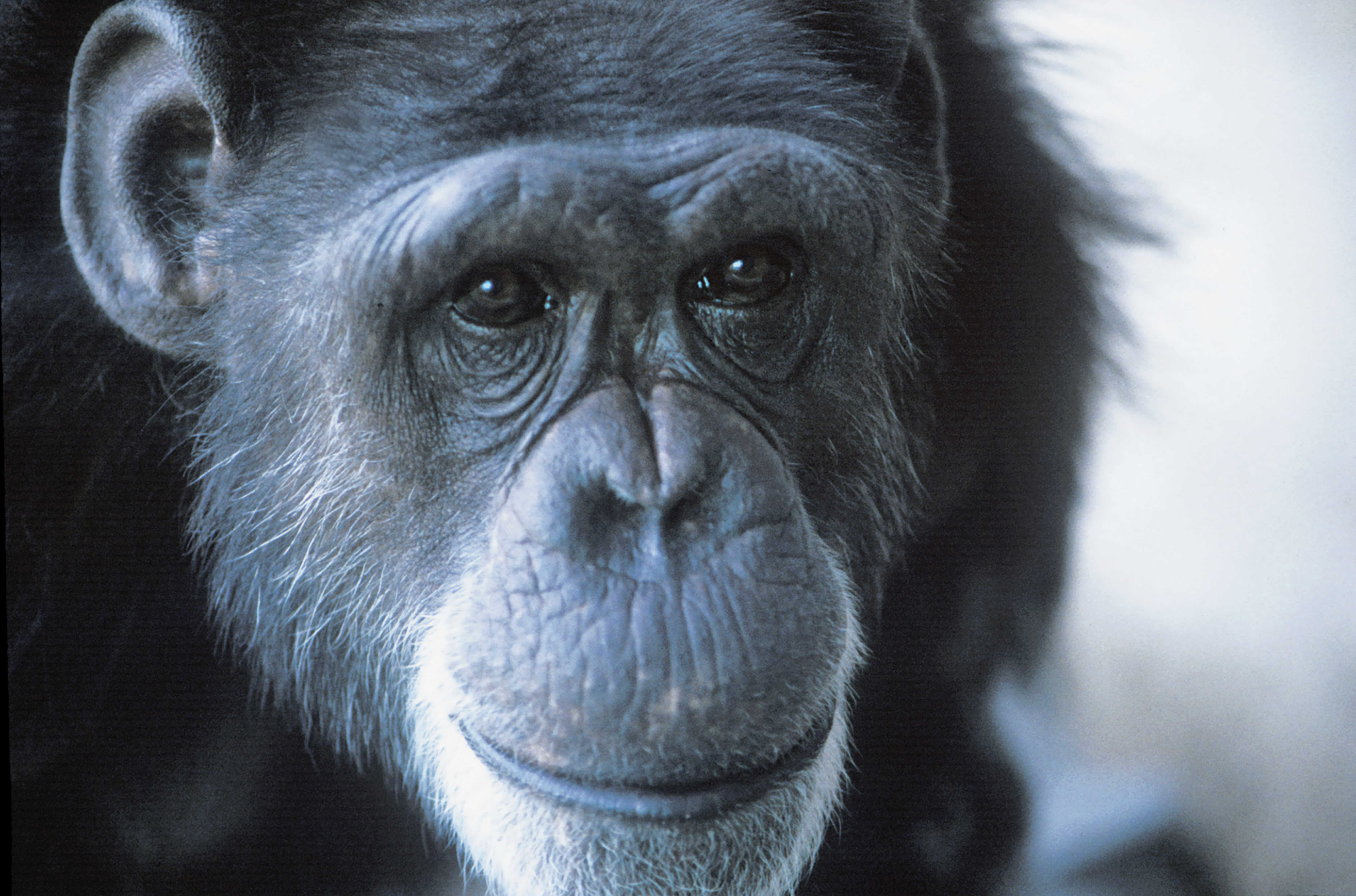
Washoe’s story featured on BBC international broadcast
October 19, 2026 by Rune Torgersen
Questions? Contact Us.
Department of Biological Sciences
Science Building, Room 338
Dr. Clay Arango
(509) 963-3163
arangoc@cwu.edu