National collaboration fuels progress in CWU Dining and Nutrition program
- January 19, 2026
- Rune Torgersen
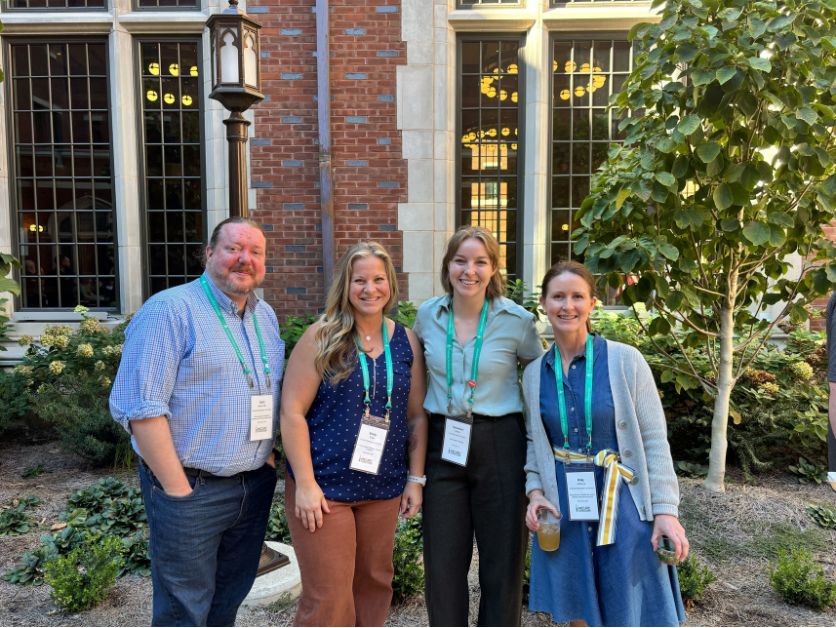
Since getting involved with the Menus of Change University Research Collaborative (MCURC) in 2021, Central Washington University has seen our participation in the national initiative pay off in a variety of ways.
The program, which features participation from more than 85 colleges and universities, bridges the gap between dining and research by using on-campus food services as real-world opportunities for innovation, particularly as it applies to increasing sustainability practices and limiting food waste.
CWU’s participation in the program is three-pronged, touching CWU Dining Services, the Wildcat Farm, and the Nutrition and Dietetics program. Campus Executive Chef Joe Ritchie has been a part of the collaboration since its inception, and he has witnessed its growth firsthand.
“The partnership has been great,” he said. “It has evolved over the years from being a sounding board or source of ideas and inspiration to a more active partnership, as seen by some of our recent collaborations.”
Those partnerships include MCURC-funded research, giving CWU students the opportunity to conduct real-world science with real-world benefits, according to Dietetic Internship Director and Senior Lecturer of Health Sciences Katy Williams.
“CWU students have benefited directly through roles as research assistants and primary investigators on MCURC-supported studies,” she said. “One Nutrition graduate student, Alyssa McCauley, was even awarded a student fellowship and attended a previous MCURC meeting, where she presented her research on CWU students’ knowledge around protein-rich foods and their associated greenhouse gas emissions.”
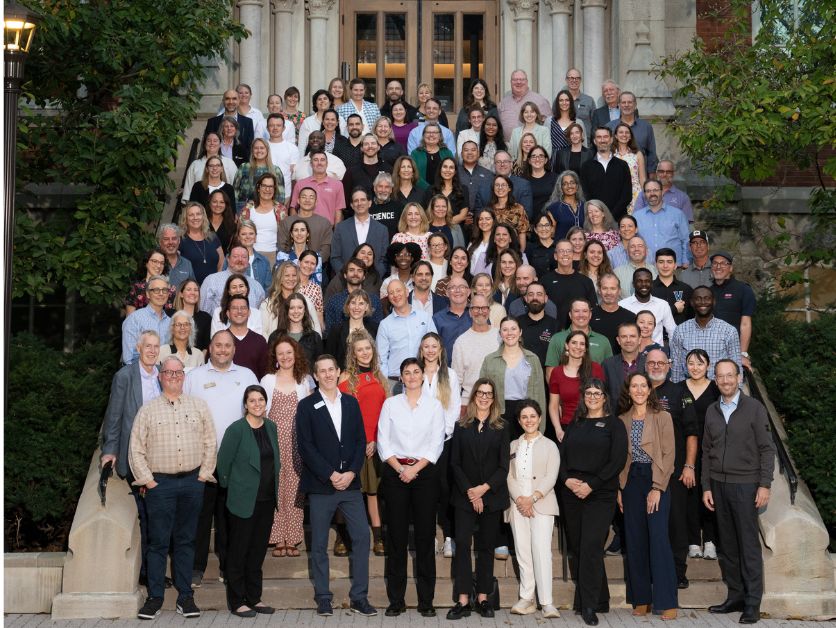
These research projects often involve far-reaching collaborations with fellow member institutions, such as the MCURC’s Collective Impact Initiative, which tracked over 300 million pounds of protein purchases from 2019-2023, and measured a total 23% decrease in greenhouse gas emissions as a result of sustainability initiatives from member institutions.
The work was documented in an academic paper titled "Evaluating Food Procurement against the EAT-Lancet Planetary Health Diet in a Sample of U.S. Universities,” which was published in the International Journal of Environmental Research and Public Health in 2024.
Williams noted that the opportunity to network and collaborate across institutions in this way is of great value to the academic community, and to the work as a whole.
“It provided me meaningful opportunities to collaborate with universities across the U.S. and globally, and to learn from innovative approaches campuses are using to support sustainability efforts,” she said. “At a time when news about the environment and climate change can feel very discouraging, this work is energizing and hopeful.”
As CWU Dining continues to evolve its approach to providing delicious and nutritious food to the university community, the ability to share ideas with a national collective has been a strength.
“Partnerships like this allow us to network with top tier peer institutions like Stanford, and glean some of the research and ideas they have,” Ritchie said. “The MCURC has also been great acting as guardrails to keep us on track as we evolve our program”
Williams agreed, adding that CWU’s involvement brings a key perspective to the ongoing conversation about sustainable practices in campus dining operations around the world.
“CWU’s involvement ensures that mid-sized state universities have a voice in shaping sustainable campus dining practices,” she said. “While sustainability efforts can feel overwhelming, this work demonstrates that local, data-driven changes can lead to meaningful and scalable impact.”
CWU News
Arts and Humanities Month continues to build momentum
October 21, 2026 by David Leder
New position at CWU-Des Moines aimed at improving student experiences
October 21, 2026 by David Leder