Geothermal Technology
CWU's GeoEco Plant
Using the heat beneath our feet to heat and cool campus.
CWU is investing in geothermal technology to transform how we heat and cool campus. The GeoEco Plant uses the temperature of water beneath campus in the Ellensburg Aquifer to provide efficient, low-carbon heating and cooling for university buildings.
The first GeoEco Plant will serve the North Academic Complex when it opens in Fall 2026, with the capacity to eventually support approximately 500,000 square feet of campus buildings. The project is an important step in CWU’s efforts to reduce greenhouse gas emissions and transition away from natural gas based heating.
Explore the Geothermal Technology FAQsHow Does the GeoEco Plant Work?
The GeoEco Plant uses an open-loop ground source heat pump system that harnesses the temperature of water in the Ellensburg Aquifer to heat and cool campus. The system will introduce low temperature hot water as a new way to distribute heating across campus.
Rather than using groundwater as a resource that is consumed, the system uses it as an energy exchanger. Water is drawn from the aquifer, passed through a series of heat exchangers, and returned underground through an injection well without ever coming into contact with the outside environment. Heat pumps then move thermal energy between the aquifer and the buildings utilizing low temp hot water, depending on whether campus needs heating or cooling.
In simple terms:
1. Draw
Water is drawn from the Ellensburg Aquifer, approximately 800-1,000 feet below the Earth's surface, through an extraction well and into the series of heat exchangers.
2. Exchange
Water travels through a series of heat exchangers which transfers thermal energy between the groundwater and the campus heating and cooling system.
3. Heat or Cool
Heat pumps move that energy where it is needed on campus. In the winter, heat is transferred into the campus heating system to warm buildings. In the summer, the process reverses to remove heat from buildings and provide cooling.
4. Return
After the thermal energy is exchanged, the groundwater is returned to the Ellensburg Aquifer through an injection well.
Why Geothermal Matters
Heating and cooling campus is one of the biggest opportunities for CWU to reduce greenhouse gas emissions. Approximately 60% of CWU's greenhouse gas emissions come from the natural gas used to heat campus buildings.
The GeoEco Plant is an important first step in changing that. By using geothermal technology and a new low-temperature hot water system, CWU can reduce its reliance on natural gas for heating and cooling while creating a foundation for a network of geothermal connections across campus.
The project directly supports CWU’s Climate Action Plan goal of reducing campus-wide greenhouse gas emissions by 45% by 2030 and reaching net-zero carbon emissions no later than 2050. The first GeoEco Plant, combined with the replacement of two aging, energy-inefficient academic buildings, is projected to reduce our greenhouse gas footprint by approximately 33,000 metric tons over 50 years.
This project is more than a new way to heat and cool buildings. It is the beginning of a long-term transition toward a more efficient, lower-carbon heating system at CWU.
A Deeper Dive into CWU's GeoEco Plant
Watch this presentation to learn about CWU's geothermal heating and cooling system, the Ellensburg Aquifer, the technology behind the plant and the role geothermal energy will play in the university's transition to a lower carbon campus.
A Living Learning Laboratory
Where campus infrastructure becomes a hands-on learning opportunity
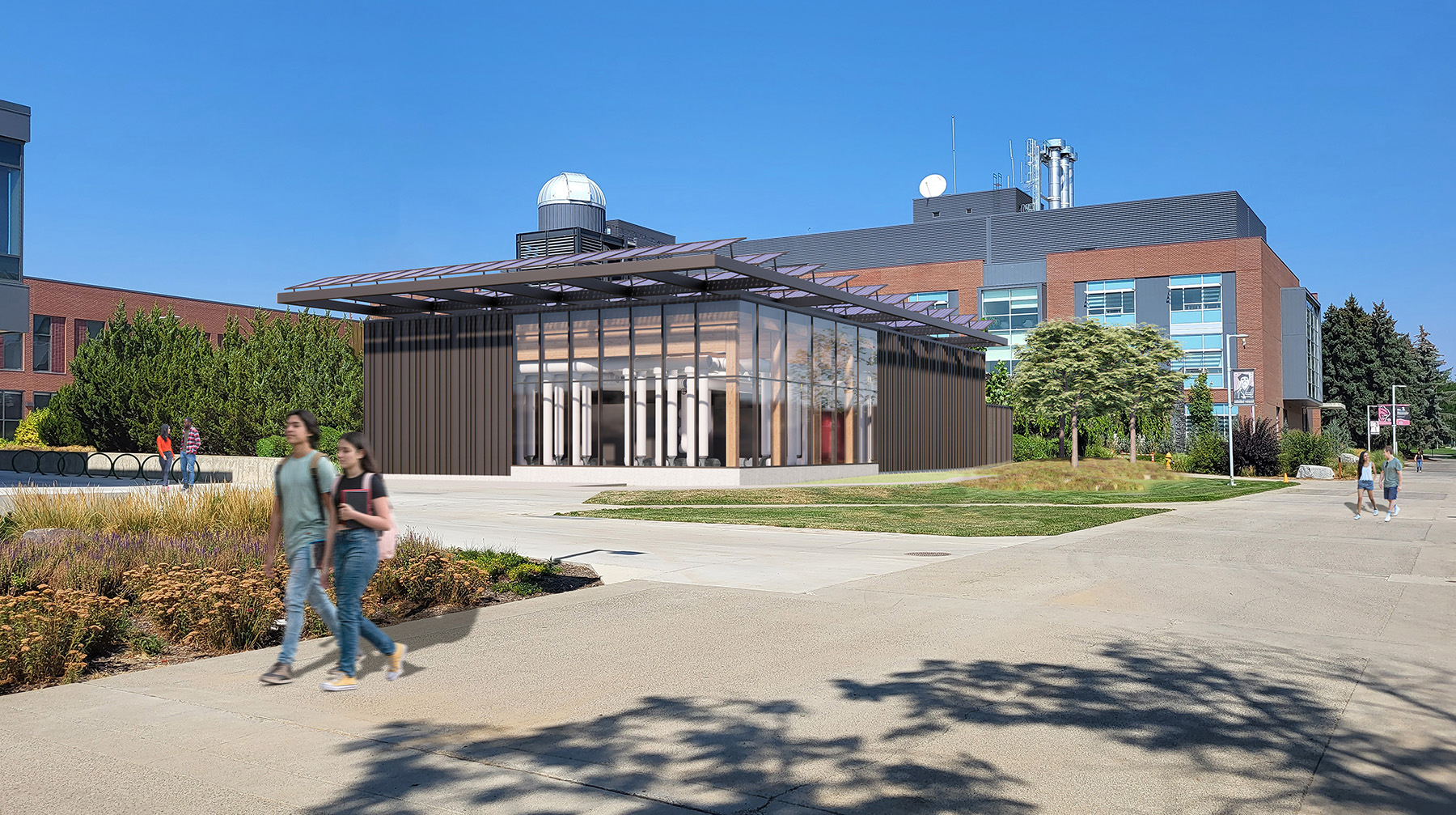
The GeoEco Plant will do more than heat and cool campus. A solar array and educational dashboard will help students, faculty, staff and community members explore how the system works and see its performance in action.
The GeoEco Plant will provide a real-world learning opportunity for students and serve as a model for institutions and agencies exploring ways to decarbonize their own district energy systems.
Explore the Story Behind the Project
-
Geothermal Technology: A New Approach to Decarbonizing Campus
An overview of why CWU is investing in geothermal technology and how the GeoEco Plant fits into the university's climate goals.
Read the Article -
New Academic Facility Expected to be a Hub for Students and Environmental Stewardship
A look at the North Academic Complex and GeoEco Plant, including the projects potential to serve as a learning laboratory.
Read the Article -
GeoEco Plant in the CWU Observer
CWU's student newspaper explores the early vision for the GeoEco Plant and its potential to transform how campus heats and cools its buildings.
Read the Article
CWU News

International student finds growth, connection and new direction at CWU
October 7, 2026 by Tran Nha Pham

Pianist Daniel Anastasio to play free concert at CWU on October 14
October 7, 2026 by Marketing and Communications