Applied Engineering
About Us
The Engineering Technologies, Safety, and Construction (ETSC) at Central Washington University (CWU) offers degree programs in several Applied Engineering, Occupational Safety, and Construction Management areas.
The department envisions itself as providing an educational service with customers at both ends of the system: students wanting an education leading toward employment, and industry desiring employees to lead them into the future. The programs are based on a foundation of technical courses, math and science, communications, and liberal arts. All of the programs work with industrial advisory committees to ensure that they stay current and meet accreditation guidelines.
The Department of Engineering Technologies, Safety, and Construction mission is to provide a quality education to undergraduate and graduate students who are preparing for professional careers. The department prepares the students for professional employment and insightful citizenship.
The curricula of the department falls into seven programs:
-
Construction Management
The Construction Management program is fully accredited by the American Council for Construction Education (ACCE), 1717 North Loop 1604 East, Suite 320, San Antonio, Texas 78232-1570, (210) 498-6161. The construction management program is also a member of the Associated Schools of Construction (ASC). Graduates of this program earn a Bachelor of Science in Construction Management. This major prepares approximately 36 graduates each year for management positions in the construction industry. Job placement of Construction Management graduates is excellent, approaching 100 percent. Graduates of the construction management program are highly qualified and compete effectively for positions as construction managers, cost estimators, project schedulers, field engineers, project engineers and project coordinators. Graduates who complete the “general construction” option in the program are typically employed by commercial building contractors and manage complex construction projects such as large retail stores, schools, higher education buildings, and commercial and public buildings. Graduates who choose the “heavy/civil” option often pursue careers in the public works arena such as bridge, highway, utility and marine construction. Some graduates have very successful careers working for major specialty contractors while others are employed as project managers for owners and government agencies.
-
Electrical Engineering Technology
The B.S. in Electrical Engineering Technology is accredited by the Engineering Technology Accreditation Commission of ABET. The technologists graduating from this program are applications oriented, building upon a background of mathematics, science and technology. They interface with engineers at the product level and produce practical, workable results quickly; install and operate technical systems; devise hardware from proven concepts; develop and produce products; service machines and systems; manage production facilities; and provide support for technical systems.
Technology refers to the diverse collection of processes and knowledge that people use to extend human abilities and to satisfy human needs and wants. Technological literacy is the ability to use, manage, assess, and understand technology.
-
Mechanical Engineering Technology
Mechanical Engineering Technology (MET) is the profession in which knowledge of applied mathematical and natural sciences, coupled with principles of technology gained by study and laboratory activity, is used to implement technological advances. The MET student is involved with the following three broad categories of study: energy, structures and motion in mechanical systems and manufacturing. The energy field involves the production and transfer of energy and the conversion of one form of energy to another. The B.S. in Mechanical Engineering Technology is accredited by the Engineering Technology Accreditation Commission of ABET.
-
Risk, Insurance, and Safety Management
The BS in Risk, Insurance, and Safety Management is fully online.
-
Professional Studies
The BAS in Professional Studies...
-
Occupational Safety and Health Management
The Occupational Safety and Health Management (SHM) degree prepares students to fill professional positions within the broad area of industrial safety and health management. The program provides three specializations: Safety and Health Management; Construction Safety; or Risk Management. This program prepares the student for a career in occupational safety and health in business and industry. These career positions range from construction, insurance, regulatory agencies, military, irrigation districts, aircraft and other manufacturing industries.
CWU News

Arts and Humanities Month continues to build momentum
October 21, 2026 by David Leder
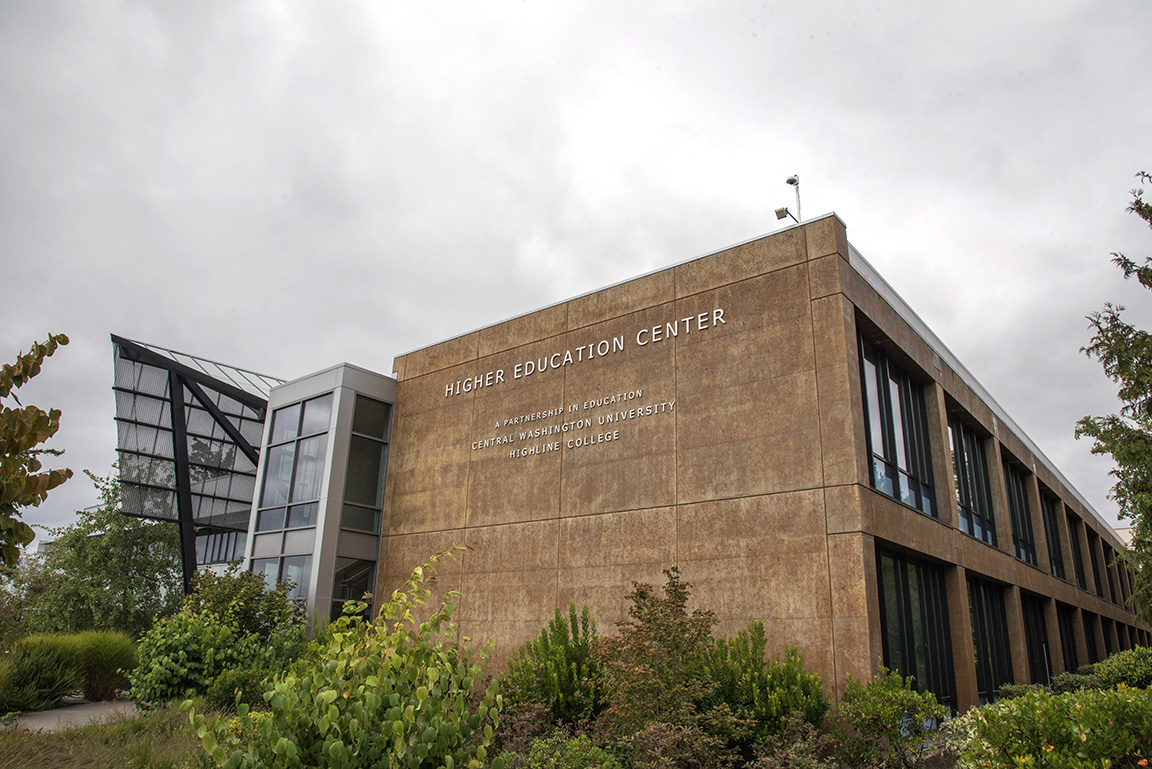
New position at CWU-Des Moines aimed at improving student experiences
October 21, 2026 by David Leder
Contact
Engineering Technologies, Safety, and Construction
Hogue Technology Building 101