Mechanical Engineering Technology
Mechanical Engineering Technology
About the Bachelor of Science in Mechanical Engineering Technology
Are you interested in applying scientific methods, harnessing mathematical principles, and leveraging critical thinking? Mechanical engineers invent, design, analyze, build, and test machines, systems structures an materials to fulfill objectives and requirements while considering the limitation imposed by practicality, regulation, safety, and cost.
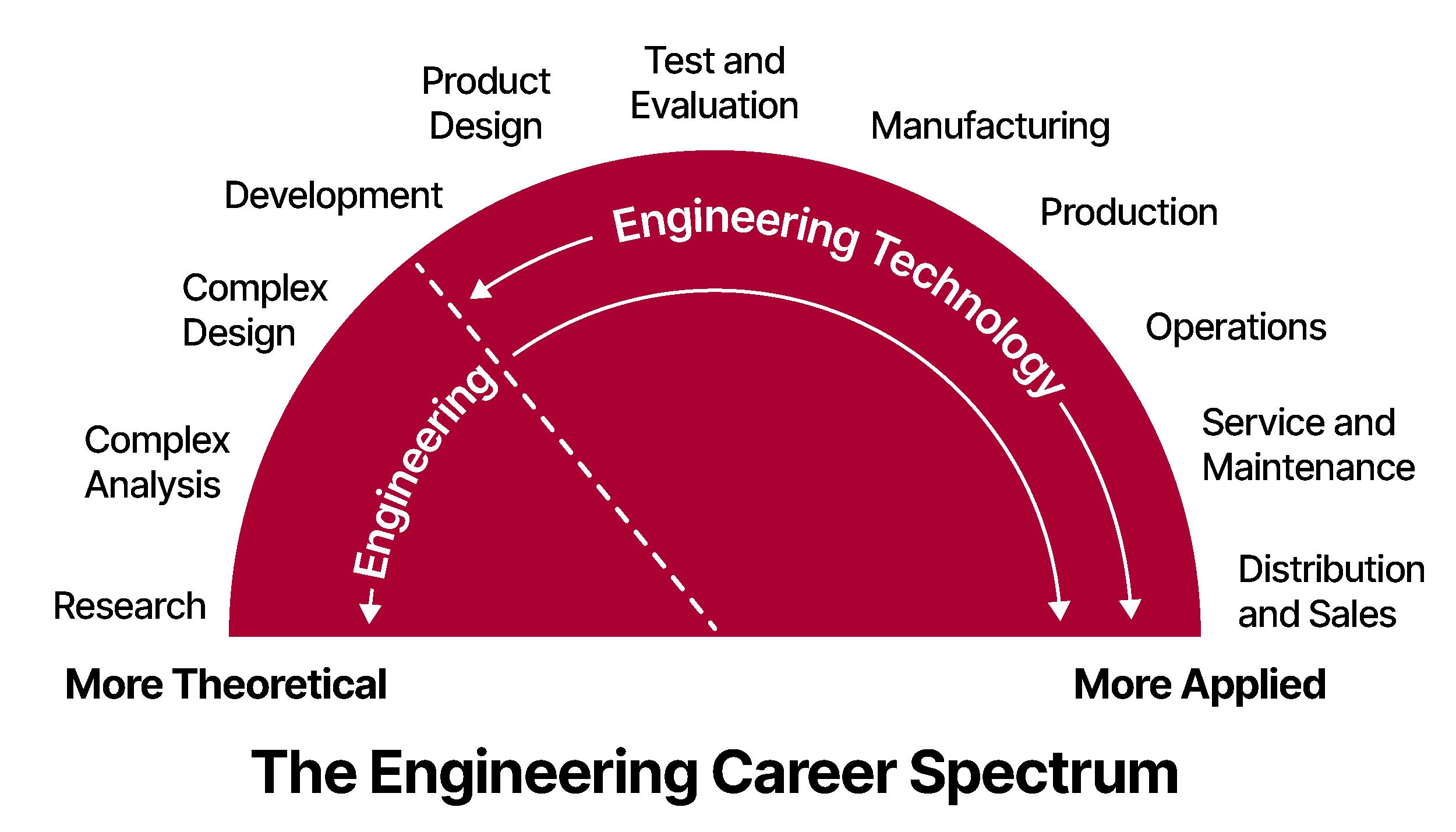
Mechanical Engineering Technology (MET) is the profession in which knowledge of applied mathematical and natural sciences coupled with principles of technology gained by study and laboratory activity, is used to implement technological advances.
Accreditation Information and Support

The Mechanical Engineering Technology program is accredited by the Engineering Technology Accreditation Commission (ETAC) of ABET, a non-governmental organization which accredits college and university programs in the disciplines of applied science, computing, engineering and engineering technology at the associate, bachelor and master degree levels.
ABET is recognized by the Council for Higher Education Accreditation (CHEA).
-
MET Program Educational Objectives
(Ratified 2017-May IAB)
1. MET graduates will perform effectively within their chosen work environments and will enhance their professional skills through continuing professional development.2. MET alumni will demonstrate responsible citizenship by participating in professional organizations and community engagement.
-
Student Outcomes
- an ability to apply knowledge, techniques, skills and modern tools of mathematics, science, engineering, and technology to solve broadly-defined engineering problems appropriate to the discipline;
- an ability to design systems, components, or processes meeting specified needs for broadly-defined engineering problems appropriate to the discipline;
- an ability to apply written, oral, and graphical communication in broadly-defined technical and non-technical environments; and an ability to identify and use appropriate technical literature;
- an ability to conduct standard tests, measurements, and experiments and to analyze and interpret the results to improve processes; and
- an ability to function effectively as a member as well as a leader on technical teams.
Student Enrollment and Graduation Data
This table shows enrollment and graduation data by year.
| Academic Year | Enrollment (Fall) | BS Degrees Awarded (June) |
|---|---|---|
| 2024-2025 | 144 | TBD |
| 2023-2024 | 126 | 24 |
| 2022-2023 | 94 | 23 |
| 2021-2022 | 109 | 20 |
| 2020-2021 | 131 | 23 |
| 2019-2020 | 141 | 35 |
| 2018-2019 | 111 | 25 |
| 2017-2018 | 113 | 24 |
| 2016-2017 | 106 | 30 |
| 2015-2016 | 128 | 35 |
| 2014-2015 | 103 | 26 |
| 2013-2014 | 88 | 21 |
| 2012-2013 | 85 | 21 |
| 2011-2012 | 75 | 10 |
| 2010-2011 | 60 | 12 |
Mechanical Engineering Technology
This video shows clips of students working in a variety of labs and watching demonstrations from professors.
CWU Foundry
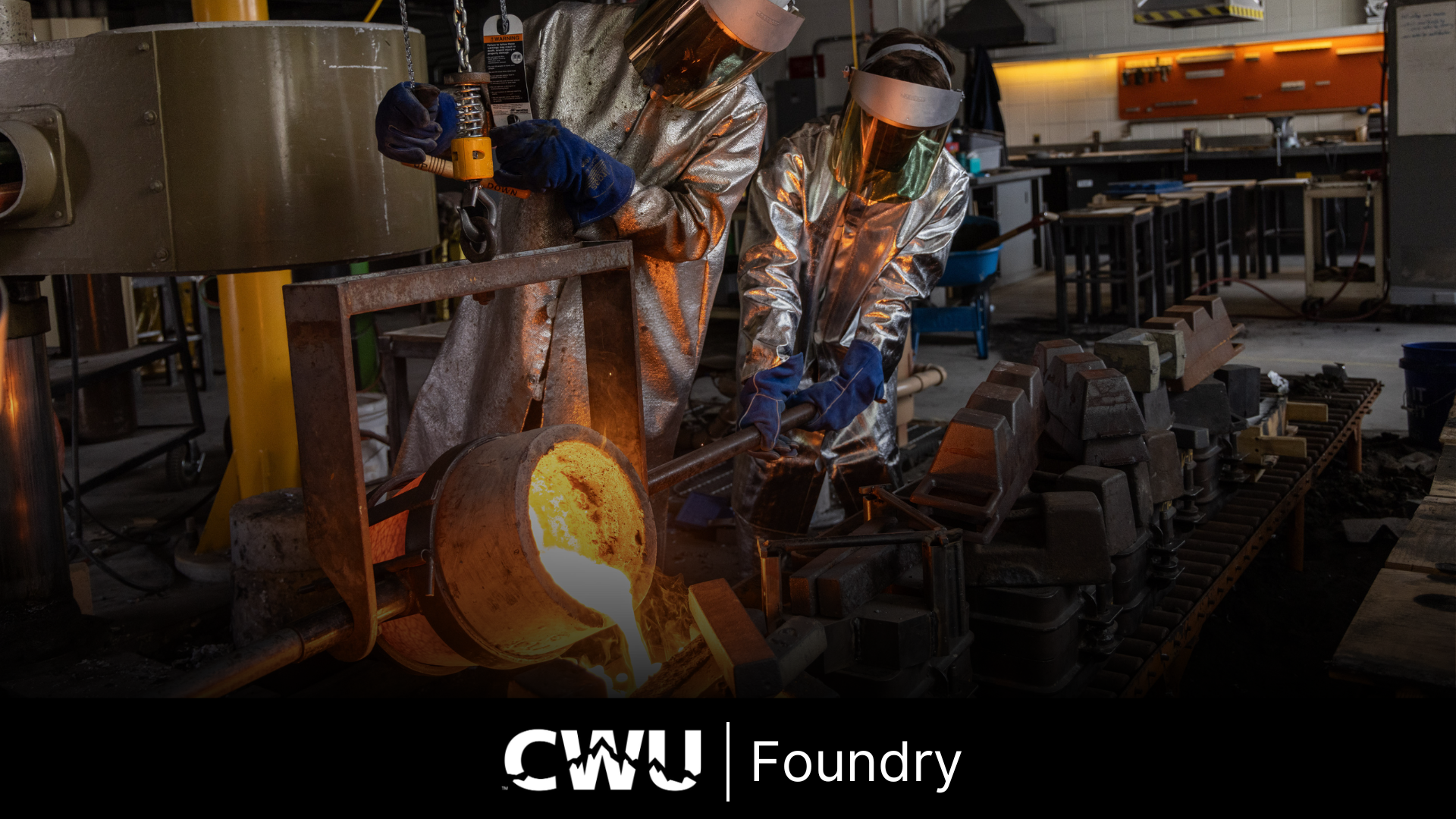
This video shows clips of students working in the foundry at CWU's Ellensburg campus.
CWU News

Arts and Humanities Month continues to build momentum
October 21, 2026 by David Leder
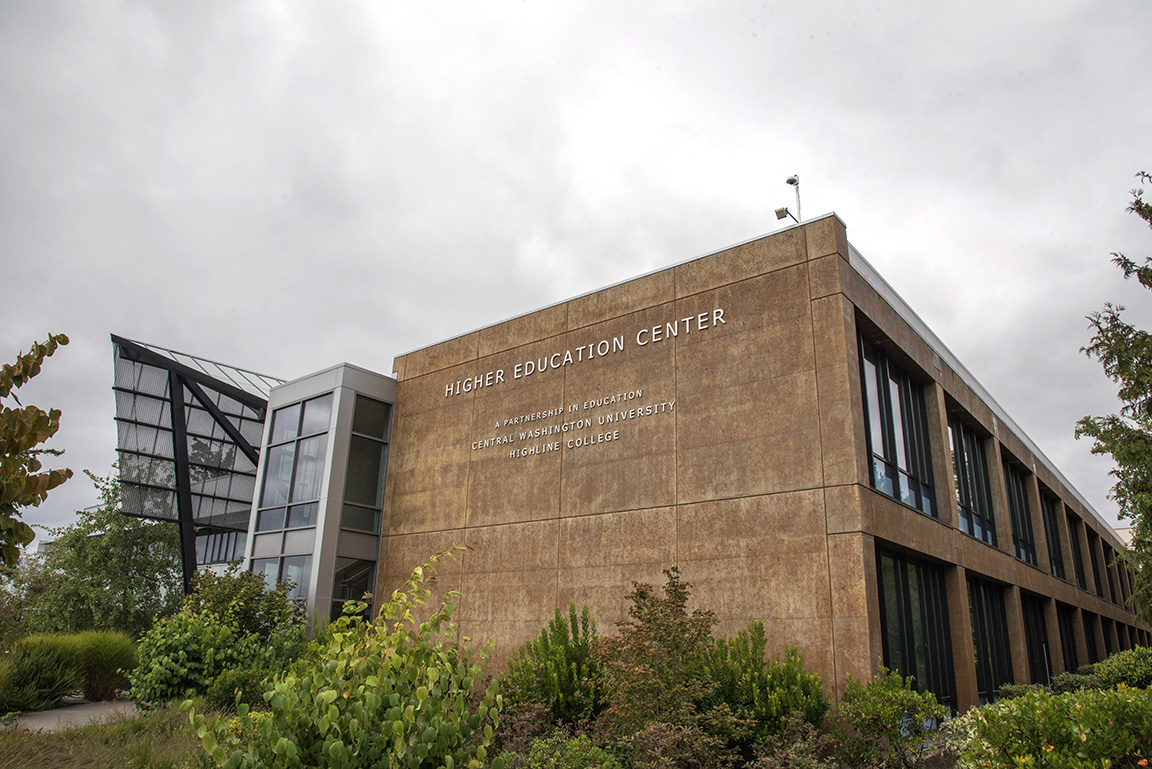
New position at CWU-Des Moines aimed at improving student experiences
October 21, 2026 by David Leder