Anthropology and Museum Studies
Welcome to the Department of Anthropology and Museum Studies
In our department, we understand the importance of practical experience.
We provide opportunities for you to engage in learning through in-class activities, laboratory courses, summer field programs, internships, study abroad, and research projects with faculty. These experiences not only enhance your understanding of anthropology but also equip you with valuable skills for your future career.
Questions? Contact Us.
Department of Anthropology and Museum Studies
357A Dean Hall
About our Department
The Department of Anthropology and Museum Studies is a vibrant and nurturing community committed to the comprehensive study of human and nonhuman societies, cultures, and biological diversity across time and space.
People
Faculty and staff in Anthropology and Museum Studies.
Student Funding and Research
This page describes departmental funding for students, and also some other key sources of student funding.
Museum Studies
About the Museum Studies Minor Program
Summer Field Programs
More Information About Summer Field Programs
Labs and CWAS
Read about the department's dedicated labs and the Central Washington Anthropological Survey.
Degrees and Courses
More Information About Degrees and Courses
Contact Us and Apply
More Information about how to contact us and apply for a major or minor.
Primate Behavior
Primatology is the study of the behavior, biology, evolution, and taxonomy of primates.
Explore our Degrees
Discover a range of programs designed to inspire creativity, build expertise, and prepare you for a successful career in Anthropology and Museum Studies.
Opportunities in Learning and Exploration
We offer enriching and diverse classes on the four major subfields of anthropology: cultural anthropology, archaeology, biological anthropology, and linguistic anthropology. Our interdisciplinary approach encourages students to explore the intricacies of human societies and develop a profound understanding of human and nonhuman experiences.
Your Learning Experience
Traditional Lectures: You’ll take part in small classes, ensuring you get the attention you deserve from your professors.
Hands-On Lab Courses: Dive into hands-on learning with topics like human skeletal anatomy, chipped stone tools, non-human skeletal anatomy, forensics, the human fossil record, and geoarchaeology.
Individual Study Opportunities: If you're passionate about a specific topic, you can work one-on-one with faculty members to explore it in depth or work on research projects.
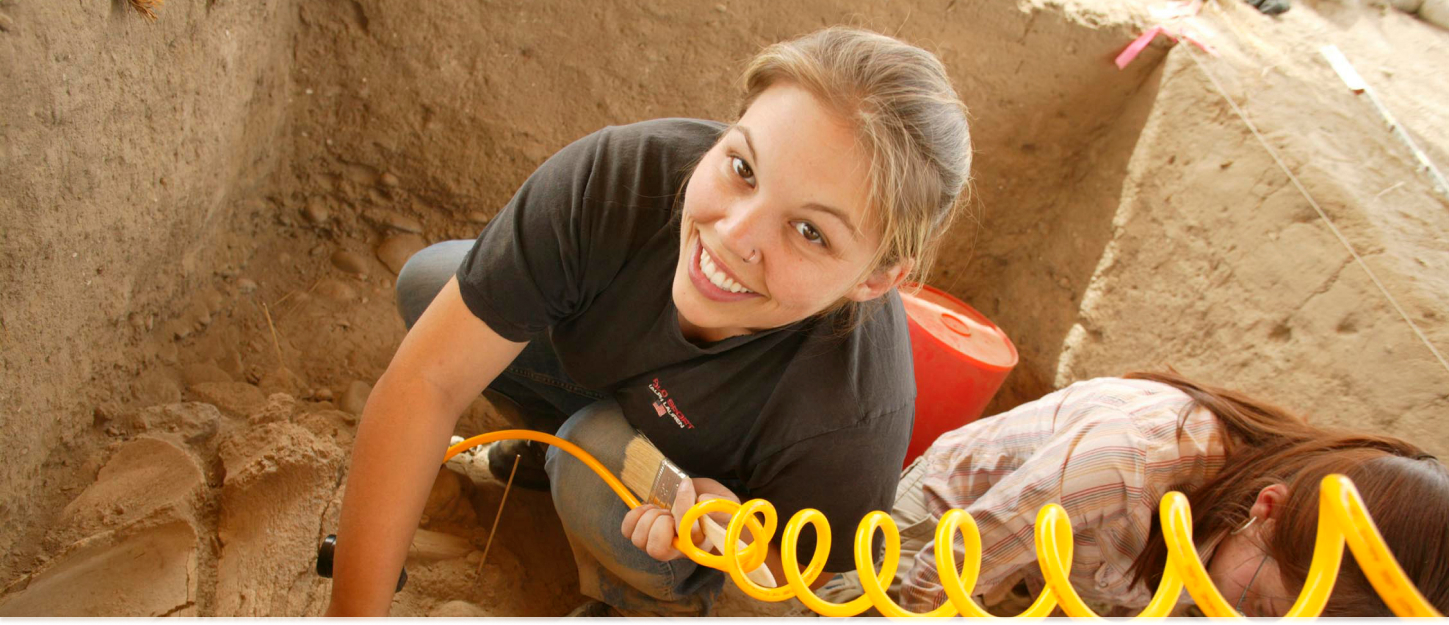
Summer Field Courses: Spend 3+ weeks in the field, meeting daily for 8 hours, and gain practical experience in archaeological and forensic anthropology methods.
Flexible Course Formats: Most of your courses will be in-person, with some offering a mix of in-person and online components for added flexibility.
Dedicated Labs and Collections: You’ll have access to dedicated laboratories for archaeology, forensic anthropology, and zooarchaeology, as well as extensive collections of fossil skull casts, artifact replicas, and animal bones.
Scholarship Opportunities
Pete and Sandra Barlow Immersive Anthropology Award:
- The Pete and Sandra Barlow Immersive Anthropology Award offers up to $2,500 per student to support immersive, hands-on experiences outside the classroom, including our summer field programs and other global opportunities.
- We award at least $16,000 annually.
The Dennis and Nancy Wilson Archaeology Scholarship:
- This scholarship awards $1,000 annually to one dedicated and committed student of archaeology.
Commitment to a Sustainable World
CWU is nationally recognized for this work through the AASHE STARS Gold rating and many CWU programs embed sustainability-related concepts, skills, and applied learning that prepare students to think critically about their impact on the world around them.
Learn more about CWU’s sustainability efforts through the Office of Sustainability, explore CWU’s national sustainability recognition, or view the full AASHE STARS report.