CWU alumna’s research influences regional conservation discussions
- June 4, 2025
- Robin Burck

When J Shah returned to Central Washington University to pursue her master’s degree, she had one goal in mind: to uncover the hidden impact of microplastics in her home region.
That research—now the foundation of a public exhibit on campus and the first study of its kind conducted on the Yakima River—propelled Shah into a career focused on the intersection of science and community.
Today, as an area habitat biologist for the Washington Department of Fish and Wildlife, Shah works to ensure that conservation is part of the conversation in one of the state’s most fragile and frequently overlooked landscapes.

“I’m passionate about the shrub-steppe, because it feels like a forgotten, beautiful, diverse biome that is fragile, but important and resilient,” she said in her recent article published in High Country News. “So many individual species have evolved over thousands of years to be able to survive in an arid environment where nothing else can survive.”
In her current role, Shah helps ensure that the region’s development doesn’t eclipse the needs of wildlife and ecosystems. It’s a role that requires both scientific rigor and human connection skills she first honed as a graduate student at Central and continues to carry into the field every day.
Her master’s thesis, which investigated the distribution of microplastics in the Yakima River, is currently featured in the CWU Museum of Culture and Environment’s Plastic Runs Through It exhibit. The project started with an eye-opening experience from her earlier fieldwork in Malaysia, where she worked as a field assistant on a turtle conservation project after monsoon season had ended.
“There were sections of the beach where you would wade through knee-high Styrofoam, trash, and plastic,” she recalled. “The whole purpose was to clear off enough area on the beach to entice turtles to come and lay their eggs. That experience really stuck with me.”
After years of working seasonal biology jobs, Shah returned to CWU for her master’s degree, teaming up with Biological Sciences Professor and Department Chair Dr. Clay Arango to explore microplastic contamination in a river that many consider pristine.

“I really wanted to look at microplastic distribution in the Yakima River, and I was really interested in how microplastics were entering the aquatic food web,” Shah said. “At the time, to the best of our knowledge, there wasn’t a study that did what we did.”
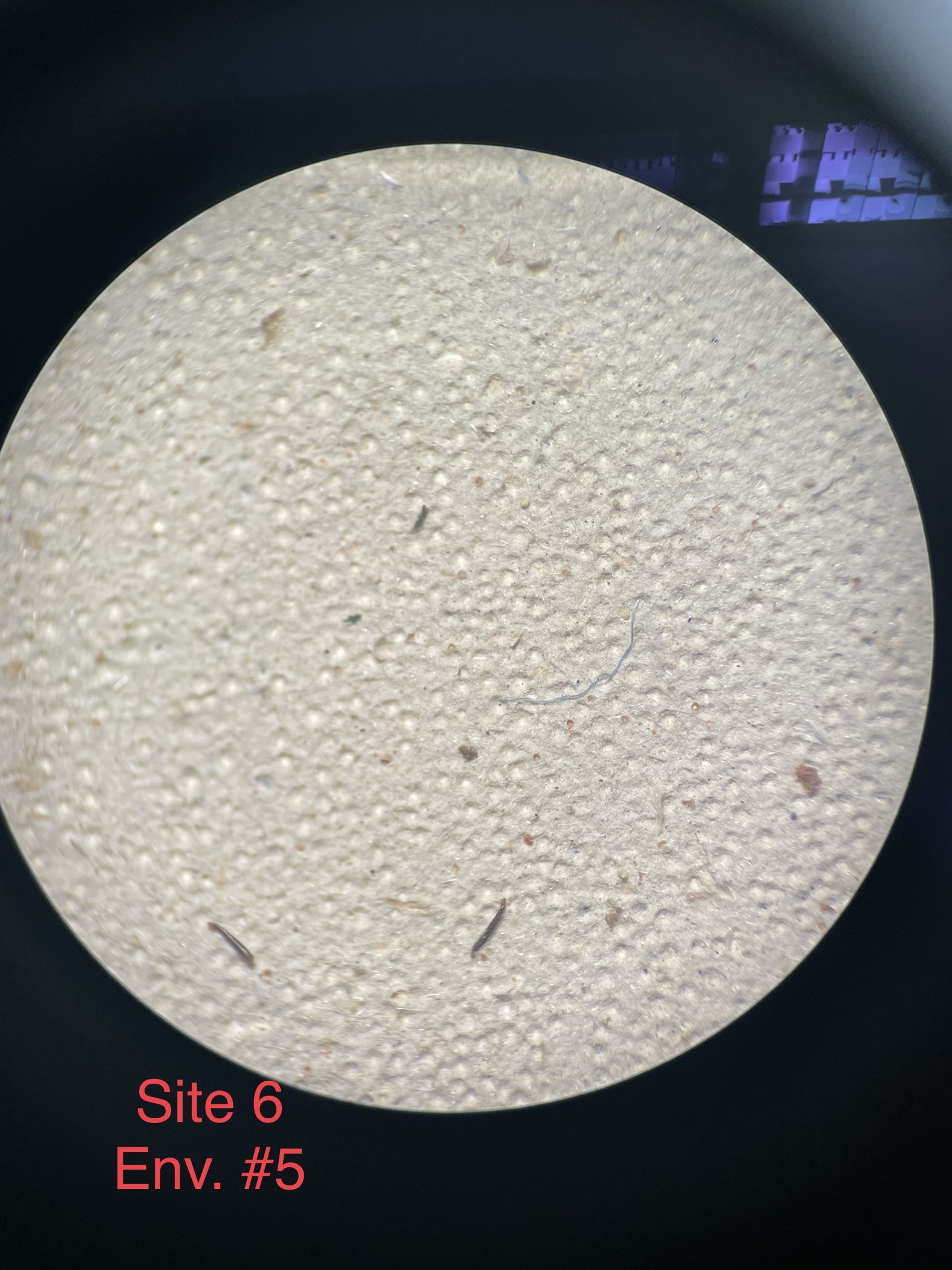
Her research was the first to analyze microplastics in the Yakima River across multiple dimensions—tracking their presence from the headwaters of a river all the way to the mouth, and studying their concentration in the water column, biofilm, and macroinvertebrates from four different families.
The work wasn’t without complications. During a pilot study, Shah discovered that synthetic fibers from her clothing had contaminated the samples, leading to abnormally high results.
“Just existing in the world was contaminating my samples,” she explained. “That was the most shocking aspect of my research, and most of the literature at the time didn’t really mention contamination controls. Or if they did, it was like, ‘Yeah, we have this $50,000 HVAC system to suck all the microplastics out of the air.’”
Rather than start over, Shah incorporated an additional “baby thesis” project to create rigorous control mechanisms, a decision that ultimately strengthened the credibility of her final results.
Dr. Arango, her thesis advisor, said he was impressed not only by Shah’s persistence but by her drive to engage with environmental problems on a practical level.
“She just embraced it and ran with it, and I didn’t need to tell her twice,” Arango said. “She was the kind of student every professor hopes for: curious, driven, and completely self-motivated.”
Together, Shah and Arango worked to turn research into something the broader public could engage with. Their joint exhibit, Plastic Runs Through It, was designed to connect a global issue to a local place and to offer a perspective that was more than doom and gloom.
“We definitely wanted to illustrate the complexity and the scope of the problem,” Arango said. “But we also agreed that we wanted to end with at least some concrete and doable things that people can adopt if they want to. That way, you don’t feel so helpless.”
Now working full-time in natural resources, Shah says the lessons she learned at CWU—especially from professors like Drs. Paul James, Daniel Beck, Kristina Ernest, and Arango—still shape how she communicates about science.
“A huge thing for me is making information accessible for everyone,” she said. “I don’t like using inaccessible vocabulary or terminology. It’s really irritating to me when people fluff up their vocabulary in a way, when they know they’re in an audience that maybe doesn’t have access to that kind of background.”
Shah’s research has since contributed to broader awareness and practical discussions around local environmental health. As plastic pollution increasingly becomes a global concern, studies like hers underscore how even seemingly remote or rural areas provide a useful snapshot about the larger global environmental story.
CWU News
International student finds growth, connection and new direction at CWU
October 7, 2026 by Tran Nha Pham
Pianist Daniel Anastasio to play free concert at CWU on October 14
October 7, 2026 by Marketing and Communications