
CERM
MS Degree
In addition to master's degree guidelines for admission to CWU master's programs, applicants for admission must have the following qualifications:
1. A bachelor's degree in a closely related discipline (e.g., Anthropology, Geography, Economics, Environmental Studies, Geology, History, Sociology, etc.). In some cases, work experience and/or additional coursework may be accepted in lieu of a degree in a related field. Before admission, program faculty will evaluate the academic coursework and experience of all applicants for admission, and will recommend additional coursework if, in their judgment, there are deficiencies in pre-baccalaureate work that need to be overcome before entrance into the program.
2. A high proficiency in written and spoken English. Evidence of proficiency and potential includes samples of previous writing, letters of recommendation, an informal interview, or any other optional evidence of academic success (e.g., standardized test scores).
Applicants are also required to have taken the following courses:
3. One upper-level undergraduate statistics course. Note: If you have not taken an upper-level statistics course, do not let this stop you from applying to the program. GEOG 409: Quantitative Methods or something similar can be taken while enrolled in the program and will satisfy this prerequisite.
4. One undergraduate course in microeconomic principles. Note: If you have not taken ECON 201: Principles of Microeconomics, do not let this stop you from applying to the program. You can test out of this prerequisite. Contact the CWU Economics Department for more information.
Application Deadline: February 1st for priority consideration, however applications are accepted through May 15th or until the program is full.
Graduate Committee: The student will have at least a three-member graduate committee, to be selected in consultation with the program coordinator and the dean of Graduate Studies and Research.
Culminating Experience: Each candidate must successfully complete and defend a thesis that involves original research within the fields of cultural and environmental resource management.
Thesis Options
CERM students have two options in terms of writing a thesis: 1) traditional; and 2) journal-ready.
Traditional Thesis:
A traditional thesis typically includes the following: introduction, literature review, methods, results and discussion, conclusions, and references. Sometimes theses also include appendices. Previous CERM theses have been “book-like” ranging from ~50 to more than 200 pages in length including text, figures, and tables. Those writing a traditional thesis may follow one of three journal styles as they write their theses:
- American Association of Anthropology's American Anthropologist
- Association of American Geographers's Annals of Association of American Geographers
- Society for American Archaeology's American Antiquity
The backup for each of these journal styles is the Chicago Manual of Style. Those who do not choose to follow a journal style, may use APA.
Journal-Ready Thesis:
The journal-ready format option is available for those who wish to submit a chapter of the thesis to an academic journal with minimal format changes.
The decision to pursue this option must be made with full agreement and cooperation of all committee members.
At least one quarter before thesis completion, obtain thesis committee approval and the approval of the OGSR to use the journal-ready format option.
a. Submit a Graduate Committee and Option Approval Form electing the journal-ready format option.
b. Attach a photocopy of the current journal format requirements (often called “instructions [or guidelines, information, etc.] for authors,” and typically available online) and a recently published article from the journal you have selected.
The main body of a journal-ready formatted thesis will include the following:
a. Chapter I: A general introduction providing an overview of the topic, often incorporating a brief literature review to provide a broad, scholarly context for the thesis topic.
b. A survey of the literature, to augment the overview in Chapter I and provide an adequate scholarly context for the subsequent journal article chapter(s). This will be a broader, more detailed and comprehensive discussion of the literature in the field related to the research topic than can be addressed in the subsequent journal article chapter(s). If included, it should end with a discussion that provides a bridge into the journal article or articles.
c. A page precedes each journal article proper with the chapter number and the title of the article. The title of the article(s) may be different than that of the thesis.
d. The article or articles, each with its own reference page.
e. At the discretion of the committee: A concluding summary chapter (following the article chapter(s)) covering the material if more than one article is included in the thesis, or if specified by the student’s committee.
f. A comprehensive reference page that lists sources from the entire thesis, including those sources listed in the article’s reference page. The format of the reference citations will strictly adhere to the chosen journal style.
g. Appendixes (as needed).
CWU News
Arts and Humanities Month continues to build momentum
October 21, 2026 by David Leder
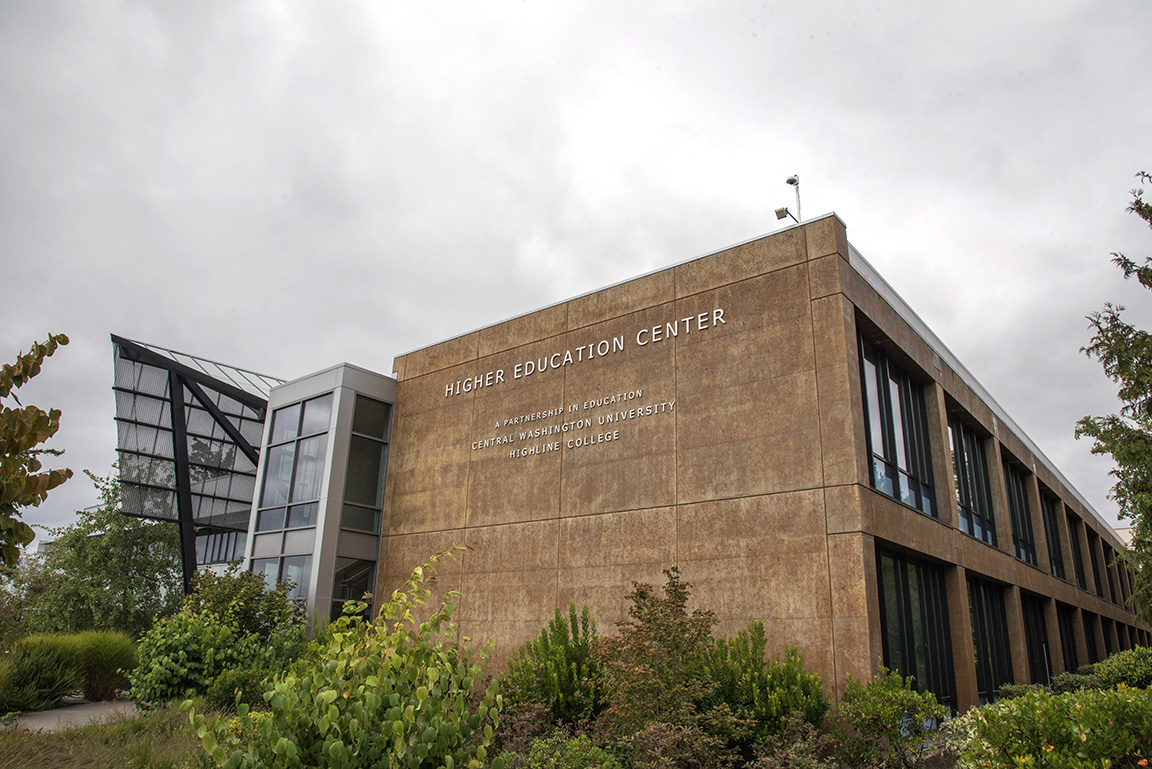
New position at CWU-Des Moines aimed at improving student experiences
October 21, 2026 by David Leder