College of the Sciences
Primate Behavior and Ecology
Bachelor of Science | Major
Bachelor of Science in Primate Behavior and Ecology
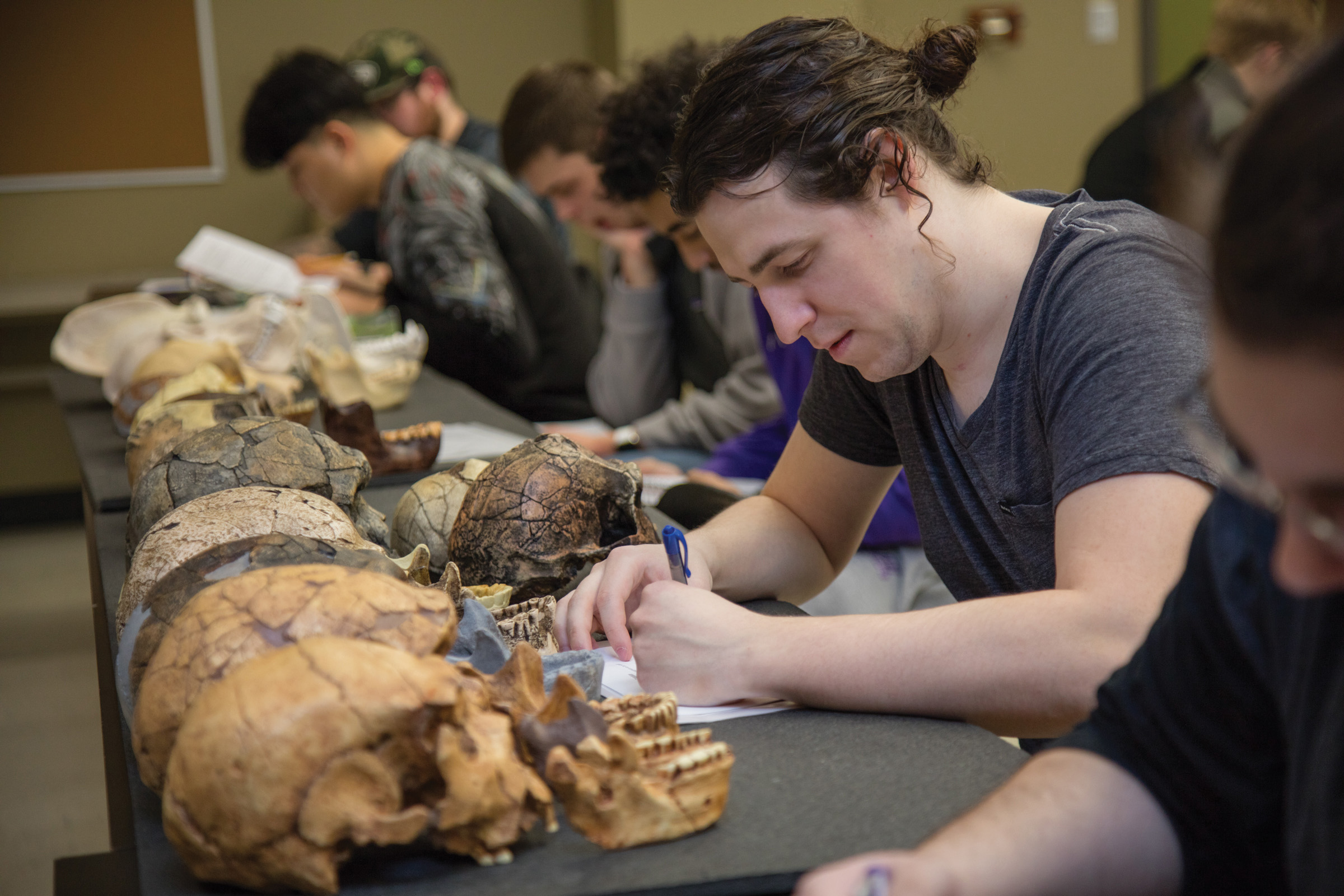
The Primate Behavior and Ecology, BS pulls from four subjects—anthropology, biology, philosophy, and psychology—in relation to primatology.
As you learn about primates, you will unravel the intricacies of their social dynamics, behavioral complexities, and ecological interactions. You will also have opportunities to conduct scientific research as undergraduates. Immerse yourself in a world teeming with insights on primate behavior and conservation initiatives. At CWU, we will guide you to make a positive impact both within and beyond our campus community, from local conservation efforts to global initiatives.
Questions? Contact Us.
Dr. Lori Sheeran and Dr. Jessica Mayhew, Co-Directors, Primate Behavior Programs
penelope.anderson@cwu.edu
(509)-963-3201
You belong here
What You'll Study
Academic Catalog | Primate Behavior Department Website
Core Courses
- ANTH 110 - Bones, Apes, and Genes: Exploring Biological Anthropology
- ANTH 201 - Grade 1 Animal Technician
- ANTH 313 - Primate Social Behavior
- PRIM 450 - Primate Behavior and Ecology Capstone
- PSY 101 - General Psychology
Biology
- BIOL 101 - Fundamentals of Biology
- OR
- BIOL 181 - General Biology I
- BIOL 200 - Plants in the Modern World
- OR
- BIOL 182 - General Biology II
- BIOL 201 - Human Physiology
- OR
- BIOL 183 - General Biology III
Group Courses
The Primates (select two)
- ANTH 412 - Monkeys of the Neotropics
- ANTH 416 - Apes
- ANTH 418 - Monkeys of Asia and Africa
- ANTH 419 - Lemurs and Lorises
Research Methods (select one)
- ANTH 413 - Research Methods in Primatology
- PSY 300 - Research Methods in Psychology
Quantitative Methods (select one)
- BIOL 213 - Introductory Biostatistics
- PSY 362 - Introductory Statistics
Ecology (select one)
- ANTH 352 - Anthropology of Environmental Issues
- ANTH 440 - Ecology and Culture
- BIOL 360 - General Ecology
- ENST 201 - Earth as an Ecosystem
Conservation (select one)
- ANTH 411 - Primate Conservation
- BIOL 466 - Conservation Biology
- ENST 303 - Environmental Resource Management
- PSY 413 - Conservation Psychology
Animal Behavior (select one)
- ANTH 380 - Non-Verbal Communication
- BIOL 465 - Biology of Animal Behavior
- PSY 301 - Learning
- PSY 442 - Evolutionary Psychology
- ANTH 412 - Monkeys of the Neotropics
- ANTH 416 - Apes
- ANTH 418 - Monkeys of Asia and Africa
- ANTH 419 - Lemurs and Lorises
Philosophical Issues in Primatology (select one)
- PHIL 306 - Environmental Ethics
- PHIL 314 - American Wilderness Philosophy
- PHIL 364 - Philosophy of Mind
Department-Approved Electives
- ANTH 493 - Anthropological Field Experience
- PRIM 490 - Cooperative Education

Department Scholarships
The Primate Ecology and Behavior program offers two scholarships: the IVAN Scholarship, which supports students with a focus on captive primate care, and the Barlow Award, designed for students also pursuing studies in anthropology.

Recent Graduates
Our alumni have gone on to impactful roles, including caregiver positions at Chimpanzee Sanctuary Northwest, Project Chimps, and Chimp Haven, as well as director of the Endangered Primate Rescue Center in Vietnam.

Primate Social Behavior
In ANTH 313, you’ll explore the diverse behaviors of various primate species, examining the similarities and differences that shape their social interactions.

Double Major
In addition to this program, you’ll be required to choose a second complementary major in anthropology, biology, or psychology, allowing you to study topics most aligned with your career goals and interests.

Apply
Discover how to apply to your program of choice at Central.

Financial Aid
Our Financial Aid staff are here to help you navigate financial aid.

Student Life
Pursue your interests in a supportive community. Learn more.

Visit
The best way to discover what makes CWU so special is to experience it yourself.

and Only
CWU offers the only BS in Primate Behavior in Washington State and the country.
Encounters
The Chimpanzee Sanctuary Northwest is located approximately 30 miles west of campus, providing volunteer and job opportunities.
Training
Our program requires on-the-job field experience with a contracted business, industry, government, or social service agency.
Why Study Primate Behavior at Central?
The interdisciplinary nature of the program and double major requirements prepare students for an increased number of career paths.
CWU has the only Captive Care Certificate that requires an internship working with nonhuman primates either in a zoo or sanctuary.
You’ll gain the skills to contribute to wildlife conservation, habitat management, and environmental education and research, playing a critical role in protecting biodiversity and ensuring the sustainable coexistence of wildlife and ecosystems.
Pursue a meaningful career stemming from your genuine curiosity to learn about and care for animals.
Experience personalized guidance and mentorship from our close-knit department and small class sizes with only 20-25 students.
Potential Careers
Animal caretaker at zoo/sanctuary
Behavior specialist at research facility/zoo
Conservation management
Environmental agencies
Management
Research scientist
Academic advisor
Program coordinator for animal use programs