HIP Institute gives CWU faculty valuable tools to help all students succeed
- August 3, 2023
- David Leder
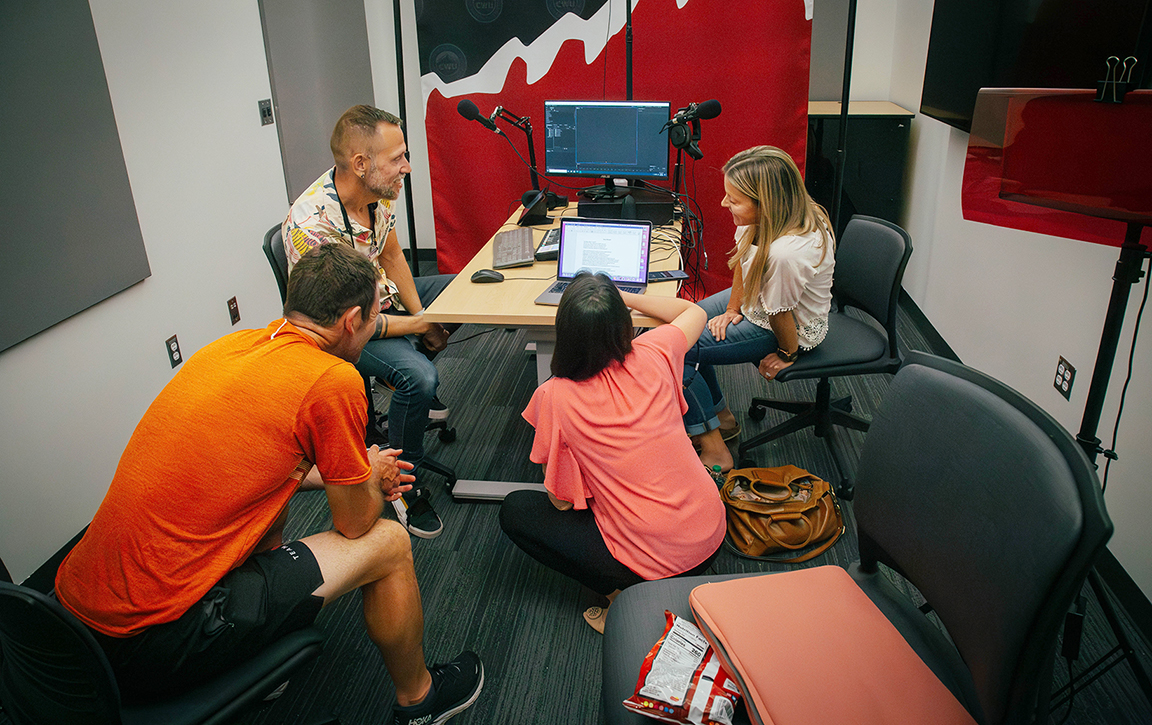
Central Washington University has always understood the value of high-impact practices (HIPs); we just haven't always done a great job of imparting that message to our students.
That's all about to change.
Provost Michelle DenBeste and a growing number of CWU faculty members have recognized that as we live into our vision of being a model learning community of equity and belonging, Central will need to put HIPs front and center.
That realization, shared by President Jim Wohlpart and the Executive Leadership Team, was the impetus behind hosting CWU's first-ever HIP Institute in late June.
"A lot of people say, 'We're already doing this. Why do we need to focus so much on HIPs now?' One of the main reasons, I would say, is equity and belonging," said DenBeste, who coordinated the June 26-30 event with help from Executive Director of Interactive Learning and Innovative Delivery Joy Fuqua.
"Right now, we're only serving about 10% of our students with opportunities like study abroad, internships, and service learning projects," she added. "The fact is, we need to be doing more. We need to build HIPs into our classes and be more intentional so we can do things in a way that benefit all students."
DenBeste explained that many students don't even know how to apply for an internship, let alone where to find one. Meanwhile, most of the students who are currently studying abroad are the ones who can afford to go without financial support.
"We need to think more about how we can provide these opportunities through a diversity lens," she said. "We have to ask ourselves, 'what services would benefit first-generation students and people from underrepresented backgrounds?' If we're going to do it right, we need to embrace and celebrate the cultural capital they bring to CWU."
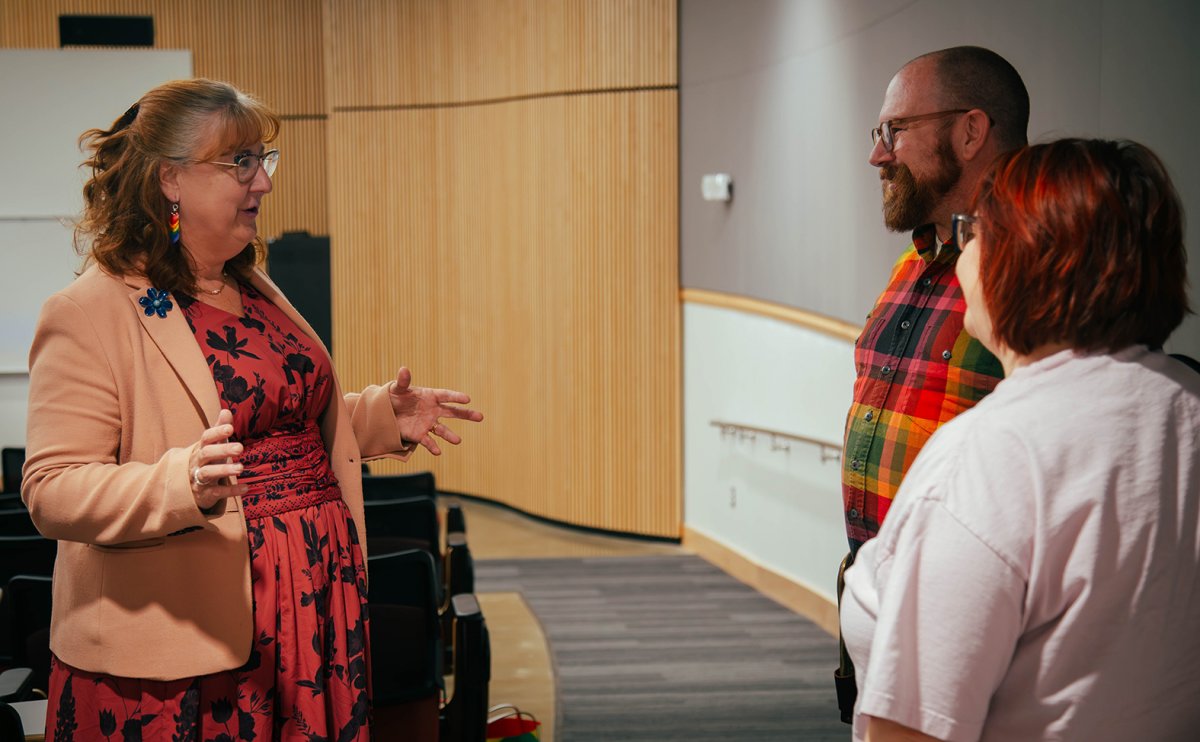
As described in a recent Crimson & Black article, HIPs include capstone courses and projects, first-year seminars or experiences, common intellectual experiences, internships, and e-portfolios. Participating in living-learning communities, attending student events, volunteering, and meeting with an advisor are other examples of HIPs.
Higher education institutions that have elevated the use of HIPs have seen students from a wide range of backgrounds develop the skills they need to succeed while also boosting their résumés. After seeing how successful HIPs have been across the country, CWU is seizing the opportunity to reinvent our approach.
"If we want students to come here because of The Central Experience, we need to show them that we care about them by helping them get involved in all of these amazing opportunities," DenBeste said, noting that HIPs give students both a sense of belonging and the tools to realize their full potential.
"But we haven't been telling that story, and many students who may want to come here don't know about us," she added. "If we can do a better job of telling prospective students what we can do for them, it's going to help us stand out from other schools."
Fuqua pointed out that today's college students are much different than the students of 10 or 20 years ago. They're much more technologically adept, and they don't want to do what's always been done.
Today's learners are looking for more than just a degree; they want to be better prepared for what the future holds.
"Today's students are much more modern, and they want to be engaged on various levels," Fuqua said. "We need to show them that we're not just a place to earn a degree; we are here to help them become a better version of themselves. If that idea really catches on-which I think it is-that's going to encourage even more people to come here. Sharing that message more broadly is the next step, and I'm excited to see the results."

Successful launch
Last month's HIP Institute featured five all-day sessions for 75 participants. The attendees spent the mornings together in Samuelson Hall and divided into working groups in the afternoon, led by 12 faculty mentors.
Most of the speakers at the inaugural HIP Institute were CWU faculty members, including Associate Dean of the College of the Sciences Elvin Delgado, Sociology Professor Pam McMullin-Messier, and Apparel, Textiles, and Merchandising Director Andrea Eklund.
Delgado gave a presentation about using portfolios to support student learning, McMullin-Messier discussed how to cultivate an HIP culture at CWU, and Eklund talked about how to provide more engaged learning opportunities for students.
Law and Justice Professor Teresa Divine gave a presentation about service learning, which followed an introduction to the concept by Dean Takahashi and Amber Hoefer. Other presenters over the five days included Bill Provaznik, Carlo Smith, Ana Tonseth, Jennifer Wilson, Delayna Breckon, Josue Estrada, David Schwan, Christina Torres Garcia, and Ian Miller.
DenBeste was pleased by the variety of presentations and the engagement she saw from the faculty and staff who will breathe life into Central's renewed focus on HIPs.
"Our faculty is already doing a lot of these things, so we don't have to reinvent the wheel," she said. "We just need to find new ways to share the cultural wealth we have as an institution and continue to build on that."
The event also benefited from a virtual component, made possible by Multimodal Learning, which allowed more people to join the afternoon sessions. The institute organizers said the ability to participate remotely ended up being a major enhancement.
"The institute was meant to be in-person, but we had a few team members who couldn't be here, so we decided to allow some virtual participation," Fuqua said, adding that the keynote speaker, Buffie Longmire-Avital of Elon University, also appeared virtually.
DenBeste had been looking for the right keynote speaker for months and came across Longmire-Avital's name while doing research about HIPs. She turned out to be the "perfect fit" for the CWU forum because the work she is doing at Elon is very diversity-centered.
"They do a lot of civic learning, service learning, and study abroad programs at Elon, and HIPs have been built into everything they do," DenBeste said. "They are required in the curriculum, and as a result, the university has found a niche for themselves. It's why students go there-it's what they're known for."
Not coincidentally, CWU is seeking to build our own niche around student engagement and success. As outlined in The Central Experience-CWU's six-year legislative priorities plan-we aim to provide the same opportunities for all learners, regardless of their individual circumstances.

We believe everyone should be able to achieve the same level of success when they come to Central; we just need to adjust our approach so we're meeting them where they are in life.
"Our students come to us with lots of capital, and they bring things with them that we don't give them credit for," DenBeste said. "Some speak three languages, some have traveled the world, and others know what it's like to care for family members young and old. We often think of those things as deficits, but in reality, they are strengths. We need to learn more about what they are bringing to CWU that can help us become a more diverse institution."
DenBeste and Fuqua are planning a follow-up HIP Institute next year with an entirely new group of participants. This summer's cohort continues to work on their small-group projects, and they will be asked to serve as ambassadors for future events.
If future iterations of the institute are anything like the initial conference, the entire CWU faculty-and, by extension, our students-will benefit in ways we can only imagine.
"I thought it was the event of the year, and it's only going to get better next year," Fuqua said.
CWU News
Arts and Humanities Month continues to build momentum
October 21, 2026 by David Leder
New position at CWU-Des Moines aimed at improving student experiences
October 21, 2026 by David Leder