Entrepreneurship contest teaches students to take risks and identify real-world solutions
- June 27, 2023
- David Leder
The best part of the job for many Central Washington University professors is giving their students the parameters of a project and then turning them loose.
Or, as Rob Ogburn puts it, "just get out of their way."
That's exactly what the CWU College of Business instructor did during spring quarter when he empowered five of his Entrepreneurship 288 students to coordinate and execute a university-wide business plan contest called Cat Tank.
What resulted from Ogburn's hands-off approach was both surprising and inspiring, even to him.
"The exciting thing for me is when students realize that the most important part of my job is to get out of their way," said Ogburn, a former industry executive who also serves as the director of business development for the Institute for Innovation & Entrepreneurship (I4IE).
"They weren't even doing this for credit; their class was during winter quarter," he added. "This was done entirely on their own time, and it came together because of their own ideas and their own passion."
Ogburn noted that Cat Tank-an ode to the popular ABC television show, Shark Tank-was the first time most of these students had worked on a large-scale project for which they were accountable for its success or failure.
As far as Ogburn is concerned, the Cat Tank team passed the exam with flying colors. Now, he says they're ready to take what they've learned into their careers and make an immediate impact.
"The confidence that comes out of something like this is immeasurable," he said. "Now that they have come up with their own ideas, executed them, and learned from their mistakes, they can use those experiences to start their own business, or launch a community-based support structure for startups. They have been toughened up, and they know how to make stuff happen that many other people don't know how to do."
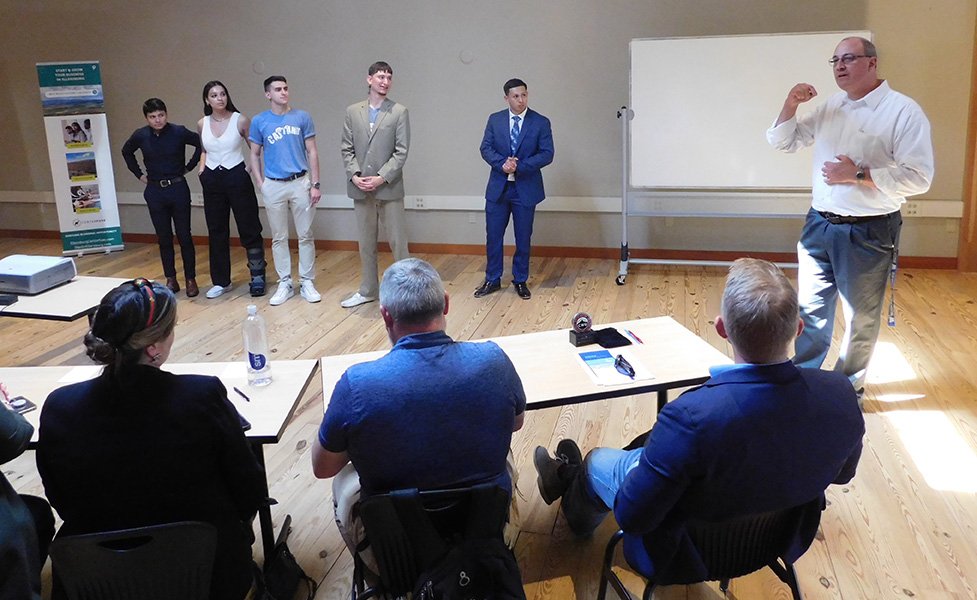
The Cat Tank finals were held May 19 at The Foundry in Ellensburg, featuring 10 contestants and a total prize purse of nearly $6,000. The contest was adjudicated by a panel of 10 industry representatives from Starbucks, Microsoft, Wheatland Bank, BWT Pharma, CWU, the University of Washington, CenterFuse, and others.
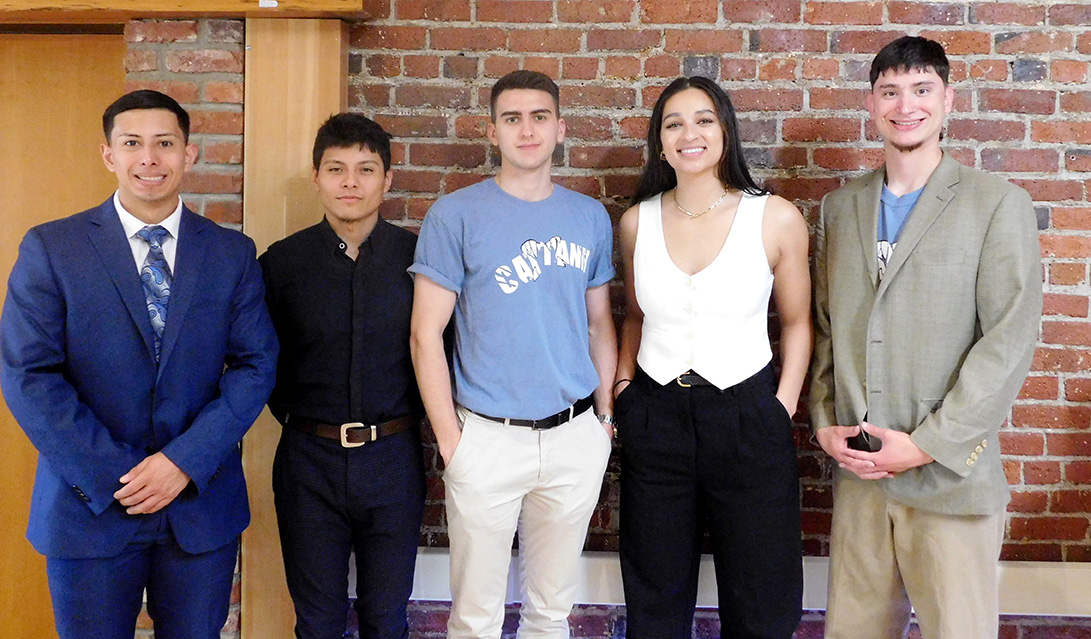
The Cat Tank team was made up of five students from a variety of academic backgrounds: Jack Trombetta (industrial engineering and entrepreneurship), Bobi Vladimirov (computer science), Gerardo Castillo (fashion), Marianna Payne (business administration), and Miguel Gomez (accounting and marketing).
Gomez is the CEO and co-founder of the organization who helped coordinate the inaugural event in 2022. Vladimirov won the initial competition and is now president of Cat Tank. Trombetta serves as vice president of People for Cat Tank, Payne is the vice president of operations, and Castillo manages the marketing side.
"Our goal for this competition was to find people who love what they do and want to take their business ideas to the next level," Gomez said. "We wanted to convince people to follow their passion and structure a business plan they could pursue after the competition."
Building interest across campus
One reason this year's competition proved so successful was the effort the team put in on the front end. Rather than focusing entirely on College of Business students, the team partnered with student clubs, set up information booths on campus, and conducted a series of workshops.
That multifaceted approach yielded significant interest across all academic disciplines, and it helped create a more diverse pool of entrants-a total of 25.
"We did quite a few tabling events at the SURC and that allowed us to reach a much wider audience," said Payne, who plays for the Wildcat volleyball team. "We also talked to people in our classes and on Instagram, and that helped us create a lot of good personal connections."
Vladimirov pointed out that the team's objective for Cat Tank was less about finding students to enter the competition; it had just as much to do with building entrepreneurship interest across campus.
"The most important thing for us was provide value to students," he said. "We wanted to encourage them to share their business ideas and gather feedback so they could keep going with their ideas. We had a lot of people attend the workshops, and it was really exciting to see that level of interest."
Even those who didn't win the competition came away with some valuable experience that they can carry with them as they continue to develop their business plans.
One Cat Tank finalist, Melinna Lopez, laid out her plan for a line of ceramic smoking pipes called Sin Verguenza ("No Shame") that are designed for chemotherapy patients and people coping with mental illness. And while she didn't end up claiming a top prize, she's going to continue pursuing her dream.
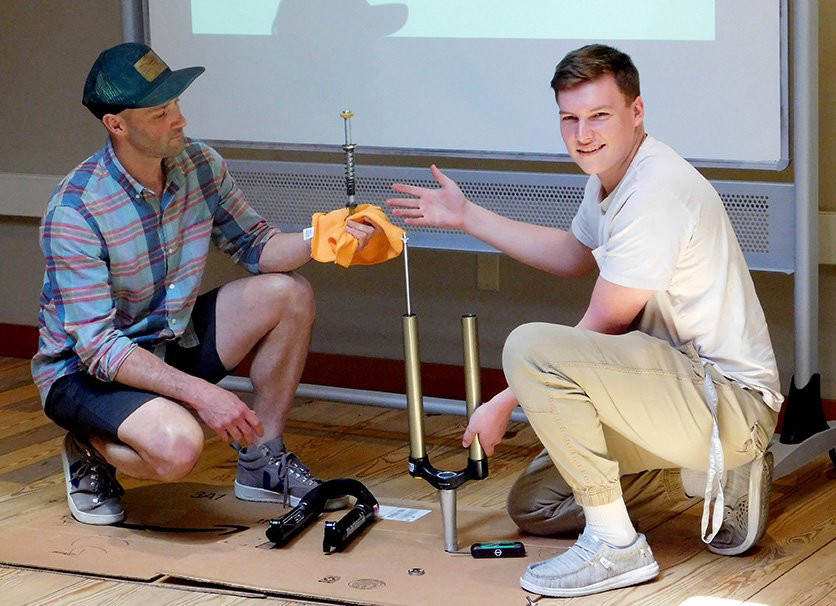
"Melinna has a real passion for this and she's going to keep working to make her business a reality," Gomez said. "The workshops and the competition gave her the tools she will need to keep going."Mechanical engineering student Boden Parrish won the $3,000 grand prize with his invention for a technology upgrade to mountain bike suspension forks. Parrish attended the workshops and sought input from the program mentors, eventually producing a winning concept.
"Boden found us through tabling, and he came up with a system using his mechanical engineering skills," Castillo said. "His invention was exactly the kind of thing we were looking for-an idea that has a real-world application."
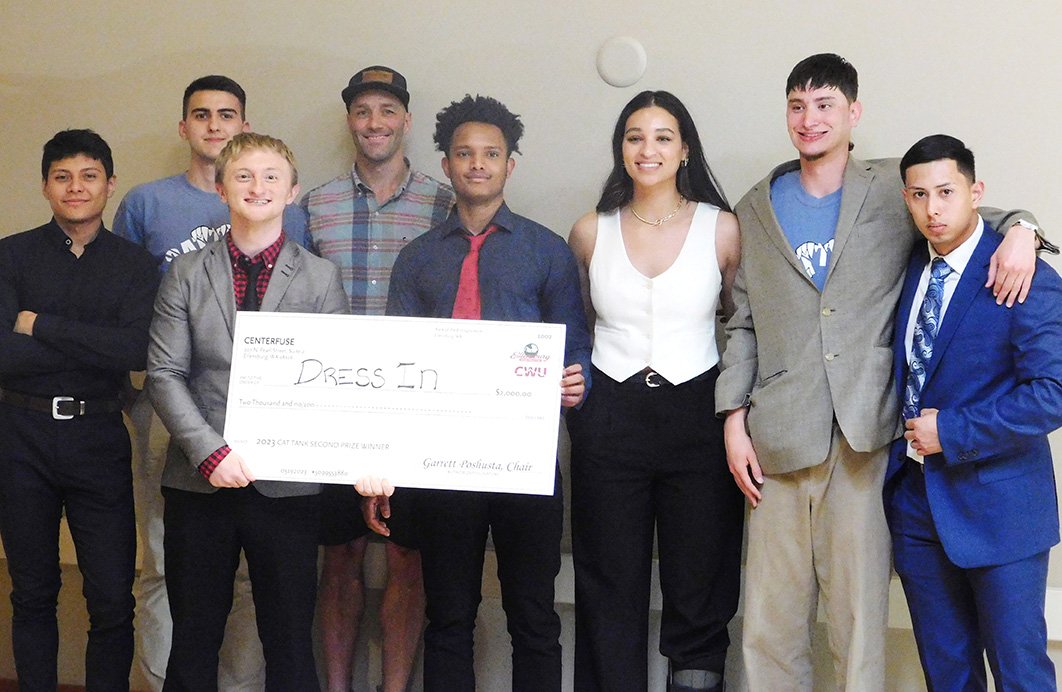
Cole Smith and Yung Idow teamed up for second place and a $2,000 prize with the Dress In software application, which creates a virtual model of the human body and allows people to see how clothing items fit their individual measurements.
Smith and Idow are now developing a prototype of the app as they look to create a more sustainable return system for clothing that will ultimately benefit both customers and business owners.
"The best part was working with people from a variety of different backgrounds and sharing our ideas and experiences with one another," said Smith, a managerial economics major. "It didn't feel like any of the competitors were doing it for the money. They were doing it for experience and to get feedback on projects they are passionate about."
Planning for the future
Although the Cat Tank concept was introduced last year, nearly everything about the 2023 competition was new. Some of the ideas and resources may carry over in 2024, but ideally, next year's student coordinators will begin with a blank slate just like this year's group.
"We had to pretend as though last year's competition didn't even happen," Trombetta said. "We started from scratch, like a true startup business. And that's how it will be next year as well. Next year's Entrepreneurship 288 students will have to start over from the ground up."
That doesn't mean this year's project team won't be available for support. After all, entrepreneurship is supposed to be a shared venture that allows prospective business owners to draw on a variety of influences as they build out their ideas.
"We will all be involved in some way next year, and I think we will be valuable as mentors," Vladimirov said. "We have experienced the setbacks, but we have also had success with our strategy. When next year's group comes along, they will know we went through all of the same things and that we have their backs."
Payne is proud of the momentum she and her peers have built this year, and she is optimistic about where the contest is headed.
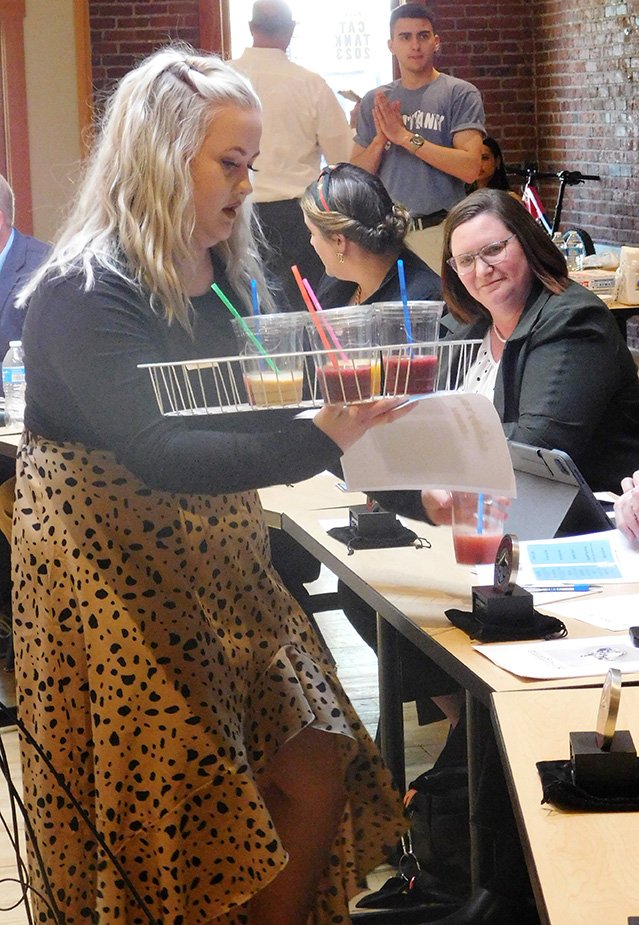
"We really tried to reach a broad audience, and I hope to see it continue to grow in the years to come," she said. "I would like to see more student-athletes get involved, and I'm going to encourage my volleyball teammates to try it. We're all competitive people, and it would be cool to see them put their energy into something like this."
If nothing else, learning some of the basic concepts about entrepreneurship could help more students discover a potential career option that they haven't even thought of yet. That's evident whenever you watch Shark Tank, Castillo said.
"One of the most captivating things about entrepreneurship is you can go all-in with something you enjoy rather than getting stuck in a 9-to-5," he said.
Many college students don't know what their careers will look like after graduation, and it never hurts to explore a variety of options. With so much uncertainty in today's job market, learning the basics of business can only help, Trombetta said.
"You may know what you want to do, but why not learn how to bring something to market?" he said. "For someone like me, who came to school for engineering, it only makes sense to learn the business side. If I can combine that with what I know about engineering, I can adapt later on and start my own business."
That kind of foresight is precisely why Ogburn loves his job. He says there is no better feeling for him or his colleagues than seeing their students become energized by their experiences at Central, and then take that passion back to their home communities where it has more meaning.
But you have to remember to get out of their way.
"These students have the power to make the world work in ways they could only dream of," Ogburn said. "Once they get a feeling for what it's like to really channel their passion, you can't stop them."
CWU News
Arts and Humanities Month continues to build momentum
October 21, 2026 by David Leder
New position at CWU-Des Moines aimed at improving student experiences
October 21, 2026 by David Leder