CWU Theatre Arts embraces inclusivity with Yakima River Adventure
- March 6, 2024
- Katherine Camarata
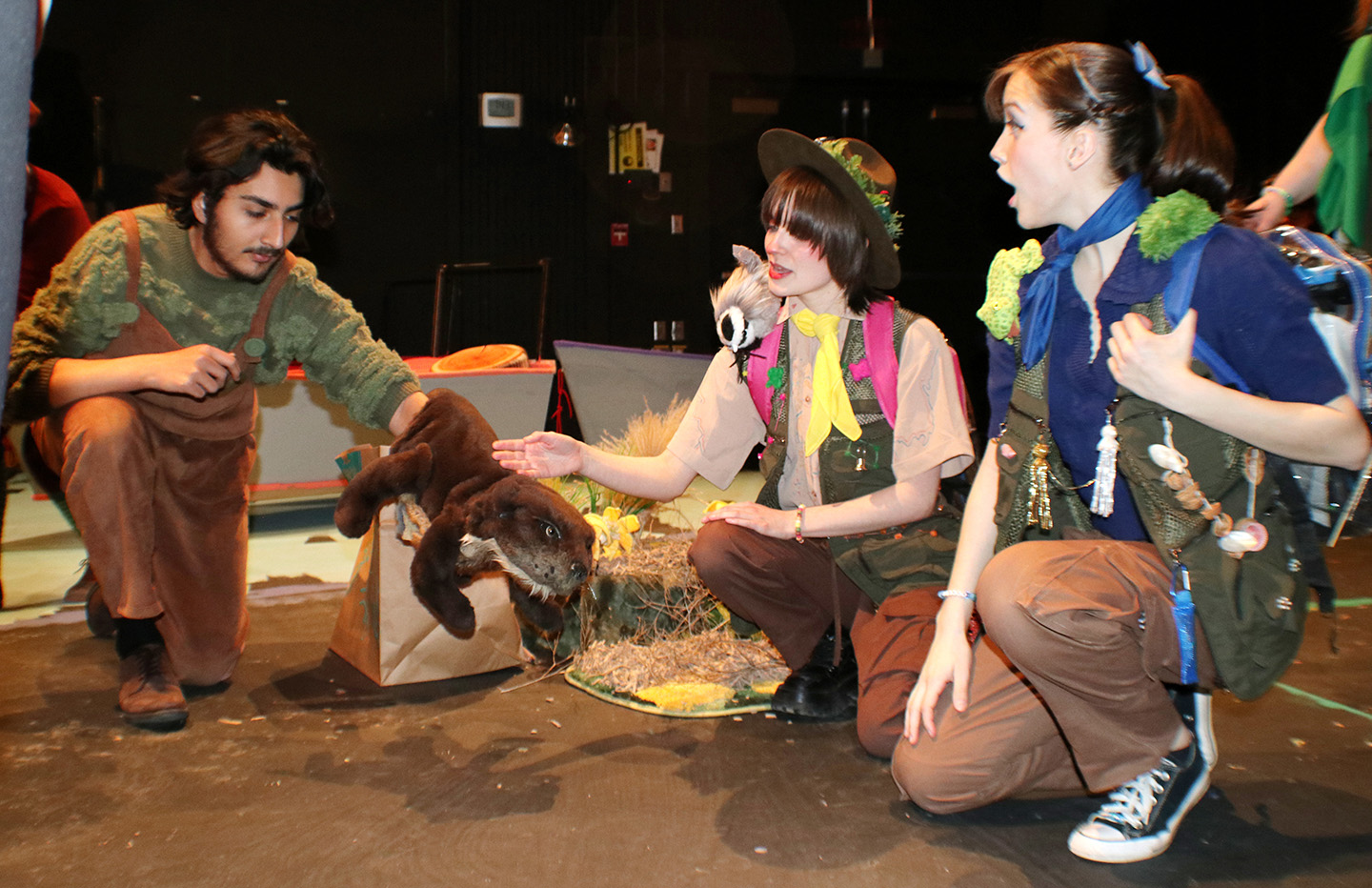
An expansive canyon, raging river rapids and interactive wildlife scenes have taken over the Milo Smith Tower Theatre over the past week as the interactive production, Yakima River Adventure: A Sensory Experience, entertains audiences of all types.
Yakima River Adventure is geared toward those who are neurodivergent or have mental health conditions impacting sensory input, such as autism spectrum disorder. The show opened March 1 and will continue through this weekend, with limited tickets available via Wildcat Tickets for Friday-Sunday.
Instead of attendees sitting still in a dark, silent theater, the production allows event-goers to take an active role in the world-building and scene-setting.
“I'm most excited about getting to see those who aren't always welcome in traditional theater spaces, just because of social constructs and social rules, getting to enjoy moments of storytelling,” says Director Kathryn Stahl, who also serves as a professor in the CWU Theatre Arts department.
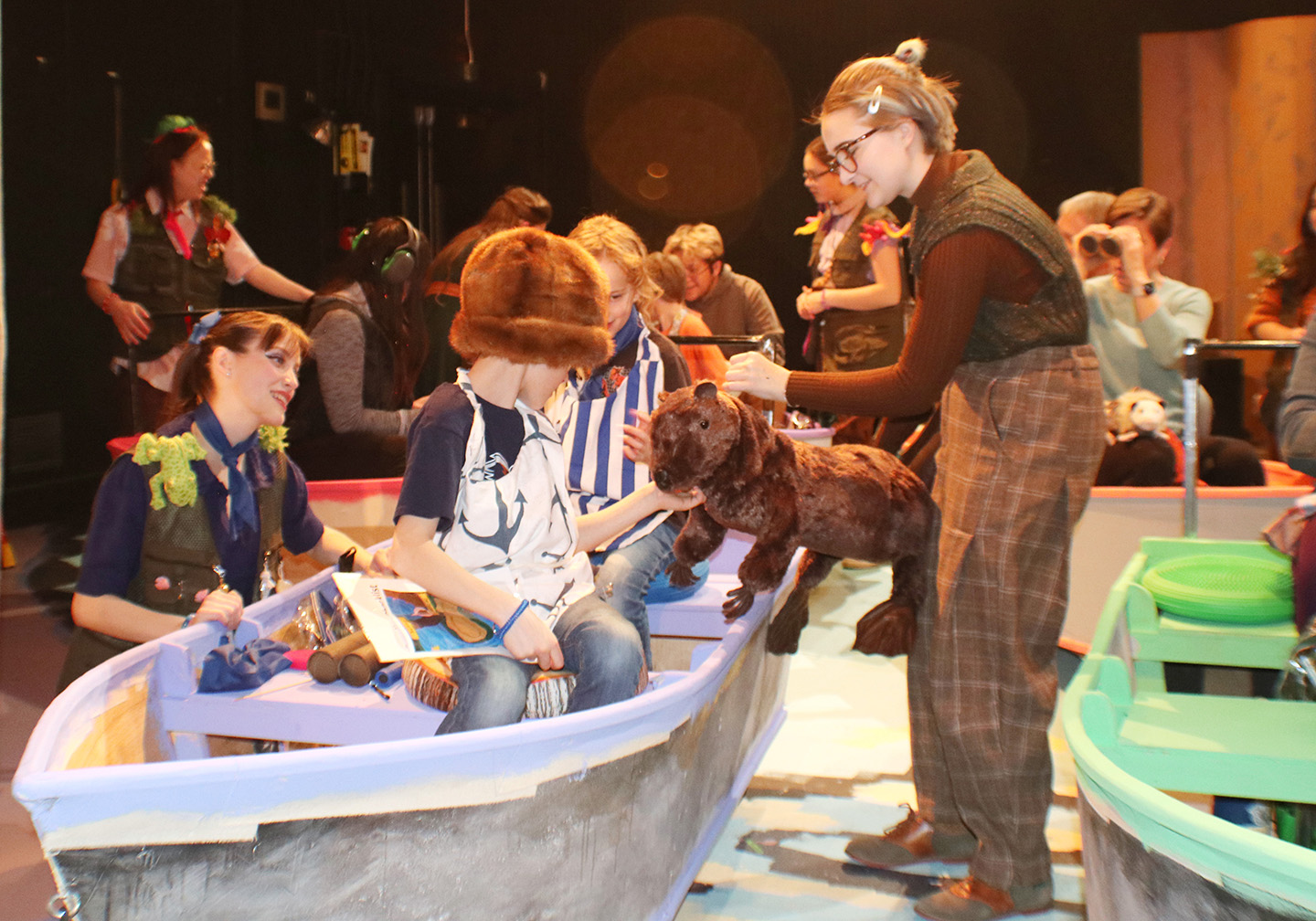
Rangers are played by student actors who guide groups of up to 10 participants to experience the hills and valleys of the canyon through various interactive moments of excitement and intrigue. Special sensory shows have limited seating available for audience members who wish to have a one-on-one or one-on-two tailored experience, where they can let their imagination take control without the added pressure of a larger group.
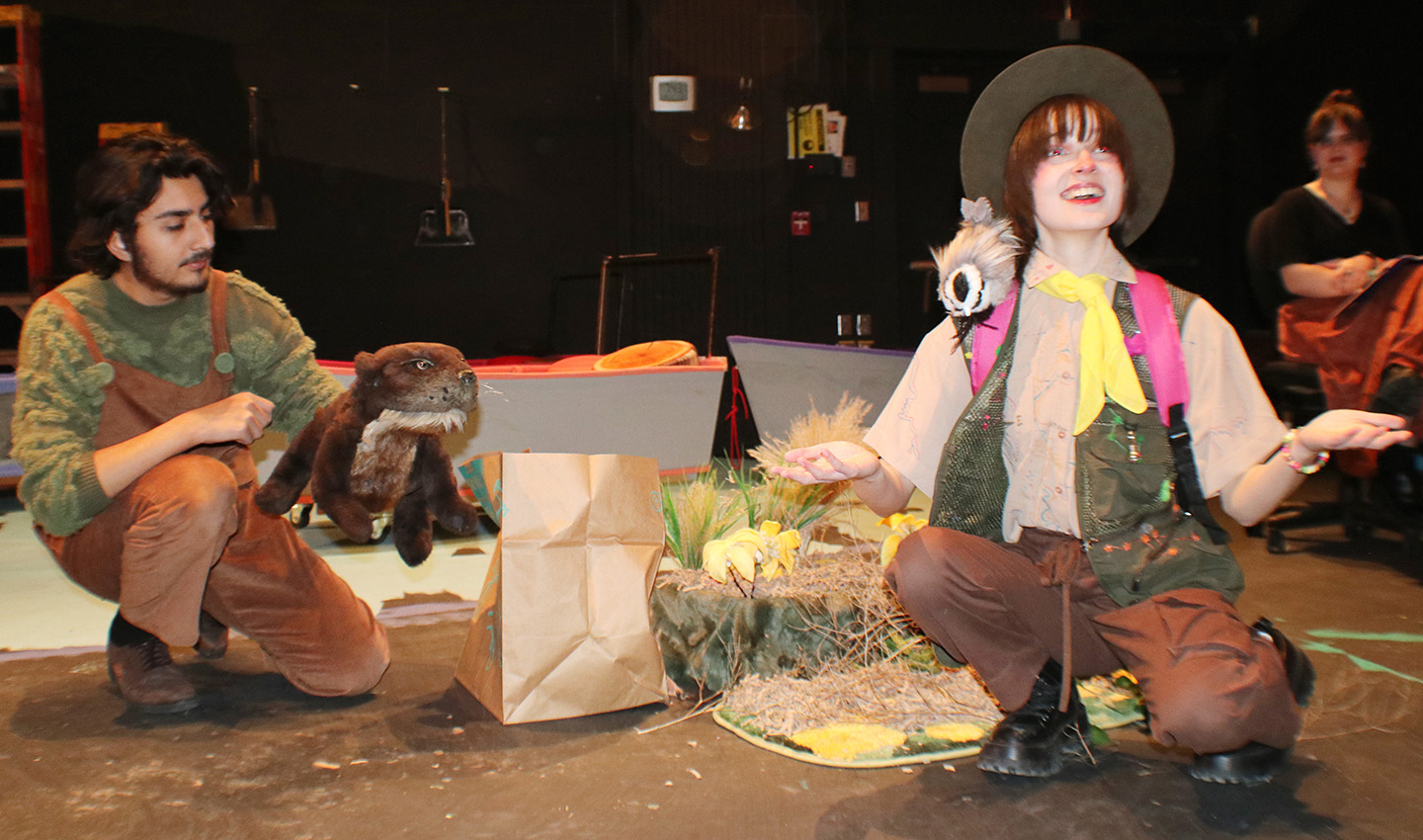
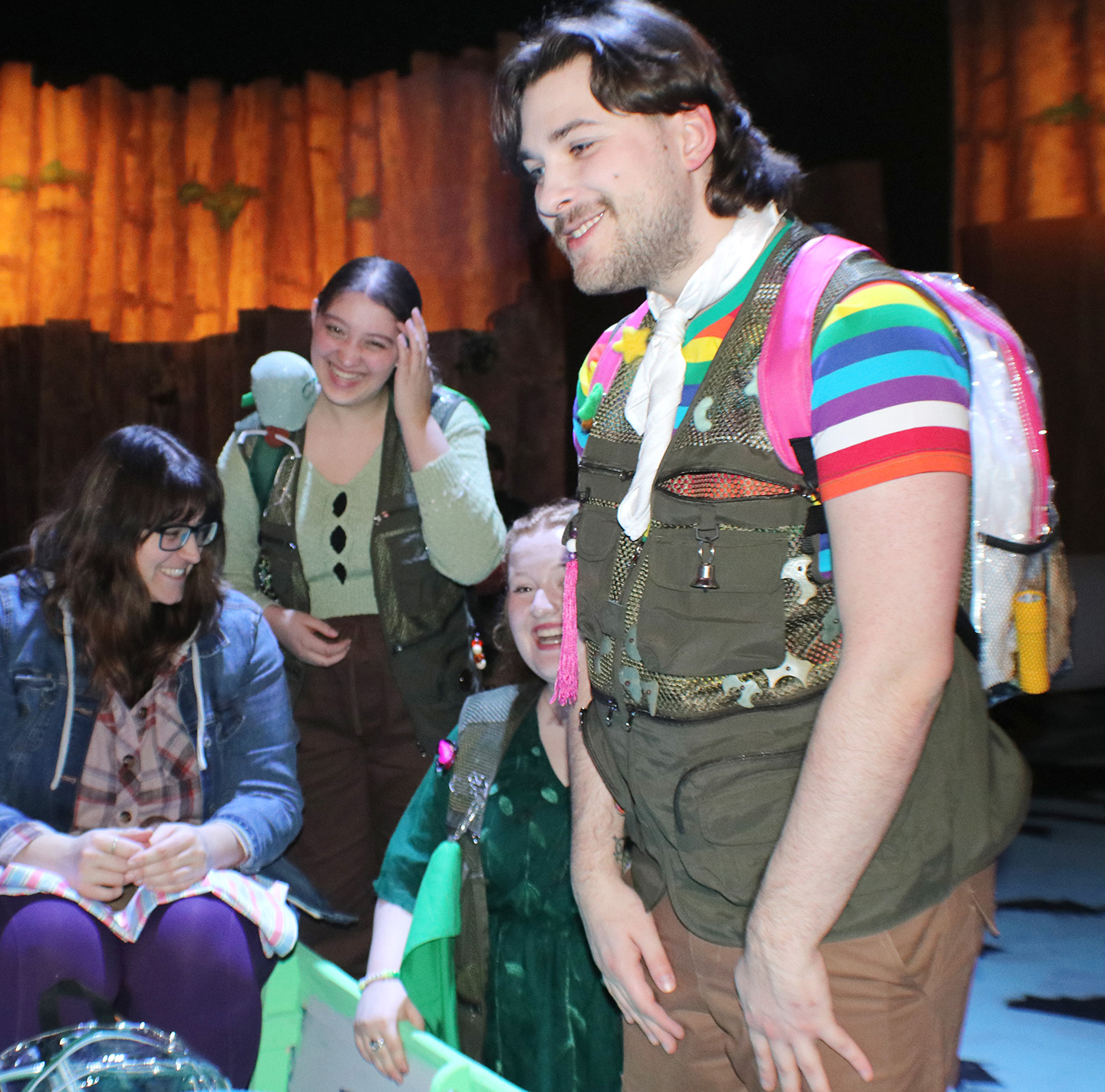
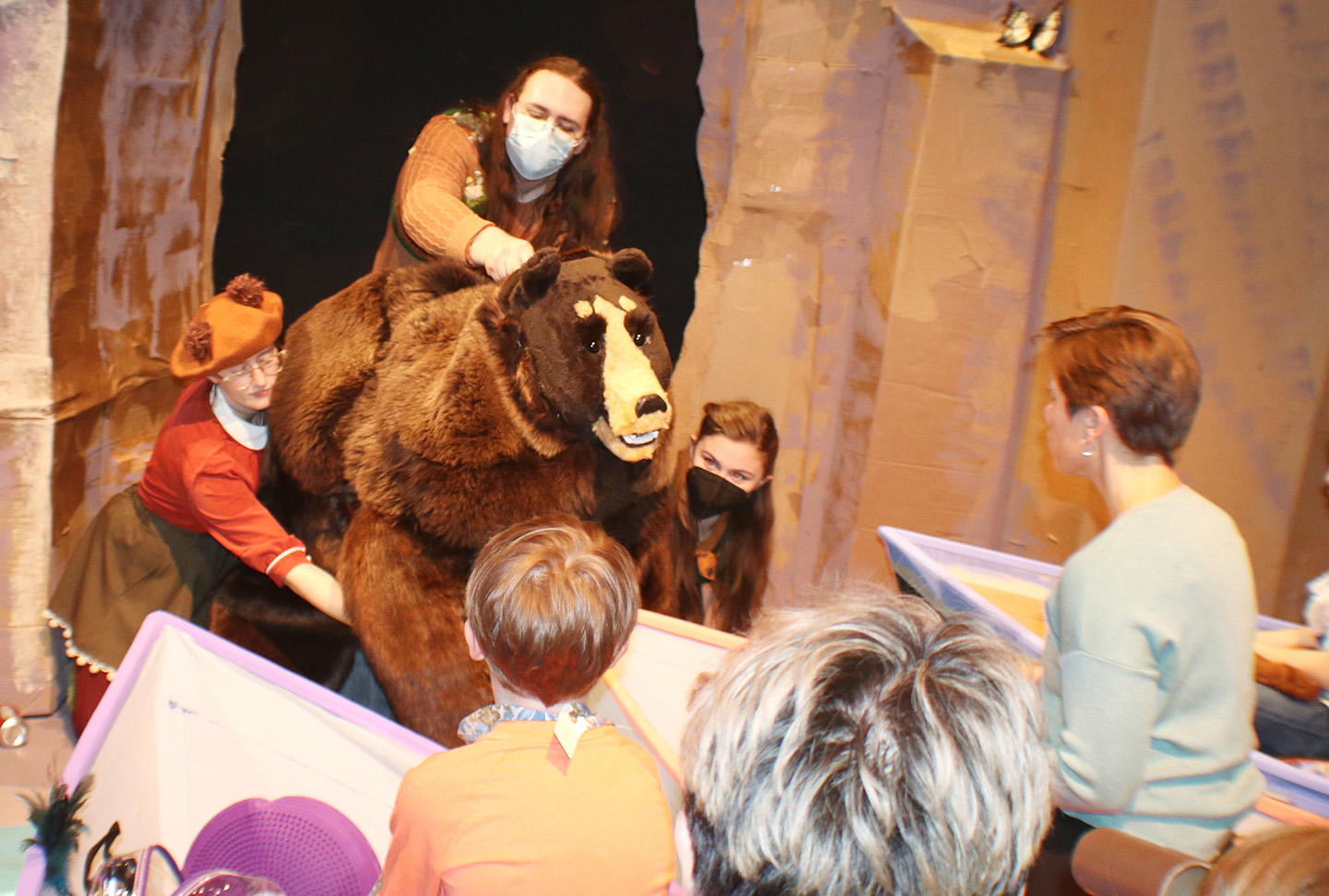
Rangers greet attendees in the Milo Smith Tower Theatre lobby to start the journey, each wearing vests covered in fidget toys and devices meant to be explored by audience members as they are guided along the Yakima River. During their journey, participants encounter texturized logs, larger-than-life creatures and countless features of the canyon.
The boats are equipped with noise-canceling headphones and methods of communicating for participants who are nonverbal, including some sign language that is taught and repeated throughout the play.
Concept Developed Over Time
Stahl's training in sensory theater for audiences with complex abilities led to the creation of the Yakima River Adventure show, which has been in the works since 2021.
“I loved every minute of working with these participants who have the most imaginative brains,” says Stahl, who received her training through the New York-based organization Trusty Sidekick and U.K.-based organization Oily Cart. “My personal connection for this specifically is, I was playing on a playground in Chicago where I was on a boat, like it was suspended. It had chains and it wobbled. I thought to myself, one, ‘this park is super cool. I wish I could bring my nephew who is autistic,’ and two: ‘wouldn't this be a super fun play?’”
The concept for the show continued to take shape as Stahl and her students developed a storyline featuring an expedition down the Yakima River and puppets from the Blue Bear Puppet Lab on Main Street in downtown Ellensburg.
Dave Barnett, the technical director, collaborated with Bryan from Blue Bear Puppet Lab to create the natural scenery surrounding the river, and sound designer Jason Tuholke composed original music for the show, inspired by the banjo.
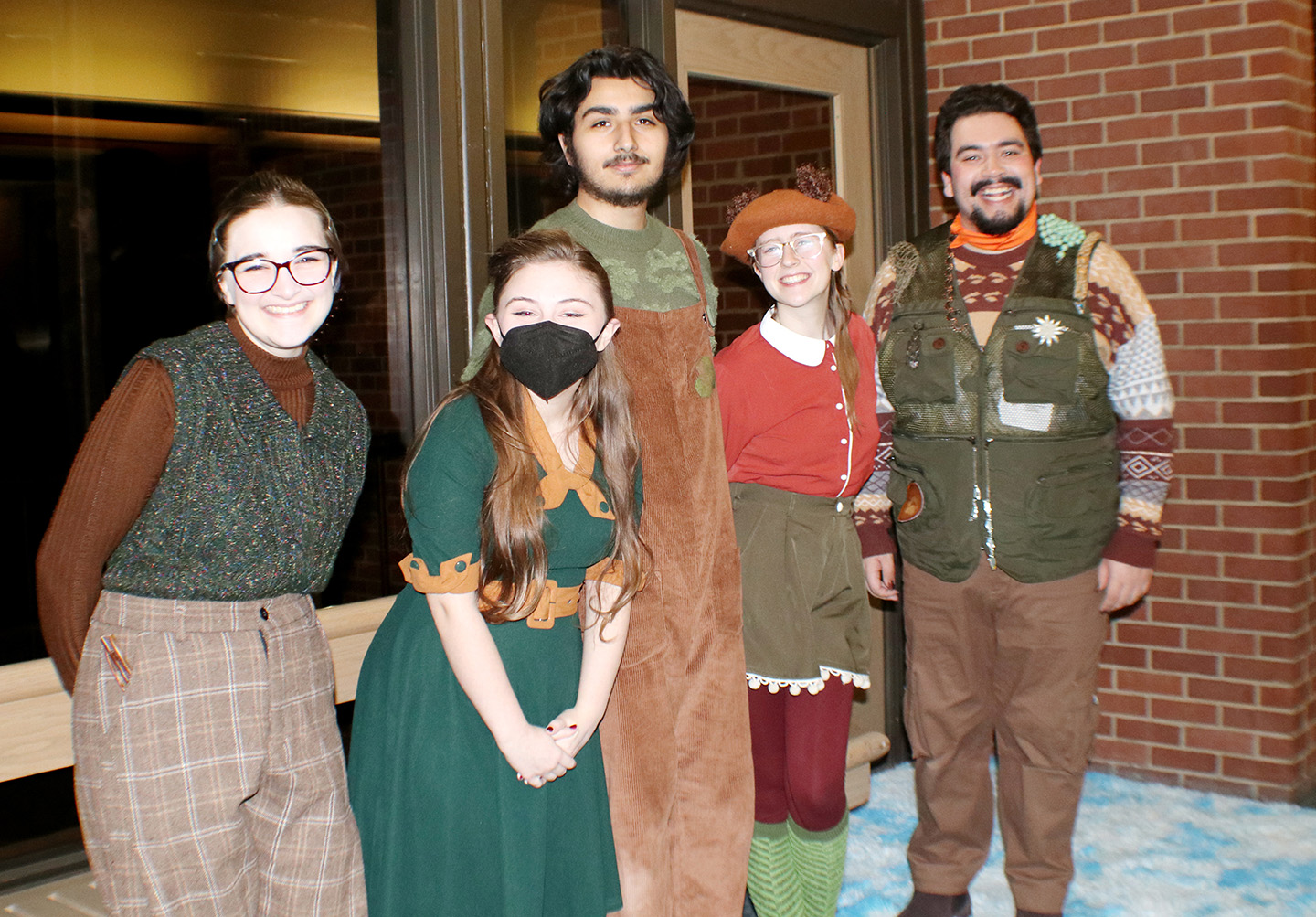 Stahl's students, Neo Klosterman and K.B. Brown, helped create the show, which was their first time being involved in a sensory theater production.
Klosterman says the Yakima River Adventure showed them how expansive the world of theater can be, beyond simply learning lines on a page. They emphasize the importance of remaining adaptable during this kind of production.
“You will stray,” Klosterman says. “It has been interesting figuring out how to improvise and how to stay on track, but still acknowledging all the things that these people are offering, making sure that they feel like they're contributing and that they see that in the world.”
Brown says they were able to grow by focusing on the perspective of the audience first and foremost throughout this production.
“The focus really is on the participants' experience, and this is my first time being a part of a sensory theater production, so we are getting used to it being okay if the lines aren't all perfect, because everyone's experiences are going to be different and everyone is going to be seeking different experiences,” they say. “It's been fun, but it's been different, so it's provided a bit of a challenge. It's been getting a lot easier.”
Show Geared Toward Participants
Stahl explains that the individual access needs of participants were taken into account as the show was created, adding that people on the autistic spectrum have quite a broad range of experiences that the production team prepared to accommodate.
“One participant may really love loud noises, and so how can we look to potentially incorporate that, while we also have the tools to allow someone who doesn't like loud noises to have headphones,” she says. “We are looking at how we can collaborate and be in communication with participants, too. If they want to touch this stick in this bucket of water for 10 minutes, great! Play with this stick in this bucket of water for 10 minutes. That is part of your adventure on your time on the river, because it's for you.”
Each night of rehearsal, actors improvised different scenarios, such as a participant deciding to stay in one location, leaving to use the restroom or traveling back to the ranger station.
 “Be ready for anything,” Stahl says. “From the beginning, the actors have known that they need to learn all of the lines.”
Actors may have to cover for each other in order to facilitate the story for any unique sensory-seeking motivations that arise for participants. Stahl notes that a number of students who were involved in the production since 2021 identified themselves as neurodivergent and gave input during the development of the play.
Stahl's nephew, who is on the autistic spectrum, was also invited to participate in the adventure and give feedback. In 2024, Stahl partnered with the Kittitas parent-to-parent group, with Kittitas schools and with education programs through CWU to further prepare the production as a welcoming and inclusive space.
“It's not about entertainment; it's about coexisting,” Stahl explains. “K.B. was off in the corner having a conversation about ghosts or paranormal things, because that's where a participant wanted to go. There were other people that wanted to lay on the floor and hold a stuffed animal, because that's what this person's energy needs right now. It was a lot of just knowing that existing is enough.”
Brown explains the process of learning when and where to improvise and let the story flow through participants.
“At first, I was at a station that a lot of the students did not interact with as much, but I had to realize, that's okay,” they say. “A student came up and we had a conversation for a while about cryptids and creepy stuff that might be in the canyon. At first I was concerned: ‘should I be redirecting this conversation?’ But then I realized, this is what this student wants to talk about, and that's fantastic, and I'm happy to listen and ask questions about this thing that this student is very clearly interested in.”
Brown describes a scene with snow where participants did not want to touch the snow as he had expected, but they interacted with the snow in other ways. Offering alternative methods of engaging in certain scenes was essential for this production, Brown says.
Art Imitating Life
Meanwhile, Klosterman likes to pull the curtain back on their process, mitigating their own expectations with the reality of the river experience.
“I was putting my expectations on participants and having to ask myself why I did that,” they say. “In professional theater, you work really hard to portray an expectation, to impact a certain way, and that's how a lot of performance goes. So, then, changing your whole framework and saying, ‘I'm just going to have fun and just be in the canyon and be a ranger to somebody’ is a very different way of thinking about performance.”
Klosterman explains that typically, it may be a privilege for neurodivergent people to experience a theater production due to sensory input complications, but this show is intended to flip that script and offer an experience that is catered to neurodivergent people — a perspective that neurotypical people would instead be privileged to experience.
“It's important for neurodivergent audience members to be able to experience this and realize that they are in mind and there are people out there who are specifically trying to give them that opportunity,” Klosterman says. “I think it's important for non-neurodiverse people to just see the work that we're doing. We are offering this to general audiences because we want them to see, not because it was designed for them.”
Similarly, Brown says they hope neurotypical people can imagine what is possible through theater when they experience the Yakima River Adventure.
Once attendees are able to enjoy the full experience, Stahl says she hopes they become aware that inclusion does not have to be difficult.
“Allowing us to follow some of the impulses that connect us into fun and play and curiosity that are honestly taught out of us through the social constructs of education is my hope,” she says, adding that she would like this production to foster conscious consideration of the myriad different ways each person experiences life. “Inclusion is something different for everybody, but it doesn't have to be hard. Accessibility is about the development of the spaces.”
CWU News
Arts and Humanities Month continues to build momentum
October 21, 2026 by David Leder
New position at CWU-Des Moines aimed at improving student experiences
October 21, 2026 by David Leder