CWU seeks to build a strong future for Washington with state support
- May 22, 2023
- David Leder
Central Washington University has received the green light from Washington state lawmakers to pursue some of its most urgent priorities, securing more than $130 million in capital and operating budget funds in the 2023-25 biennium.
Governor Jay Inslee signed the legislation last Tuesday, allowing CWU to proceed with two major building projects on the Ellensburg campus-the North Academic Complex and Multicultural Center-along with a plan to increase employee salaries over the next two years, expand the College in the High School (CiHS) program, and improve teacher preparation opportunities, specifically for dual-language instruction and teacher residency.
CWU President Jim Wohlpart said he and the administration are ecstatic about what the infusion of more than $130 million in state funds will mean for the university's short- and long-term objectives to maximize student success and contribute to Washington's economy.
"We are extremely grateful to our state representatives and Governor Inslee for supporting Central Washington University's important role in preparing students to lead in their homes, workplaces, and communities," he said.
"This funding will enable the university to provide a strong return on our workforce and economy, and it supports our effort to further reduce our reliance on fossil fuels to operate our campus. I would also like to thank CWU's government relations team for their tireless efforts in helping us secure the funding we need to accomplish the goals we have laid out in our six-year plan."
The university's six-year plan, dubbed the The Central Experience, outlines CWU's legislative priorities over the next three biennia (2023-28) and aligns the institution's priorities with those of state leaders. These include:
- Raising employee salaries annually so CWU can keep up with cost-of-living increases and remain competitive in the marketplace.
- Expanding the availability of dual-language instruction and investing in teacher residency programs in high-need teaching areas.
- Addressing learning loss brought on by the pandemic.
- Improving financial literacy to help more students take advantage of state and federal financial assistance programs.
Central's government relations team worked alongside Chief of Staff and Interim Vice President for Public Affairs Andrew Morse during the legislative session to secure the operations funding needed for salary increases, the expansion of teaching programs such as dual-language and teacher residency, and additional funding for CiHS.
Discussions about the need to address learning loss and improve financial literacy will continue, and Morse is optimistic about the support CWU has received from its legislative partners. He hopes these relationships will help the university bring even more attention to Central's budget priorities over the next budget cycle.
"We are very pleased with the progress we made during this legislative session," Morse said. "These conversations are ongoing, and we will continue to look at ways that we can move these initiatives forward through different funding mechanisms."
Morse said he was especially happy with the 70%/30% funding split for employee salaries-a 4% increase over the split that was previously available. The boost will allow CWU to increase faculty and staff pay this year and next year, although he noted that it still reduces the university's overall funding because the recent tuition increase does not fully cover the remaining 30%. The funding split also does not offset the inflationary costs of CWU goods and services, which account for roughly 20% of the annual budget.
"The funding split for our employee salaries is a step in the right direction, and it will allow us to provide more competitive compensation to our talented, dedicated faculty and staff," Morse said. "We are also very excited about the funding for College in the High School and dual-language instruction, which will help Central build a successful-and even more affordable-future for our students."
CWU is traditionally among the best higher-education values in the state, offering small class sizes, hands-on learning opportunities, high job-placement rates, and a welcoming culture that promotes diversity, equity, and inclusion initiatives and prioritizes student success.
Wohlpart noted that the additional funding for salaries, CiHS, teacher preparation, and dual language instruction will be instrumental for CWU as it seeks to deliver equal opportunities for all learners. He shared his appreciation with the Legislature's Operating Budget committee in an April 6 letter.
Major Building Projects
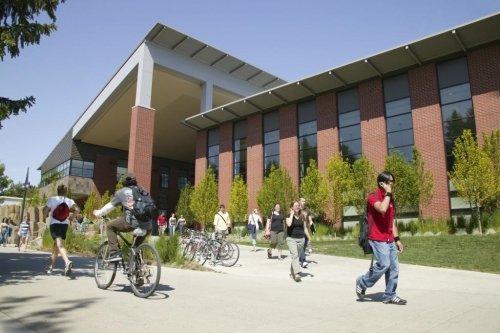
One major highlight of the state's capital funding package was the North Academic Complex (NAC)-also known as the Humanities and Social Sciences Complex-which will replace the aging Farrell Hall and Language and Literature (L&L) Building.
The project includes the excavation of a geothermal well that will heat the NAC and future campus buildings by harnessing the renewable heat that is emitted naturally. The NAC will be the first building on campus that is heated with renewable geothermal energy, tapping into the Ellensburg Aquifer underneath campus.
Vice President of Finance and Administration Joel Klucking said building a geothermal well-the first of its kind in Washington-is the first of many projects that will lessen CWU's reliance on fossil fuels.
"Adopting more environmentally sustainable practices is a crucial component of our new vision and mission, and limiting our carbon emissions is an important first step," he said. "Building a geothermal well to heat our campus facilities makes good long-term business sense, but it will also contribute to CWU's goal of creating a healthier community for our students, faculty, and staff. We appreciate the support of our state lawmakers as we pursue more environmentally friendly practices that will benefit everyone."
Wohlpart expressed his appreciation to the Legislature and the governor for supporting this environmentally sustainable project, and others, in an April 1 letter to the Legislature's Capital Budget Committee.
"Your investment in these projects will greatly improve the sustainability of the university; reduce greenhouse gas emissions; and provide the dynamic facilities that support the high-quality education we deliver to CWU students-the vast majority of whom come from a Washington community," the president said.
Another significant allotment CWU received in the 2023-25 budget is $6 million for the academic spaces in the Multicultural Center. The total cost of the project is estimated at $22 million, with a portion of the funding coming from student activities fees after students voted last fall to extend the SURC bond. Wohlpart said the CWU community will work together to identify additional funding streams to make up the remaining cost.
"The money granted for the Multicultural Center is a huge accomplishment, not only for the current ASCWU executive board but those that came before us," said ASCWU President Luis Reyes. "Students have been advocating to get this building constructed at Central for over a decade now, and I am ecstatic to see that the university as a whole is focused on making the Multicultural Center a reality."
Interim Vice President of Student Engagement and Success Lucha Ortega echoed Reyes' sentiments, saying the presence of a Multicultural Center will go a long way toward bringing together students from all walks of life.
"The team in Student Engagement and Success is excited for the opportunity to better support our students' efforts in fulfilling their aspirational educational and professional goals, including building community and cultivating a sense of belonging throughout the student journey," Ortega said. "I am very grateful for CWU's efforts, and to the Legislature, for funding initiatives that will contribute to student success."
Expanding CWU's Reach
While the bulk of CWU's funds from 2023-25 budget are going toward the two major building projects, the university's College in the High School and dual-language elementary education degree programs also received significant investments.
Central's CiHS program-which gives high school students a chance to earn college credits-served more than 7,700 students during the 2022-23 academic year. Director of Concurrent Enrollment Kyle Carrigan believes the infusion of additional state funding will be a game-changer.
"This new legislation will allow students across the state of Washington to access the College in the High School program at no cost," said Carrigan, who oversees both CiHS and Running Start. "This is a significant investment in the future of our state through the education of students. With the cost of higher education continuing to go up, this funding allows more high school students across the state to access higher education."
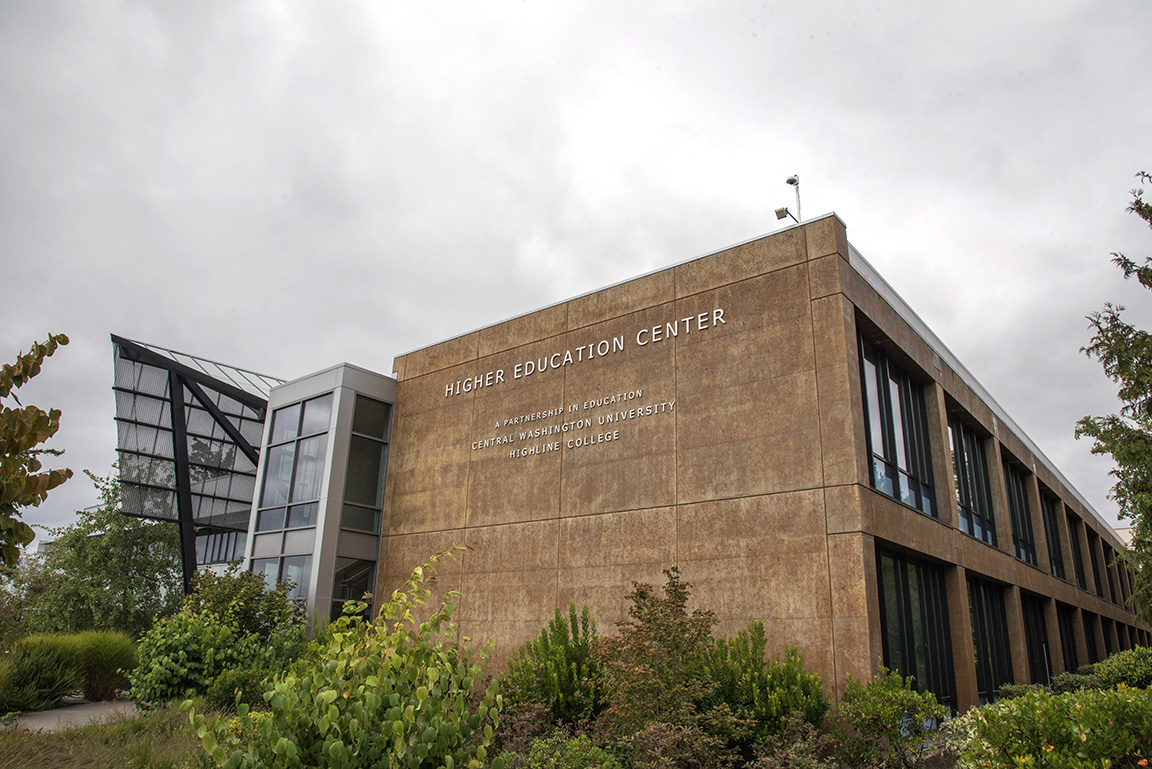
Meanwhile, the additional funding for CWU's teacher education programs will extend dual-language instruction to the university centers in Yakima and Des Moines, and will help strengthen teacher residency.
Craig Hughes, interim chair of the Department of Education, Development, Teaching, and Learning (EDTL), expects this investment to make a tremendous difference as CWU seeks to help diversify the state's educator workforce.
"The Bilingual Education/Teaching English Language Learner program has been in the process of moving the bilingual program to a dual-language focus program for some time," Hughes said. "Changes in the endorsement competencies now mandates such a change, and this funding will provide the support needed to finalize these changes. It will also support the hiring of bilingual faculty qualified to teach the needed courses, and it will help strengthen the programs at two of our centers."
Hughes noted that many students in Washington come from families where English is not the primary language spoken. Dual-language programs allow children from these families to receive the same quality education as their English-speaking peers. These programs also give English-dominant students an opportunity to become bilingual/biliterate in a second language.
"Both populations of students enter the program in kindergarten monolingual in their home languages," Hughes said. "They are taught in both languages from the start, and by the time they complete the program, the majority of the students have gained high levels of proficiency in both languages."
CWU News
Arts and Humanities Month continues to build momentum
October 21, 2026 by David Leder
New position at CWU-Des Moines aimed at improving student experiences
October 21, 2026 by David Leder