CWU professor promotes access and equality through statewide partnership
- July 28, 2023
- Savannah Tranchell
Editor's note: This story appears in the latest edition of Crimson & Black magazine.
Nearly 60% of U.S. college seniors who received a job offer by graduation had participated in an internship, and they were more likely than their non-interning peers to receive multiple offers, according to the National Association of Colleges and Employers.
This supports scores of data that reinforce the value of internships and their connection to better outcomes, including higher salaries and employment rates.
But those benefits aren't distributed equally. Students of color are significantly less likely to apply for internships. Research by the B.A. Rudolph Foundation shows 68.2% of White students participate in internships, while only 59.5% of Black students and 53.3% of Hispanic students do.
The outcomes for Black, Indigenous and people of color (BIPOC) don't improve, either. People of color are less frequently referred for jobs, less frequently called back for interviews, and have less access to their organization's senior leadership compared to White colleagues. All that combines for a promotion rate from manager to executive of just 2.6% for Black managers, compared to 4.9% for White managers.

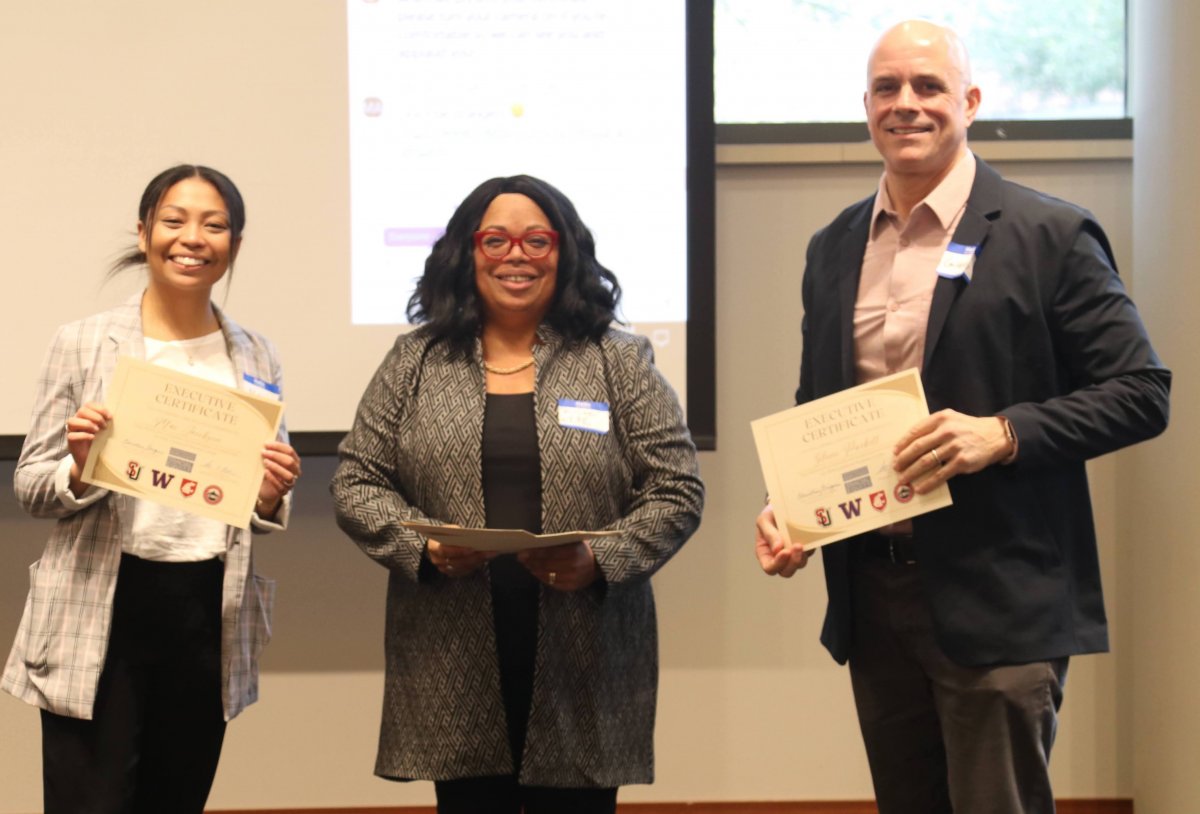
CWU's Milton Kuolt Professor of Business Andy Parks is hoping to move that needle. Parks is partnering with Deanna Kennedy, associate dean of academics for the School of Business at the University of Washington Bothell. The program is designed to promote access and equity in higher education and increase awareness of pipeline diversity.
The pair was initially awarded a $25,000 grant from the KPMG U.S. Foundation's Reaching New Heights Program, and has since received another $50,000 grant from the foundation to continue their efforts.
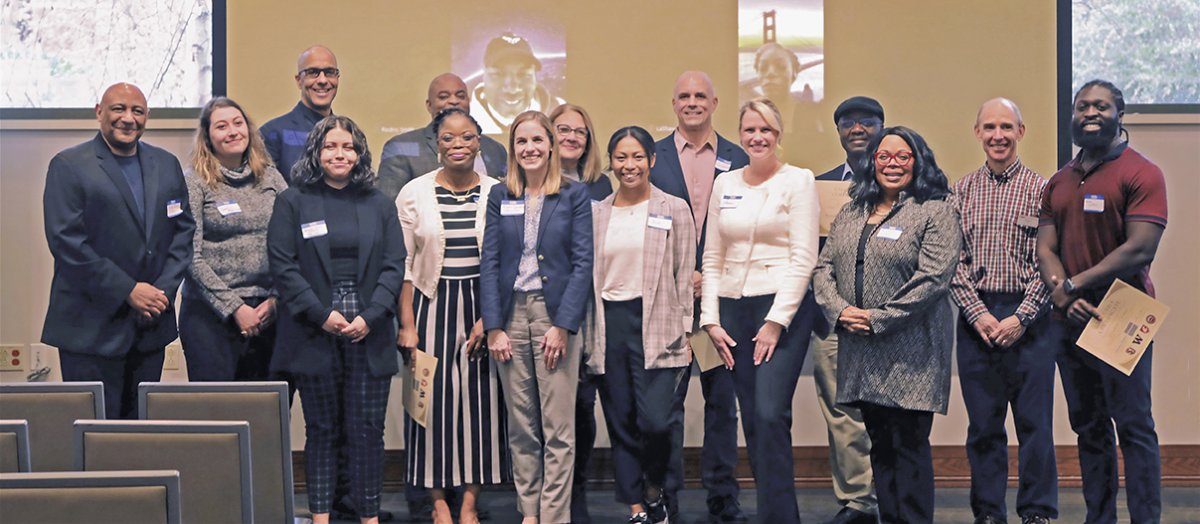
In addition to being grant partners, Parks and Kennedy are co-chairs for the Washington Employers for Racial Equity's (WERE) Pipeline for Black and Indigenous Employees committee. The committee is pursuing three large initiatives to prepare and open the pipeline to more BIPOC employees:
- Create a racial equity repository of information and resources for the academic and business communities.
- Create a leadership training program for BIPOC early career professionals and their mentors.
- Create an internship training program for BIPOC students.
The KPMG grant will help fulfill the third objective. The first was completed in 2022 and is available on CWU's WERE website. Parks and Kennedy completed the first round of the leadership training program in March.
"When Deanna and I decided we needed something for college students as well as business professionals, we decided to use a model of mindfulness and emotional intelligence training that would go outside what a student would traditionally receive through their university's career services department," Parks said. "The other part was we wanted to give their managers training on how to best support an intern of color, which they may not typically receive at their company."
Two-way Training
In the past few years, many organizations have launched diversity, equity and inclusion (DEI) initiatives to support hiring more BIPOC candidates. But those good intentions come with learning curves.
Kennedy has worked with different organizations to create internship programs that are accessible to diverse students. That process may include reevaluating the application to give more weight to community and family involvement over academic achievement, as well as holding information sessions targeted at students of color.
"We saw that students of color weren't applying for internships because they didn't have the same kind of job experiences" as their White peers, Kennedy said.
Once companies saw success at increasing the diversity among their interns, they came across an unexpected hurdle.
"A manager reached out and said, 'I don't know how to mentor this student. Their background and experience are nothing like what I grew up with,'" she said. "Another reached out and noted some professionalism and business skills the students were lacking. It was interesting to me that there were shortcomings on both sides that we could work on."
With the Reaching New Heights grant, the two universities are creating a program that helps students be more prepared for an internship in a corporate environment and helps their supervisors build emotional intelligence skills vital to managing individuals from different backgrounds.
"As companies are working to break down systemic barriers, creating more policies that will help increase hiring, retention, and promotion of minority employees, we want to make sure that as that pipeline is opened, our interns, our employees are prepared to step into that open pipeline and effectively compete," Parks said. "Especially those who are first-generation and may not have business acumen from their home environment."
 On-demand, Self-taught
The program consists of online, self-guided modules hosted in the Canvas learning platform. Each module includes a short lesson paired with homework activities and assessments where the participants can apply the skills. For students, the modules cover:
- Overcoming imposter syndrome and code-switching
- Requesting and receiving negative feedback
- Bringing your authentic self to work
- Using an emotional vocabulary to manage stressful situations
- Building your personal network and partnering with employee resource groups
- Managers also get access to Canvas and the modules in order to learn along with their interns. Manager topics include:
- Cultural awareness
- Considering employee diversity holistically
- Communicating with empathy
- Recruiting and onboarding interns
- Communicating the corporate culture
Kennedy and Parks are each creating half of the modules. Participating in the program will be free for CWU and UW Bothell students and the host companies.
"What makes this program unique is the combining of expertise of these two universities," Parks said. That collaboration is key to reaching more organizations and making a real impact on the employee pipeline.
KPMG Partnership
Another aspect of the grant is an expanded relationship between Central and KPMG, one of the largest financial service organizations in the world. The company created a team of champions-CWU alumni who are dedicated to increasing KPMG's presence on campus and utilizing Central's faculty expertise to benefit their own employees.
"This partnership allows KPMG professionals to closely collaborate with Central in many areas," said Michelle Quisenberry, a KPMG partner and 1990 graduate of Central's accounting program. "I am the first female consulting partner within KPMG's Seattle office, and I also come from a diverse background. The work we're doing here is so important as it will help increase the number of BIPOC students entering the workforce and provide them the confidence, skills, and mentoring necessary to thrive and become our next generation of leaders."
The partnership includes connecting KPMG with student clubs and faculty to identify opportunities for guest speakers; increasing KPMG's visibility on campus and in career fairs; holding emotional intelligence and DEI workshops for KPMG staff; and creating a way to track interactions between students and the company using the college's EDGE (Explore, Develop, Grow, Excel) career readiness program.
"We've been fortunate to have a number of alumni who are with KPMG, from new associate to senior partner. This is an exciting extension of that, and mutually beneficial," said Jeffrey Stinson, the now-former dean of the College of Business.
"The thing I like about it is it's not just us going to KPMG and asking for money, or them giving us funding and then standing aside and saying, 'OK, figure it out,'" Stinson noted. "It's really developing that partnership. They're supporting employees coming to campus to be guest speakers and interact with classes; they're leveraging our faculty expertise to provide professional development. It's going to be a critical piece for both organizations as we really try to leverage our DEI efforts."
Additional Funding
The initial grant was for $25,000, but the institutions found out in July that they would be awarded an additional $50,000 to further support the internship and EDGE programs.
"This is a great opportunity for us to help rally alums within KPMG to donate this year and take advantage of the match," Quisenberry said.
With the additional funding, Parks and Kennedy plan to expand the number of modules in the training to include topics like conflict resolution, giving and receiving feedback, coaching, bias training, and transitioning from internship to job. They'd also like to be able to offer in-person training.
Parks and Kennedy hope to see at least two dozen people from each school go through the program in its first year. The benefit of the online format is it will live on past the grant funding and serve students and employers well into the future.
"What we're really hoping this accomplishes is to reduce that feeling of imposter syndrome, especially for students of color," Parks said. "We want to build up the confidence and esteem levels of the intern so they can be their authentic selves in the workplace."
CWU News
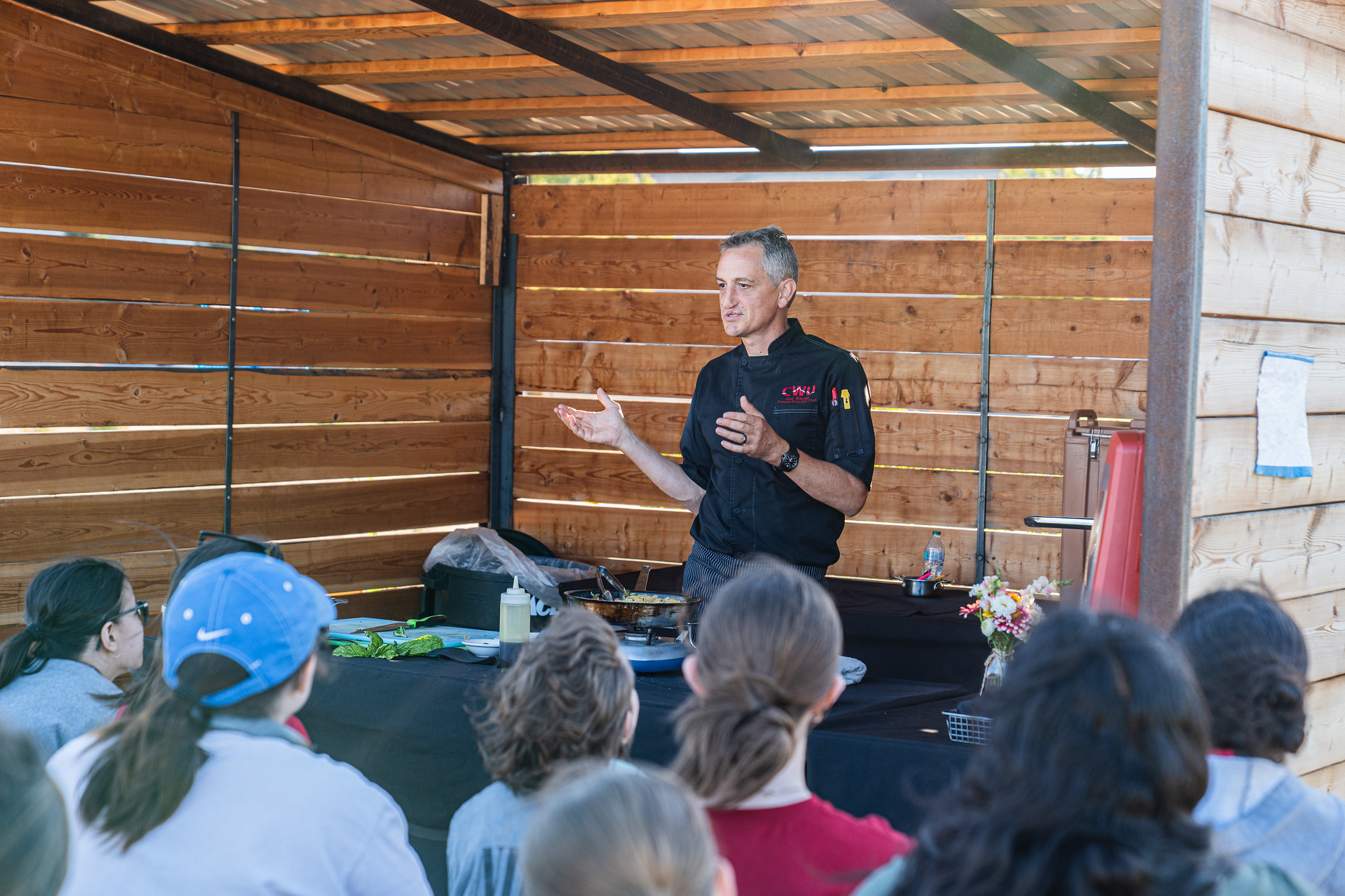
Ellensburg has helped CWU’s Campus Executive Chef reach new heights
September 30, 2026 by David Leder

Encanto Arts residency at CWU to feature internationally acclaimed musicians
September 30, 2026 by Rune Torgersen