Former NASA exposure scientist joins CWU Safety and Health Management faculty
- November 2, 2026
- Tran Nha Pham
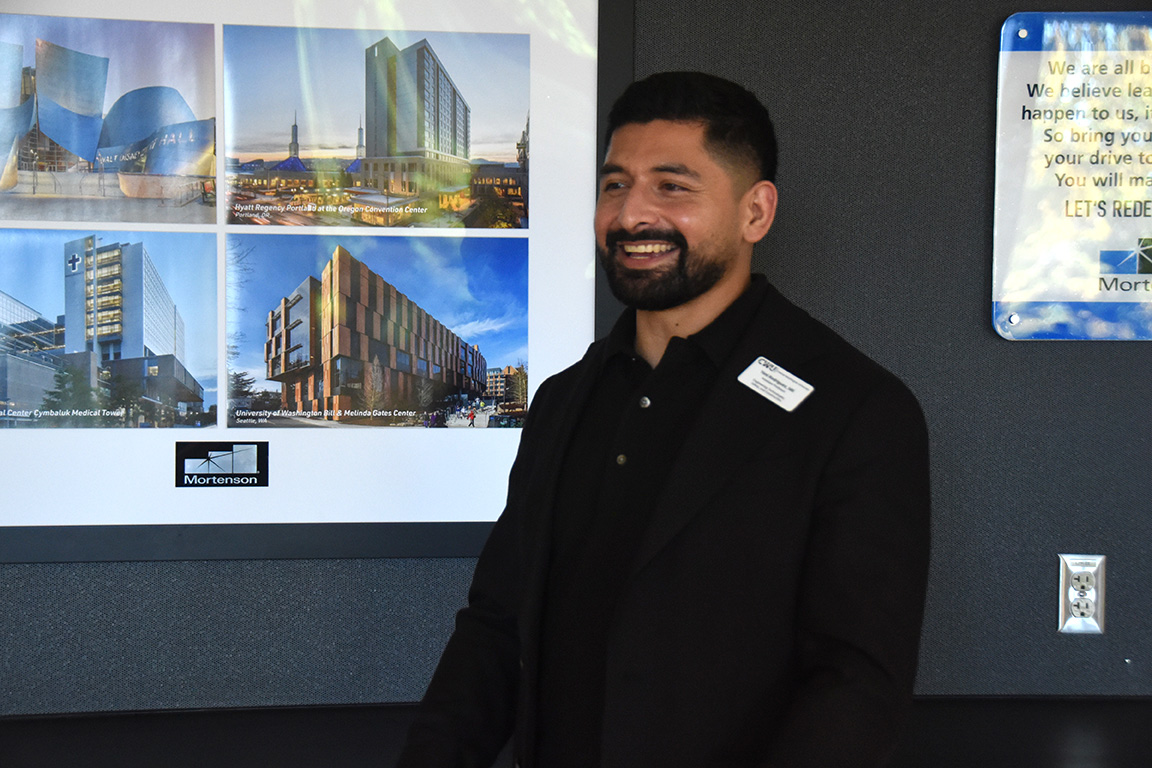
Yoni Rodriguez strives to help his students put their learning into practice
From investigating environmental exposures in agricultural communities to supporting experimental aviation research at NASA's Armstrong Flight Research Center, Central Washington University Assistant Professor Yoni Rodriguez has built his career around a central question: How can scientific principles be used to understand, eliminate, or reduce human exposure to hazardous agents?
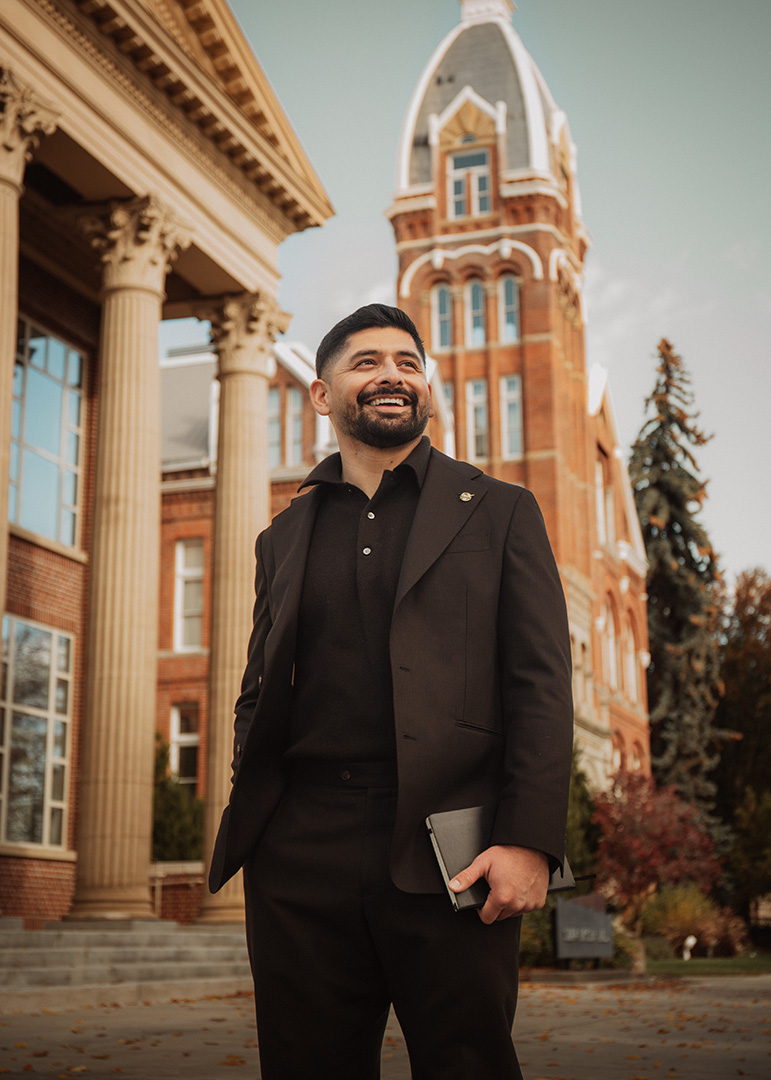
Trained in biochemistry and exposure science, Rodriguez approaches environmental and occupational health through an interdisciplinary scientific framework that integrates chemistry, physics, biology, toxicology, epidemiology, and public health. His research has examined a range of environmental and occupational exposures, including agricultural pesticides, wildfire smoke, extreme heat, and respiratory hazards.
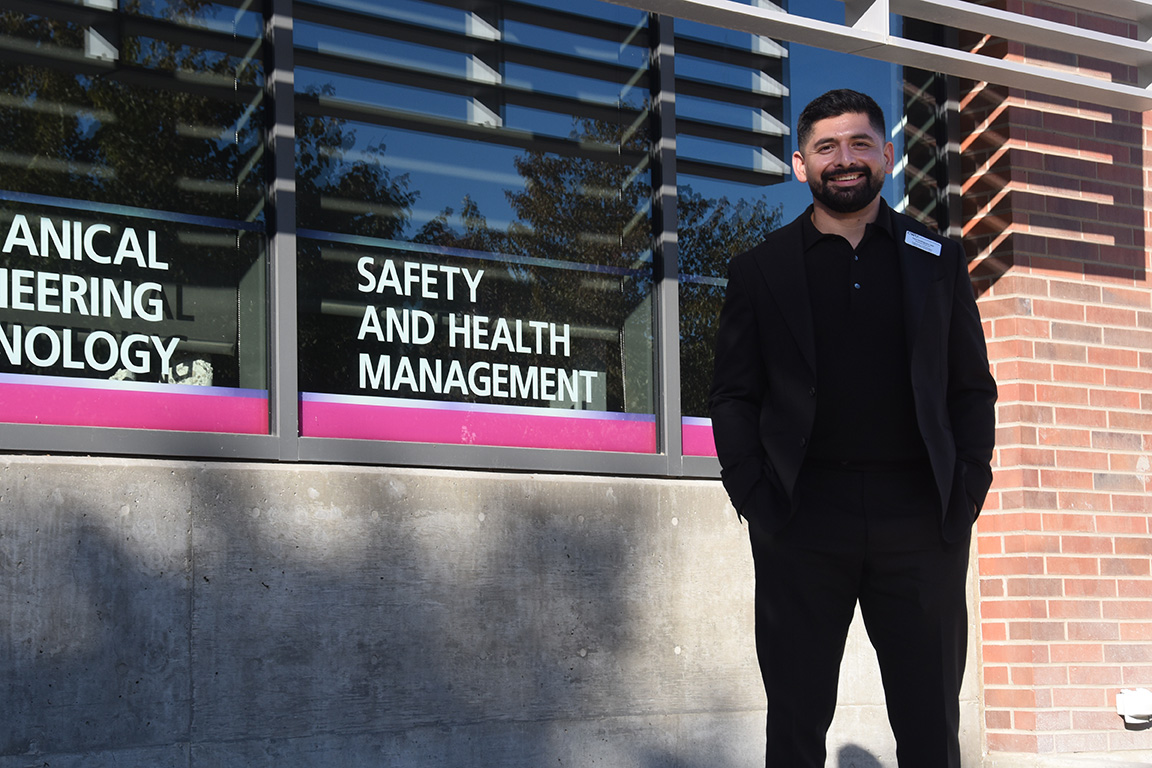
Rodriguez joined CWU’s Occupational Safety and Health Management program in the Department of Engineering Technologies, Safety, and Construction (ETSC) in September, seeing his new role as an opportunity to strengthen the occupational health sciences perspective within a program that already has a strong foundation.
As an educator, Rodriguez hopes to help his students understand the scientific principles underlying occupational and environmental hazards, develop transferable analytical and problem-solving skills, and recognize how research can inform decisions in professional settings.
"I want them to remember that their responsibility is not simply making sure somebody gets through today's shift without an injury," he said. "We also need to think about whether the work somebody does today affects their health five, 10, 20, or 30 years from now. That is the 'health' we are referring to in occupational health."
Rodriguez's interest in environmental and occupational health began in the Yakima Valley, where his early experiences working in agriculture raised questions about pesticide exposures, human health, and social injustices affecting agricultural workers.
Those experiences helped shape his interest in scientific research and ultimately led him to pursue a career investigating environmental and occupational hazards across diverse populations and working environments.
Putting His Interests to Work
At NASA's Armstrong Flight Research Center, Rodriguez applied his background in environmental and occupational health science to support the federal agency’s X-plane programs — a series of experimental aircraft designed to test cutting-edge concepts in speed, aerodynamics, propulsion, and flight technology.
His work included evaluating occupational heat stress among personnel working in the Mojave Desert, assessing electromagnetic field exposures associated with the X-57 Maxwell electric aircraft, and developing an emergency response plan that addressed potential hydrazine exposures for the X-59 experimental aircraft program.
These projects required Rodriguez to integrate scientific principles from chemistry, physics, toxicology, physiology, and exposure science to evaluate potential hazards and develop practical approaches to protecting personnel.
Working alongside engineers, pilots, researchers, and other technical specialists reinforced his appreciation for interdisciplinary collaboration and the role of scientific evidence in supporting complex operations. Despite his experiences in research and public service, Rodriguez did not originally envision himself becoming a university professor.
"My path to CWU was probably less linear than the question makes it sound," Rodriguez said. "I did not leave NASA with a predetermined plan to become a professor., but when the opportunity at CWU came along, I began to see how I could continue conducting research while giving back to the community and state that invested in my education through scholarships.”
He explained that his experience also presented him with an opportunity to share his experiences and contribute to the development of future professionals.
“I am still very early in this transition, so I am also learning what it means to be a professor and what kind of mentor I want to become,” he said.
For Rodriguez, joining CWU presented an opportunity to bring together his interests in scientific research, applied problem-solving, interdisciplinary collaboration, and community engagement. He hopes to draw on his experiences in academia, public health, and federal research to help students develop the scientific knowledge, analytical skills, and confidence to investigate unfamiliar problems and apply what they learn beyond the classroom.
"I learned through my experiences as a graduate student and working at the federal level that I enjoy research, applied problem-solving, interdisciplinary collaboration, and connecting with communities," Rodriguez said.
A Turning Point
Rodriguez's interest in environmental and occupational health began with his experiences working in agriculture in the Lower Yakima Valley while saving money for college. During that time, he and a coworker were exposed to pesticides sprayed by an agricultural aircraft.
Following the incident, his coworker became ill and was subsequently fired. The experience raised questions for Rodriguez about the social injustices agricultural workers can face, the conditions under which they work, and the potential long-term health consequences of repeated exposure to hazardous chemicals.
"I began thinking about the social injustices agricultural workers can experience, but I was also really curious about what was happening inside the human body," Rodriguez said. "If workers are exposed to pesticides repeatedly over many years, what does that exposure do biologically? How could it contribute to neurological disease or cancer? What is happening at the chemical and cellular level?"
These questions helped shape his interest in biochemistry, which he pursued at Yakima Valley College (YVC) and later Washington State University (WSU). He wanted to understand how chemicals interact with biological systems and how those interactions might contribute to adverse health outcomes.
At YVC, Professor Tanya Knickerbocker encouraged Rodriguez to participate in scientific research investigating drinking water quality from private household wells. The research was motivated in part by concerns surrounding reported cases of anencephaly, a serious neural tube birth defect, in the Lower Yakima Valley.
This experience introduced Rodriguez to environmental research and the importance of investigating potential relationships between environmental exposures and human health.
After transferring to WSU, Rodriguez continued developing his foundation in biochemistry while gaining exposure to engineering principles and atmospheric science through the mentorship of Dr. Von Walden.
Working with researchers from WSU's Laboratory for Atmospheric Research and physicians affiliated with the Elson S. Floyd College of Medicine, he helped develop air quality sensor units to monitor airborne pollutants, including wildfire smoke, and investigate potential respiratory health effects.
These experiences demonstrated how chemistry, biology, atmospheric science, engineering, and medical research could be integrated to investigate complex public health questions.
His undergraduate education and early research experiences eventually led him to pursue a master's degree in exposure science at the University of Washington's School of Public Health. His research aimed to reduce pesticide drift and potential exposures among agricultural workers and nearby communities, ultimately helping prevent pesticide-related illnesses.
Under the mentorship of Dr. Edward Kasner, Rodriguez continued developing his interdisciplinary knowledge and research skills by working on a model that predicts wind speed and direction to help agricultural growers evaluate weather conditions before applying pesticides.
"There are so many people who influenced my education that I almost hesitate to start naming them because I know I will leave somebody out," he said. "When I look at my career, though, different mentors taught me different pieces of what it means to be a scientist."
New Opportunities at CWU
For Rodriguez, the decision to join CWU’s ETSC Department was influenced by its interdisciplinary approach to education, collaborative environment, and emphasis on preparing students to address real-world challenges.

The department brings together faculty and students from engineering technologies, occupational safety and health management, construction management, and related applied disciplines. Rodriguez was particularly drawn to the opportunity to work alongside colleagues with different areas of expertise and contribute his own scientific background to a collaborative learning environment.
"It felt like a place where I could contribute something different while also continuing to grow," Rodriguez said.
His approach emphasizes understanding the physical, chemical, and biological properties of hazardous agents, investigating how exposures occur, and examining how those exposures may contribute to adverse health outcomes. He hopes to help students connect these scientific principles with practical strategies for preventing occupational illnesses and reducing long-term health risks.
"I saw an opportunity to bring more of that perspective into a program that already has strengths in safety, construction, engineering technologies, and applied education," Rodriguez explained. "I don't see that as replacing what's already here; I see it as adding another dimension to it."
His decision to join CWU also carries personal significance. Having begun his higher education journey at YVC, the Yakima Valley native sees his return to Central Washington as an opportunity to support students who may share similar educational backgrounds and experiences.
He hopes to contribute not only through teaching and research, but also through mentorship and helping students recognize opportunities they may not have previously considered.
"I didn't just see a position I could fill; I saw a program I could contribute to and grow with,” he said.
From Learning to Doing
As Rodriguez begins his teaching career at CWU, he hopes his students come away with more than an understanding of scientific concepts, regulations, and occupational health practices. He wants them to develop the curiosity, confidence, and analytical skills to investigate unfamiliar problems, explore new interests, and recognize opportunities to apply their knowledge beyond the classroom.
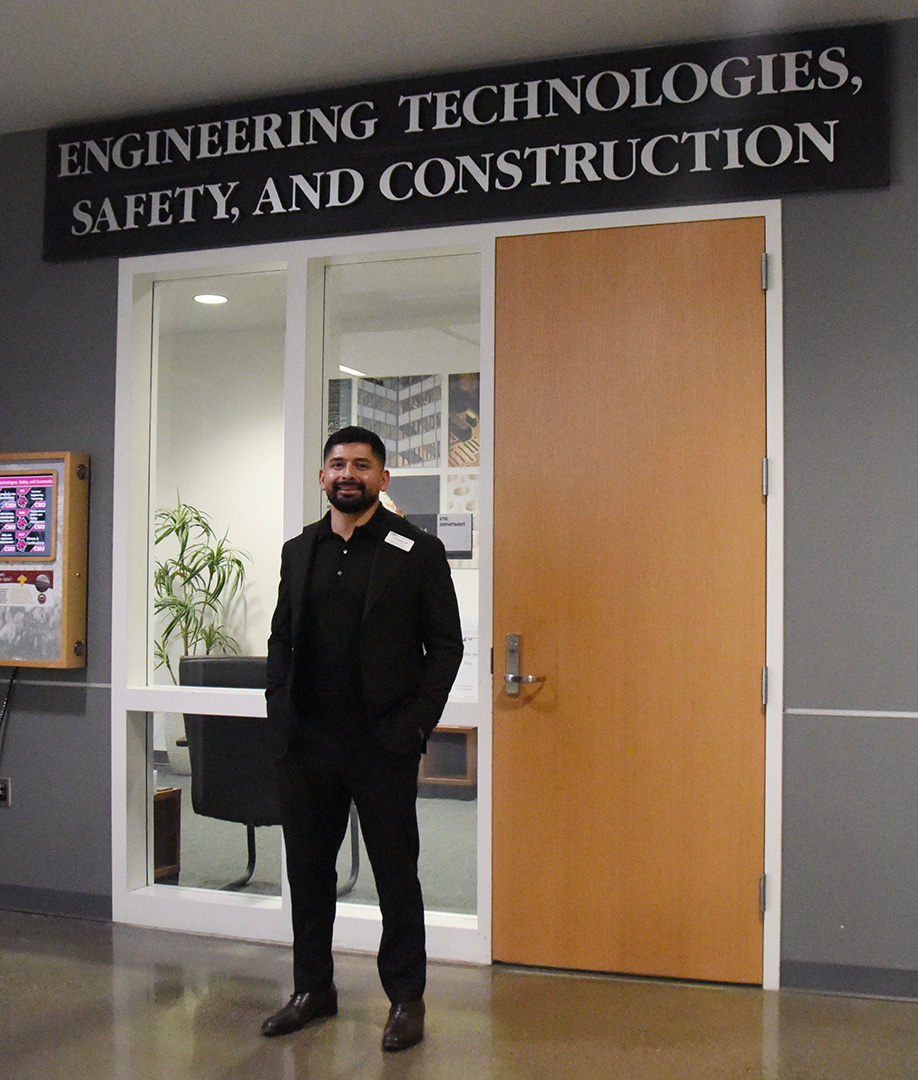
"I do not expect my students to remember every equation, chemical, regulation, or lecture I teach them," he said. "What I hope they leave with is the ability to encounter a problem they have never seen before and know how to begin thinking through it.”
Rodriguez is putting this philosophy into practice in SHM 377: Hazardous Materials Management, where he introduces students to scientific principles underlying hazardous materials and provides opportunities to investigate environmental and occupational health questions through applied exercises. In one laboratory assignment, students use R and RStudio to work with environmental monitoring data, developing skills in data organization, visualization, interpretation, and scientific reasoning.
“The objective isn't to turn every student into a statistician or academic researcher," he said. "I want them to realize, ‘I can work with data. I can investigate a question. I can find scientific information. I can use evidence to solve a problem.’”
Beyond coursework, Rodriguez encourages his students to build professional relationships, participate in practical learning experiences, and remain open to career opportunities that may not initially seem connected to their academic training.
Drawing on his own unexpected path to NASA, he hopes students will recognize that their education can prepare them for a wider range of professional environments than they might imagine. He wants them to understand the science behind those hazards and use that knowledge to collaborate with other professionals in developing practical solutions that protect human health.
"I do not want them to become professionals whose only answer is, 'No, you cannot do that,'" he said. "I want them to see themselves as scientists and problem-solvers who are invited into the room while a project is still being developed.”
Rodriguez also wants them to develop the scientific knowledge they need to collaborate with engineers, researchers, and other professionals.
“I want them to contribute to the decision-making process and develop solutions that allow projects to move forward without putting people's lives at risk, while preventing disease and protecting human health throughout their careers," he said.
CWU News
Arts and Humanities Month continues to build momentum
October 21, 2026 by David Leder
New position at CWU-Des Moines aimed at improving student experiences
October 21, 2026 by David Leder