Ellensburg has helped CWU’s Campus Executive Chef reach new heights
- September 30, 2026
- David Leder
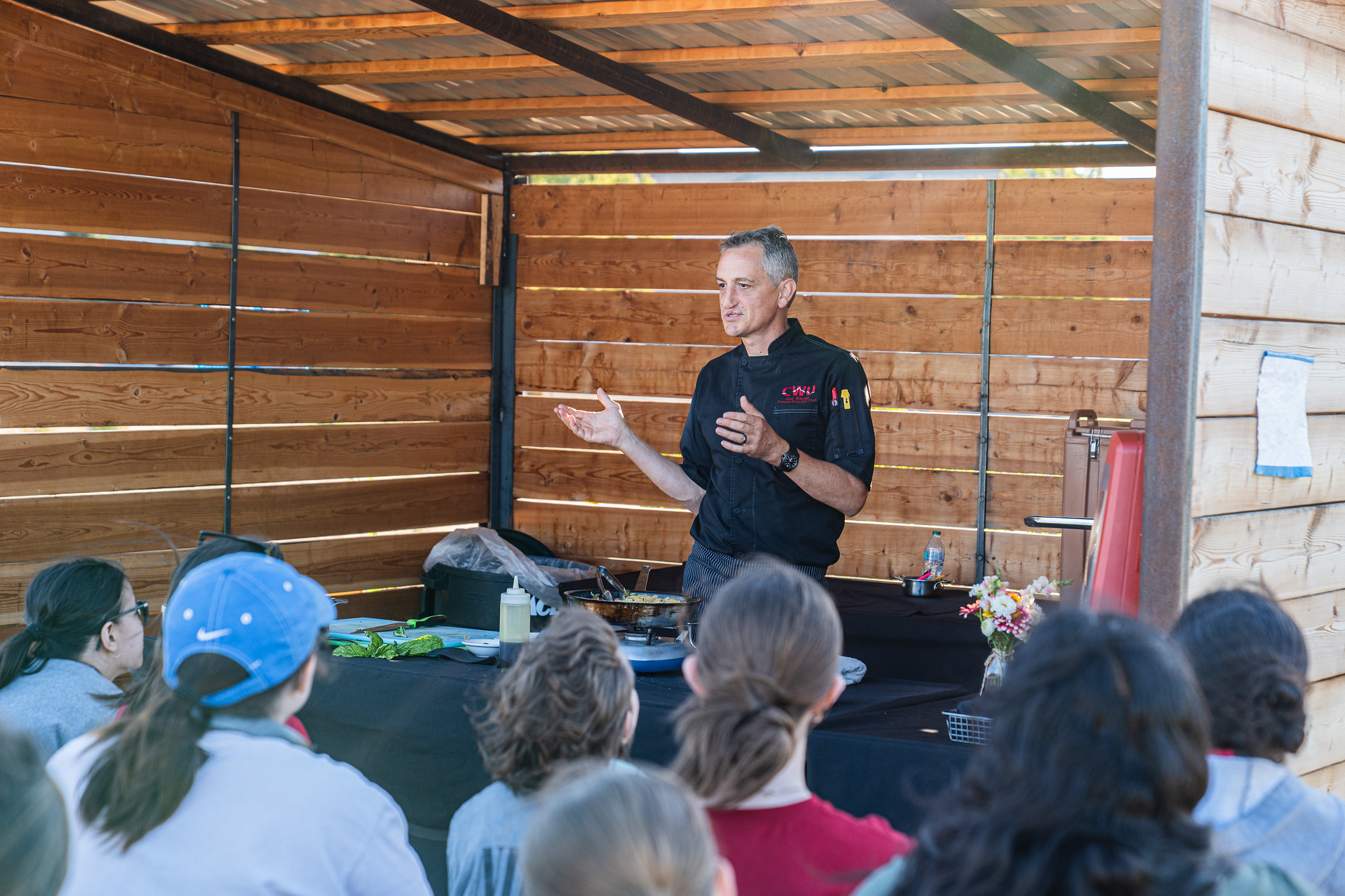
Joe Ritchie never thought he’d end up living in Ellensburg, but ever since he and his family made the move over the mountains seven years ago, he can’t think of anywhere else he’d rather be.
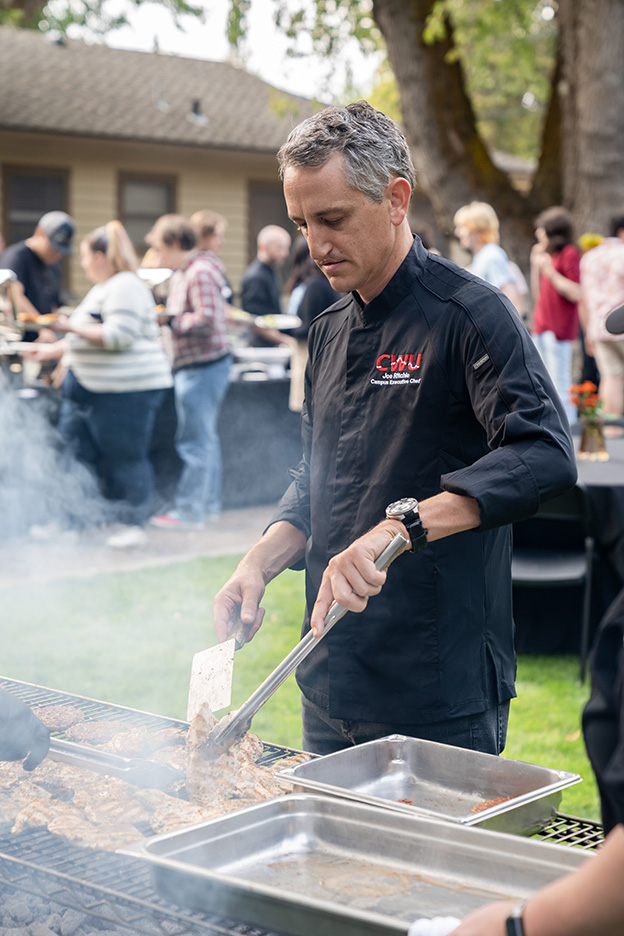
Before becoming CWU’s Campus Executive Chef in 2019, Ritchie had spent the past 20 years working in fine dining restaurants in Arizona, Colorado, California, and Washington.
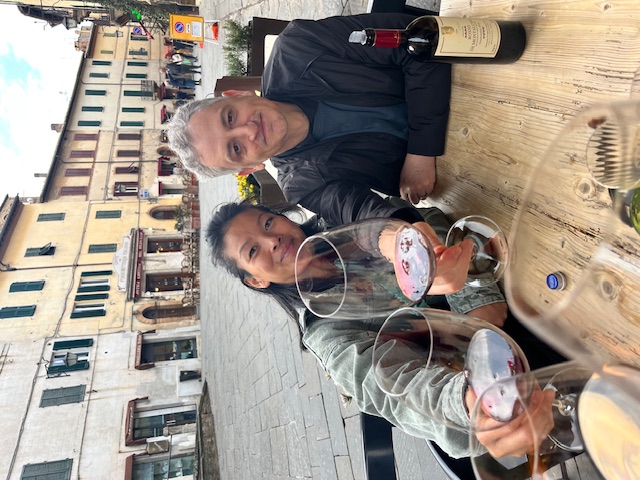
But with a potential cross-country move staring him in the face, he and his wife, Lieu, decided that staying close to family and giving their kids a stable environment to grow up in was the best path forward.
“Our second daughter had just been born, and we weren’t ready to move across the country to chase the next big thing,” Ritchie said of potential job opportunities in Boston and Baltimore. “After doing the Seattle restaurant scene for a while, we decided it was time to settle down in a more rural area.”
Making Kittitas County all the more attractive was the fact that Ritchie’s parents had recently retired here, while his siblings had settled in Yakima, Ellensburg, and Wenatchee. Plus, he had spent about a year working as a chef at the Cave B Winery at the Gorge while living in Ellensburg, which gave him a pretty good idea of what he was getting into.
“I swore I was never going to move to Ellensburg, but when we came over to visit family, we thought to ourselves, ‘this place isn’t that bad,’” said Ritchie, who grew up in Snoqualmie and joined the Army out of high school before attending Le Cordon Bleu culinary academy. “It’s crazy to think it’s already been seven years.”
Another draw for the couple was an opportunity to manage their own sustainability-focused farm. Dating back to his internship at a farm-to-table restaurant in Woodinville in the late 1990s, Ritchie has always been intrigued by farming and sustainable agriculture.
His sister operates a regenerative farm in Ellensburg and, while living in Seattle, he would often come over on the weekends to help with butchering and other ranch-hand tasks.
“I started getting really interested in sustainable agriculture, so my wife and I decided that we would try to start our own operation,” Ritchie said. “Now we have our own livestock — sheep, pigs, and a couple steer — an orchard, and a pretty extensive garden. We have tried a number of different things to see what sticks, and some of it has panned out while other stuff hasn’t. But that’s just the nature of farming: if it doesn’t work, then you move on.”
A large percentage of the livestock the family maintains are sheep, which they raise for meat and for breeding stock. They use the wool for mulch and animal bedding, and also donate it to local gardeners.
When asked if he was the primary caretaker of the sheep, Ritchie quickly deferred to his daughters, ages 10 and 8.
“They are both very involved in the operation,” he said. “They have their own animals and their own little flocks, and they also help out with the larger flock. They pretty much do it all.”
As part of their sustainable approach to farming, the Ritchies believe in the concept of rotational grazing, which involves putting more into the soil than you take out of it.
“We’re trying to manage the pasture in a way that benefits it as much as it benefits us,” Ritchie said. “So we’re out there every couple of days moving the sheep into different paddocks so we can optimize their effect on the soil.”
Lieu Ritchie, who spent many years working in restaurant kitchens herself, manages the gardening side of the operation, which features more than 20 crop varieties. She’s also an avid canner, giving the family plenty of preserved food varieties throughout the year. But the couple isn’t interested in the commercial side of the business, and they rarely sell their produce on the open market.
“We trade and barter with our family and friends, but that’s pretty much it,” he said. “We use most of it ourselves, either for pickling or in our own kitchen.”
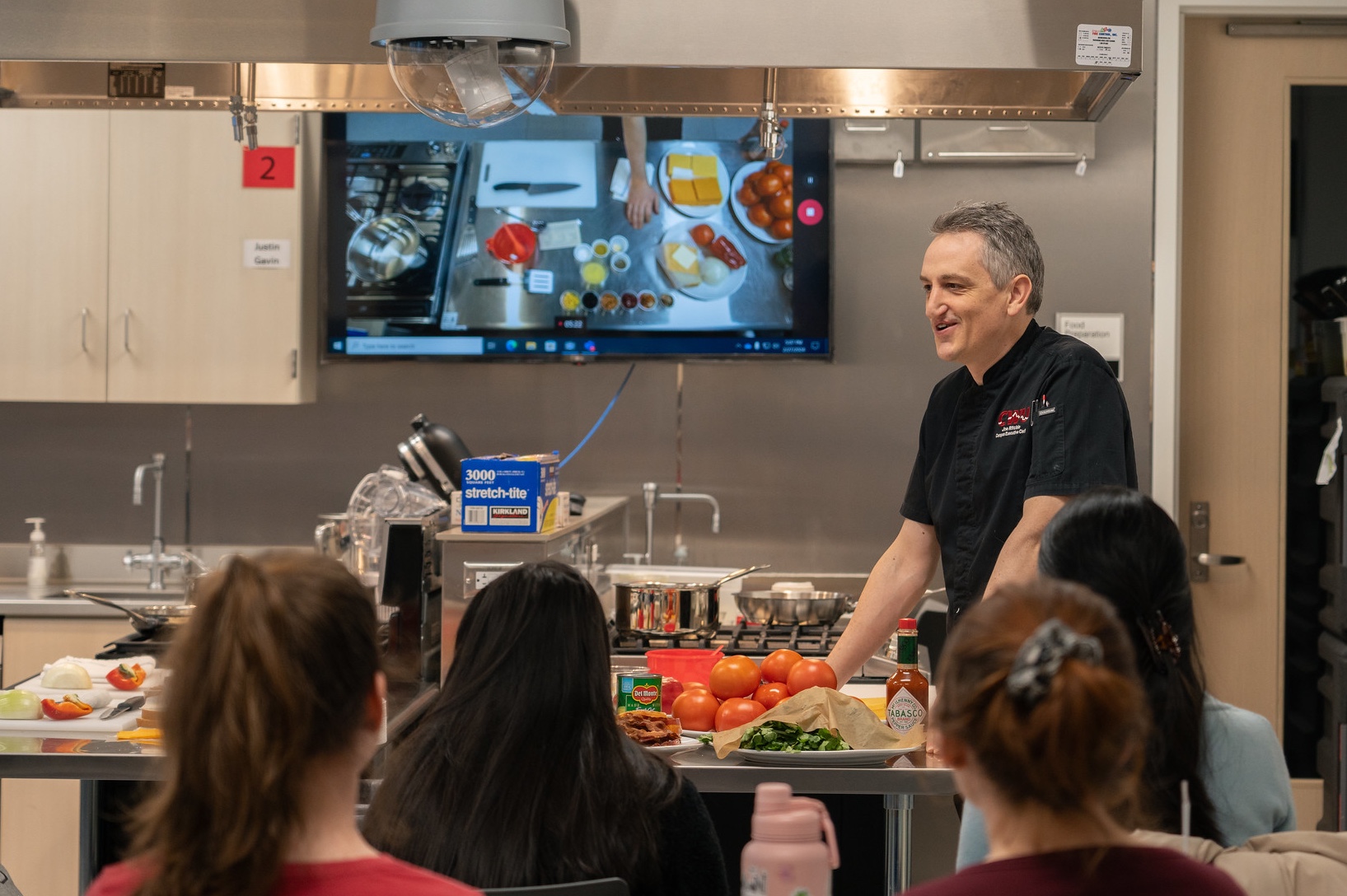
Ritchie’s extensive knowledge of — and appreciation for — the art of farm-to-table dining has fit in nicely with CWU Dining Services, which makes use of the bounty from the on-campus Wildcat Farm throughout the year.
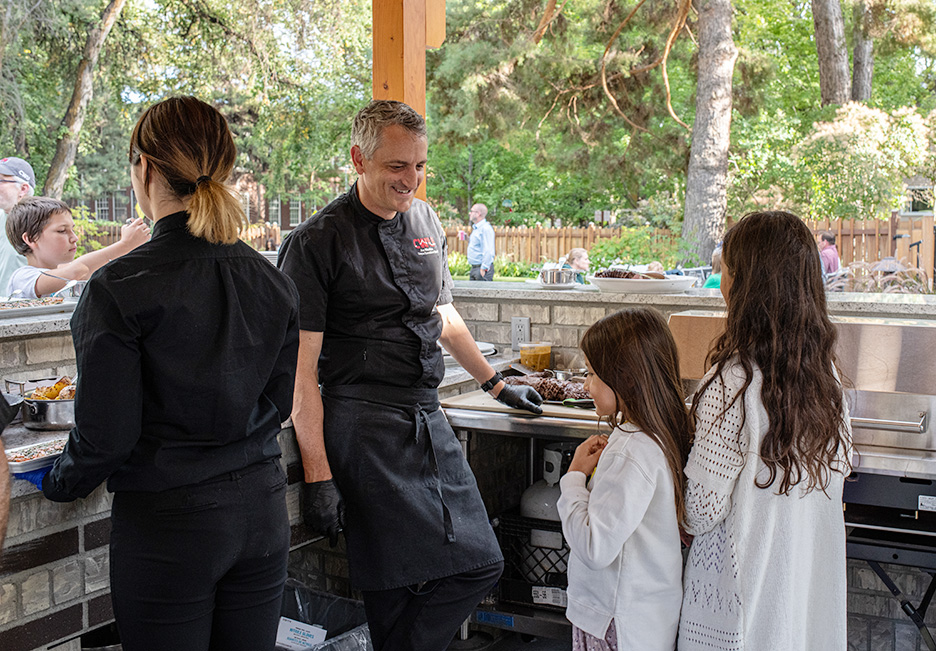
One of the things he has enjoyed most about his job at Central is having access to so much fresh, local produce. He has also appreciated the opportunity to try new concepts and interact with other culinary aficionados, including students.
“When I arrived, there were a lot of opportunities to make some big changes,” he said. “And then, coming out of the pandemic, we were able to do a lot of other creative things really quickly that helped raise our profile in the minds of the students and the campus community.”
One strategy Ritchie helped implement upon his arrival was to increase food costs, with a goal of ensuring higher food quality. He explained that his background in fine dining helped instill in him the importance of quality over convenience.
“Institutional food service operations usually try to keep costs as low as possible, but my mindset was that we should prioritize quality over cost,” he said. “Students are paying a lot of money to go to college here and they deserve to have a positive experience. We don’t want to just give them the cheapest and most convenient options. And, compared to our peer institutions, I think we’ve done a great job of that.”
Whether he’s overseeing Dining Services operations, planning new menus, or mentoring staff and students, Ritchie says he comes to work energized every day. After all, he’s doing what he loves in a place that values his expertise and allows him to experiment with new ideas.
Life on the farm isn’t half bad, either.
“The community here in Ellensburg is probably the biggest draw for me and my family,” he said. “The people are so kind, and we have felt very welcome here. We’ve made a lot of friends on campus and around the area, and we couldn’t ask for more. The past seven years have just been fantastic, and I feel very fortunate to have wound up where I am today.”
CWU News
International student finds growth, connection and new direction at CWU
October 7, 2026 by Tran Nha Pham

Pianist Daniel Anastasio to play free concert at CWU on October 14
October 7, 2026 by Marketing and Communications