Douglas Honors College at CWU to celebrate 50 years (part 1)
- July 15, 2026
- Tran Nha Pham
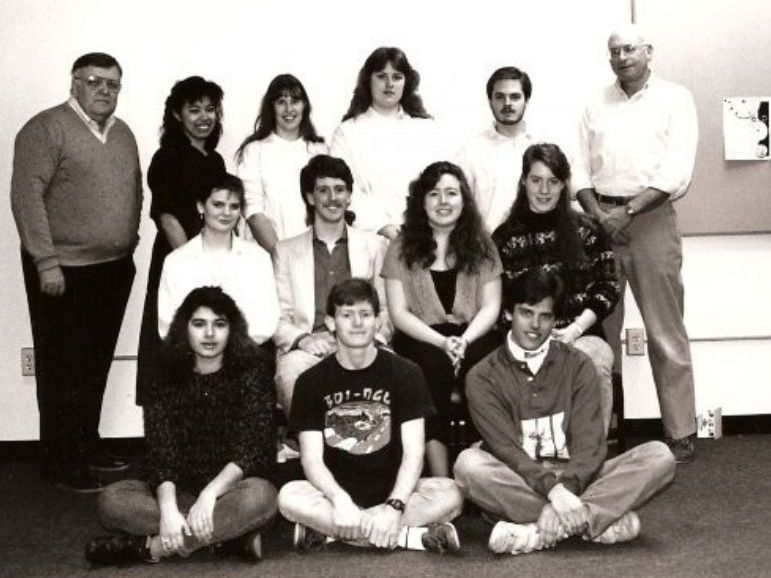
The William O. Douglas Honors College (DHC) at Central Washington University will celebrate its 50th anniversary during the upcoming academic year, marking a half century of empowering students on their journey toward developing critical thinking skills, intellectual and academic growth and broadened worldview.
The DHC is a multidisciplinary academic program that is designed for undergraduate and transfer students from a variety of majors, serving approximately 250 students per year.
Instead of functioning as a standalone major, the honors college enhances the educational experiences of its students through high-level coursework, faculty mentorship, hands-on research, and creative projects, culminating in a faculty-guided capstone project.
As part of their academic experience, DHC students are set up to enroll in small, discussion-based seminars that encourage them to think critically, conduct research, and get involved in their community.
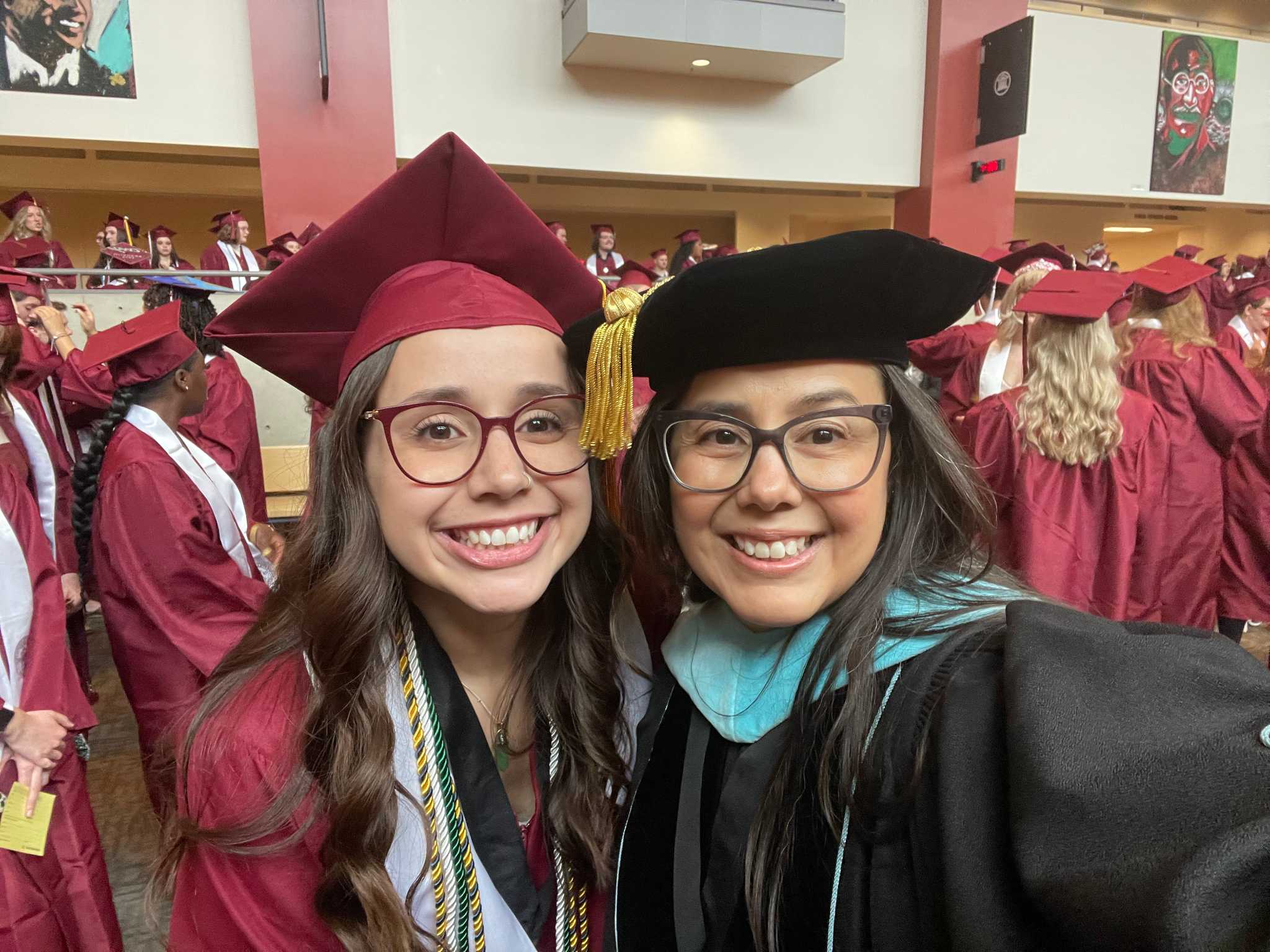
For Dr. Christina Denison, who has served as the Executive Director since February 2026, the DHC is more than just an academic program. To her, it’s a defining part of her life.
"Working in the honors college has not only impacted my educational trajectory, but on a very personal level it impacted my daughters," she said. "So not only did it give me a pathway to a profession and a career that I love, honors education truly set my daughters up on a pathway for success."
The DHC has been intertwined with the Denison's family in their academic and professional pathways for the past five decades. Denison's sister was a DHC student in the 1980s, and her youngest daughter, Katherine, graduated from CWU as an honors student, going on to Gonzaga University law school.
Her oldest daughter graduated from the Honors College at Washington State University where she earned the "Pass with Distinction" for her research thesis, "Instrument Evaluation: Attitudes Toward Older Adults and Intent to Work in Geriatrics" before pursuing her doctorate in nursing at the University of Washington,
Seeing how the DHC helped her children excel in college and in life has been inspirational for Denison. These experiences have helped solidify her beliefs that the DHC creates promising futures for students, and it has the power to change lives.
"I'm a first-generation college graduate and I'm so pleased that both of my daughters have gone on to earn advanced degrees," she said. “While they have absolutely earned every academic accolade that they've received, I know that it was an honors education in college that truly set them on a path to achieve their ultimate goals.”
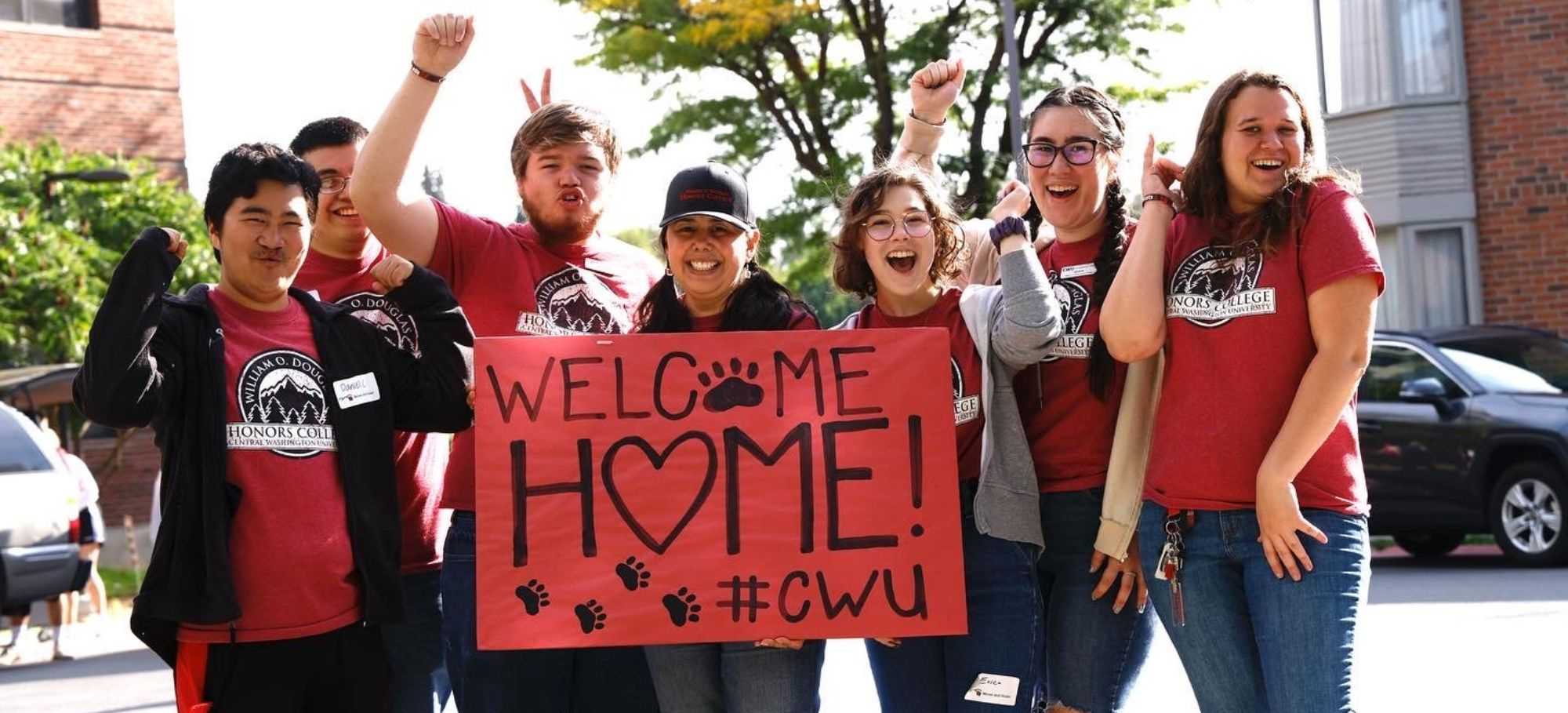
More Than Just Extra Work
One common misconception people have about the DHC is that it consists of an overwhelmingly rigorous curriculum with demanding classes. But Denison explains that it often helps students achieve more than just fulfilling their desire to push themselves academically.
She recalled the long history of DHC, while simultaneously depicting the core nature of the DHC program, which is centered around insightful discourse and intellectual debate. She explained that students who enroll in the DHC program are required to engage with other students in critical discussions in which they address intricate questions and explore multi-dimensional viewpoints from a wide range of disciplines.
"The faculty that came together to form the honors college felt that an honors college should be a common space for discourse," Denison said. "I have appreciated that the honors college has been a place where students can come together and have solid opinions about topics that are divergent from each other."
The way she sees it, this vision has been maintained for nearly half of a century.
Denison notes that when exploring complex issues, or controversial topics, such as death penalty or abortion, students might have varying perspectives, and it is commonly understood that disagreement is unavoidable.
It’s important to note that no one involved in these discussions takes disagreement or pushback personally. Instead, students view this approach as beneficial because it helps them consider new perspectives on specific issues. The way they see it, as long as they present their viewpoints with respect, everyone wins.
"They can have disagreements in class, and then they walk out together," Denison said. "They leave that in the classroom."
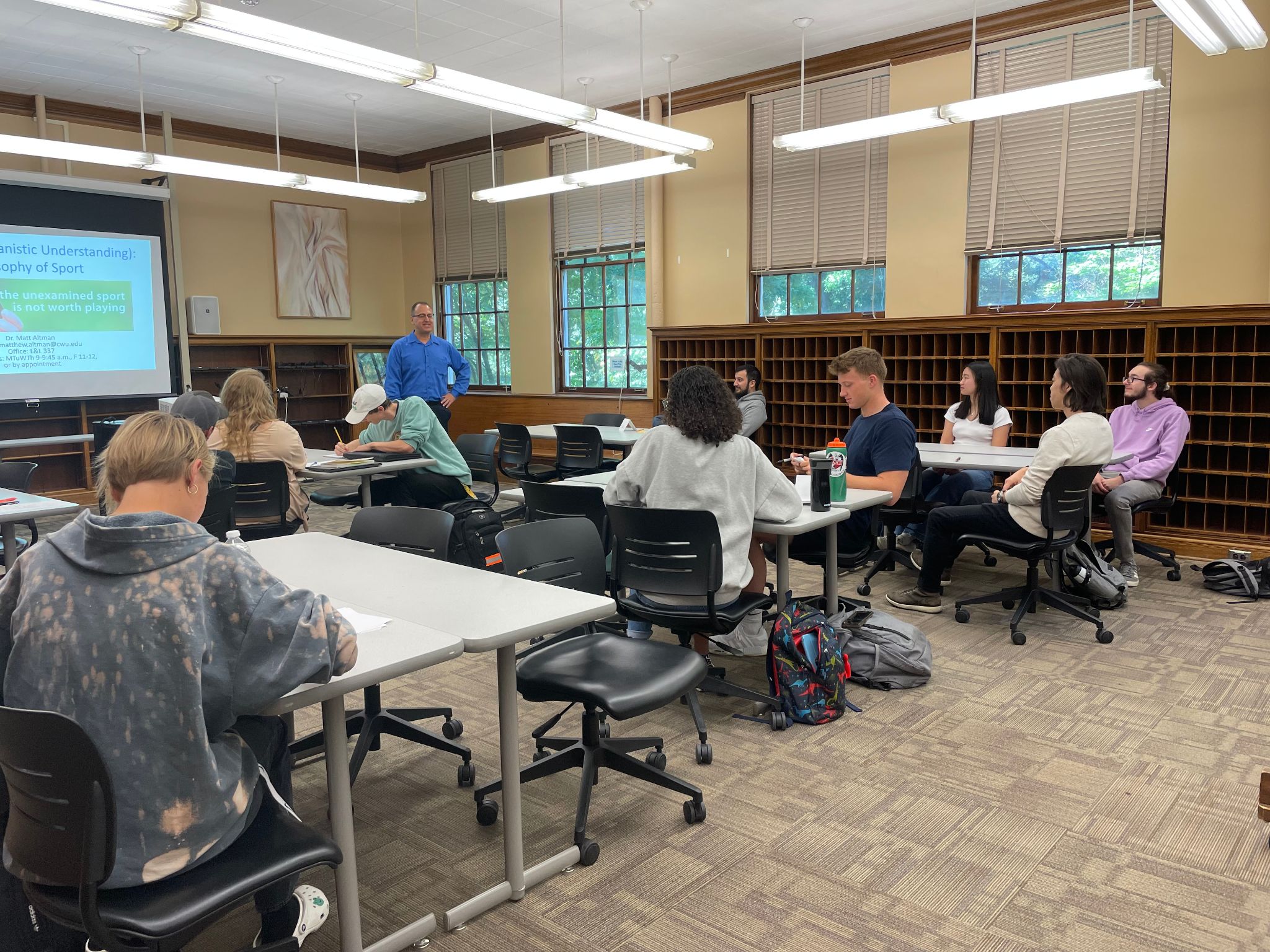
One DHC professor who has proven to be highly effective in this learning atmosphere is Dr. Matthew Altman. Denison described his approach to teaching as open and mutually respectful, which lends itself to discussion-based classes where students are encouraged to share and discuss different perspectives.
These practical experiences demonstrate one of the primary values of the DHC: giving students an opportunity to engage in discussion with curiosity, which embodies the spirit of higher learning.
"What I appreciated about what Dr. Altman did is that he created this space where the students could talk about the issues and they didn't make it personal," Denison said. "I remember the students walking out and you never would have known that these students were in there really having constructive disagreement about these things because they walked out super friendly."
Thinking Critically and Independently
Denison considers the most ubiquitous false assumption about higher education to be that it teaches students "what to think."
“Within the honors college and here at CWU, we're not teaching students what to think,” she explained. “We're teaching students how to think, how to make well-reasoned arguments.”
Denison added that the DHC isn’t seeking to offer students specific answers to the issues at hand. Instead, students are the ones who need to discover the answers on their own. For this reason, the DHC stands as an "intermediary party" that teaches students to evaluate the problems using logical, relevant and reasonable pieces of evidence as part of their argument.
Instead of asking students to memorize all of the course material, the honors curriculum provides them with an opportunity to be curious, to address the issues with questions, and enhance their own individual skills in analyzing, synthesizing and assessing multiple sources of information. This approach allows students to form their evidence-based opinions and conclusions, while learning how to deliver their ideas succinctly and coherently.
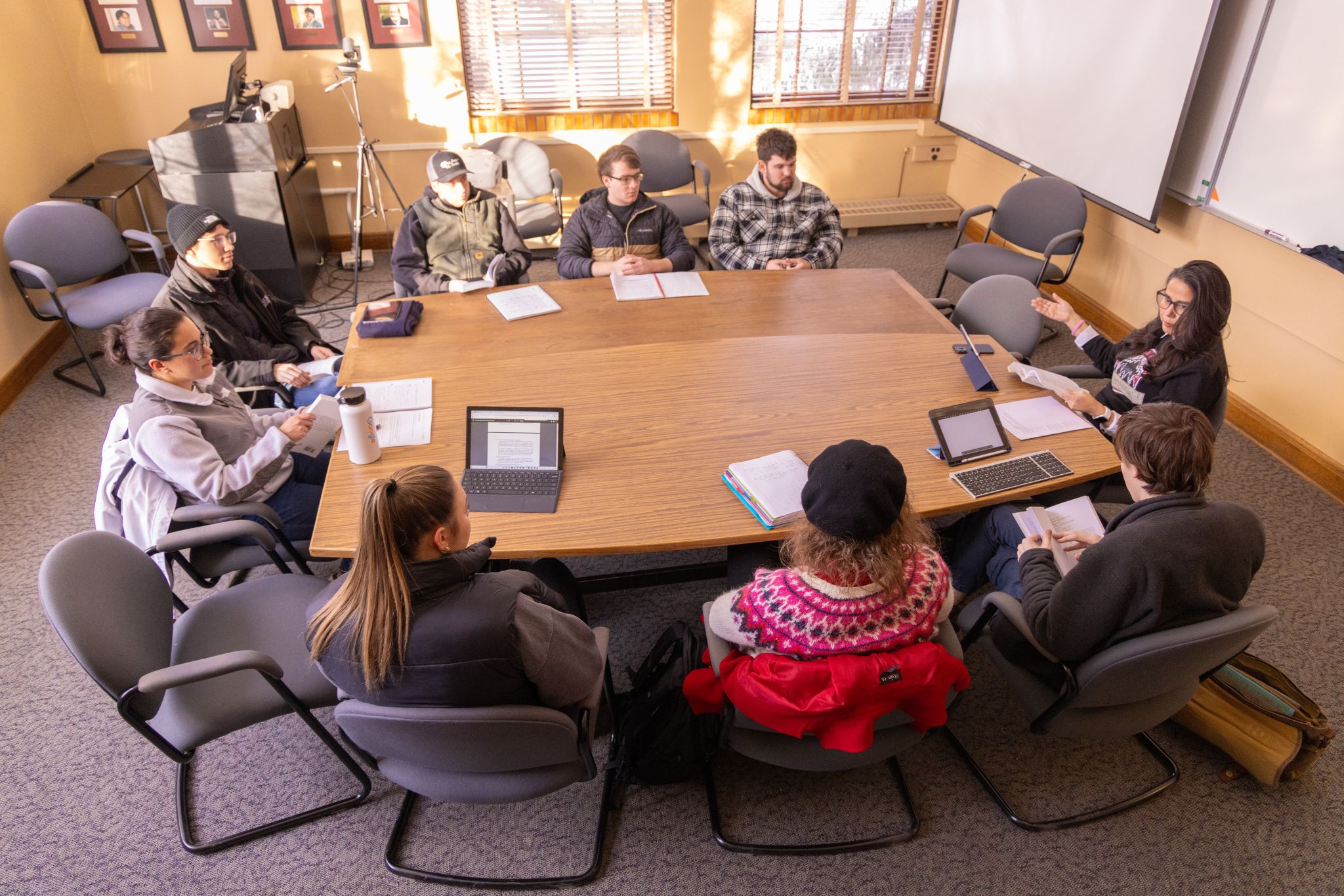
This has been the long-standing philosophy in DHC pedagogy. Because students engage in discussion-focused seminars, they learn to develop their own viewpoints, which are ultimately just as valuable as the course materials.
Another crucial element of the program is the interdisciplinary characteristic, which asks students from different majors to explore subjects that are outside of their primary academic scope.
"The liberal arts were designed to give everyone that broad education so that we can learn to see and recognize the connections that we have,” Denison said. "Life isn't separate boxes; it is all the interconnections, which is why we're interdisciplinary within the honors college."
Denison stressed the significance of imparting the interdisciplinary aspect to students, who will need those skills to succeed in a professional environment. She underscores that in a real-life workplace, employees are required to communicate with one another and present their own specialized knowledge both to people in their field and to “outsiders.”
In addition to discovering new, compelling ideas from interdisciplinary learning, students also learn to detect the interconnections within these fields that they might not have understood before.
Therefore, learning how to conduct critical thinking, in-depth analysis, and evaluation of a wide range of topics in numerous subjects is essential to future success in the program and in the professional world.
Small-Classes, Meaningful Mentorship
One of the qualities about the DHC that stands out for those who enroll is its close, collaborative, student-centered learning environment.
The maximum number of students for each class is typically 24, and it rarely goes much higher. For this reason, the professors can remember their students' names and learn about their specific needs.
"What I really appreciate about the honors college is that the students complete their general education in honors-designated courses," Denison said. "They see the same faculty and the same group of students quarter after quarter, which really allows them to build relationships with each other and with the faculty."
Undergraduate students who enroll in the DHC usually complete the program in about four years. Spending so much time together helps them reinforce their relationship over time.
In most cases, the DHC faculty is not only instructing students about class materials, or coursework knowledge; they also carry their roles as the mentors to counsel, advise, and support students in terms of career selection, personal goals, life choices, challenges, hardships and future plans.
"Because of the relationships, our students share very personal things with their faculty in ways that I've always just kind of been amazed by," Denison said.
"They build such a close relationship that they feel comfortable in sharing and knowing that that faculty member is going to be there to support them."
These relationships often continue after the students graduate since the DHC professors always strive to support them as they enter the professional ranks. They often write letters of recommendation, provide students with academic resources, present research opportunities, and deliver career advice.
Throughout their time together, the professors become aware of every student's strengths and weaknesses. This allows them to become trustworthy mentors who understand how to help their students become successful professionals.
"When they go out and interview for jobs, it doesn't matter the field," Denison said. "They can go into that room and they can speak with authority about what they've learned and how they're going to apply it in the job. It also has helped them for our students who are considering graduate school."
••••••
- Part 2 of the Douglas Honors College 50th anniversary story will be published next week.
- Tran Pham is a student writer in the Office of Marketing Communications who will be working with the Strategic Communications team during the upcoming academic year.
CWU News

Arts and Humanities Month continues to build momentum
October 21, 2026 by David Leder
New position at CWU-Des Moines aimed at improving student experiences
October 21, 2026 by David Leder