ROADS from Earth to Venus National Challenge celebrates student innovation
- June 24, 2026
- Darci Snowden
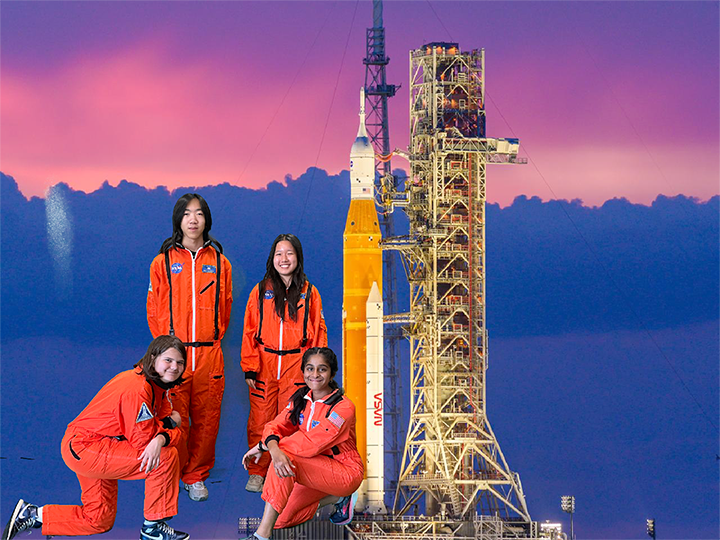
NASA’s Northwest Earth and Space Science Pathways (NESSP) recently concluded the 2025-26 ROADS from Earth to Venus National Challenge, engaging students in science and engineering experiences inspired by NASA's research of our neighboring planet, Venus.
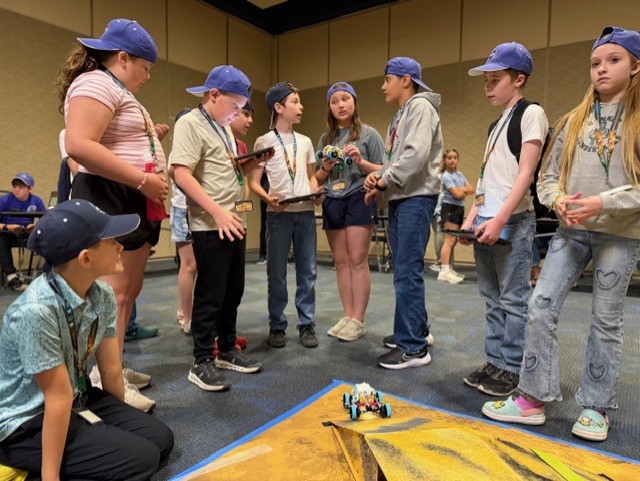
Over the course of the academic year, more than 500 students on 120 teams from eight states participated in the challenge, applying science, technology, engineering, and mathematics (STEM) skills to investigate how NASA scientists and engineers prepare for future missions to Venus.
Students in upper elementary, middle, and high school worked collaboratively to solve problems, communicate their ideas, and envision themselves as part of the future of space exploration.
“The ROADS Challenge gives students the opportunity to do more than learn about NASA missions — they become part of the mission,” said NESSP Director Dr. Darci Snowden, who also serves as a physics professor at Central Washington University. “I am especially proud of this year's teams. Students took on an exceptionally broad set of mission objectives, from modeling carbon cycles and designing experiments to conducting remote sensing operations with kites and programming rovers to navigate challenging terrain while collecting scientific data.”
The ROADS (Rover Observation and Discoveries in Space) framework challenges students to tackle real-world problems modeled after NASA mission concepts. Throughout the Earth to Venus National Challenge, teams completed a series of Mission Objectives that encouraged them to think critically, design creatively, and work as engineers and scientists.
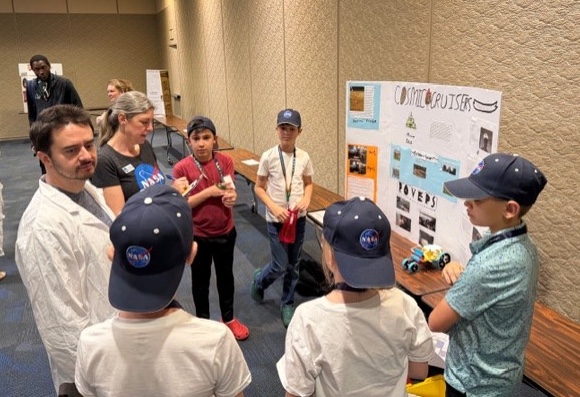
In addition to submitting their projects virtually, students participated in in-person Hub events hosted by NESSP partner institutions. These events brought together teams from multiple states to showcase their work, exchange ideas with peers, and experience life on college campuses hosted by partners including CWU, Montana State University, and Northern Arizona University.
“Without the promise of a major prize, these students participated because they were curious, motivated, and eager to learn,” Snowden said. “By investigating authentic mission challenges, collaborating with teammates, and sharing their ideas with others, students develop the confidence and skills needed to see themselves as future scientists, engineers, educators, and explorers."
NESSP recognized the following top teams for their outstanding participation and exemplary Mission Development Logs:
- Elementary School Division: The Evil Twins (Silverdale, Washington); The Acid Clouds (Silverdale); Flaming Asteroid Nebulas (Silverdale); The NASA Intelligence (Silverdale).
- Middle School Division: Venus Ascenders (Mukilteo, Washington); Project Fuego Venus (Safford, Arizona); Galaxy Dragons (Sequim, Washington); The Four Folds (Hardin, Montana); Crater Lake Crusaders (Medford, Oregon).
- High School Division: Laborantem (Columbus, Montana); Velocity to Venus (Sequim); Puget Sound Propulsion (Mukilteo); Evergreen Explorers (Mukilteo).
Highlights from this year's challenge, including student presentations and special recognitions, can be viewed during the Virtual Recognition Ceremony available on the NESSP YouTube channel (@nwessp). The activities and educational resources developed for the ROADS from Earth to Venus Challenge, along with materials from previous challenges, are free and available through the NESSP website.
The NESSP project is supported by a NASA cooperative agreement award and is part of the organization’s Science Activation Portfolio, which connects learners with authentic NASA science experiences through partnerships with educators and community organizations.
CWU News

Arts and Humanities Month continues to build momentum
October 21, 2026 by David Leder
New position at CWU-Des Moines aimed at improving student experiences
October 21, 2026 by David Leder