CWU welcomes tribal leaders to campus for historic summit
- May 6, 2026
- David Leder
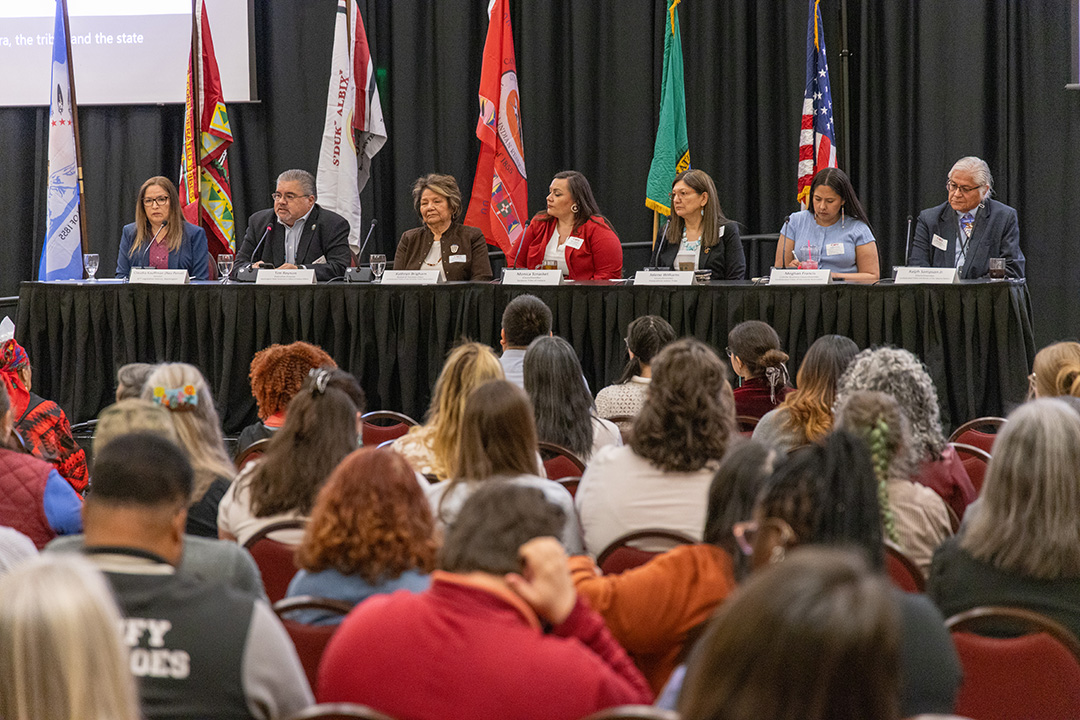
Central Washington University reaffirmed its commitment to building lasting relationships with Northwest Tribal Nations on April 27 when it hosted the inaugural Tribal Leaders Panel and Listening Session.
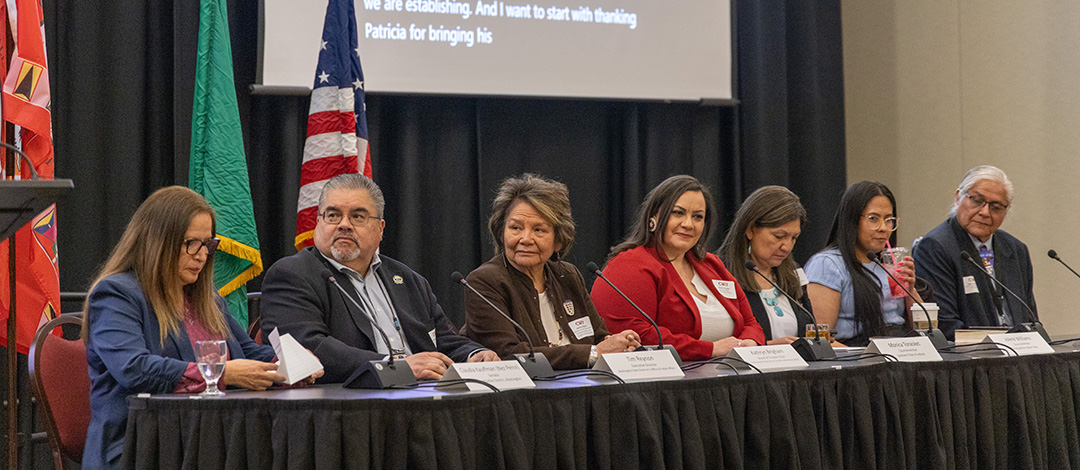
Representatives from five Native American Tribes joined Washington State Senator Claudia Kauffman (D-47th District and a member of the Nez Perce Tribe) and Executive Director for the Governor’s Office of Indian Affairs Tim Reynon for the panel, which welcomed approximately 180 people to the SURC Ballroom.
The hourlong discussion was moderated by CWU’s Associate Vice President for Tribal Relations Zoë Higheagle Strong and featured tribal council members Monica Tonasket, Spokane Tribe of Indians; Jolene Williams, Snoqualmie Indian Tribe; Meghan Francis, Confederated Tribes of the Colville Indian Reservation; Kathryn Brigham, Confederated Tribes of the Umatilla Reservation; and Ralph Sampson Jr., Confederated Tribes and Bands of the Yakama Nation.
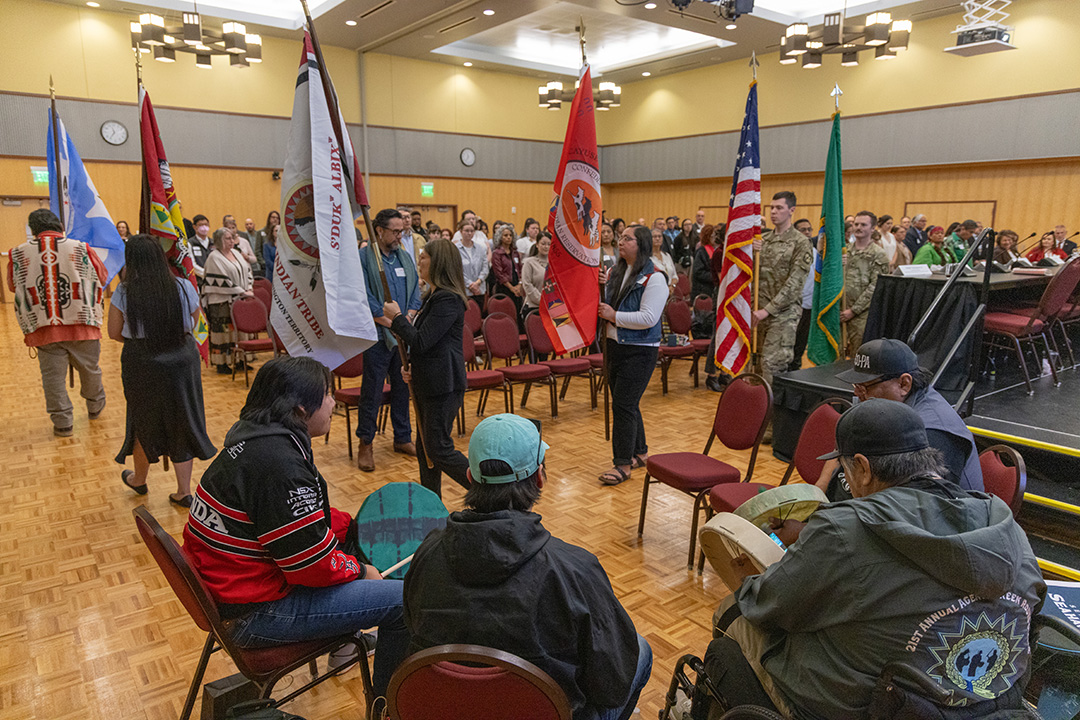
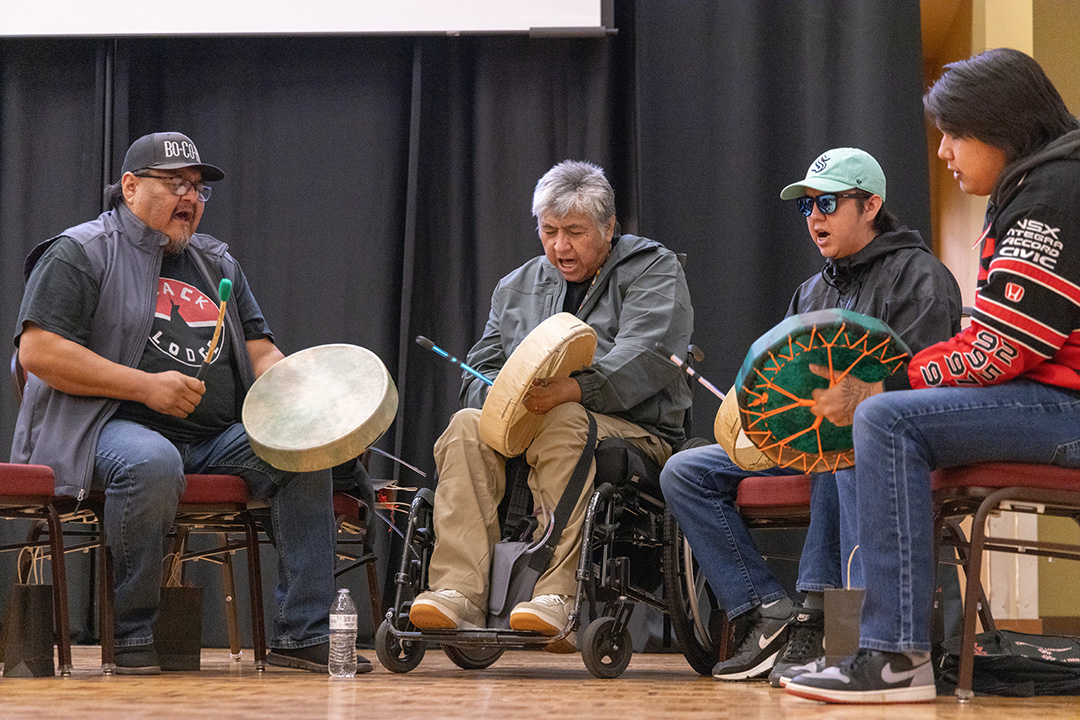
CWU President Jim Wohlpart also spoke at the historic gathering, which began with a blessing by Jason Buck (Yakama/Wanapum) and continued with traditional singing and drumming by the Black Lodge Singers and a posting and retiring of the flags.
“The feedback we have received about the event has been very encouraging, and we feel like this was an important first step for us as we build long-term relationships with our Northwest tribal communities,” Higheagle Strong said. “Most importantly, the tribal leaders told us that they appreciated that we created a space where they were able to do most of the talking and the rest of us could just listen.”
The panelists each shared their perspectives on what Native students need to thrive in both the K-12 and higher education spaces, with a number of the guests sharing how important it is for these families to feel heard and valued.
Higheagle Strong noted that many of the priorities outlined by the panelists align with the priorities CWU has to expand access and opportunity to Native students and communities.
“The tribal leaders were united in their priorities for the role of higher education in their communities, and they built off each other when conveying the needs of each individual tribe,” she said. “It was nice to hear that there are a lot of shared priorities that we can embrace at Central Washington University, and we came away with a number of action items we can start on right away.”
After lunch, the panelists, President Wohlpart, and Higheagle Strong were joined for a series of listening sessions by CWU Provost Patrick Pease, Yakama Nation Education Manager Elese Washines, Yakama Nation council member Bazillu Windy Boy, Umatilla Board of Trustees member Sierra Quaempts, WA OSPI Assistant Superintendent Henry Strom, and Yakama Elder Patricia Whitefoot. Key leaders like Director of Education for the Kalispell Tribe Anna Armstrong and Spokane Tribe Education Manager Ally Pionne, along with CWU Native American student organization leaders, joined in for the table discussions.
The goal of the sessions, Higheagle Strong explained, was to share ideas designed to help strengthen — and re-envision — the ways in which the tribes can partner with CWU, with an overarching goal of improving educational opportunities for Native and Indigenous students across the region.
“We addressed eight different topics at separate tables — such as Native student pathways, Native undergraduate and graduate services, and integrating tribal and Native knowledge into college courses — and we took detailed notes,” Higheagle Strong said. “Our next step is to review the notes this spring and then report back on our progress.”
Higheagle Strong expressed gratitude to CWU leaders, faculty, staff and students for showing up and creating a welcoming environment.
“What encouraged the tribal leaders the most was the large turnout from the CWU community — people who genuinely wanted to come together and listen,” she said. “I think this event helps set the stage for us to continue working together and creating a strategic plan for tribal relations.”
Once the CWU Executive Leadership Team has reviewed the list of shared priorities that resulted from the April 27 panel discussions, Wohlpart, Pease, and Higheagle Strong will follow up with tribal leaders on both sides of the state before putting their plans into action.
“The next step is to visit the tribal communities that attended the convening and explore how we can build on our conversations to strengthen relationships in mutually beneficial ways,” Higheagle Strong said. “I believe looking for opportunities for action, and we have already begun to address some of the issues that came up last week. Now, we can start thinking long term, setting goals for the areas that will require a deeper system change.”
CWU News
Arts and Humanities Month continues to build momentum
October 21, 2026 by David Leder
New position at CWU-Des Moines aimed at improving student experiences
October 21, 2026 by David Leder