Professor Jennifer Serne’s curiosity guides her pursuit of success
- April 1, 2026
- Rune Torgersen
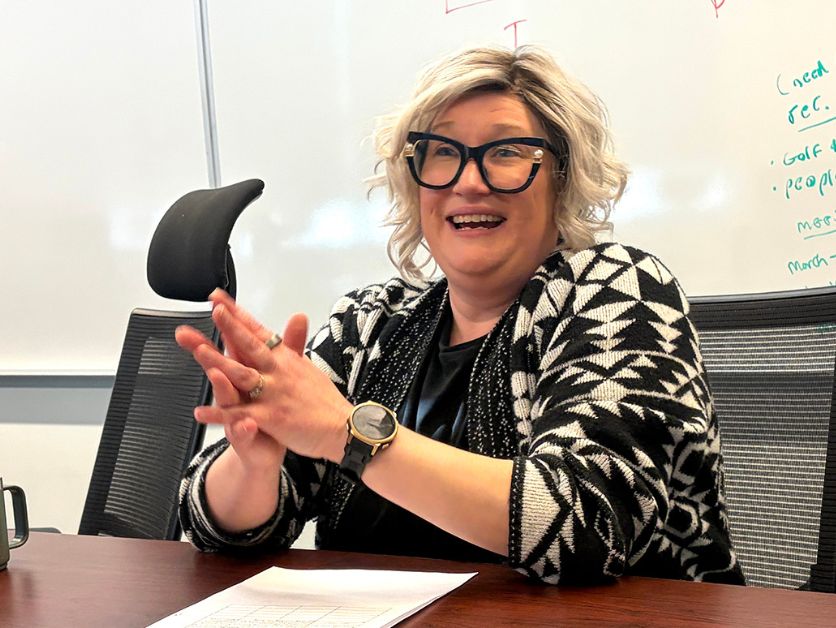
As a frequent keynote speaker at safety management conferences across the country, CWU Associate Professor of Occupational Safety Health Management Jennifer Serne nevertheless always finds herself surprised that the assembled crowds hang on her every word as a thought leader in her field.
“I was surprised when people really thought I was an expert in this,” she said. “I wanted to be a filmmaker, but I kind of ended up here by accident.”
Serne’s artistic ambitions started in high school in Kennewick and compelled her to pursue a film studies degree at the University of Washington. Halfway through, however, her curiosity got the better of her, and she ended up graduating with a degree in chemistry from The Evergreen State College.
Adrift with a bachelor’s degree she didn’t quite know how to apply to a career, Serne got a job at Pacific Northwest National Laboratory (PNNL) in Richland, where her father worked. There, she made the connection that would ultimately come to define her career and ultimately set the stage for the unlikely fusion of her artistic ambitions with her talent for analysis.
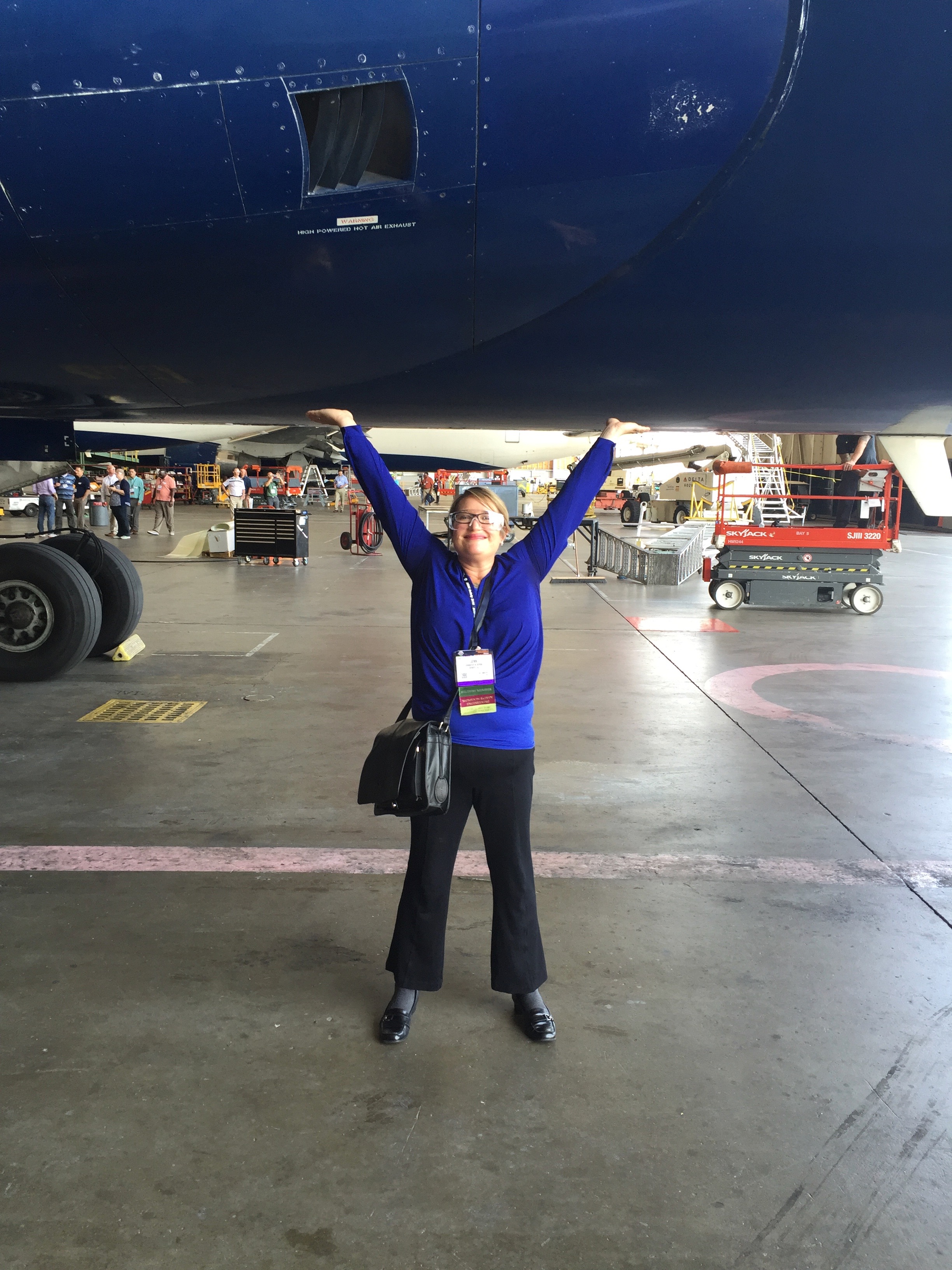
“I got a job in my dad’s lab over the summer, because he wanted me to figure out what the heck I was going to do with my life,” Serne recalled. “There was a person there who was a safety professional, and I ended up doing some work with them. We got to talking, and I realized I had a real knack for thinking up scenarios where things could go wrong.”
Serne’s contact at PNNL directed her toward the Human Performance Team — at the time a novel approach to workplace management that aimed to let human behavior inform workplace safety policy as a way of better protecting workers from accidents. This people-forward technique inspired Serne and built the foundation of her life’s work in workplace accident investigations and what eventually followed.
“Let’s look at the human performance aspect of it,” she said. “Let’s find out where we can better support people as opposed to ‘you’re an idiot, you screwed up, and you’re fired.’”
As her career took off, Serne moved into the biotech field, and she soon found herself working for the Washington State Department of Health (DOH). In her position overseeing radiation protection, she helped ensure workers who came into contact with high levels of radiation were able to avoid the negative health effects of overexposure. As her experience grew, so did her conviction that statistics and flowcharts could only ever tell part of the story behind any given workplace accident.
“I am constantly surprised by the new things I’m learning, and the new ways of seeing things I encounter,” Serne said. “When you walk into an incident, you might think you’ve seen a similar thing before, but that biases you towards evidence that confirms that connection, and you start missing other pieces in your pursuit of that narrative.”
After working with the DOH for 10 years, Serne went back to school in pursuit of a master’s degree in Safety Science at Embry-Riddle Aeronautical University, an experience that both further honed her skills and convinced her that transportation safety was not the direction she wanted to go in.
“I realized I didn’t want to do that after my internship, but I did get a degree that included a crash lab at Embry-Riddle’s Prescott (Arizona) campus, which taught me the whole methodology for investigation,” she said. “I learned a lot of really sophisticated interviewing skills and a lot of interesting stuff there.”
Finding Her Calling
Returning home to Washington after earning her second degree, Serne was hired as an assistant director in the Office of Research Assurances at Washington State University, overseeing on-campus research projects and making sure they were safe for everyone involved. While this position eventually led to a promotion to radiation safety officer, it also put her on CWU’s radar in 2018. Soon, Serne was invited to join the CWU faculty as a lecturer, while still serving in her role at WSU.
Amidst offers to teach, opportunities to speak to conference-goers, award nominations, and a long stint as part of an international accident investigation agency, Serne found herself wondering where all of the attention was suddenly coming from, and whether she was truly deserving of it.
“I guess I have impostor syndrome, which I didn’t even know was a thing until I got into academia,” she said. “I get asked to speak at a lot of conferences, and it does feel odd to think of myself as someone who is considered an expert, because to me, I’m still learning more every day.”
It is this curiosity and refusal to accept that she knows everything there is to know that makes Serne so good at what she does. Through her work at CWU, and through her private consulting practice, she strives to impart that openness to others.
“I specialize in teaching people how to look at accidents from a different point of view, how to reframe the narrative to remove as much human bias as possible, and how to end a lot of the finger pointing and victim blaming that often happens after an incident,” Serne said. “My methods help organizations move away from the assumption that accidents are caused by workers doing dumb things, and towards a systems-oriented way of looking at it.”
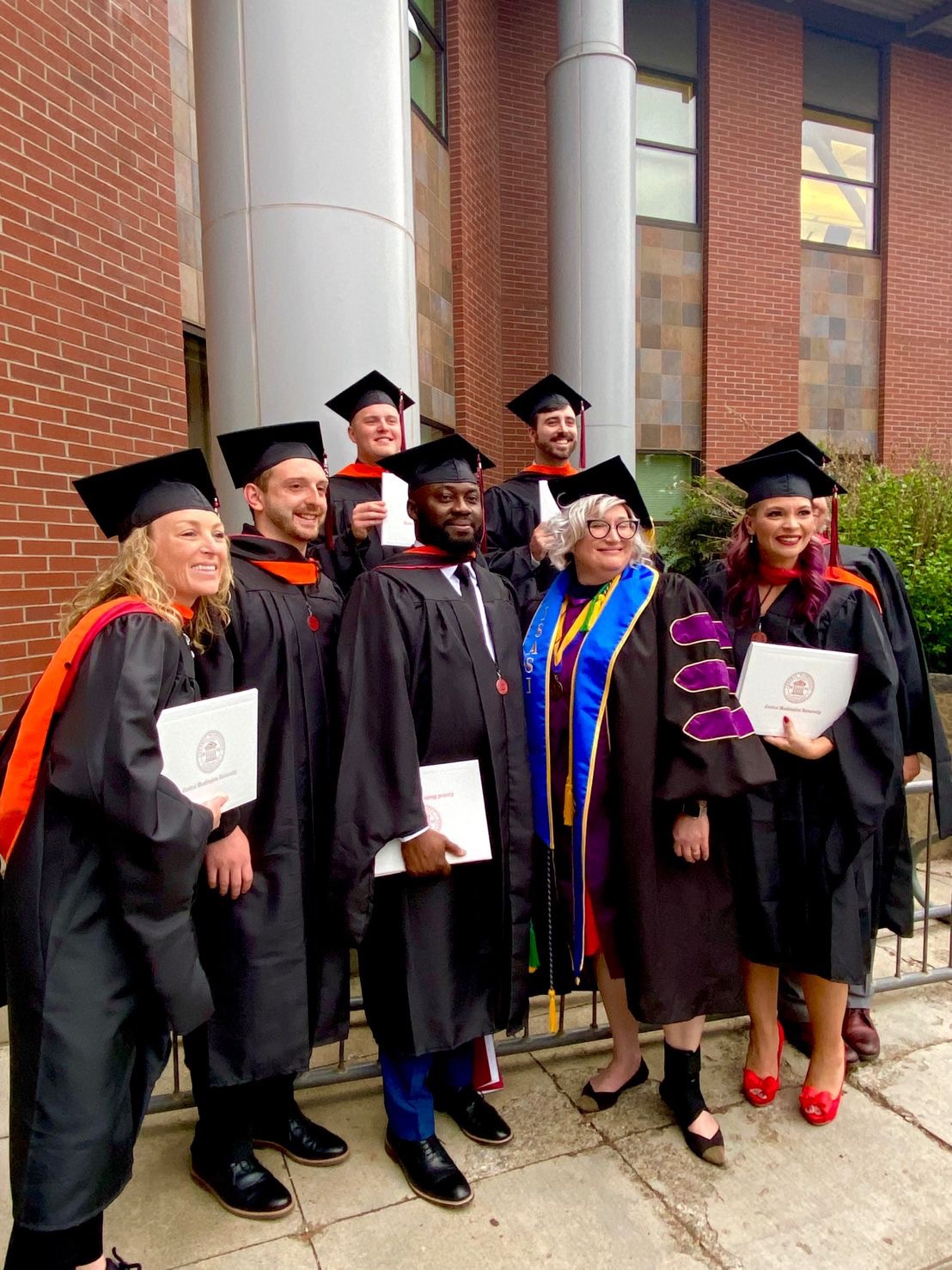
Having moved into a full-time faculty position with CWU, Serne sees a lot of herself in her students, and she strives to be the kind of professor she wishes she’d had during her own education, which culminated with a PhD in Industrial and Organizational Psychology from Grand Canyon University in 2024.
“One thing I like about this school is that I get to work with students who have probably also felt this way, like they shouldn’t be here doing this for whatever reason,” she said. “We always look at this stuff as negative, but there are some really unique aptitudes that come with it, too.”
Serne’s commitment to her students earned her an Outstanding Teaching Award from CWU in 2024. While she knows her skillset would be welcomed at most institutions of higher learning, she has found her experience teaching in Ellensburg to be as educational for her as it is for her students.
“I love the student population here at CWU because we have a lot more non-traditional students, which gives us a lot more diverse viewpoints in the classroom,” Serne said. “It’s a cool pickle to try to figure out how to explain stuff in different ways for different people, and we all get more out of it that way.”
Looking to the future, Serne is excited to serve as coordinator for the revamped Safety and Health Management master’s degree, set to launch in the fall. As she comes to terms with her role as a rising star in the world of safety management, Serne is realizing that perhaps all those people she shares the conference stage with might once have felt like she often does.
“It does always shock me when I see my name on the list next to people who were big mentors for me in this field,” she said. “Once I get to know them personally, though, I realize that maybe the coolest thing about them is the humility they have, and that they’re constantly learning, too.”
CWU News
Arts and Humanities Month continues to build momentum
October 21, 2026 by David Leder
New position at CWU-Des Moines aimed at improving student experiences
October 21, 2026 by David Leder