CWU primatology faculty prominent in the news
- March 4, 2026
- Rune Torgersen

Officially founded in 1998, Central Washington University’s primatology programs have received international acclaim, with alumni represented at all levels of the field across the world.
As such, faculty members in the department are often called upon by media organizations looking to add expert context to their work covering the wide world of primates, such as in recent publications by National Geographic and the Huffington Post.
“Meet Tatu and Loulis—the last of the 'talking' chimpanzees,” published in National Geographic on February 20, sheds light on the series of experiments that led to CWU becoming the first, and so far only, place in the world where an animal has both learned and taught a human language.
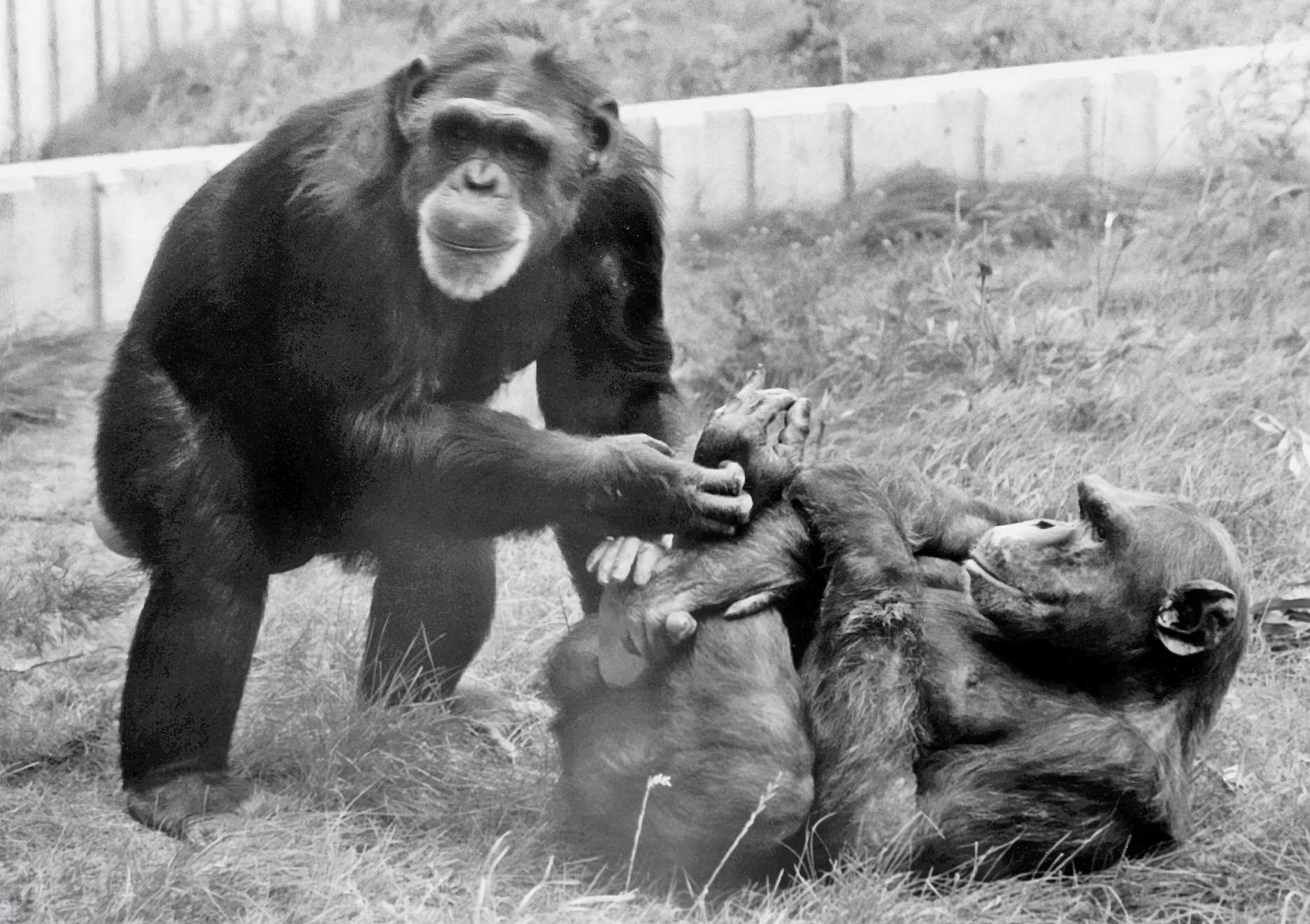
The story follows Washoe and her adopted family — Tatu, Loulis, Moja, and Dar — across 40 years of research into the chimpanzees’ ability to communicate via American Sign Language. Washoe was reported to have used 245 different signs to communicate with her human caregivers, and she passed the skill on to her adopted son Loulis, who picked up 78 for himself.
Though CWU’s Chimpanzee Human Communication Institute (CHCI), which closed in 2013, the surviving chimpanzees, Tatu and Loulis, have found a new home at the Fauna Foundation in Carignan, Quebec, under the care of former CHCI director Mary Lee Jensvold.
Jensvold, who also serves as a senior lecturer at CWU, and as associate director of the Fauna Foundation, lent her expertise to the National Geographic article through an introduction to Tatu and Loulis as they are now, living out their old age as two of only three chimpanzees in all of Canada.
Elsewhere in the news, the Huffington Post published the story “Why Would A Mother Monkey Abandon A Baby Like Punch? We Asked Primate Experts" on February 24, covering recent online sensation Punch, the baby macaque who is trying to integrate into his newfound family at the Ichikawa City Zoo after being abandoned by his mother.
The images and videos of a small monkey alone, save for his favorite stuffed toy, have touched the hearts of viewers around the world, leading many to wonder just what social mechanics within the pack of macaques was leading to the seemingly neglectful behavior on display.
CWU Anthropology Department Chair and Professor Lori Sheeran joined fellow experts, including CWU colleague Jessica Mayhew, to discuss the issue, highlighting the complex troop dynamics Punch has encountered as he works to settle in with the group, considered a very normal process for macaques.
Sheeran took care to highlight the many ways in which macaques go about raising their children as a group, noting that “often, care, particularly if it is costly, comes from close biological relatives of the infant or juvenile, such as a sibling, but it can come from unrelated group members, too.”CWU News
Arts and Humanities Month continues to build momentum
October 21, 2026 by David Leder
New position at CWU-Des Moines aimed at improving student experiences
October 21, 2026 by David Leder