Graduate students study ice cores in Norway alongside CWU professor
- January 26, 2026
- David Leder
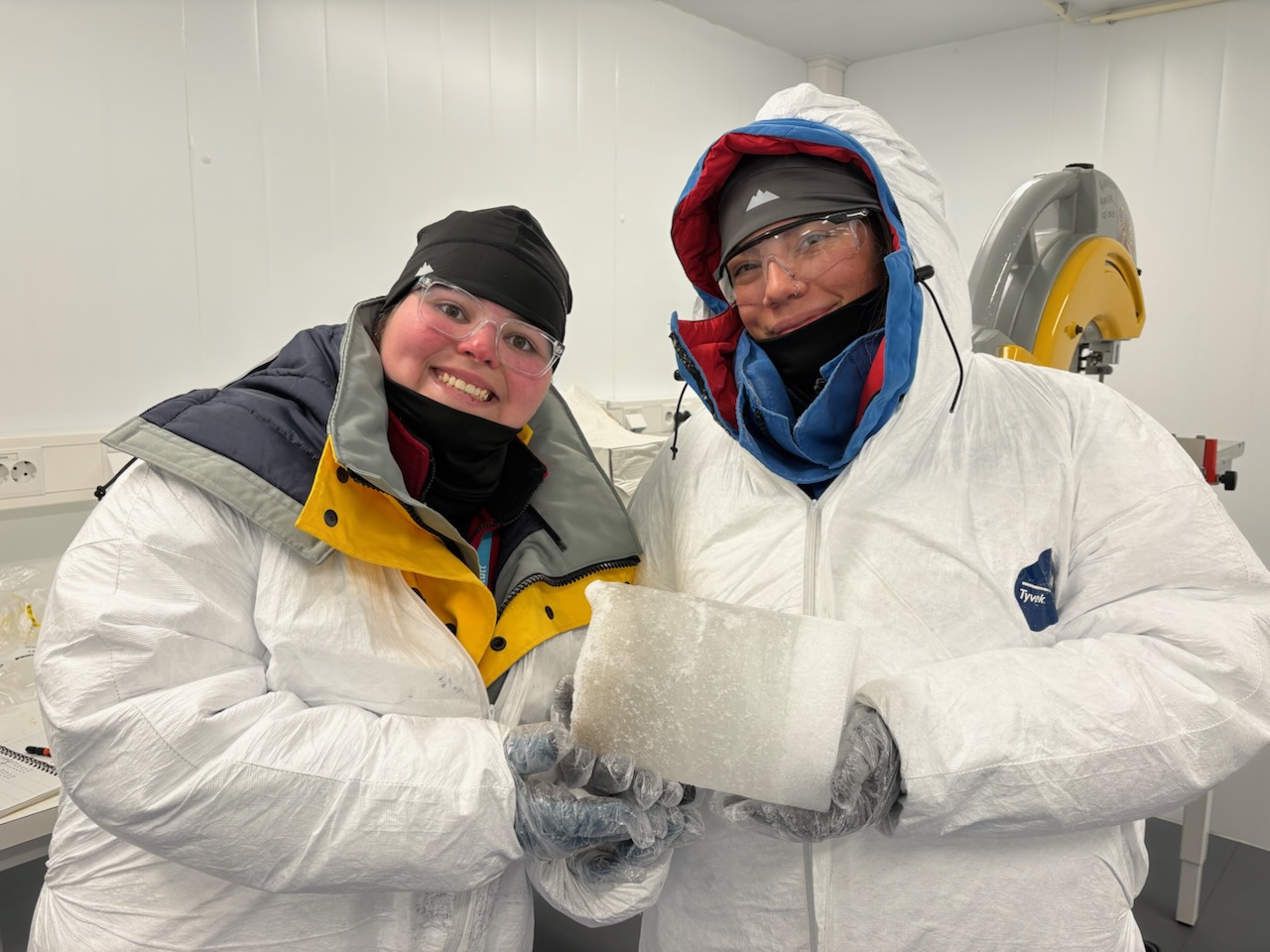
Two Central Washington University graduate students joined Geological Sciences Professor Dr. Susan Kaspari in Norway last month to study ice cores and learn what these specimens can teach us about the world’s changing climate.
Denise Diaz Vega and Tess Kraics accompanied Kaspari to the Norwegian Polar Institute in Tromsø from December 1-14 so they could analyze the cylindrical, layered ice samples that are sourced by drilling into glaciers.
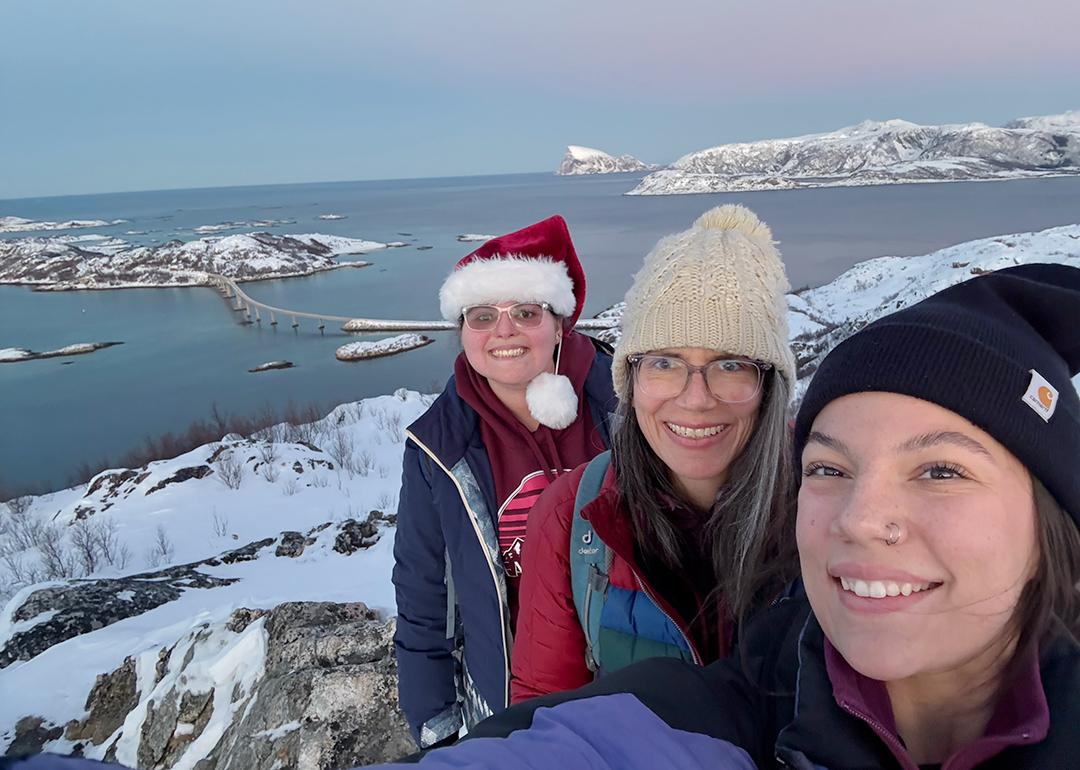
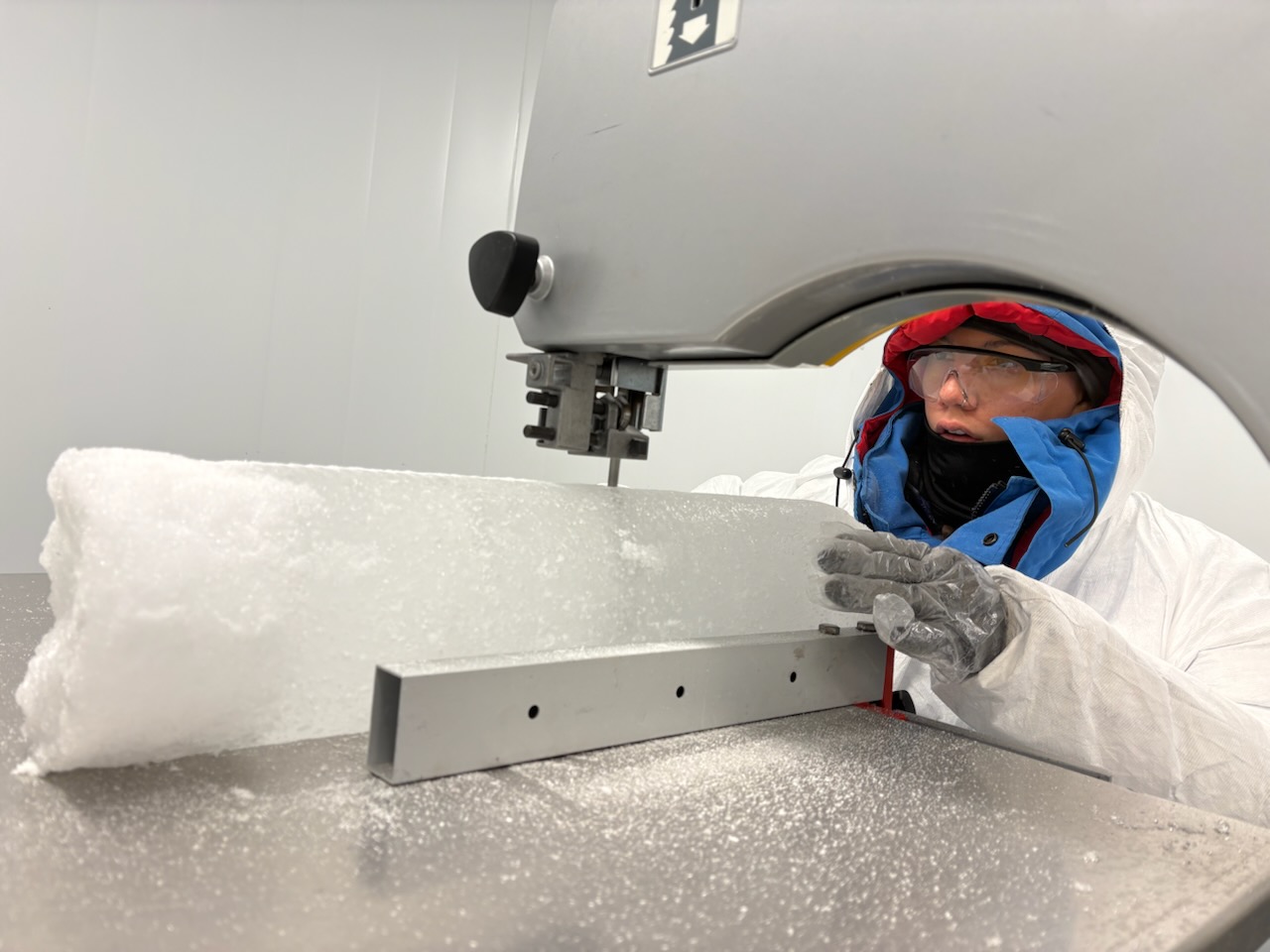
As part of their research, the team cut ice cores that Kaspari had collected with colleagues in spring 2025 through a grant supported by the Norwegian Research Council. The cores were then shipped from Svalbard to Tromsø, where Kaspari, Diaz Vega, and Kraics processed about half of the ice samples. The remaining ice will be shipped frozen back to CWU for further analysis.
Kaspari received a Fulbright Scholarship in 2023 to study Arctic ice cores and she has continued her research in the years since. Last month’s trip was special for her because it was the first time she was able to bring her students along.
“The Fulbright Scholarship laid the foundation for me to begin doing research on Svalbard, and the Norwegian Research Council grant provided support to collect the ice cores, but it didn’t cover the cost of analysis or student time,” said Kaspari, who began studying ice cores in Antarctica in 2001. “I received a National Science Foundation grant that is supporting the analytical costs and Denise and Tess’s research assistantships, which includes funding for them to travel to Norway for the lab work.”
Diaz Vega and Kraics will be engaging in separate research projects with the ice samples in the months to come, with most of their research being conducted inside the Discovery Hall ice core lab.
Diaz Vega is searching for mineralogical dust in the cores to help her understand their composition, while Kraics is doing a time series analysis of the samples to identify climate change trends. During winter quarter, she will be examining dust and black carbon deposits in the ice cores for spatial and temporal variability.
“I’m hoping this research will tell us more about the effects we will be experiencing in the future due to climate change,” said Kraics, who earned her bachelor’s degree in environmental geology from Florida Gulf Coast University. “My goal is to figure out what the ice is telling us by looking at the trends over time.”
Kaspari explained that Svalbard is one of the fastest-warming places on the planet, and by analyzing the dust contained in the Arctic ice — as opposed to mid-latitude areas like the Himalayas or Cascades — scientists can gain a better understanding of the future changes we might expect elsewhere.
“I feel like we’re still at the very beginning of this research,” Kaspari said. “We still have a couple years ahead of us with the samples we have now.”
Kaspari’s grant funding helped pay for the ice cores to be shipped to Ellensburg, and she will advise Kraics this winter as she analyzes them in the CWU lab.
Meanwhile, Diaz Vega has returned to Norway to participate in a highly selective two-month glaciology course at the University Centre in Svalbard. She will resume her research of the samples when she returns to campus in March.
“There were only 12 spots available for non-Norwegians, so I feel pretty fortunate to have been selected,” said Diaz Vega, who grew up in Puerto Rico before doing her undergraduate studies at Clemson University in South Carolina. “Susan told me about the opportunity the week before fall classes started, and I was able to put the application together in six days. She has been really helpful, and I can’t thank her enough.”
Upon returning to Ellensburg this spring, Diaz Vega will begin processing the filters she used on her December trip to capture dust particles from the melted ice cores.
Kaspari trained her students on how to cut ice before they traveled to Norway, but Diaz Vega soon realized that cutting ice cores was entirely unique.
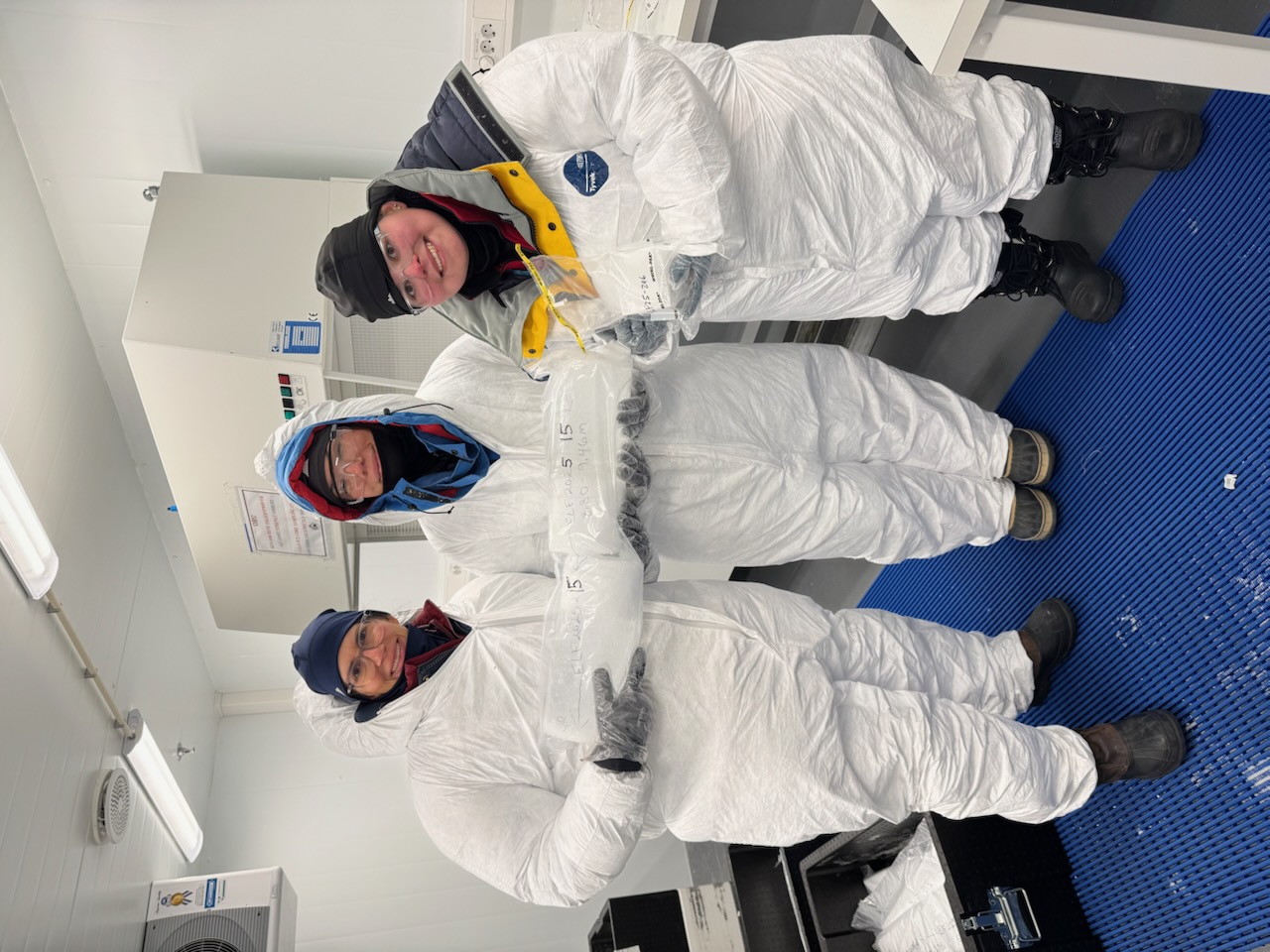
“Cutting the ice cores was much different, but we figured it out,” she said. “After we cut them in half, we melted some samples and filtered them so we could identify the minerals. I enjoy this kind of work, and I’m looking forward to doing more of it in the future.”
Both of Kaspari’s students are outspoken about the support and practical research experience they have received since venturing across the country to pursue their master’s degrees at CWU.
“I had no experience with glaciology research, but I was drawn to the work Susan is doing and how it relates to climate change,” said Kraics, a native of Maryland. “I feel like this work is really important, and I’m excited to take this research in a new direction and hopefully expand on it.”
Diaz Vega, who earned bachelor’s degrees in geology and mathematics at Clemson, has appreciated the hands-on research opportunities and one-on-one attention she has received in her short time at Central.
“The professors seem to prioritize their students, not just the class work,” she said. “When I told them that I was going to Norway for two months, they were very understanding. They agreed to work with me so I wouldn’t fall behind, and that really meant a lot.”
Kaspari said she is excited to have students like Diaz Vega and Kraics show so much enthusiasm for the ice core research she has been involved in for the past 25 years (and since 2009 at CWU).
She is planning a return trip to Svalbard in April with Diaz Vega, and she hopes to expand her research to other Arctic locations someday.
“I’m not sure where I will take it next, but I have built some strong partnerships in Norway who understand that environment really well,” Kaspari said. “Conducting research on Svalbard would not have been possible without the help of my colleagues at the Norwegian Polar Institute and University Centre in Svalbard. I’m hoping we can continue our research in the future.”
CWU News
Arts and Humanities Month continues to build momentum
October 21, 2026 by David Leder
New position at CWU-Des Moines aimed at improving student experiences
October 21, 2026 by David Leder