CWU professor visits Czech Republic to share research, foster collaboration
- July 28, 2025
- Rune Torgersen
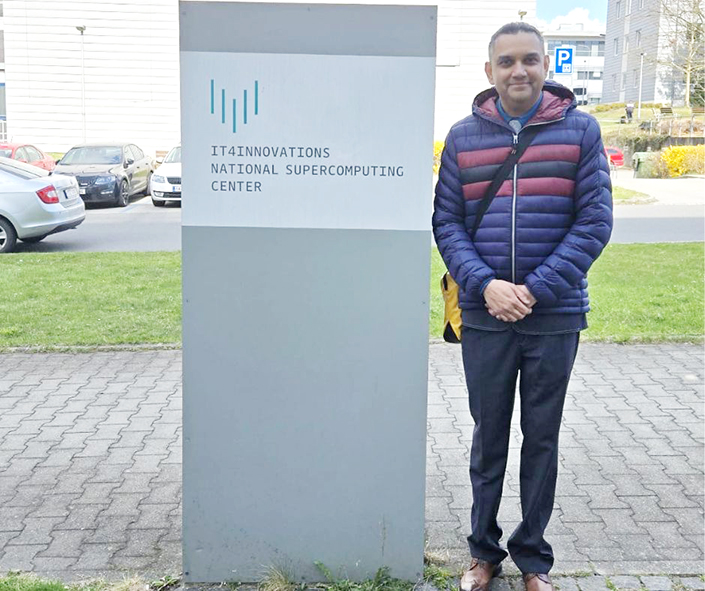
A key component of worldwide progress is engaged collaboration between institutions of higher learning, regardless of how far apart they might be geographically.
In April, Central Washington University Professor of Computer Science Donald Davendra traveled across the globe to his alma mater, the VŠB-Technical University of Ostrava in the Czech Republic.
He was invited there to speak to the institution’s students on his research into electric vehicle and pollution routing, and the ways in which advanced computing techniques might be applied to streamline and improve those processes, in a lecture titled “Addressing Electric Vehicle Routing and Pollution Routing Problems Using Metaheuristics and CUDA.”
While VŠB specializes in high-performance computing, electric vehicles and their associated infrastructure haven’t proliferated as much in Central Europe as in the U.S., giving Davendra the opportunity to offer VŠB students insight into a technology that could soon be knocking on their door.
While he was in town, Davendra in turn got the chance to see the Czech Republic’s national supercomputing center, IT4Innovations, which is currently home to the country’s first quantum computer.
Davendra explained that this kind of exchange between universities brings added value for students of both institutions.
“When we create this level of cooperation with other universities, when we share ideas and resources, that helps everyone in the ecosystem,” he said. “You can’t just google things like this; you have to be there, talking to the people involved in these cutting-edge fields, so you can bring that back to your students.”
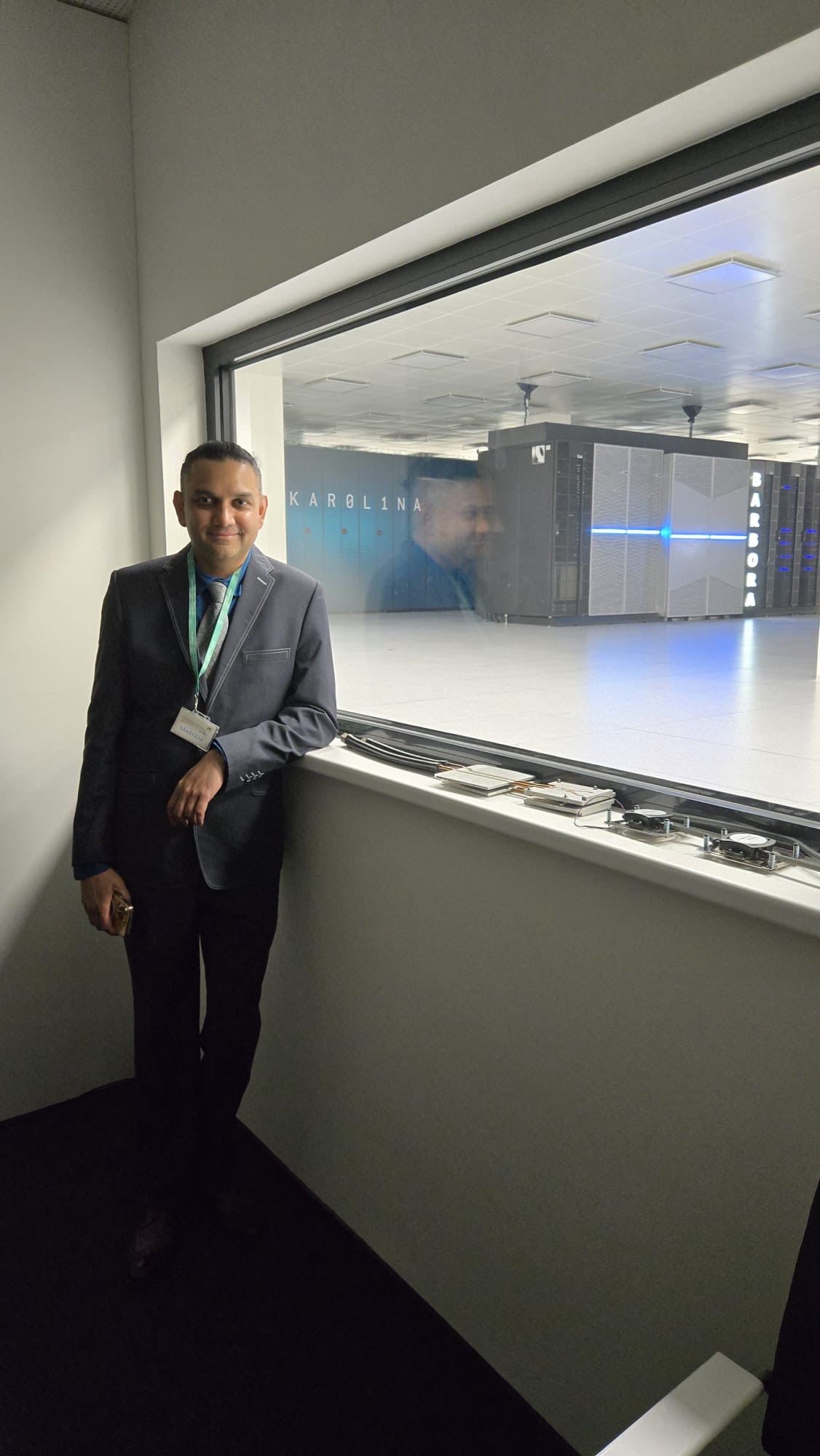
As part of his tour of IT4Innovations, Davendra saw firsthand the moment that the first node of the quantum computer, named VŠB Lumi Quantum (VLQ), was installed. The moment held great significance to him, as it represented the very latest in high-performance computing, which is Davendra’s specialty.
“It was a really rare thing, to be able to see it being installed in the supercomputing center there,” he said. “My colleagues there are amazing people, and to get that much access and hospitality was incredible.”
While access to the quantum computer is limited to European universities due to the way in which it’s being funded, there are no rules against collaborating with the Czech scientists who work with it, in order to enrich the curriculum of CWU students. As quantum computing continues to advance, Davendra believes this approach will be vital in keeping CWU computer science graduates familiar with emerging technology.
“In a few years, I believe that quantum computing will be everywhere,” he said. “We have to engage our students in it now, so that they can be ready for that shift.”
In the months since his visit, Davendra has been in touch with VŠB’s Vice Dean of International Relations to help solidify the partnership between the two institutions and continue to share the research that moves the world forward. He knows that the work put into that connection today will pay off exponentially for everyone involved.
“The research bleeds into the teaching, for sure,” Davendra said. “The research problems I encounter through these kinds of collaborations are what I have students work on for their capstones. That way, they have an advantage when they enter the job market.”CWU News
Arts and Humanities Month continues to build momentum
October 21, 2026 by David Leder
New position at CWU-Des Moines aimed at improving student experiences
October 21, 2026 by David Leder