CWU communication professor makes new memories while presenting work in Croatia
- July 31, 2024
- Katherine Camarata
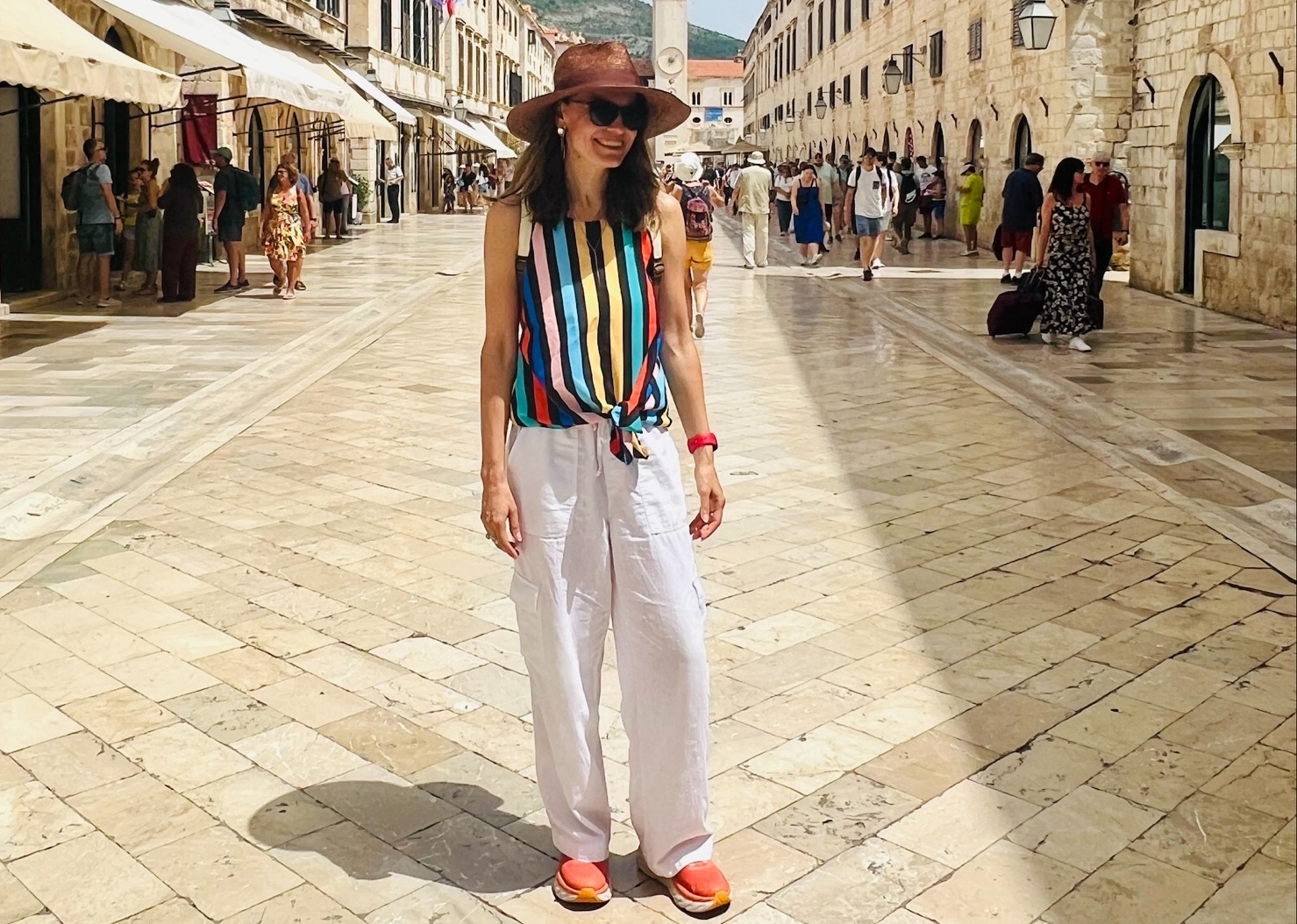
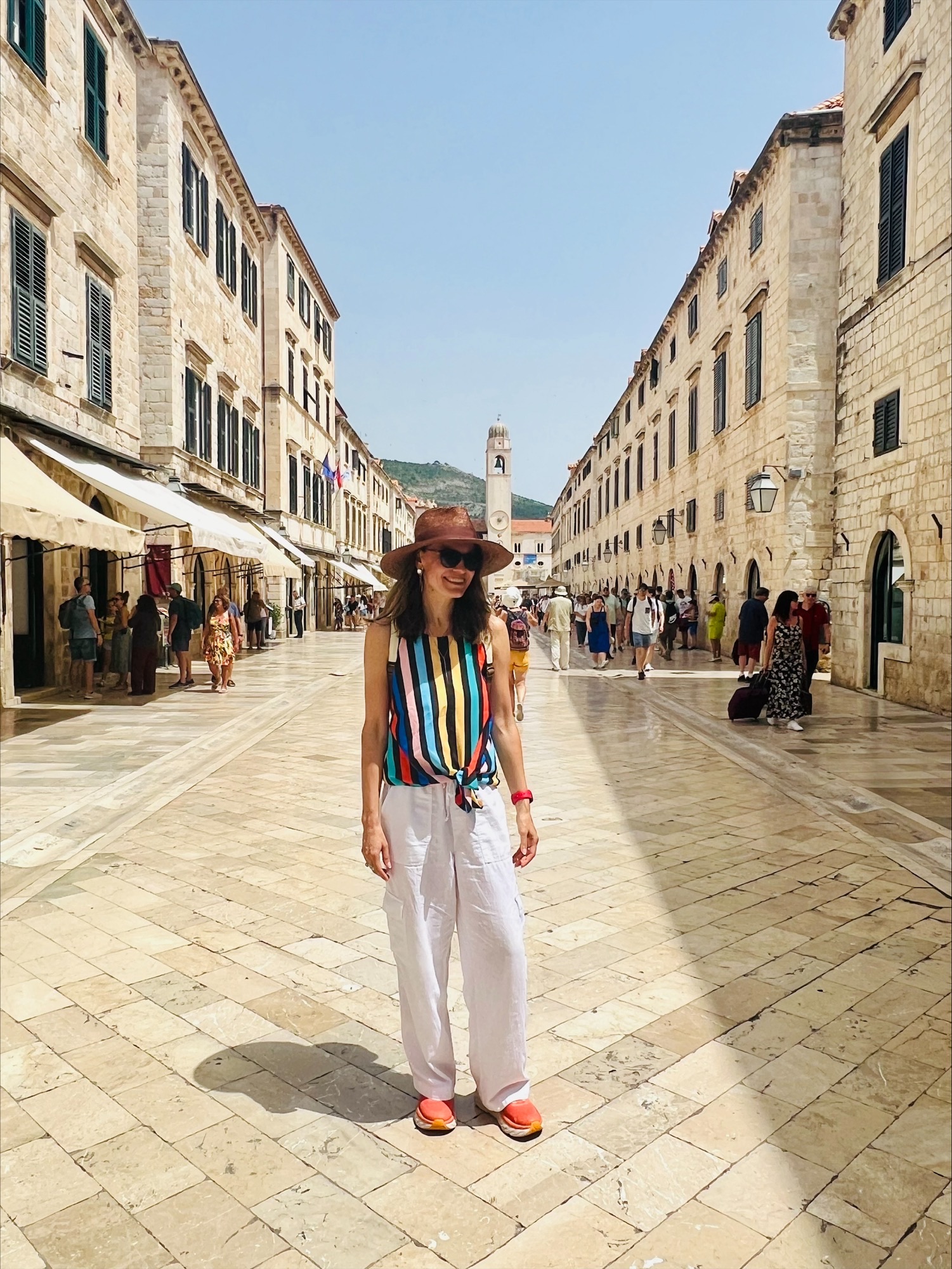
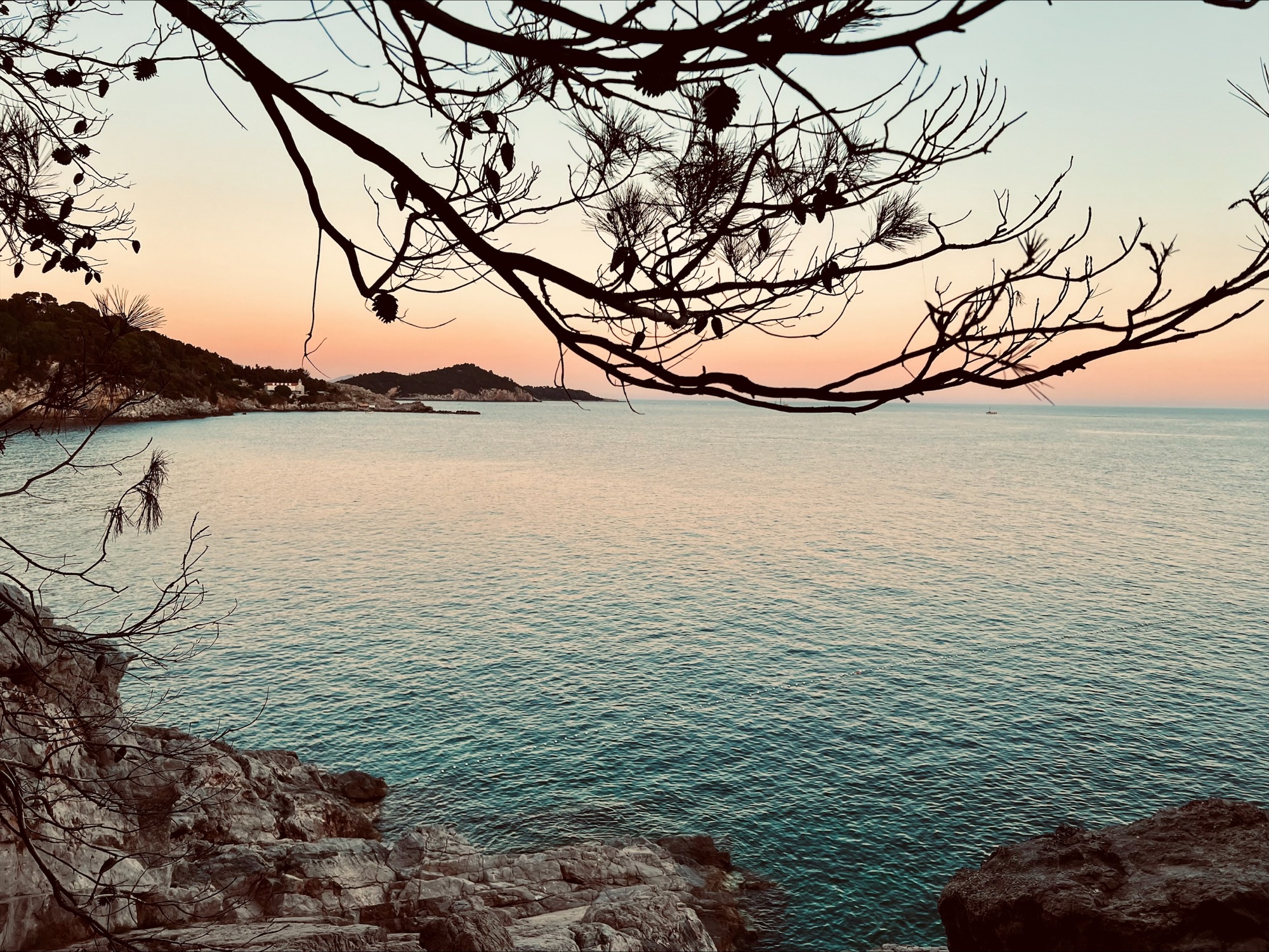
Translucent, teal waters on stone beaches, a traditionally costumed a cappella singing group, Mediterranean-style countryside cooking, and museum adventures highlighted Dr. Mary Eberhardinger’s week-long visit to Dubrovnik, Croatia, this summer to present her work at the International Rhetoric Workshop.
Eberhardinger’s latest travel adventure was a continuation of her mission to pursue connections overseas, just as she engaged in earlier this year during a trip to Japan. This time around, the CWU Department of Communication faculty member funded the trip herself because she viewed it as “important for professional reasons, and for enjoyment reasons as well.”
The conference lasted a few days, during which Eberhardinger presented the first and second chapters of her book, A Rhetoric and Philosophy of Gifts, respectively titled Language as Gift and Object as Gift. She shared her work to a small group at the conference and had an opportunity to receive feedback and answer questions afterwards.
“I’m pretty interactive when I present and when I’m teaching in person,” Eberhardinger says. “I also like to use objects. When we checked in at the conference, they gave us gift bag with a little bar of homemade soap made from Croatian lavender. I used that soap and I put it on the table while I was presenting, and I had some other souvenirs in my pocket. Before I presented, I set up the table with some visuals.”
Eberhardinger recalls the passages she shared from book as being well-received, noting that people in the audience enjoyed her ideas and mentioned related articles. A man from Poland talked about the lost art of handwritten thank you letters in response to receiving gifts, while another audience member sparked discussion about a quotation by philosopher and Jewish Holocaust survivor Hannah Arendt that was included in her book.
“It’s what people hear and decide to raise their hand and comment on,” she says. “You never know, but you have to sit there confidently with your work and be ready for anything, and know that you know what you know. Don’t be afraid of the audience when they raise their hand.”
Eberhardinger encourages writers to keep the dialogue going with readers beyond when one’s work has been already published, saying, “Even if your work gets published, it’s still open for interpretation or conversation. Try to tour the work, try to get the work out there.”
She emphasized some unique and impactful connections she made while participating in the conference, including some people she was able to encourage or “semi-mentor.”
She especially enjoyed meeting the chair of the communication and media department at Penn State University, as well as an anthropologist from British Columbia who showed great interest in her book.
“I could tell that she genuinely understood and appreciated where I was coming from,” Eberhardinger says. “It helps my confidence to meet these people and talk openly, and that’s what conferences give you the opportunity to do. She’s very familiar with gifts because she is an anthropologist and she does field work in Ethiopia, so she would bring many objects from the United States that they would exchange.”
Seasoned World Traveler
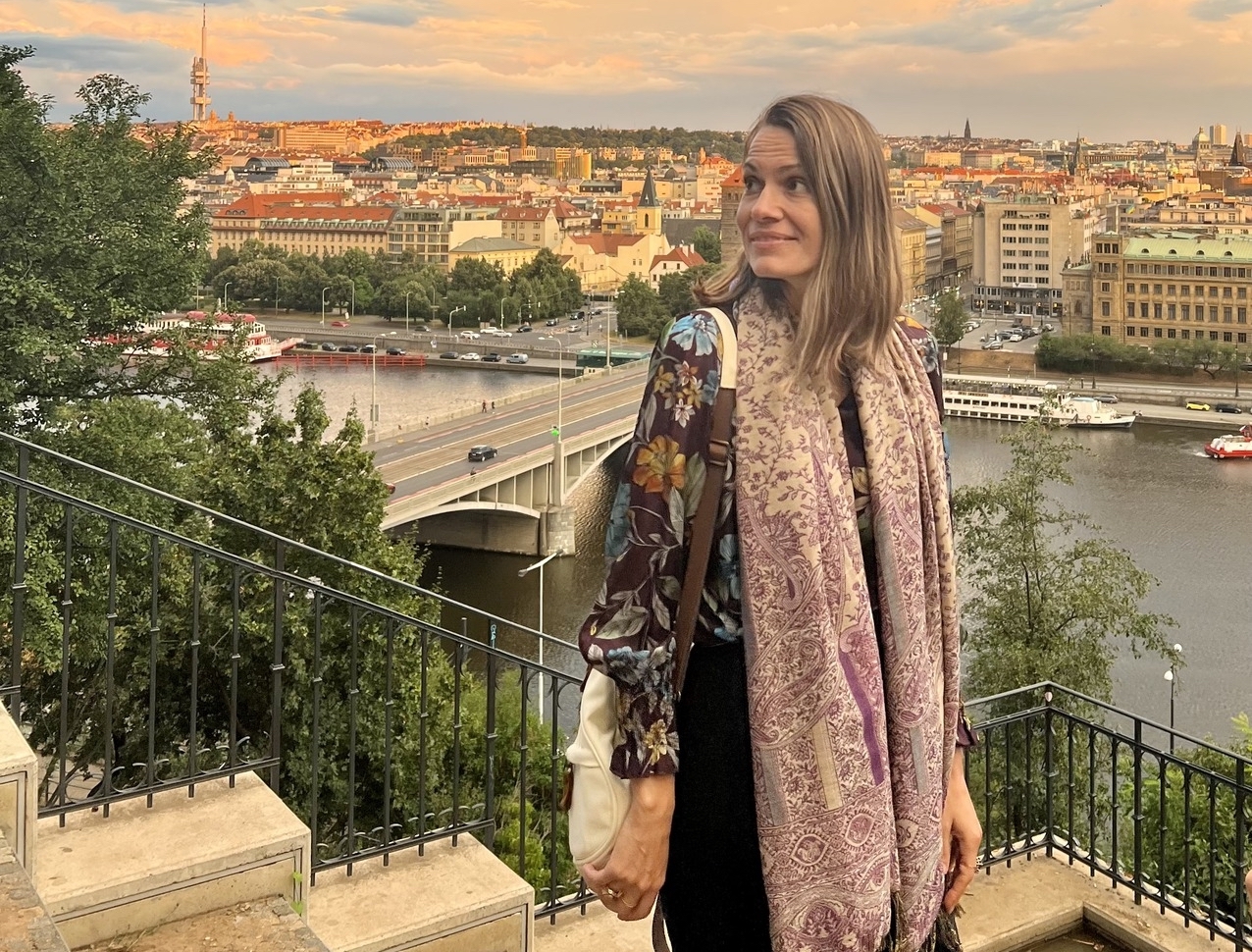
Eberhardinger is no stranger to fostering international relationships, as she did last winter when she traveled to Japan, and in the summer of 2023 when she visited Prague, Czech Republic.
“A Memorandum of Understanding was just signed between CWU and Palacký University Olomouc in the Czech Republic, and that resulted from me going there to Prague last summer,” she says. “My colleagues in the Czech Republic also came to Ellensburg and met the dean in the College of Arts and Humanities, the chair of the World Languages and Cultures Department, staff from the Office of International Studies and Programs, and faculty members in the Communication Department. So, it was a reciprocal exchange.”
With so many beneficial relationships continuing to grow, Eberhardinger hopes to encourage others to travel and build lasting relationships abroad. While it’s not always easy, it can be very rewarding.
“I feel proud that I did it, but it was difficult,” she says.
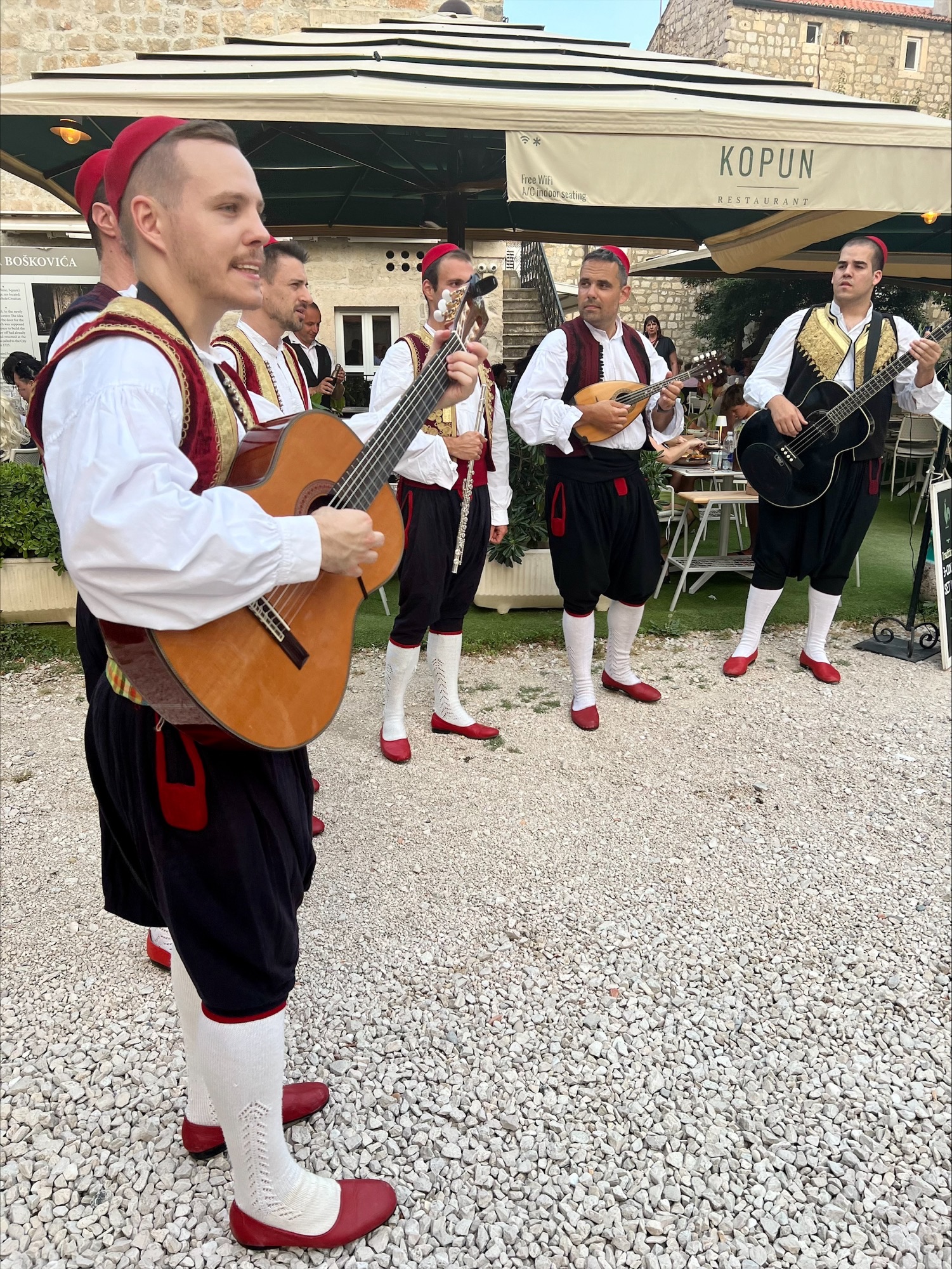
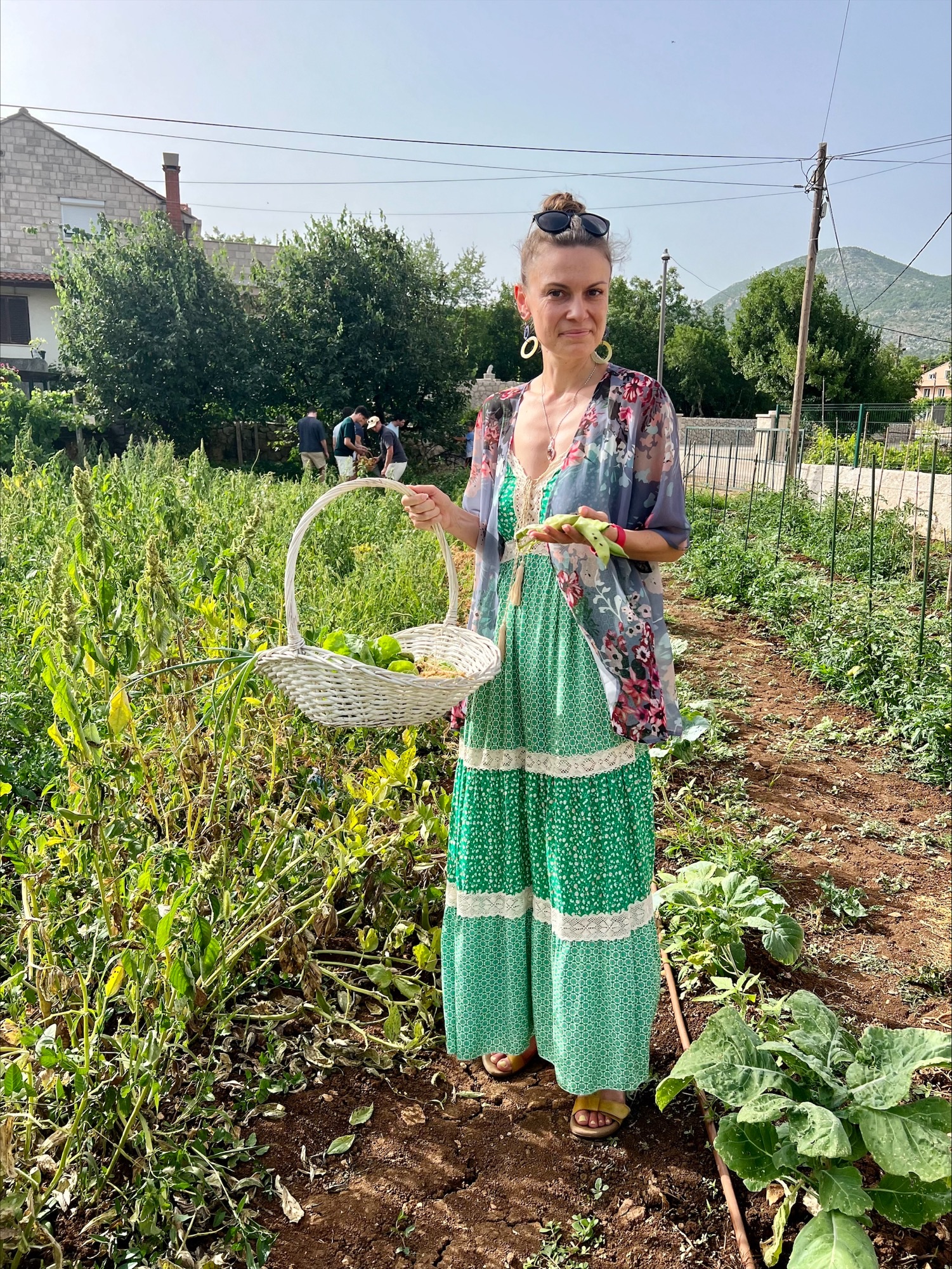
Eberhardinger documented her experience on her social media accounts, sharing vibrant photos of her adventures in the Balkan region. She cited a countryside cooking course as one of her favorite experiences while abroad, where they used simple ingredients like high-quality olive oil, white wine, and dalmation herbs that highlight the taste of the fish, meat, or vegetables being served.
The course lasted about five hours and included a visit to the location, which was a tavern/farm/living quarters called a “konoba.”
“A family lives there, and you meet the family and the host, you get to see the farm animals and you pick vegetables from their gardens,” Eberhardinger says. “We made a traditional dish called peka, which features garden-fresh root vegetables, dalmation herbs, olive oil, and wine, plus a type of meat or fish.”
The instructors chose veal for this particular dish, putting put all of the ingredients into a cast iron pan.
“It’s a very slow-cooked meal in a rustic stone hearth oven, and they serve it with wine that they make on the property,” she adds. “Wine is a big deal in south Europe, so that was a highlight.”
Eberhardinger also recounts a tale of a meal during an outing organized by the conference, during which the group was surprised by live music while they dined. She and her new friends were treated to an all-male a cappella group that performed traditional Croatian music similar to polka called “klapa.”
“That was really nice,” she says. “They were in traditional costume and they sang outside of the restaurant. We all drank champagne and listened to the music. It was really fun.”
Despite overnight layovers and a nationwide power outage during her trip, Eberhardinger has many positive memories from her most recent overseas adventure.
“Travel is always helpful, even if it’s challenging,” she says. “You learn how to problem-solve and have these survival skills come out.”
Side Project Getting Underway
Aside from her world travels, Eberhardinger has been involved in writing a proposal for the European Union governmental grant called the Marie Curie Staff Exchange, in collaboration with a couple from the Czech Republic, Drs. Ludmila and Tyler Bennett, who she met last summer.
“My colleague from Slovakia invited me to work on it and collaborate with her,” she says. “If the grant is accepted, then CWU would be included in these partnerships with the European Union … The research focus for the grant would be implementing semiotics into curriculum for the work force.”
Eberhardinger explains that the purpose of the proposal would be to modernize semiotics — the study of signs and symbols and how they are used — and communications curricula to reflect the current workforce and how it is being impacted by emerging technologies like artificial intelligence.
“The grant would deal with job ready curriculum and skills, specifically semiotics,” she says. “Semiotics is something that sometimes gets this old reputation of just talking about symbols and philosophy and signs, and something that stands for something else, and it gets stuck in this literature. We are in the starting phase of it.”
CWU News
Arts and Humanities Month continues to build momentum
October 21, 2026 by David Leder
New position at CWU-Des Moines aimed at improving student experiences
October 21, 2026 by David Leder