CWU Paramedicine program returns to its roots as it begins new chapter
- July 19, 2024
- David Leder

The Central Washington University Paramedicine program entered a new era this spring when it brought in alumna Emily Gonzalez as its new program director.
The certified paramedic, senior Emergency Medical Services (EMS) instructor, and former professor at Tacoma Community College was hired in May to help give CWU Paramedicine a fresh start after some ups and downs over the past couple of years.
With the program’s 50th cohort beginning classes this fall, the College of Education and Professional Studies (CEPS) wanted to reestablish the program’s momentum as the preeminent paramedicine and EMS training destination in the Northwest.
“We are here, and we’re not going anywhere,” CEPS Dean Sathy Rajendran said, addressing recent rumors that the program has fallen on hard times. “We are rebuilding the program with an entirely new staff, and we are really excited to have someone like Emily leading us into the future.”

Rajendran added that the CWU Paramedicine program — which offers the Northwest’s only four-year degree in EMS medicine — plans to return to the “Dorothy Purser model,” in honor of the program’s co-founder and longtime CWU faculty member.
“We’re going to do things the right way,” Rajendran said. “We want to recapture the passion that Dorothy brought to the program, and we believe Emily is going to help us get back to that tradition of excellence.”
Gonzalez holds a bachelor’s degree in paramedicine (’21) and a master’s degree in public health (’22) from CWU, and she is currently pursuing a doctorate in education.
She has been a certified Emergency Medical Technician (EMT) with the state of Washington since 2015 and earned her paramedic certification in 2018. She continues to actively practice as a 911 paramedic, and also holds various Washington state certifications, including Emergency Services Evaluator (ESE) and Senior EMS Instructor (SEI).
Gonzalez is known for her scholarly research in the mental health and EMS fields, and for her contributions to promoting gender equity and the professional advancement of women in EMS education and careers.
Like Purser and her other CWU predecessors, she believes in the traditional method of teaching paramedicine: giving students an opportunity to engage in practical learning of paramedic skills in both clinical and field environments alongside their academic studies.
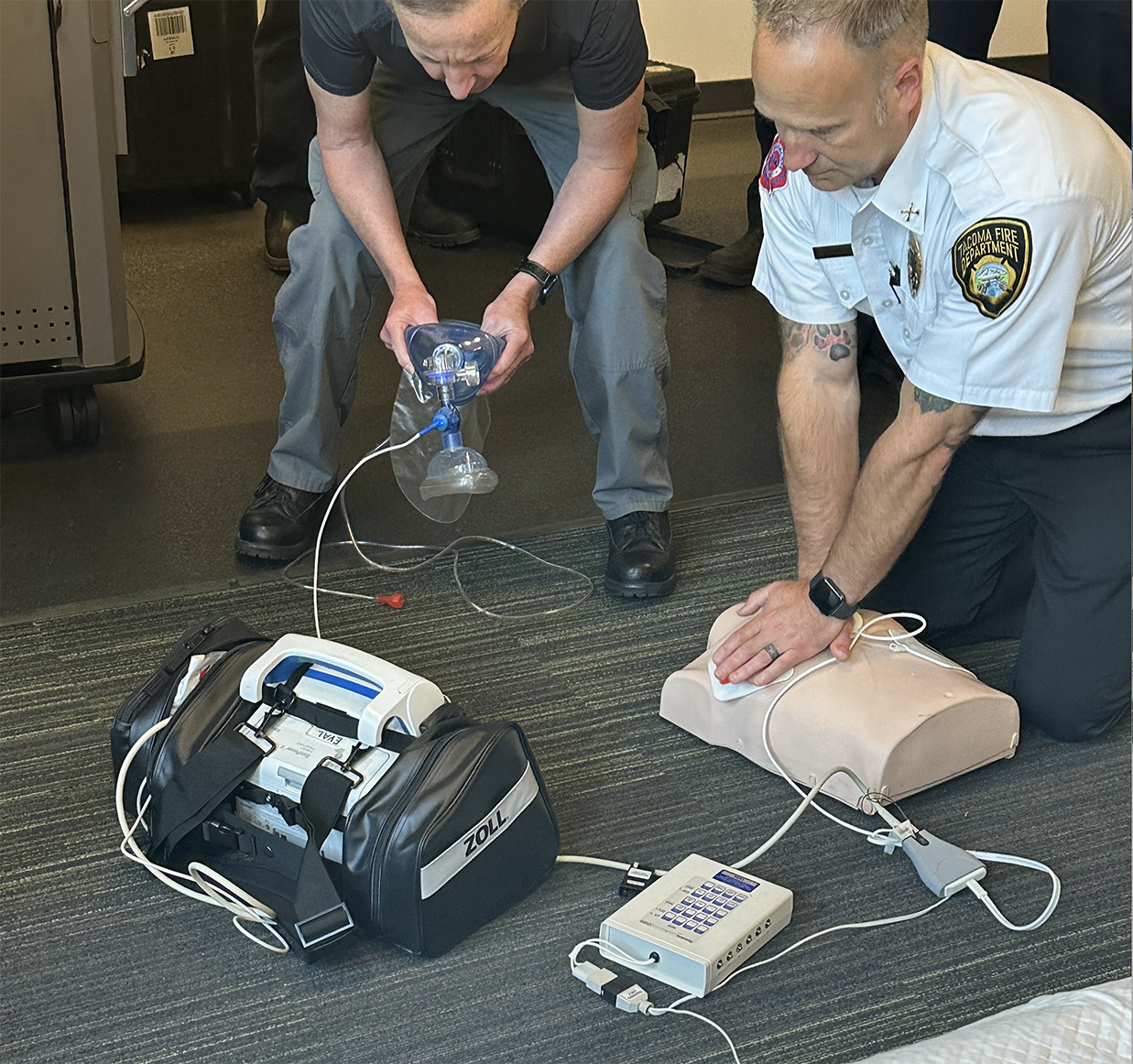
“I have found that the immediate practical application of the skills students are learning in the classroom leads to better retention,” Gonzalez said, explaining that some educational models restrict field work until after students complete the classroom phase.
“We’re going to provide applied learning experiences from the very beginning, and students will begin working in the hospital during their fourth week,” she added. “We feel like this is going to provide a lot of added value for our students, as well as our field partners.”
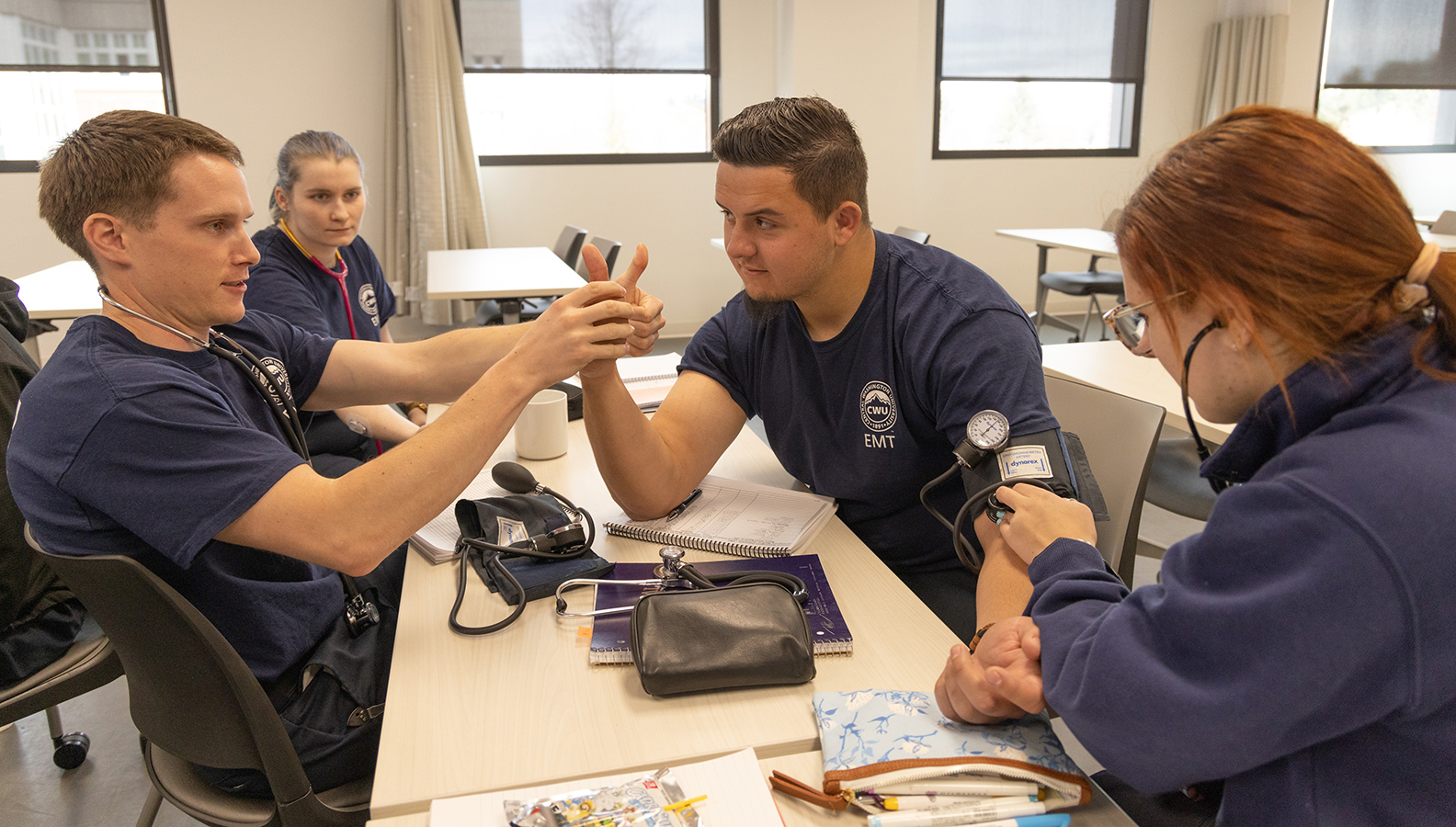
The CWU program is designed to help students build and apply skills appropriately over time. As they learn and grow their skills, the environments and scenarios in which they use those skills also becomes more complex as their training progresses.
Gonzalez said the EMS-Paramedicine program — which encompasses a one-year paramedicine certification and a one-quarter-long EMT training course, along with the paramedicine bachelor’s degree — will implement the continuous applied learning model when fall 2024 classes begin.
The one-year paramedicine certificate program already has a nearly full roster enrolled for this fall, and the faculty looking forward to a fresh start.
“This new approach will help our students grow and develop into stronger providers as they simultaneously learn the academic material,” Gonzalez said. “By gaining hands-on experience in the field from the very beginning, that will help cement the building blocks of learning they will need throughout their careers.”
Gonzalez will be joined in the classroom by well-known instructor and textbook author Daniel Limmer. He previously taught at CWU from 2011-18, and he is one of the most highly respected paramedicine and EMS instructors in the nation.
“We are honored to have such an esteemed member of the academic community join our faculty,” Gonzalez said of Limmer, the co-author of the widely used Emergency Care textbook. “He already has a connection to our program, and he is also looking forward to helping us move into the future.”
Eyes On the Future
Also new at CWU this fall will be hands-on training with four emerging technologies that are gaining traction in the field: portable ventilators, portable ultrasound, packed red blood cells, and power pump infusers.
Gonzalez noted that all four treatment methods have become increasingly common in EMS over the past five years, and CWU wants to expose students to this life-saving equipment before they enter the workforce.
“At Central, we want our students to be prepared for every scenario they will encounter,” she said, adding that CWU is only the second program in the state to offer training on all four of these emerging technologies. “We want them to have as much specialized training as they can get because this is where medicine is heading.”

Even before Gonzalez’s arrival this year, CWU Paramedicine had already begun preparing for the future by introducing practical learning spaces in the new Health Sciences building, which opened in 2022. These include an ambulance simulator, a real-life hospital room setting, and a variety of simulated treatment environments, such as a bathroom, bedroom, and kitchen.
“Providing care to patients requires students to respond confidently in a variety of different settings, including in the back of an ambulance, which is an entirely different dynamic for our students to become comfortable with,” Health Sciences Department Chair Tishra Beeson said. “Exposing our students to a variety of scenarios using these simulated spaces is extremely valuable, and it helps set our program apart.”
The CWU program also has a fully operational ambulance that it drives around Ellensburg for training purposes. Giving students this additional level of experiential learning shows them what it will be like to deliver services in the field.
“Providing care inside of a moving ambulance takes practice, and it’s a great way to make sure our students are fully prepared to do the job,” Beeson said.
Well-Prepared Professionals
CWU is proud of our five-decade-long tradition of training some of the finest EMTs and paramedics in the country, and we look forward to many more years of setting the standard across the Northwest.
Among the key beneficiaries of the program’s expertise over the years has been Kittitas Valley Fire and Rescue. Chief John Sinclair said his department depends on CWU Paramedicine to properly train its new recruits and help fill open positions.
“It’s a very high-quality program, and it’s been really vital for our community over the past 50 years,” said Sinclair, who completed the CWU program in 1979-80. “The majority of our paramedics are CWU graduates, and we really rely on the university to provide us with well-trained professionals.”
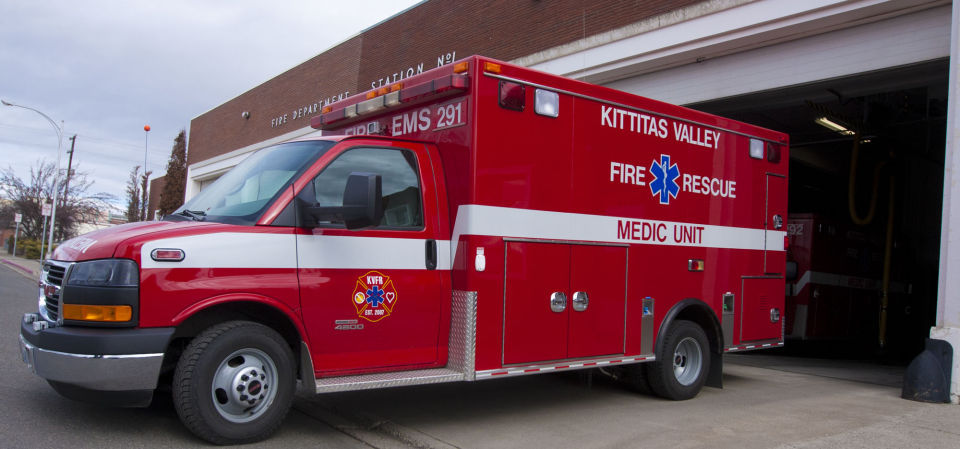
Sinclair noted that having a paramedicine program in our own backyard is essential to his department’s ability to serve the community effectively. He estimated that more than two-thirds of KVFR’s 16 paramedics went through the CWU program.
“We are constantly looking to hire and train paramedics, so having such a quality program right here is a great asset for this community,” he said. “But they aren’t just serving the people of Kittitas County; there are a lot of graduates who have gone on to leadership roles across the country. The CWU program has a long history of excellence, and we are proud to partner with them so closely.”
Maintaining strong community connections remains a priority for the Paramedicine program and the Department of Health Sciences as it begins a new chapter.
Beeson explained that she and her colleagues look forward to helping the program extend its long tradition of excellence and community service.
“We have a long history of advancing cutting-edge paramedicine training, and with Emily’s help, we are going to be taking an even more innovative, forward-looking approach,” she said. “All of these elements will combine to create a powerful educational experience for our students. As a result, they will have a chance to be even more successful in a high-demand field.”
Learn more about the EMS-Paramedicine program on the CWU website. If you have questions, email healthsciences@cwu.edu or call 509-963-1912.
CWU News
Arts and Humanities Month continues to build momentum
October 21, 2026 by David Leder
New position at CWU-Des Moines aimed at improving student experiences
October 21, 2026 by David Leder