Breaking the Stigma: Suicide prevention and mental health awareness at CWU
- October 9, 2024
- Katherine Camarata
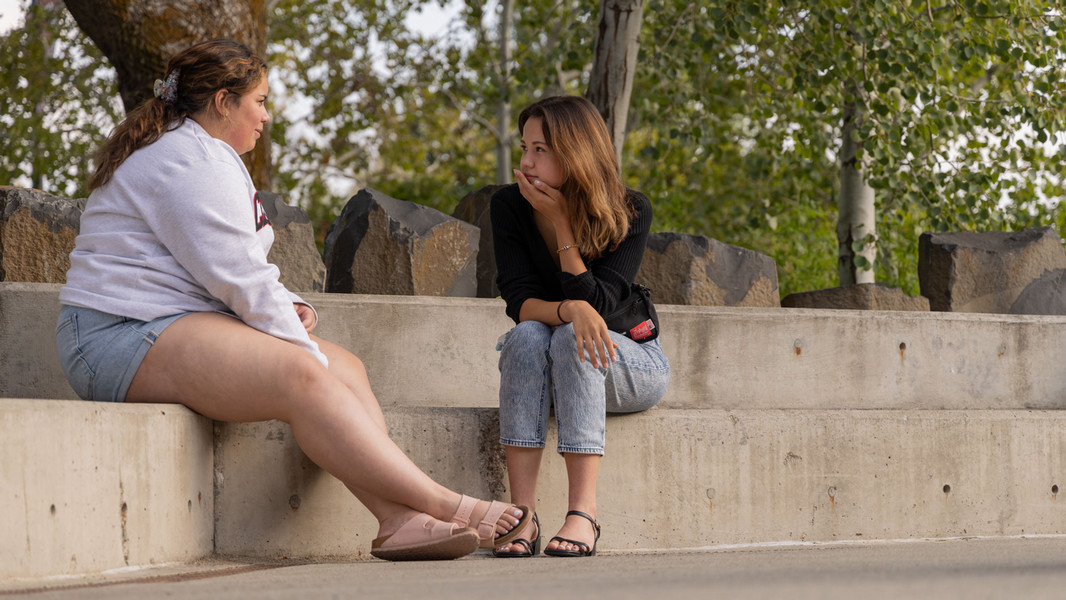
As the leaves transform shades and float to the ground from the branches they once clung to, students filter onto campus and begin a new academic year, finding a new sense of community and facing newfound challenges during their transition back to college life.
As the campus community was reminded last month during national Suicide Prevention Month, CWU fosters caring and supportive spaces for students to break beyond the stigma of sharing mental health concerns and reach out for resources to help them and their peers, no matter what they may face beneath the surface. These spaces include the Student Counseling Services clinic in Black Hall, suite 225-30, and the Office of Health Promotion, formerly known as the Wellness Center, in SURC 256.

David Douglas, senior lecturer in Information Technology Management and founder of the Kittitas County Recovery Community Organization, hopes students will remember that they matter as they go through the ups and downs of their mental health journey.
“It’s the start of the school year, and it’s one of my favorite times because I get to engage with students,” Douglas says. “I want to build relationships with students in a way that they know that they’re important to the world. We all bring value to the table; we all bring something unique to the table.”
Douglas says he relates to introverts and students who live outside of social norms, and he recognizes that these students may face the most severe challenges.
“The world at large, in their minds and it may be true, doesn’t accept them for who they are or the color of their skin or their race,” he says. “Their life is meaningful. I’ve been in those really hard places in life where you don’t feel that. It can be hard to hear some guy say, ‘you matter’ when you feel like you don’t. So, it’s important to have someone to just be there for them, to just listen and sometimes not say anything.”
Similarly, Student Counseling Services Director Cindy Bruns reminds students that each person is a vital part of our community: “Depression can make you feel like you’re not an important part of the whole, but without you, we aren’t whole, so try and remember that the depression isn’t telling you the truth.”

Bruns encourages students to remember that even if others are not speaking openly about their challenges, other people are definitely going through the same thing as those who are hurting.
“Breaking the silence, and reaching out and asking for help and support, is such a powerful thing,” she explains. “It’s not an overnight solution. It takes work, it takes support and challenge and changing these long-standing patterns, maybe seeking medical attention. It is work to feel better, but it’s such important work.”
Jasmine Cottam, Health Promotion Coordinator, echoes this sentiment of how integral it is for students to speak their minds when it comes to mental health.
“The best way students can advocate for themselves is definitely opening up to others,” Cottam says. “It’s the hardest thing to do, but if we’re not open to our friends, to our peers, or to trusted family members that we are going through something that’s difficult, then it’s hard to be able to receive help or receive any kind of assistance with our school work or with our home and personal life.”

The CWU Student Counseling Services staff. Top row (L to R): Jen Moultine, Kelsey Sullivan, Tiffany Smith, Sarah Sheranian Hall, Cindy Bruns. Bottom row (L ot R): Shianne Lowe, Ran (Renee) Bi, Sara Stubbs, Trisha Pearsall.
Resources Available
Students in crisis or immediate risk of suicide are advised to text 988 for 24/7 support or to call local authorities via 911 to avoid unnecessary loss caused by serious mental health concerns. For those who are struggling in a more long-term way but do not feel in immediate danger, there are myriad resources at CWU.
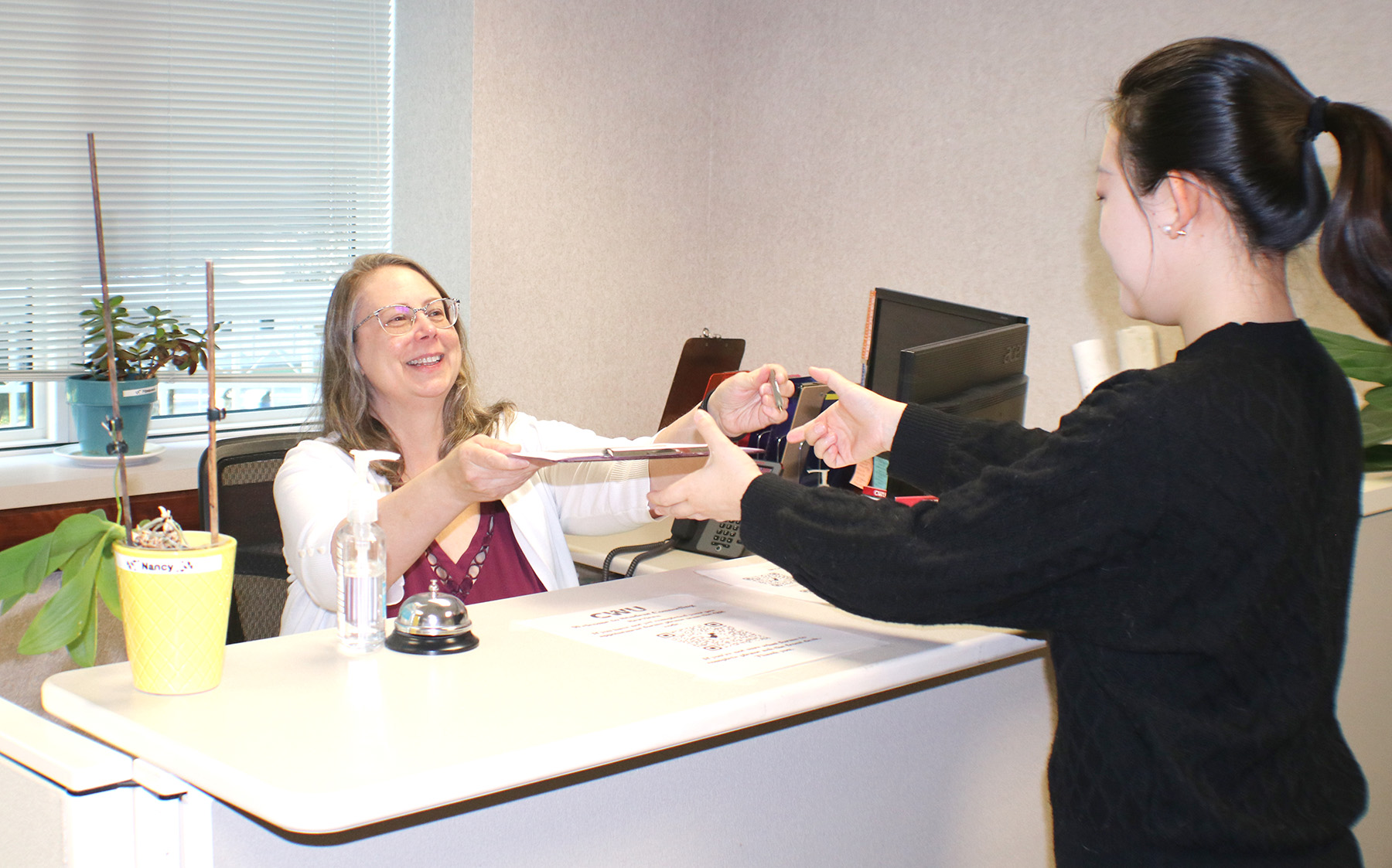
Student Counseling Services is open Monday to Friday from 8 a.m. to 4:30 p.m. (closed for lunch from 12-1) and provides a space for students to share concerns about their own lives or the lives of others around them. If a student does not feel able to speak directly with a peer about their challenges, they can consult with Student Counseling Services or with the Office of Case Management on their behalf.
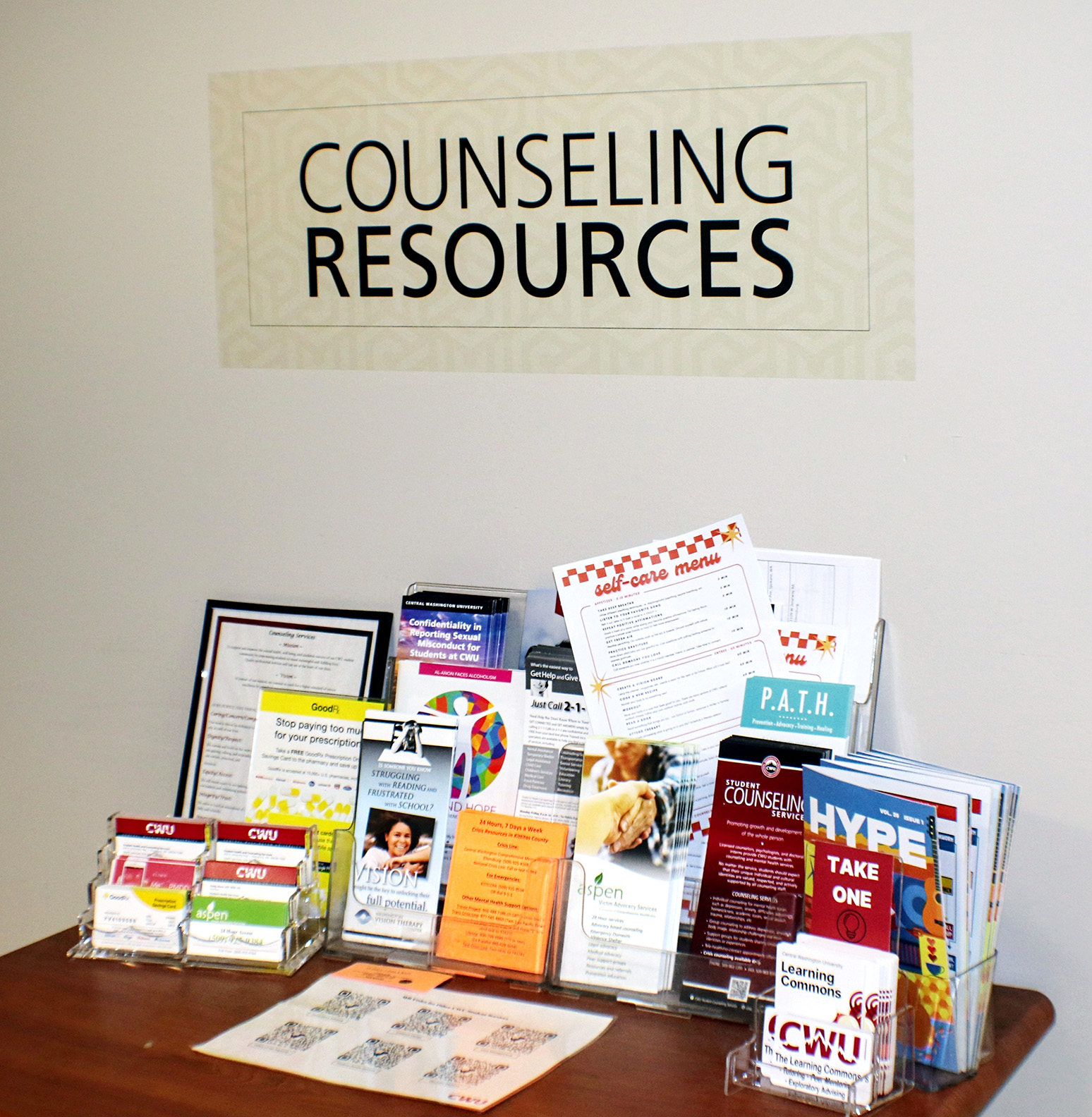
Students, faculty, and staff can also complete the Care and Support form through MyCWU for themselves or others, and Case Management would then reach out to that student with resources and support.
Another space of support is the Office of Health Promotion, which recently published a Health and Wellbeing Resource guide, so everybody at CWU can be aware of which resources are available to them at any given time.
Bruns encourages students to first collaborate with those they are concerned about through conversation. However, if this is not possible, students are always welcome to consult with the Student Counseling Services, Case Management or the Office of Health Promotion.
“In general, it’s always better to say something than to not say something,” Bruns says. “Whenever possible, first being able to talk with the person that you have concerns about and say, ‘Hey, I’m worried about you, what’s going on, are you okay?’ And I realize that that’s not always a realistic thing, depending on how the information comes to someone or how the relationship is.”
Bruns recommends that students approach people they are concerned about by saying: “It sounds like it’s beyond just a friends and family thing, I’m really worried about you. We need to get you more support. I’m not going anywhere, but we need to expand the circle.”
She explains that the priority of the Student Counseling Services is to help students of all identities and experiences feel welcome, comfortable, and supported.
“We want to make sure that they are physically and emotionally safe,” Bruns says. “If there are concerns around potential harm to self or others, then our first step is really to talk with students about what might be driving that, understand what the pain point is, and see if there is something we can do fairly short term to alleviate some of that pressure.”
The next step, Bruns adds, is to engage students in a collaborative safety planning process and staged intervention by talking through coping strategies and developing support networks for students to utilize when feeling overwhelmed or suicidal.
Student Support
Beyond seeking help through the multitude of programs at CWU, Bruns encourages students to be intentional about connecting with others to combat isolation and lack of connection, which she says often drives suicidal thoughts.
“The simple act of slowing down and maybe saying hi to somebody in their classroom that you don’t normally say hi to and having a little bit of a conversation, stopping and asking a friend or a family member, ‘How are you, really?’” Bruns says.
Along those same lines, Cottam says it is important to truly focus on listening by being mindful and attentive when a peer is sharing about their mental health.
“Putting away anything that’s distracting like our phones or turning off the TV and just being totally present in the moment can be very validating and helpful,” they advise. “Just saying, ‘I hear you, I hear that you’re having a really hard time. What can I do to help you?’”
Cottam additionally recommends writing encouraging sticky notes and placing them where students will see them, like on their bathroom mirror or phone. The notes can contain messages like: “You’re not alone in this;” “It’s okay not to be okay’” and “Reach out when you’re ready.”
“Although they seem cliché, they really do have an impact on our mental health,” they say. “It’s hard to reach out for help when you don’t really feel like it, but the first step is realizing that you’re not alone in this, and once you kind of get past that a little bit, it’s much easier to reach out.”

Douglas spoke about the importance of finding peers and faculty who can empathize and relate to the challenge of suicidal ideation or depression.
“Finding the right faculty that someone can share their struggles with and find commonalities, engaging with the counseling staff, and of course their peers,” he says. “If students can find peers that have shared the same struggles and have found tools that are helpful for them to manage mental health, all of that can be good.”
Douglas also recommends maintaining healthy sleep cycles by going to bed and waking up at the same time each day, showering every day and getting outside for a walk. Beyond this, he talks about the benefits of clinical assistance for his personal mental health.
“I’ve had lots of counseling along the way, and I’m a huge proponent of counseling with professionals and talking to my physician,” Douglas says. “I take medication for my anxiety on a daily basis and it helps. I think it’s a multi-pronged approach to my mental health to use all of those resources.”
Bruns additionally recommends a grounding exercise using the senses called “5-4-3-2-1,” where you look for five things that you can see and describe each thing in detail, four things that you can hear, three things that you can touch, two things that you can smell, and one thing that you can taste. This exercise really slowly and intentionally goes through each of the five senses to help people ground back into the “here and now.”
“Other things folks can do are temperature changes,” Bruns says. “Taking a cold or warm shower, changing the shower temperature, hands in warm or cold water, things to kind of get your body to reset a little bit, plunging your face in cold water.”
Bruns says exercising or moving the body in a way that expresses the intensity of what they are feeling, or that moves their body in the opposite way if they are feeling down, is an effective method to activate or soothe the nervous system.

CWU Office of Health Promotion staff, left to right: Jasmine Cottam, Katie Parks, Claire Stanford, Marissa Howat, Arryn Welty.
Strengths and Challenges
Cottam highlights the strengths of CWU student wellness, reported in the National College Health Assessment, sharing that CWU is above the national average for students seeking counseling and students who consider themselves in recovery from a substance use disorder. CWU students also score higher nationwide for reporting less food insecurity.
“Actually, 3% of students identify as being in recovery from alcohol or other drugs, so that’s 3% more than other schools,” Cottam shares. “People are identifying that they may be dependent or coping with other drugs, and yet they are still choosing to find help and to seek recovery efforts, which is something that we do in the Office of Health Promotion with our new recovery community.”
Cottam emphasizes a disparity between suicidality reported by the general cisgendered student population, with over 30% reporting positive for suicidal thoughts and behaviors. Meanwhile, around 70% of the transgendered and gender nonconforming student population reported positively for suicidal thoughts and behaviors.

“I definitely think our school, as a whole — as we’re going in the right direction — we need to keep transgendered and nonconforming students as a forefront,” they say. “We need to be hearing more of their voices in all that we do. As much as we can get their input, reach out to them more, hear what they’re saying and they’re needing, that’s how we can best support change. And we’re trying to do that in a lot of ways at the Office of Health Promotion.”
Cottam mentions the entrance survey for students conducted by the Office of Health and Promotion that seeks to identify student needs and experiences to better equip CWU to support everybody.
Douglas pointed to the lasting systemic improvements made at CWU when it comes to supporting students since the COVID era, extending into the present.
“Our leadership and faculty and staff across campus have really grown to understand the need for awareness for mental health issues, for issues related to suicide,” he says. “And I always have to add, the lowering of stigma surrounding use of language when talking about mental health issues and substance use disorders and the help that has increased during the COVID era and has stayed. We really see the importance and understanding that we need to support our students, however that looks for them.”
Bruns encourages members of the campus community to reframe mental health as something multidimensional, instead of something somebody either “has” or does not have.
“There can be areas where you’re struggling and areas where you’re doing well, so pay attention to areas that are still going well for yourself, and remember that it’s a continuum for us all,” she says. “Being able to value areas of strength and areas where things are going well makes it a whole lot easier to navigate the areas where things are a little more difficult.”
Additional Resources
- 988: https://988lifeline.org/
- Health and Wellbeing Resource Guide: https://online.flippingbook.com/view/306978679/
- Health and Wellbeing Resource Guide (Spanish): https://online.flippingbook.com/view/888895685/
- National College Health Assessment conducted by Office of Health Promotion: https://www.cwu.edu/student-life/health-wellness-services/wellness/National%20College%20Health%20Assessment%20Survey.php
- Employee Assistance Program: https://www.cwu.edu/about/offices/human-resources/benefits-leave/employee-assistance-program.php
- How to talk to a friend through ALGEE: https://www.mentalhealthfirstaid.org/2021/04/algee-how-mhfa-helps-you-respond-in-crisis-and-non-crisis-situations/
CWU News

International student finds growth, connection and new direction at CWU
October 7, 2026 by Tran Nha Pham

Pianist Daniel Anastasio to play free concert at CWU on October 14
October 7, 2026 by Marketing and Communications