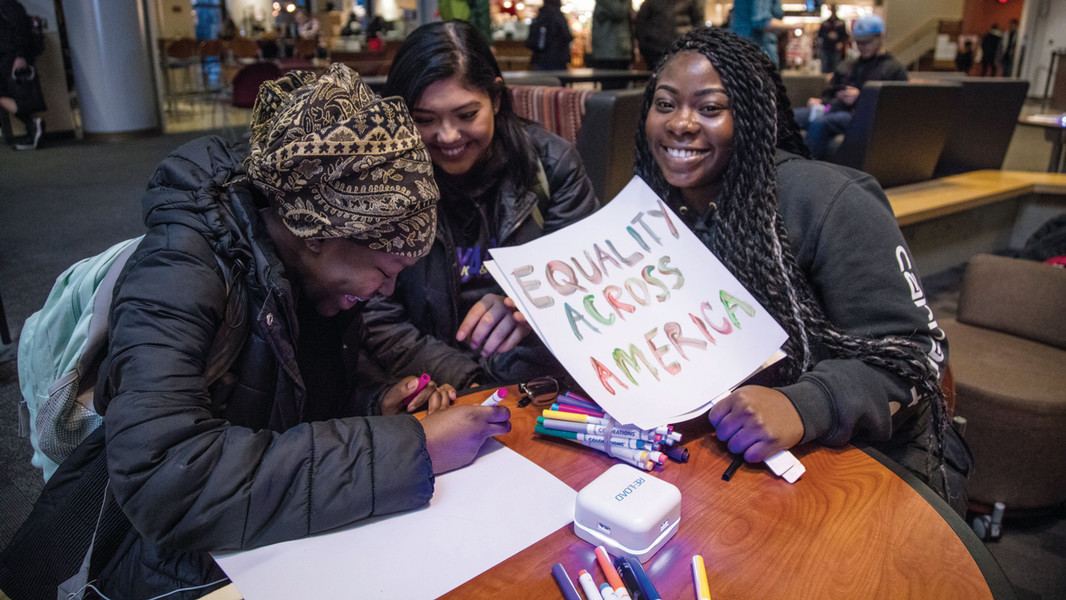
Free Speech at CWU
Central Washington University believes in creating and maintaining an environment where free speech is both encouraged and protected, as outlined in the First Amendment of the U.S. Constitution.
We strongly support the free exchange of ideas, and we understand that allowing the expression of different viewpoints is essential to building a vibrant academic community.
As part of our commitment, CWU seeks to foster an atmosphere where a wide range of ideas can be expressed and challenged in a civil, constructive manner. At the same time, we must guarantee the safety of our campus community while ensuring that university operations can continue unimpeded.
CWU will do everything we can to support everyone’s right to free speech and expression, but above all, we are committed to preserving the right to learn, work, and speak without fear of harassment and discrimination. Under no circumstances does CWU condone the disruption of campus operations, threatening or abusive behavior, or damaging public property.
State law allows CWU and other public institutions to set reasonable time, place and manner restrictions on speech, although these rules must always be content neutral. We ask the members of the CWU community to respect these limitations, which are outlined by our Facilities Use Procedures.
We will be updating this page throughout the year to ensure all members of the CWU community understand their rights and responsibilities and the limitations outlined in our policies and procedures. If you have specific concerns, please refer to the FAQs below.
Thank you for helping us build an environment of mutual respect that we can all be proud of. While our viewpoints may differ, we are all Wildcats, and we all call CWU home.
Free Speech at CWU
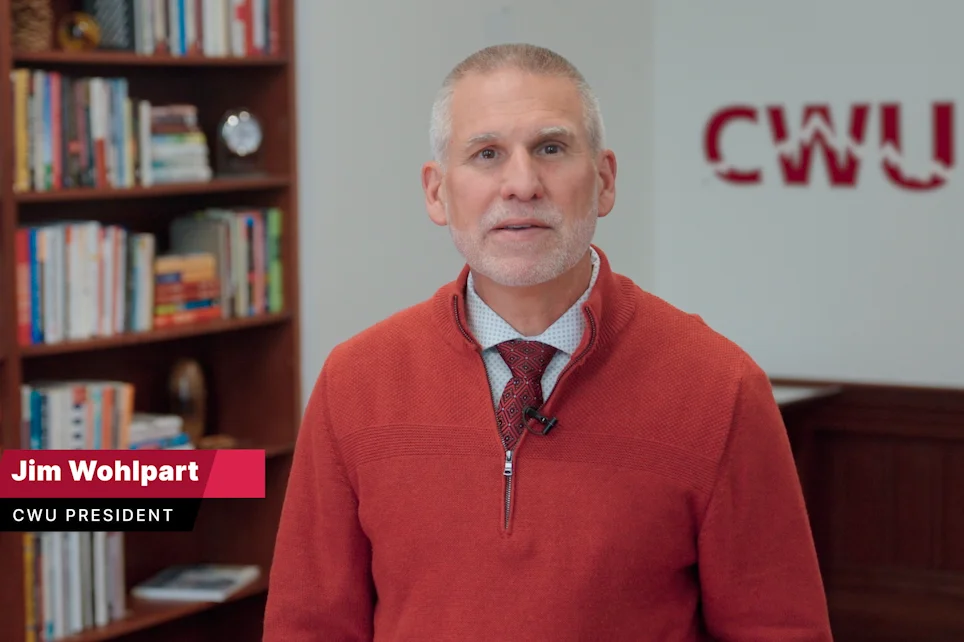
CWU President Jim Wohlpart and ASCWU’s Michelle Carrillo explain how CWU supports free speech while ensuring a respectful, inclusive environment.
CWU Free Speech Rights and Policies FAQs
-
What are CWU's rules regarding protests and demonstrations on campus?
The university’s guidelines for protests and demonstrations are outlined in WAC 106-141-020(3): The university as an academic institution values freedom of inquiry and expression, civil discourse, and tolerance of competing viewpoints. At the same time, campus facilities are intended primarily for use by campus groups for educational and related institutional purposes. The university intends to open the campus for expressive use by non-campus groups to the extent that such usage does not substantially and materially interfere with institutional purposes. People may create and participate in protests and demonstrations as long as they follow the CWU policies and WACs related to time, place, and manner.
-
Why does CWU allow protests and demonstrations on campus?
As a public university in the state of Washington, CWU is committed to the free exchange of ideas and the principles of academic freedom, in accordance with the First Amendment of the U.S. Constitution. All CWU students, faculty, staff, administrators, and volunteers have a responsibility to ensure that freedom of speech and expression is lawfully supported and protected. Providing a safe forum for free speech or expression of ideas is a cherished and time-honored feature of university life.
Because the rights of free speech and peaceable assembly are fundamental to the democratic process, CWU supports the rights of students and other members of the university community to express their views or peacefully protest against actions and opinions with which they may disagree.
-
Are protestors limited to certain areas on campus? Does CWU have “free speech zones”?
The CWU campus does not have “free speech zones,” which limit protests to certain spaces on campus. Protesters may demonstrate on campus grounds and buildings subject to the reasonable time, place, and manner regulations outlined in WAC 106-141-040.
-
Are people from outside the university community allowed to protest/demonstrate on campus?
Yes. Although campus property is primarily dedicated to the education of CWU students, it is open to the public. Non-campus groups and individuals are permitted to protest on campus as long as they comply with all of the rules outlined in WACs 106-141-030, 106-141-040, and 106-141-050.
-
Is a permit required to protest or demonstrate on campus? Do protesters need to notify anyone if they are planning a protest or demonstration on campus?
Permits are not required, but CWU does ask that protestors and demonstrators provide advance notice. Advance notice provides the university with information that allows us to avoid scheduling conflicts and to make appropriate security and facility use arrangements. Groups providing the requested notice are encouraged to provide the name and contact information for their group, the date, time, and place of the activity; and the estimated number of participants, as outlined in WAC 106-141-040(7).
-
Which types of speech are not protected by the First Amendment and CWU’s rules?
Categories of speech that are not protected by the First Amendment and CWU’s rules include:
- Incitements of violence or lawless action including true threats, fighting words, and speech or conduct that causes a material and substantial disruption of university activities and threaten the safety of an individual or individuals
- Obscenity/obscene materials
- Defamation or libelous material
- Discriminatory harassment
- False advertising
- Certain symbolic actions
- Interference with medical treatment
- Invasion of privacy
-
Can speech ever constitute a hate crime?
Potentially. It is a crime in Washington State to commit a hate crime. Hate crimes are defined in RCW 9A.36.080, and mostly involve physical assault, physical damage or destruction of the property of another, or a threat to harm another or another’s property. However, words alone do not constitute a hate crime offense unless the context or circumstances surrounding the words indicate the words are a threat that the person intends to carry out.
-
What is the role of the CWU Police Department?
The CWU Police Department’s primary concern is the safety of our university community. They may be present during a protest and may implement certain safeguards, such as taping off areas or requiring space between groups, for safety reasons. Depending on the size and nature of a protest, CWU’s Police Department may request assistance from other law enforcement agencies.
To ensure there are adequate safety measures in place for protestors and bystanders, CWU encourages all protestors to contact CWU’s Police Department in advance of any protest.
-
Can we drown out the protestors? Is a “heckler’s veto” permissible?
The City of Ellensburg’s noise ordinances apply to campus property. Any use of sound amplification must comply both with CWU’s policies [WAC 106-141-040(4)] and the city’s noise ordinance (Chapter 5.60 - NOISE). Sound amplification, whether by artificial means or otherwise, must be maintained at a volume that does not substantially and materially disrupt or interfere with the university’s essential academic or administrative functions [WAC 106-141-040(4)].
The concept of silencing one person’s speech by drowning out such speech is sometimes referred to as a “heckler’s veto.” While it is permissible for counter-demonstrators to fight speech with speech, they must understand it is not permitted to engage in violence or deny the original protestor the right to speak. The answer to speech that is hateful, disrespectful, or disagreeable is more speech; not violence or censorship. -
Are there other rules for protests and demonstrations (time, place, and manner restrictions)?
Yes. CWU’s rules regarding time, place, and manner are included in WAC 106-141-040. For example, campus spaces can only be used between 8 a.m. and 10 p.m., no tents or camping allowed, protests may only occur in spaces that are not previously scheduled, and sound amplification must be maintained at a volume that does not disrupt or interfere with and this policy the university’s essential academic or administrative functions.