
The design portion of the project—a renovation of the first floor of Black Hall—got underway last summer after ASCWU leaders and the Executive Leadership Team agreed on a path forward.
The Black Hall renovation was made possible by a $6 million appropriation from state lawmakers in 2023, but additional funds were needed to build a stand-alone facility. That led ASCWU and university leaders to work on a potential compromise last spring.
“While ASCWU and the university’s government relations team advocated effectively to secure $6 million from the state to enhance our infrastructure for multicultural programming, the university is not in a position to borrow additional funds for a stand-alone building in the foreseeable future,” Student Engagement and Success Vice President Margaret Ortega said.
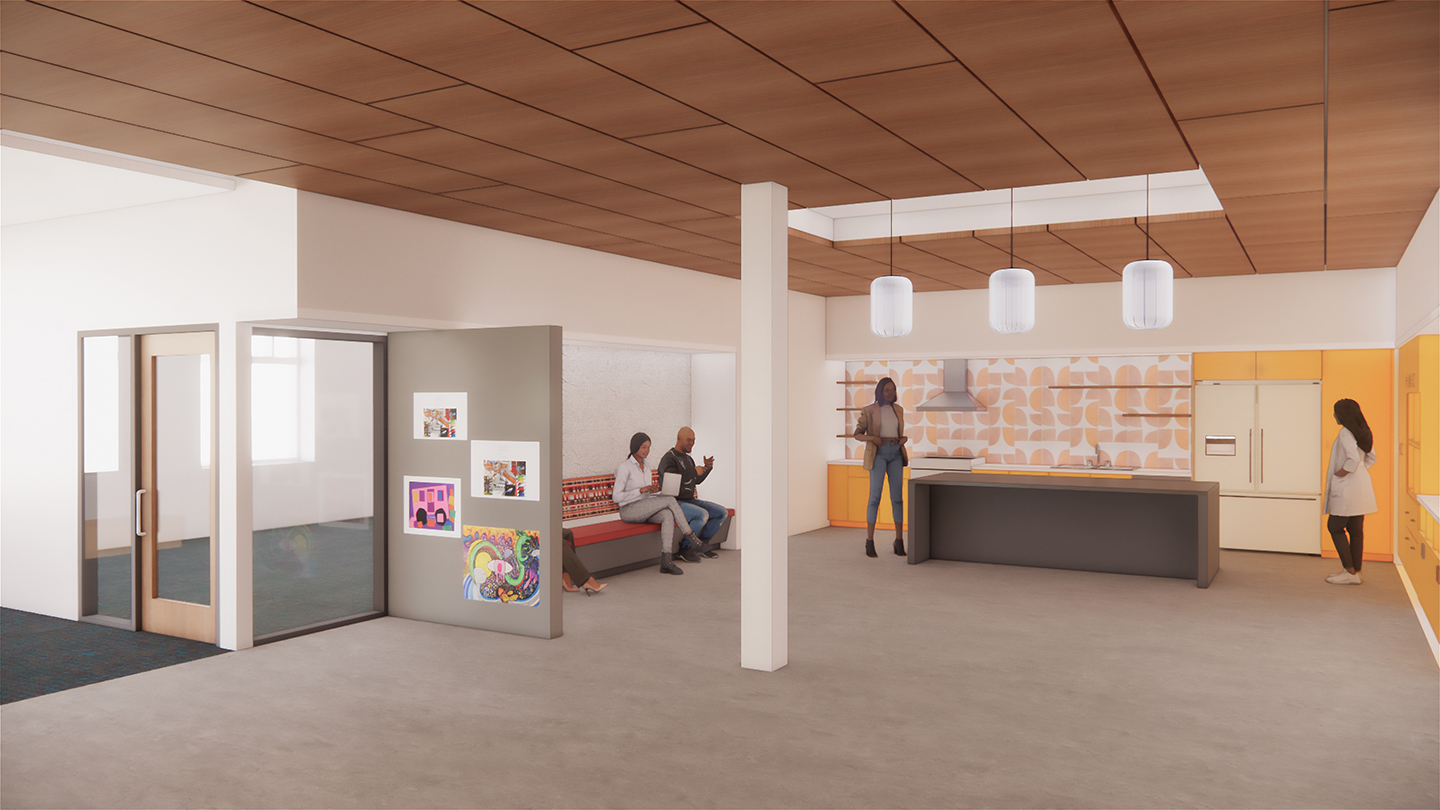
She added that the renovation of the Diversity and Equity Center (DEC) offers an immediate-term solution to the enduring need CWU students have for enhanced space to host and provide multicultural programs, services, resources, and activities. In the end, both sides decided to move forward with the Black Hall renovation instead of risking forfeiture of the state funds.
“We are very pleased that we were able to agree on a solution that meets the needs of both students and the institution,” Ortega said.
CWU’s design partner Opsis Architecture has been leading the design portion of the project, and the company held a series of meetings with CWU staff and faculty last spring. Among the goals for the renovated Black Hall space will be to enhance space for multicultural programs and improve visibility and functionality for the College of Education and Professional Studies.
The construction portion of the project will begin this winter, with a targeted opening date of January 2026.
ASCWU leaders have been advocating for years to build a MCC on campus, and the renovated first floor of Black Hall will give CWU students from all racial, ethnic, and religious backgrounds a central location to celebrate their individuality.
The vision for an enhanced DEC was guided by engagement with the ASCWU Board of Directors and Equity and Services Council student leaders. ASCWU President Malik Cantu said he and his colleagues have appreciated being involved in the planning of the MCC since the beginning.
“CWU students started the conversation through activism for marginalized voices, trying to ensure that those voices had a space they could call their own to help them in their educational journey,” he said, adding that students have been trying for years to convince the CWU administration and Board of Trustees to commit to building a MCC.
“We are excited to finally see a step like this moving forward,” Cantu added. “While students will continue to advocate for more, we are grateful to see the work of many student leaders of past and present begin to come to fruition. We hope that the renovation of Black Hall will mark a new point of advancement, collaboration, and service for students.”
By adding approximately 10,000 to 13,000 square feet of space to the existing DEC, Central will have one of the largest multicultural gathering spaces among the state’s six public higher education institutions.
The enlarged DEC will be nearly twice the size of the existing Black Hall location, and it will provide spaces specifically designed for multicultural programs, student organizations, and events. Plans also include a reflection room, a kitchen to prepare food for student organization events, comfortable gathering places, and space for intersecting academic programs. Each of the amenities has been designed to support building community and creating a sense of belonging.
Ortega noted that while some students have expressed disappointment that the MCC will not ultimately be a stand-alone facility, she is glad both sides were able to agree on a solution that meets a longstanding need for the CWU community.
“The MCC will be an engaging, visible, and dynamic place that will offer exciting opportunities for students to build friendships, celebrate the many cultures that comprise our university community, and nurture meaningful opportunities to learn and engage with one another,” she said.