
These are images from one recorded performance of Inner Discord, a dance choreographed by Gabrielle McNeillie, an assistant professor in CWU’s Department of Sport and Movement Studies. McNeillie initially developed Inner Discord in 2022 before restaging it with a new cast of students at the 2023 Detroit Dance City Festival. The festival judges selected her choreography as one of the pieces to be performed at the annual event last September.
“It’s the same piece if you think about it structurally,” she said, “but completely different movement.”
Set to selected poems from What Kind of Woman by Kate Baer, Inner Discord—like much of McNeillie’s recent work uses dance as a medium to examine, in her words, “the shifting perspectives on being a woman, motherhood, gender roles, and how we transition through each.” She doesn’t mind if the core ideas motivating her pieces don’t get through to everyone, as long as her choreography has an emotional impact.
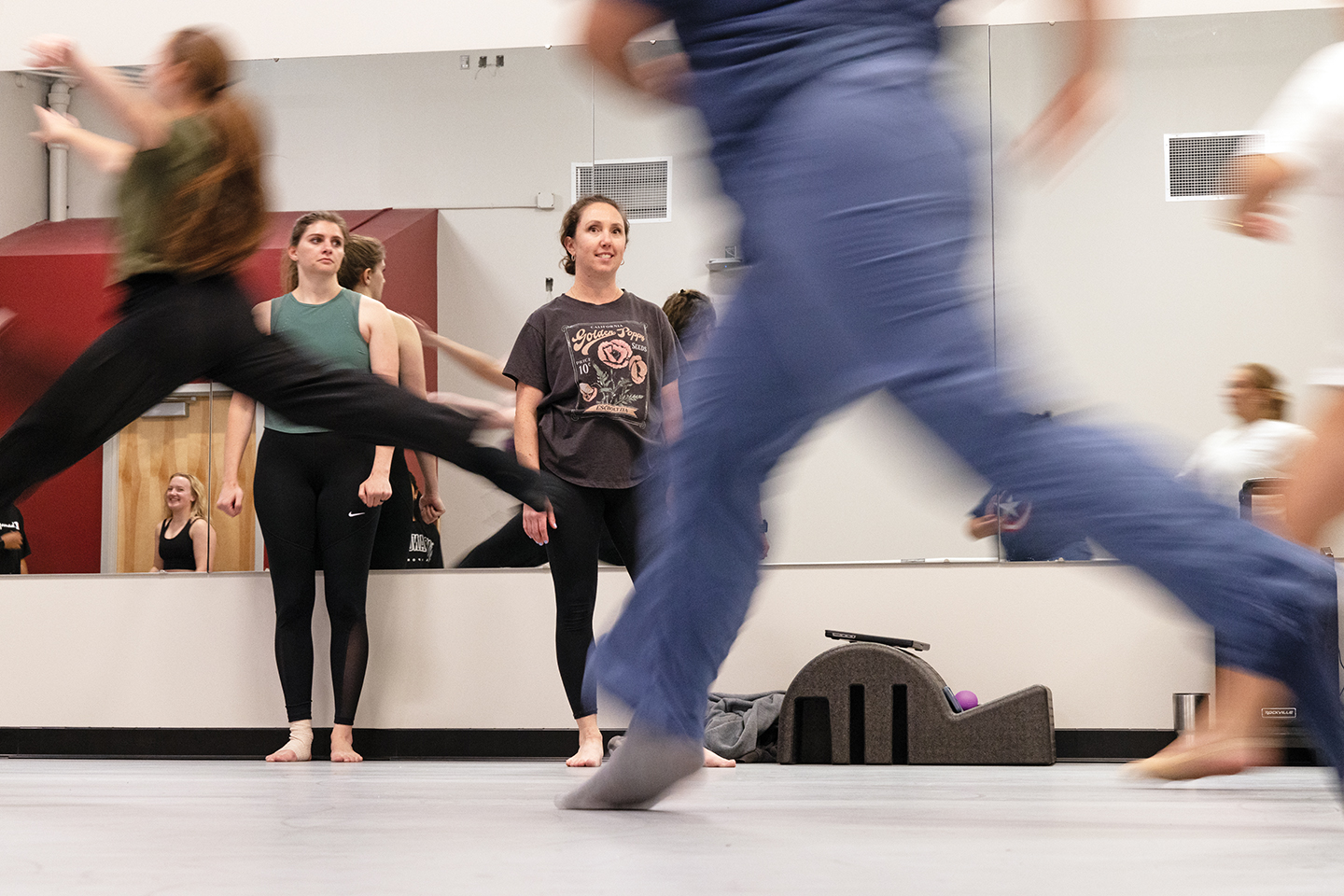
“I hope they feel something,” she said. “I want my work to make people ask questions and for someone in the audience to say that something resonated with them.”
Before coming to teach students in CWU’s dance program in 2015, McNeillie built a career as a professional dancer, training at Rochester City Ballet in New York and working for Carnival Cruise Lines as a dancer and dance captain.
Inspired by her aunt, who ran her own dance studio, McNeillie also knew early on that she wanted to share her passion for dance with others. It was this interest in teaching that led her to embrace choreography as an art form.
“I didn’t think about it as much until I started teaching more regularly, and then I had to start choreographing for shows,” she said. “Even just the exercises that you create for class are choreography.”
When developing choreography, McNeillie likes to collaborate with her dancers, allowing plenty of room for flexibility and experimentation.
“I think about the shape or the timing and just keep working from there,” she said. “Sometimes I’m retooling it right up to the day of the show. I see it as a really fluid process.”
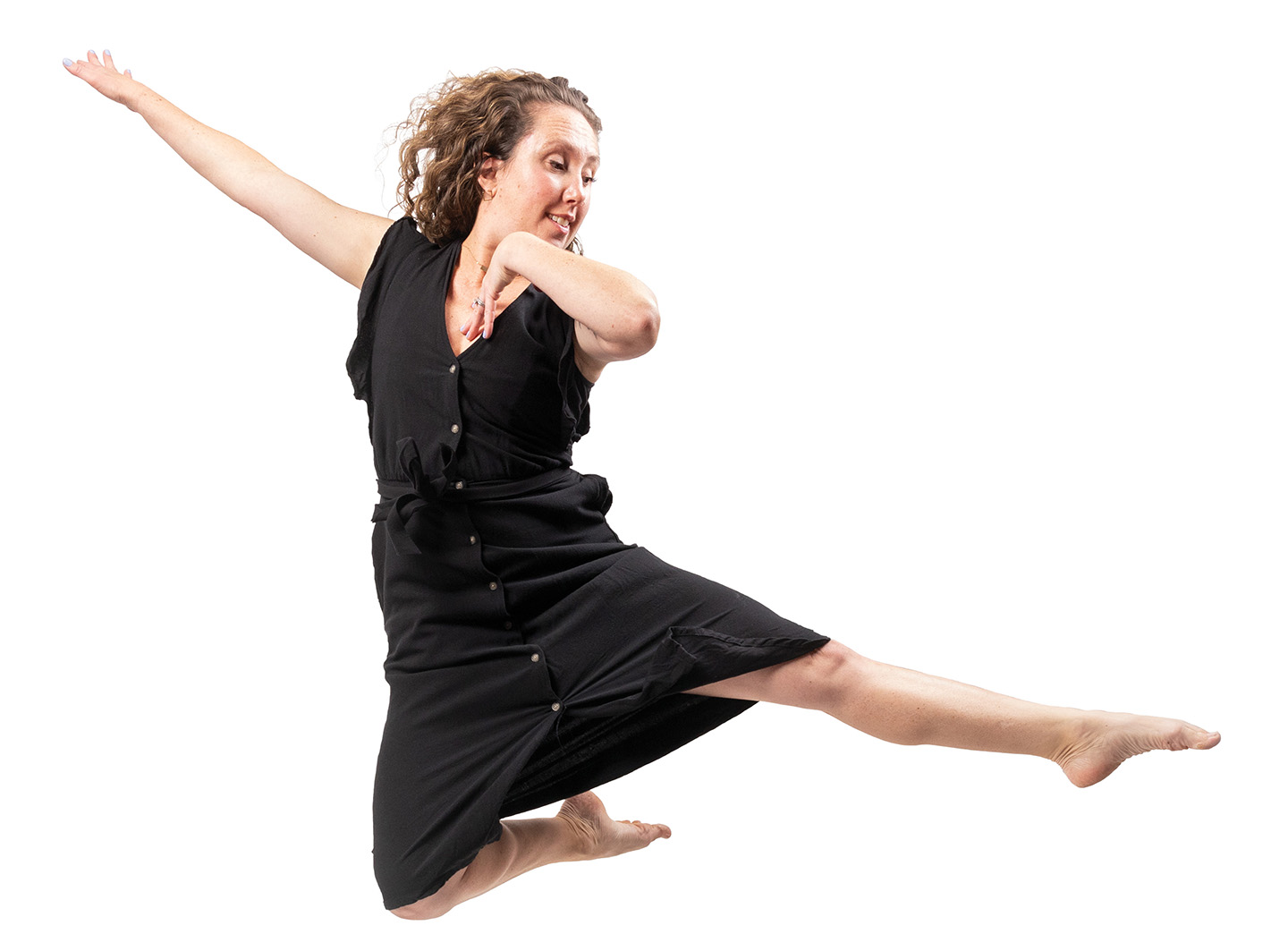
With Inner Discord, McNeillie asked the performers to read Baer’s poetry and create their own phrasework, which she then helped refine and combine. The ideas the dancers brought back were unexpected.
“Having to fully accept that as it was and continue the process was really interesting and challenging for me—to let my own bias, my own feelings, my own thoughts about what the piece should be or what it might look like go,” she explained.
McNeillie credits one of her mentors, Douglas Nielsen, with teaching her to let go of expectations and keep trying, even after failure. “Make something; throw it away. Make something else; throw it away. Do the next thing,” she recalled him telling students at the University of Arizona, where she received her Master of Fine Arts in Dance, Choreography.
At the same time, she recognizes that it takes time to master the art of letting go
“You’re being really vulnerable by putting something out there for somebody else to watch,” McNeillie said. “I’m OK with it now, but it’s hard. I see my students go through that whole process.”
The most important thing dancers and choreographers can do is “keep creating,” regardless of audience reception, McNeillie suggests.
“We may hope they get what we were trying to say, but they might feel something completely different,” she said. “We just have to make something else, move on, start over, try again.”