
During the Department of Anthropology’s six-week field schools every summer, students learn about cultural resource management (CRM), perform archaeological field work, and use ground-penetrating radar (GPR) technology in Kittitas County and surrounding locations.
The courses are open to enrolled and non-enrolled CWU students, and they have been increasing in popularity in recent years.
Senior Lecturer Karisa Terry explained that field school training is required for archaeology majors who want to find a job in the field. The credits they earn at CWU often transfer directly to their own university — a perk that made CWU a popular destination during the pandemic.
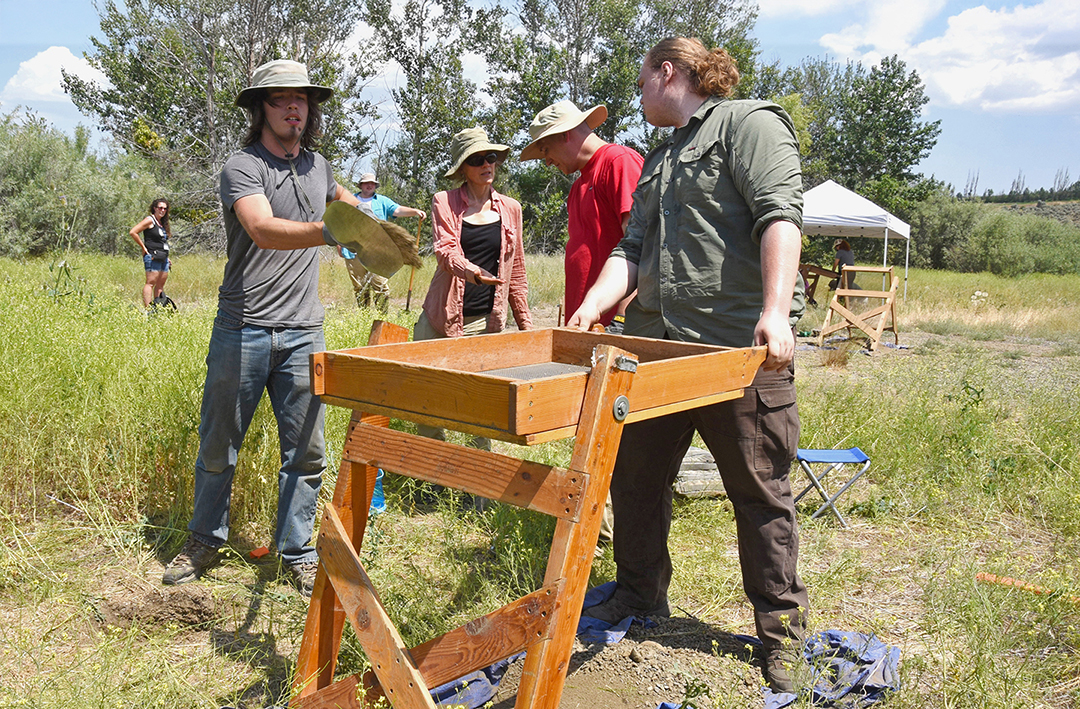
“A lot of the field schools were shut down during COVID, and CWU was one of only a few universities that was still offering it,” said Terry, who has led the program since 2019. “We had students from all over the U.S. who couldn’t get their field school credits anywhere else, so they decided to come here.”
The popularity of CWU’s field school has continued in the years since, with students from across the country learning about the quality and variety of the program through word of mouth.
Students who complete the field school earn six credits in “Anthropological Field Experience,” learning how to properly dig holes, document their work, create site maps, make grids, identify artifacts, take photos of their findings, and work with communities.
“We found out during the pandemic that there are a lot of students who need to fill this gap on their résumés, and that has helped enhance our reputation,” Terry said. “Anyone who has this training can get a job as a field technician, even if they haven’t finished their degree yet.”
Emeritus Professor Bill Smith started the six-week field school courses in the 1970s and kept them going for more than 20 years, before handing over the reins to Professor Patrick McCutcheon. Professor Patrick Lubinski became involved in the early 2000s and the two alternated years teaching CRM in the Ellensburg area and the Cascades.
Professor Steve Hackenberger also played an active role before turning over the program to Terry in 2019, while still offering occasional help.
Terry credited Hackenberger, McCutcheon, and Lubinski — as well as former CWU American Indian Studies Director Jon Shellenberger — for helping her deliver the best possible education for her students.
“I have done lot of field work, but I don’t have the CRM background that my colleagues do,” Terry said, explaining that her expertise lies on the academic side. “They have been able to provide our students with a different context about the work we are doing, and that has been extremely valuable.”