
Little did he know that his plans would be upended when he applied to study abroad as part of his double major in Japanese and communication.
“Studying abroad fundamentally changed the way I understood everything around me, and myself,” he said. “Once you start to broaden that experience, once you start to live and exist in those contexts, you can’t put that back in the box.”
Now an assistant professor of communication at Central, Nelson-Ichido has developed one of the many faculty-directed programs that exist under the umbrella of the Office of International Studies and Programs (OISP).
Programs like Nelson-Ichido’s underline OISP’s success in building connections and long-term relationships with colleges and universities in Europe, South America, Asia, and elsewhere around the globe.
CWU currently has 75 international agreements with 59 different international partners, typically colleges and universities. Of the 24 countries that collaborate with CWU, Japan has the most, with 12 partners and 22 agreements.
OISP helps students and faculty discover opportunities around the world. The following are some recent highlights.
Training EMTs Down Under
CWU has enjoyed a mutually beneficial exchange relationship with Queensland University of Technology (QUT) in Brisbane, Australia, for many years.
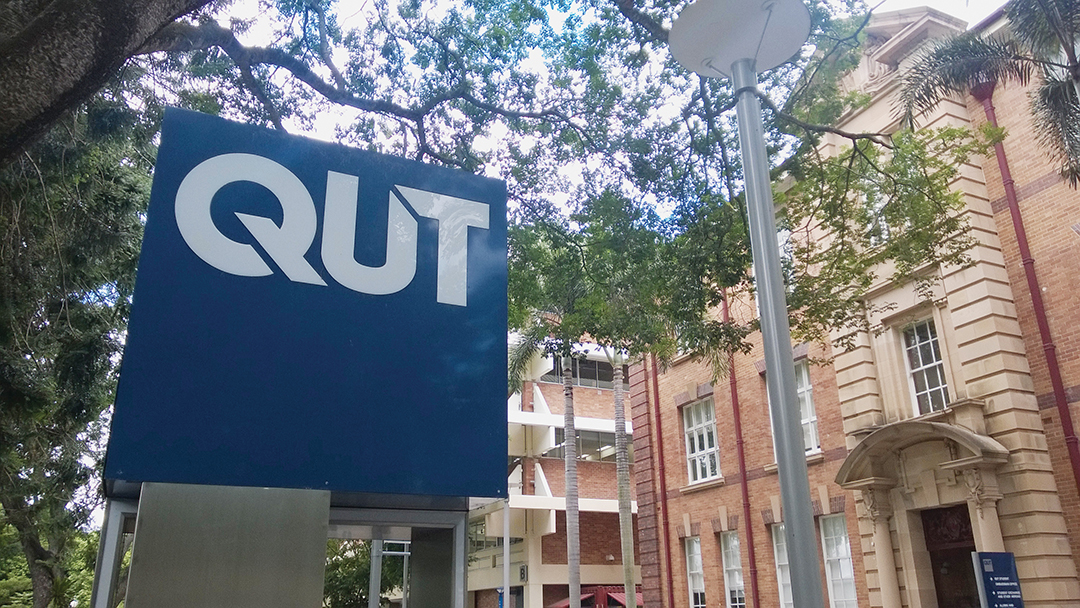
In 2017, Associate Director of Education Abroad Steve Cook traveled to QUT for a periodic site visit. While touring the campus facilities, he noticed their health sciences department that included, among other things, robust programs in nursing and paramedicine.
So, when the incoming director of the paramedicine program at Central, Emily Gonzalez, expressed interest in developing a faculty-directed education abroad program for paramedicine students, Cook remembered his visit.
“Obviously, this is a discipline where it’s a little bit challenging to have study abroad experiences,” he said.
The program directors at the two institutions began talking, which soon led to a series of paired experiences. In 2018, QUT students came to Central and got to see U.S. paramedics at work, and the following year, CWU students traveled to Queensland for three weeks, learning about both urban and rural paramedicine.
“Queensland has a significant rural area, so students were out in the bush learning about paramedicine support for bush fires and things of that nature, as well as the differences between the Australian and U.S. systems,” Cook said.
Program directors have their eye on fall 2026 as the next date for Central students to visit QUT.
Reimagining Colombia
It’s understandable that many people still picture Colombia during the 1980s, when the country — especially the city of Medellin — was the epicenter of the drug cartel wars and home to the infamous drug lord Pablo Escobar.
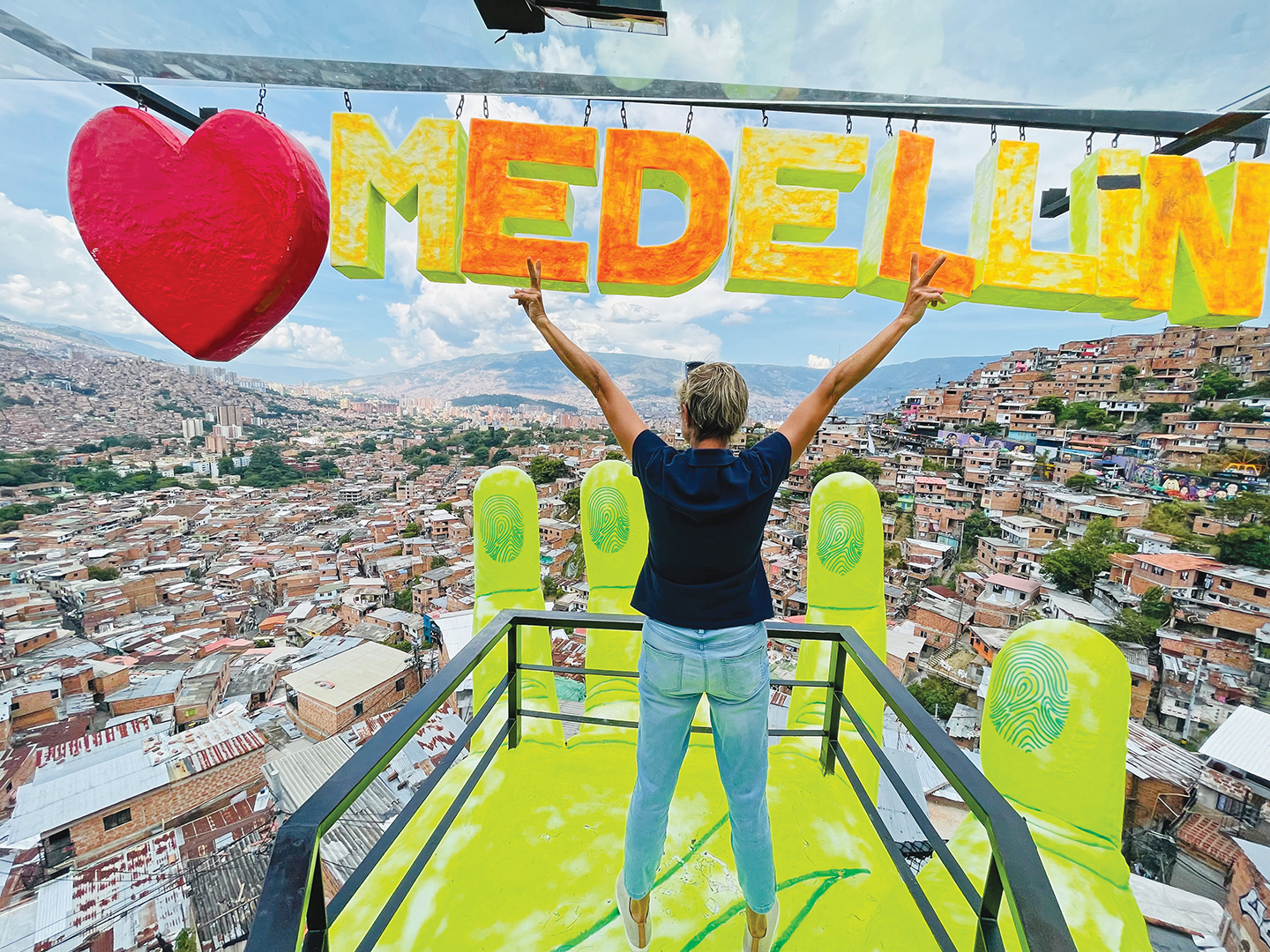
Unbeknownst to most Americans, however, Medellin is now a thriving, cosmopolitan capital and a national and international center of commerce. For Dr. Nathalie Kasselis, professor of Spanish in the CWU Department of World Languages and Cultures, watching her group of visiting students discover the truth about the country was one of the best parts of her trip.
“They kept writing in their journals about how once we got back to the States, they were going to rectify this misperception,” Kasselis said.
Central’s relationship with Colombia took off during the pandemic, when Kasselis asked OISP about doing a virtual exchange with another country for her Spanish class. Cook reached out to a number of partners across Latin America and received an enthusiastic response from Camilo Sanchez from the Institución Universitaria Esumer in Medellin.
At the time, Sanchez was coordinating Esumer’s English program and was in charge of all the international initiatives. He was eager to connect with a university in an English-speaking country.
The first virtual exchange took place in winter 2021 between a single CWU Spanish class and an English class at Esumer. Since then, it has grown to include almost the entire Spanish section of the department and multiple courses from each institution.
The conversations led CWU to arrange a student trip last spring to Medellin, where Sanchez had organized a linguistic, cultural and culinary program for Kasselis and the five students traveling with her. The program was a tremendous success, and Kasselis is already planning her next program for students in August 2026.
In the meantime, Sanchez had also received a grant from the Colombian government for an American faculty member to teach English at the Yamaha factory in Medellin. Kasselis traveled to Medellin last fall for two weeks and taught an intensive English course to 27 children of Yamaha employees, who ranged in age from 10 to 16.
“It was one of the highlights of my teaching career,” she said.
Kasselis wanted to put all of the Colombia-related initiatives under one umbrella, which she named the STELLA (Study, E-Learn, Language and Life Abroad) Initiative after her late colleague Stella Moreno, who originally hailed from Colombia.
“Stella was a really strong supporter of international initiatives, and she had traveled a lot. I thought this was the perfect way to honor her,” Kasselis said.
Eye-Opening Experiences
Given the state of Washington’s historic relationship with Japan and CWU’s popular Japanese major, it’s no surprise that most of Central’s major education abroad programs take place in Japan.
“I think Japan represents our most varied and perhaps most unique relationships,” said Nicki Kukar, executive director of OISP.
One of Central’s longest-running Japanese collaborations is the Asia University America Program (AUAP). Students from Asia University in Tokyo come to Ellensburg to study for a semester, supported by International Peer Advisors (IPAs) who help the AUAP students adjust to life in the United States and plan activities and events.
AUAP students help educate Central students about Japanese culture so when they travel to Japan, they already have some friends.
“It’s a really neat sort of bookend, and students get a lot of support,” Cook said. “It’s a great way to have international students helping domestic students prepare and have a great experience while they’re there.”
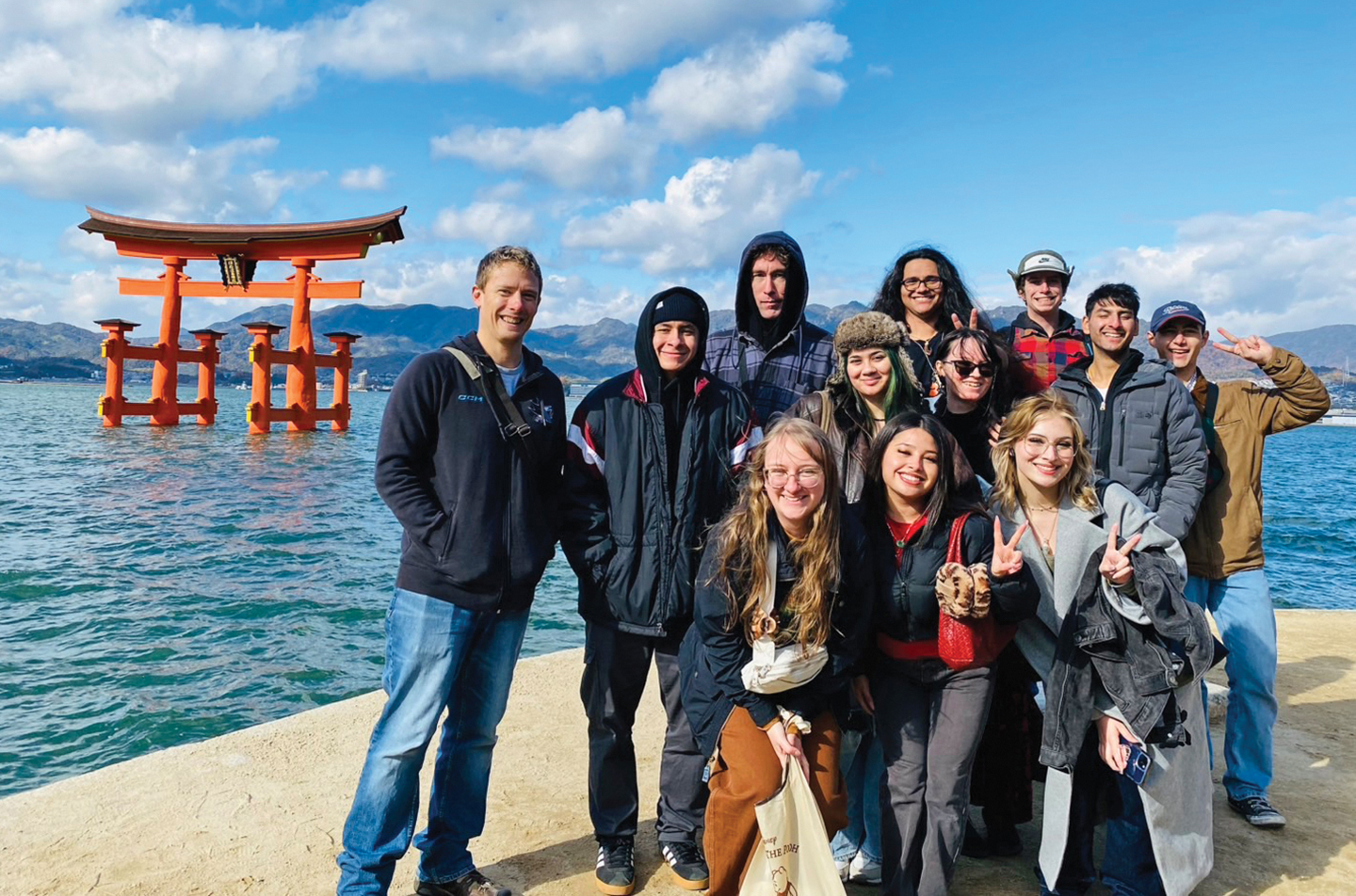
CWU faculty have created other connections with Japan, including Nelson-Ichido’s faculty-directed program, a special section of his intercultural communication course (COMM 302) that culminates with a 15-day visit to the cities of Kyoto, Hiroshima, and Tokyo.
During that program, Nelson-Ichido plans morning excursions before turning the students loose to explore and find their way back to the hotel.
“He encouraged us to go out and wander and get lost and explore and try new things,” said Alonzo Avila, one of the students who participated in the program in fall 2024. “And that’s what I did. I tried everything I could, and the first thing I did was get a haircut in Japan.”
A junior majoring in business administration with a marketing emphasis, Avila had never traveled abroad before last year, and he had only taken one semester of Japanese. Not only did he witness the intercultural communication principles in action; he also received a boost in his ability to navigate the language and the culture.
“Even if their English level wasn’t that good, I was able to communicate with some of my Japanese, as well as with body language,” he said. “It was a very cool experience.”
After his Japan experience, Avila is now interested in starting a business-focused study abroad program in South Korea.
Nelson-Ichido finds reward in seeing his students’ perspectives expand, just as his did during his first intercultural experience nearly 20 years ago.
“I always get excited to see students having that element of ‘Whoa, wait. There’s so much more to explore in this world, and this is just one little taste of it. Now I want more,’” he said.