Honoring Dr. Dinara Georgeoliani
In Memoriam: Dr. Dinara Georgeoliani
Honoring Dr. Dinara Georgeoliani—Russian program leader, scholar, mentor. Photos and testimonials celebrating her life and legacy.
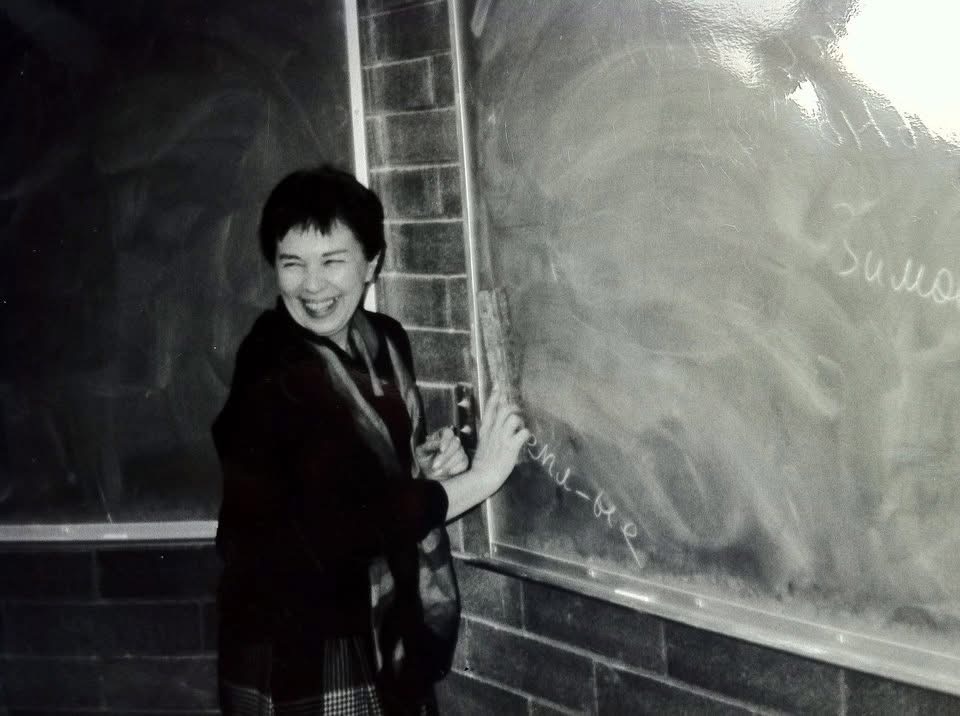
The Department of World Languages and Cultures mourns the passing of its long time faculty member, Dr. Dinara Georgeoliani, who passed away peacefully on February 5, 2026. Dinara Georgeoliani - დინარა ჟორჟოლიანი (in Georgian), Динара Жоржолиани (in Russian) - was one of the longest serving members of the department and one of our brightest stars. She led the Russian program for over two decades before her retirement in 2014, educated generations of students, and served as a mentor and friend to countless colleagues. She will always be remembered for her generous spirit, deep care for others, and an intellectual breadth of a world class scholar. Everywhere she went she brought joy, optimism and love - she will be missed like no other.
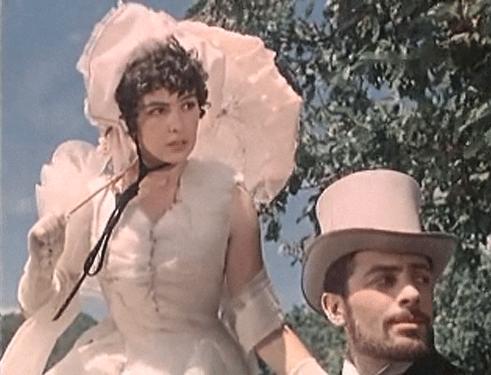
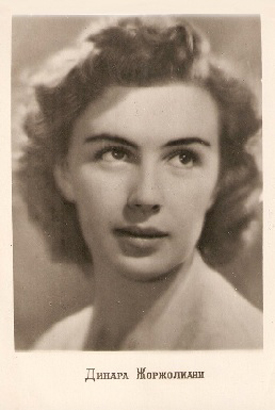
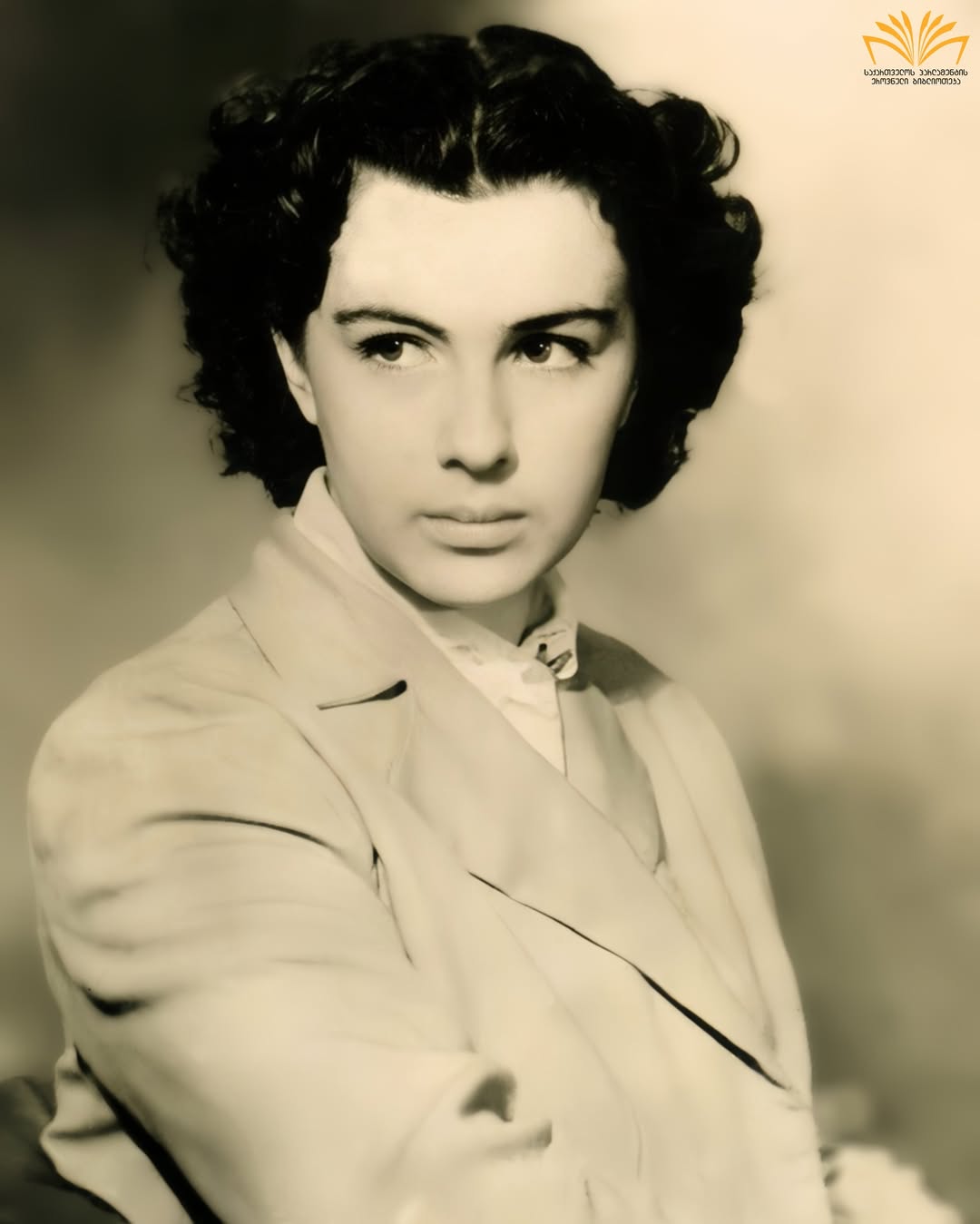
Dr. Georgeoliani was born in Soviet Georgia into the family of renowned actor, Sandro Georgeoliani. Following in her father’s footsteps, she became a rising movie star in her early twenties, scoring leading roles and being part of the post-WWII renaissance of Georgian cinema - one of the most celebrated film industries in the world. Despite her career success, Dr. Georgeoliani longed for something different. She wanted a career that would challenge and excite her intellectually, where her interest in languages could flourish. A cosmopolitan intellectual who spoke four languages, Dr. Georgeoliani decided to become an academic and a comparative linguist. Dr. Georgeoliani’s new career path took her to new heights of professional recognition and success. For many years, she led the Department of Foreign Languages at Georgia’s preeminent higher education institution for languages and linguistics - Institute of Foreign Languages in Tbilisi. She became one of the few Soviet experts in comparative linguistics and phraseology, and published extensively. Her doctoral dissertation broke ground in comparative phraseology in Georgian and English and is still widely cited by scholars in the field.
As a language educator and head of the department Dr. Georgeoliani authored textbooks and traveled to the United States for academic exchanges as the relations between the U.S. and the Soviet Union began to thaw. When the Soviet Union collapsed in 1991, Dr. Georgeoliani found herself at Central Washington University. Ellensburg became her refuge and new home. She then started another career journey at CWU - this time as a Professor of Russian and a professional translator.At CWU Dr. Georgeoliani transformed the Russian program: she revamped the curriculum, enriching it with practical focus on translation and cultural competence; she fought for the program in difficult times; and created a place of belonging and care for generations of CWU students. Under her watch the Russian program thrived in and outside the classroom: she designed her own classroom aids and materials that we use to this day; she sent students to study abroad at a time when those opportunities were just beginning to open up. She advised the Russian club for many years, and the customary end-of-year celebration at her house was legendary - a most talked about point in any conversation with the Russian alumni at the time. Her students went on to become diplomats and scholars, lawyers and educators, public servants and translators. Her special bond with her students was evident in how many of them visited her years after graduation, and how many stayed in touch throughout the decades.
An educator par excellence, Dr. Georgeoliani was an outstanding colleague and mentor. She collaborated closely with Dr. Roxanne Easely, CWU’s only Russian history expert. She collaborated with the late Dr. Mark Halperin of the English Department on creative translations of poetry and prose, which resulted in numerous joint publications, and Dr. Georgeoliani becoming an expert in yet another field. She was a trusted mentor and friend to many colleagues in World Languages across different programs: the late Dr. Stella Moreno and Dr. Nathalie Kasselis in Spanish, Dr. Michael Johnson in French, and Dr. Volha Isakava in Russian, to name just a few. In all her relations and connections Dr. Georgeoliani brought care, joy, and light to all. And she had a wicked sense of humor. Her extraordinary life journey, her dedication to students and colleagues, her love of life, will be forever missed.
Our hearts go out to Dr. Georgeoliani’s surviving family: daughters Maia Chachava (professor of Art + Design at CWU) and Nino Merabishvili, granddaughter Nini Gabunia and grandson-in-law John Cross, and great grandson Jackson George Cross.
STUDENT TESTIMONIALS
Dinara was the epitome of the quintessential teacher and warm light. Joyful, passionate, and caring, but never a pushover. I always looked forward to her classes -- not to say that it was easy -- but that through her guidance, I was always left with a greater understanding and a deeper passion for Russian. She believed that I could do better and see the human connection underpinning the study of language.
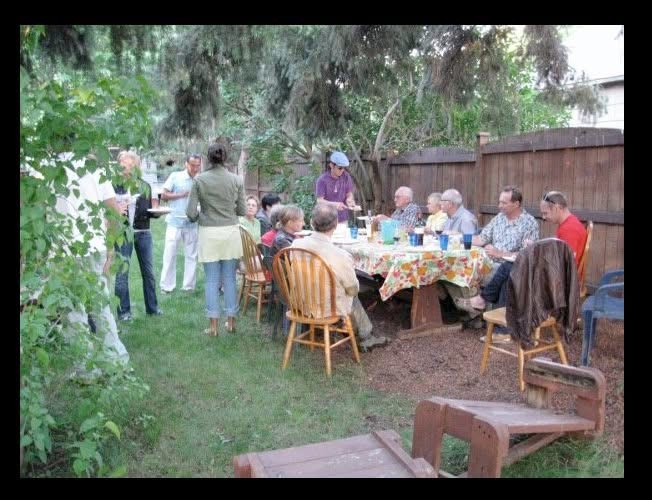
One particular summer afternoon before I graduated, I was walking through a neighborhood when I happened upon an outdoor luncheon in someone's side yard. Their garden was lush and their table was filled with people talking and laughing. My ear immediately recognized their speech as Russian and for some reason, I slowed to see if I could pick up any words or if I was still hilariously hopeless. Then, like a miracle, I heard Dinara's voice call out my name from within. Without so much as a second thought, she invited me to her table where I learned that her family had all gathered to celebrate her birthday. They pulled up a chair and instantly began to speak to me in both Russian and English, putting my conversational skills to the test. I was so touched, even then, that she went out of her way to bring me in outside the classroom; now, that gratitude and love only grows when I recall it. She continues to be an inspiring force in my life and I will always be grateful to her for her guidance.
Sophie Andarovna, class of 2017.
Dinara was a once in a lifetime professor. For American students she was from another time and half a world away; in spite of that (or perhaps because of it) she corrected your grammar like a babushka telling you to comb your hair so you don’t look like a ragamuffin. She had an aura of stories and anecdotes that entered the room before she did: Hey, is that the Soviet Audrey Hepburn? Really, she worked with Georgia's most famous director? And how many times do you need to buy black market lipstick to get caught by the secret police - three times? Trick question, this was the Soviet Union - the answer is zero. Then there was the time I was so flattered because she told me I was a “warrior”… correction- she meant worrier. All the same, her candor and warmth and interest in the world at large could make an almost-insult feel like a hug.
I moved to Washington to finish school specifically because Dinara was there. I had never met or spoken to her, but I saw her name and felt that was it. Before I arrived at CWU I sent her an email, asking a few questions about the Russian program and about her linguistic past. Years later that is still laughable- she didn’t do email and when I asked for a letter of recommendation for grad school two years later, she wrote it by hand. Another professor said it was probably the last handwritten recommendation in the country.
I feel very lucky to have known her and been taught by her. She had a bright spirit and, as much as she would shake her head and find this pathetically amusing, I could sense it from across the country, just seeing her name written the school’s website. That was the kind of person she was to me and to many students over the last several decades.
Kylee Parks-Garcia, class of 2017.
On my first day of Russian one I met Dinara and I thought: what have I got myself into?
She was a force to be reckoned with. Often, she told us about her time in the Soviet union; how students stand when the teacher enters and how they show respect to their instructors. She was tough with her corrections, and had little tolerance for lack of effort. She was incredibly intelligent and had a way of expressing feelings with few words. Not only did I learn about the Russian language from her, I learned about the people and a lot about life. She embodied the strength of self-made women and I'm honored to have been her student. The world is a little less bright without her. Покойся с миром.
Dinara positively impacted many students, myself among them. She genuinely cared about making sure we learned Russian well. Her interesting stories, lively presence, and kind heart made me look forward to her class every day. I can't understate how much Dinara's class helped me build confidence - not only in my Russian language skills, but in general. I'm grateful for what she taught me, and am fortunate to have known her.
W.D. Frank, class of 2005.
I had no intention of studying Russian when I arrived at Central Washington University (CWU)in 2002: it was only by happenstance that I landed in Dinara Georgeoliani’s first-year class the following year. That fortuitous turn of events transformed my desultory pursuit of a Master’s Degree in History into a decades-long career as a writer and lecturer.I initially enrolled at CWU to further my studies of German, French, and Spanish. Wandering the halls between classes, I read about the History Department’s Master’s Program and made a few inquiries. Because of my undergraduate background in Latin and Greek, I proposed during my initial meeting with Professor Roxanne Easley that I focus on Byzantine studies. No doubt eager to bolster the numbers of grad students in the History Department, she agreed; so, we made plans for me to enter the graduate program for the following academic year. As I was saying goodbye, Dinara happened to show up at Roxanne’s office for one of their (numerous) cigarette breaks outside the old Language and Literature Building. Roxanne introduced us and informed Dinara about my interest in ancient languages. Dinara was charming from her very first words: “you know, I love Latin and I have a favorite quotation. Do you know it? ‘in vino, veritas.’” This was the first of many times I would hear Dinara – with a glint in her eye - praise truths elicited over a glass of wine (read: getting down to the nitty-gritty after a few flutes of champagne), more often than not during her annual backyard end-of-the-year parties.
As fall quarter got underway, there was panic on the first-floor wing housing the departments of History and Foreign Languages: word had spread that the administration was intent on cutting Russian. Roxanne began soliciting department secretaries, professors, and students to enroll in first-year Russian to bolster the numbers and save the program. So, persuaded, I found myself in Dinara’s class: I became one of her most devoted students from the very first week of fall quarter. Learning Russian was a revelation and I remained in Dinara’s classes right through her third-year seminar. In the Master’s Program, I abandoned Byzantine history to pursue Russian and Soviet history in combination with my interest in winter sports. Dinara was an enthusiastic booster of my efforts, devoting extra time to help me translate difficult Russian sources and working with me to improve my skills through directed readings.
I continued my work – both in history and in Russian – as a PhD student at the University of Washington where my dissertation expanded on the master’s thesis I wrote at CWU. I turned that dissertation into a book published in 2013 by Northern Illinois University Press that has now become a foundational text on the history and cultural significance of skiing and biathlon in Russia and the Soviet Union in the twentieth century. Subsequent to that, I translated and wrote commentary for an obscure, though nonetheless significant, Russian book on skiing published by Cornell University Press in 2019. This book is now listed in catalogs at over 1,200 libraries throughout the world. As a result of these two publications as well as numerous articles and speaking engagements throughout Europe and North America over the last two decades, I am now considered one of the world’s experts on the history of skiing: because of this unexpected reputation, I was approached last year by Oxford University Press to develop an on-line research database on biathlon (forthcoming in 2026). None of this would have happened were it not for that chance meeting with Dinara at the door of Roxanne’s office in 2002 and the misguided decision by the administration to cut the Russian program to which she had given her heart and soul.
I will be forever indebted to Dinara: for her devotion to the study of Russian; for the kind regard she had for me; for the serendipitous start to a career in sports history; and especially for the many “truths in wine” we were able to share over the years.
In vino veritas, dear Dinara: istina v vine.
CWU News
Arts and Humanities Month continues to build momentum
October 21, 2026 by David Leder
New position at CWU-Des Moines aimed at improving student experiences
October 21, 2026 by David Leder