Current Exhibits


X-Ray Vison: Fish Inside Out

January 7 through March 14, 2026

Viper Moray Moray eels are legendary predators on coral reefs. Note the second set of jaws in the “throat”; these are the gill arches, which are present in all fish. Gill arches support the gills, the major respiratory organ of fish.  Radiograph by Sandra J. Raredon, Division of Fishes, National Museum of Natural History, Smithsonian Institution

Fish are vertebrates—animals with backbones—and have bodies supported by a bony skeleton. Variations in the skeleton, such as the number of vertebrae or the position of fins, are documented with X-rays. The Smithsonian’s National Collection of Fishes X-rays represent more than 70 percent of the world’s fish specimens and is the largest and most diverse collection of its kind in the world.

Although the X-rays featured in the national collection were made for research purposes, the strikingly elegant images demonstrate the natural union of science and art and are a visual retelling of the evolution of fish. X-Ray Vision: Fish Inside Out, an exhibition from the Smithsonian’s National Museum of Natural History and the Smithsonian Institution Traveling Exhibition Service (SITES) and Smithsonian Affiliations, will showcase these dramatic prints exposing the inner workings of the fish.

The exhibition features 40 black-and-white digital prints of different species of fish. Arranged in evolutionary sequence, these X-rays give a tour through the long stream of fish evolution. The X-rays have allowed Smithsonian and other scientists to study the skeleton of a fish without altering the specimen, making it easier for scientists to build a comprehensive picture of fish diversity.

X-Ray Vision: Fish Inside Out is organized by the Smithsonian’s National Museum of Natural History and the Smithsonian Institution Traveling Exhibition Service (SITES) and Smithsonian Affiliations. It was inspired by the book Ichthyo: The Architecture of Fish (Chronicle Books in association with the Smithsonian Institution, 2008) by Stephanie Comer and Deborah Klochko.

Plastic Runs Through It: Microplastics in the Yakima River

Learn about microplastics in the life-sustaining waters of our own Yakima River and what you can do about this nearly invisible pollutant and health concern.

CWU biology graduate J Shah conducted this research with her thesis advisor and professor of biology Dr. Clay Arango. The Window on Central showcases the work of CWU faculty and students in the College of the Sciences. J Shah is currently a habitat biologist in Yakima County for the Washington Department of Fish and Wildlife.  (a College of the Sciences “Window on Central” display) 

The Quincy Sloth: How a South American Mammal Made Central Washington Home

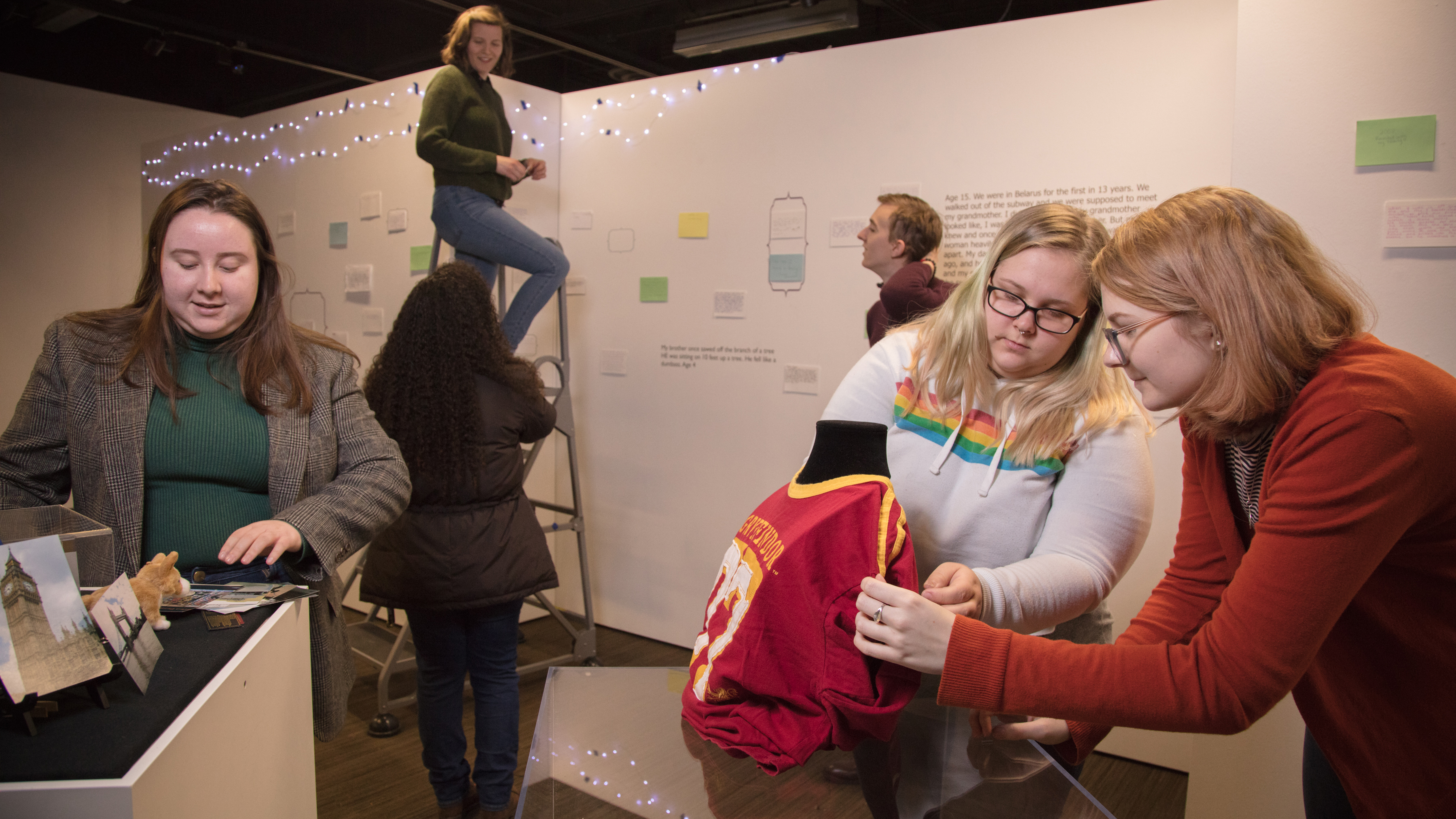
This student curated and designed exhibit in the Dean Hall Lobby explores the discovery of a prehistoric ground sloth in Quincy, Washington, compares sizes of other prehistoric spcies, and offers insight on how sloths migrated across the continent.

CWU News

A window banner at Grandview School District

$4 million federal grant aimed at helping with school psychologist shortage

February 25, 2026 by

Photo of Kendall Smart working with a student at the Disability Services office

CWU Disability Services aims to provide equitable access to education

February 23, 2026 by

More News
Give to COTS