AI Literacy Essentials for Students
Students can participate in this free five-week series, with one-hour sessions held each week. To earn a digital badge and certificate of completion from the Multimodal Education Center, students must attend all five topic sessions and demonstrate competency in each learning outcome. A brief assessment will be completed each week, building toward a culminating project that may take the form of a short essay, oral presentation, mind map, or another approved format. Sessions may be completed in any order and are offered each quarter in Samuelson 126 or via Zoom. Please reach out to mec@cwu.edu with any questions!
Fall Student AI Literacy Series Registration
- October 5 @ 4 pm: What is AI Literacy and how does AI work?
- October 12 @ 4 pm: AI Communication Skills
- October 19 @ 4 pm: Critically evaluating AI
- October 26 @ 4 pm: Ethical and sustainability concerns in using Generative AI
- November 1 @ 4 pm: Student AI Literacy badge: Final project sharing and next steps
Winter Student AI Literacy Series Registration
- January 28 @3 pm: What is AI Literacy and how does AI work?
- February 4 @3 pm: AI Communication Skills
- February 11 @3 pm: Critically evaluating AI
- February 18 @3 pm: Ethical and sustainability concerns in using Generative AI
- February 25 @3 pm: Student AI Literacy badge: Final project sharing and next steps
Spring Student AI Literacy Series Registration
- April 16 @3 pm: What is AI Literacy and how does AI work?
- April 23 @3 pm: AI Communication Skills
- April 30 @3 pm: Critically evaluating AI
- May 7 @3 pm: Ethical and sustainability concerns in using Generative AI
- May 14 @3 pm: Student AI Literacy badge: Final project sharing and next steps
To earn the badge, students must:
- Attend and participate in each subject (5 total) during the year (either in-person or online via Zoom).
- Submit an assessment/ knowledge check for each week.
- Submit a culminating assessment of their choice before graduating.
Learning Outcomes
What is AI Literacy and how does AI work?- Summarize what generative AI is, how it works, and how it differs from other AI types
- Describe accuracy and ethical considerations associated with gen AI.
- Critically analyze and discuss features that make an entity intelligent including discussing differences between human animal and machine intelligence.
- Determine when use of gen AI is appropriate and when it is not.
- Identify problem types at gen AI excels at and problems that are more challenging for gen AI use
Critically evaluating AI
- Describe how gen AI models are trained on data.
- Summarize how misinformation and biases occur from training data.
- Critically analyze gen AI outputs for accuracy and potential biases
- Explain how to critically evaluate AI tools
- Employ best practices for protecting data privacy.
- Apply a structured framework (e.g., EVERY or RAGAS) to evaluate the quality, accuracy, and faithfulness of AI-generated content.
- Identify and explain common issues in gen AI outputs such as hallucinations, misinformation, and bias, using real-world examples.
- Reflect on ethical responsibilities when using gen AI tools in academic work, including the importance of transparency, fairness, and accountability.
AI Communication Skills
- Write effective prompts to get efficient, accurate and useful results from gen AI tools.
- Refine and improve gen AI outputs using practical feedback and iteration techniques.
- Evaluate AI-generated content to determine its accuracy and relevance to your needs.
Ethical and sustainability concerns in using Generative AI
- Critically evaluate ethical considerations in the use of gen AI tools, including issues of bias, transparency, and accountability.
- Synthesize information from various sources to develop a comprehensive report on the long-term environmental implications of widespread gen AI adoption.
- Apply ethical frameworks to real-world scenarios involving gen AI use in personal, work, and learning related contexts.
Student AI Literacy badge: Final project sharing and next steps
- Analyze current trends in gen AI development and predict potential future advancements and their societal impacts.
- Evaluate the ethical implications of emerging gen AI technologies and propose guidelines for responsible AI development and deployment.
- Evaluate the potential impact of gen AI technologies on their chosen fields of study and future employment, identifying both opportunities and challenges, and propose strategies to adapt to these changes.
What Is a Digital Badge?
A digital badge is an online credential that represents a specific skill, achievement, or learning outcome you’ve earned. Think of it as a virtual certificate or sticker that you can display on your digital profiles—like LinkedIn, your resume, or your college portfolio. Digital badges are awarded when you complete certain requirements, such as attending workshops, passing assessments, or demonstrating competency in a subject.
Key Features:
- Evidence of Achievement: Badges show you’ve mastered a skill or completed a learning experience.
- Portable and Shareable: You can add badges to your online profiles, email signatures, or digital portfolios.
- Verifiable: Each badge is linked to details about what you did to earn it, so others (like employers or professors) can see exactly what it represents.
In summary:
A digital badge is a modern way to showcase your skills and achievements online, making it easy for others to recognize your learning and expertise.
CWU News
Arts and Humanities Month continues to build momentum
October 21, 2026 by David Leder
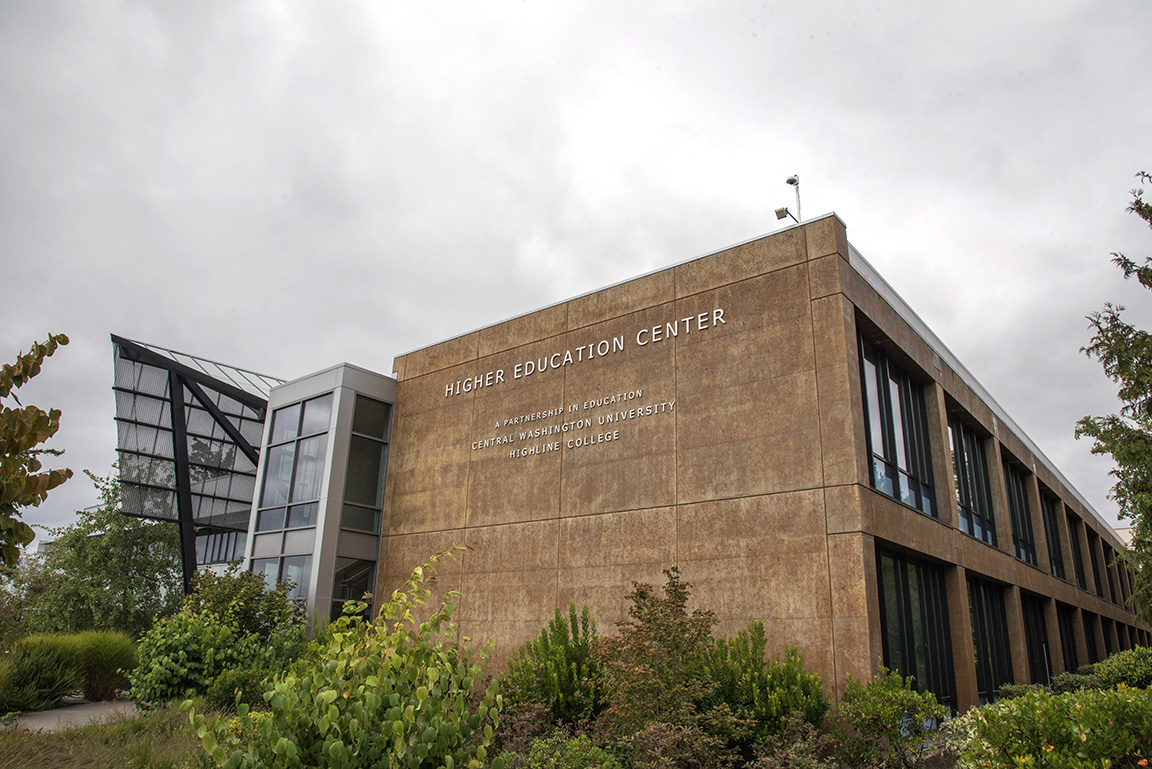
New position at CWU-Des Moines aimed at improving student experiences
October 21, 2026 by David Leder