Introducing Bricks: Reusable Content in Cascade CMS
- March 5, 2026
- Jose Romero
Introducing Bricks: Reusable Content in Cascade CMS
We’re introducing a new feature in Cascade CMS called Bricks, designed to make managing shared content across the website easier and more consistent.
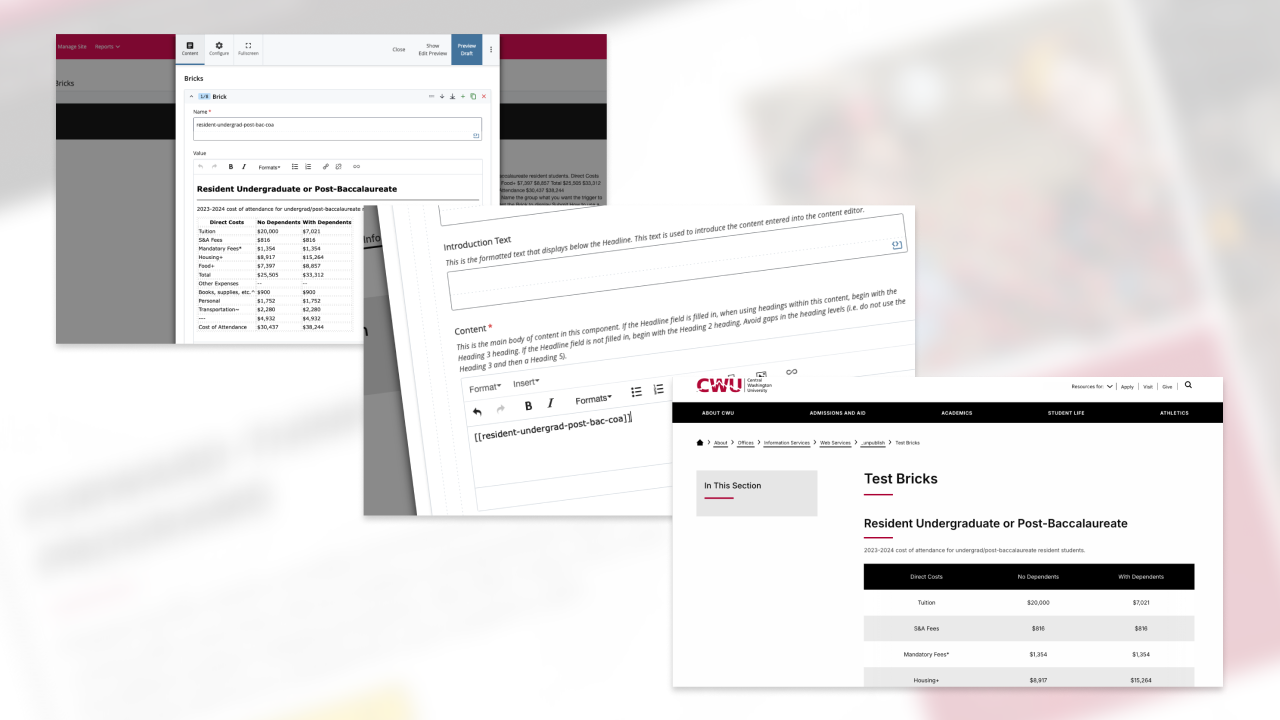
Bricks allow content to be created once and reused across multiple pages. This helps reduce duplication and ensures that when shared content needs to be updated, it only has to be changed in one place.
Bricks support fully formatted content, meaning they can include paragraphs, bold or italic text, lists, links, tables, and other structured content. This makes them especially useful for information that appears in multiple places across the site and needs to remain consistent.
For example, if the same table or block of information appears on several pages, updating each copy individually can be time‑consuming and increases the risk that one version may be missed. By placing that content in a Brick, updates can be made once and automatically reflected everywhere the Brick is used.
Currently, only the Web Services team can create and edit Bricks. Once a Brick has been created, however, content managers can easily insert and use it on their pages. This allows shared content to be maintained centrally while still giving content managers the flexibility to place it where it is needed.
Over time, we plan to expand access so that content managers will be able to create and manage Bricks themselves, but for now Web Services will manage their creation and updates to ensure consistency and stability as the feature is introduced.
When Should Content Be Moved Into a Brick?
Bricks are most useful for content that appears in multiple locations and needs to remain consistent across the site. If you find yourself copying and pasting the same content into more than one page, it may be a good candidate to move into a Brick.
Content appears on multiple pages
- If the same content block is used on two or more pages, placing it in a Brick can help ensure it stays consistent everywhere it appears.
Content requires periodic updates
- Content that needs to be updated on a regular cadence—whether weekly, monthly, annually, or as policies change—is a good candidate for a Brick. Updating the Brick once will automatically update it everywhere it is used.
Content must remain consistent across the site
- Information that needs to remain identical across multiple locations (such as policy language, instructions, or shared resources) benefits from being managed in a single place.
Content contains structured formatting
- Bricks are especially useful for content that includes formatted elements such as tables, lists, or multiple paragraphs. Managing this type of content in a Brick helps avoid having to recreate or maintain complex formatting on multiple pages.
Content is maintained by a central source
- If a specific office or group is responsible for maintaining certain information across multiple areas of the website, placing that content in a Brick allows updates to be made once rather than across many individual pages.
If you believe content on your site may be a good candidate for a Brick, please contact Web Services. We can review the content with you and help determine whether moving it into a Brick would improve maintainability and consistency across the site.
Contact
José Romero
Web Services
Director