CWU provides Pathways for students to overcome concerns
- November 2, 2018
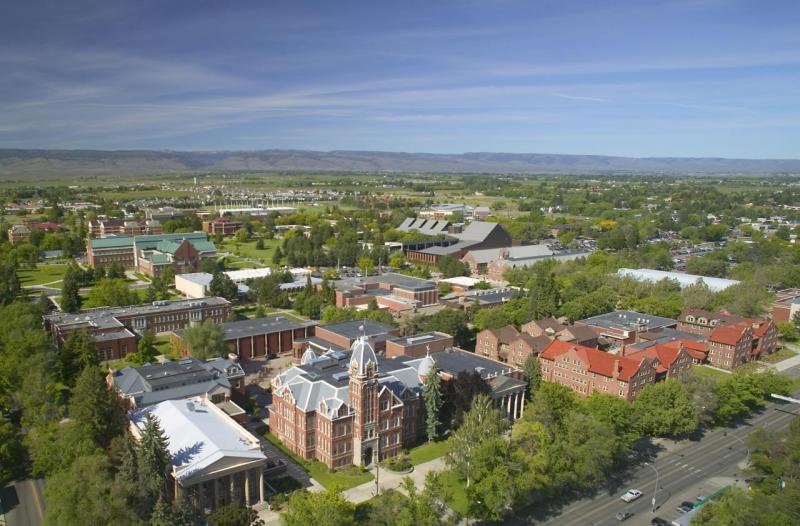

Called Pathways, the program offers counseling to students to provide them with the tools they need so they can successfully face and overcome psychological barriers and emotional roadblocks.
Cindy Bruns, CWU’s Director of Counseling in CWU’s Student Medical and Counseling Clinic, said that today some two dozen other colleges and universities nationwide have either adopted the CWU model outright or now offer a similar program based on that from another institution, also based upon the Pathways approach.
In its September edition, the Journal of College Student Psychotherapy reported on the success of the Central program, in the article, Pathways: An Innovation in the Delivery of College Counseling Services.
“We did some research on our Pathways program, then produced a scholarly article, and submitted it to them for consideration,†noted Bruns.
Established in 2004, the first-of-its-kind university program was based, in part, on a related Department of Veterans Affairs pilot program. However, the CWU services were carefully crafted to meet university student needs and created specifically as a college-intervention program.
“It’s unlike group therapy, where people are encouraged to be vulnerable, share why they’re coming, and discuss their internal experiences in detail,†explained Bruns. “Pathways is set up to protect student confidentiality. There’s no requirement for them to share why they’ve come to the clinic, about issues they’re struggling with, or any personal details.
“We use experiential exercises to help them learn coping skills for addressing whatever is causing them to seek counseling while continuing with their academics,†she continued. “We want the students to approach the exercises like they would a class discussion.â€
Pathways is offered through small, classroom-type environments, during three, 50-minute group workshops that take place weekly throughout the school year. Generally, between eight and 10 students comprise one workshop group.
“Most Central students take part in Pathways after their initial appointment with us,†Bruns said. “It also helps students shift from an external focus on their issues to understand that there is an internal component—such as betrayal, abandonment, or hurt—that’s the reason they are really seeking counseling in the first place.â€
Overall, more females are participating than their male campus counterparts, though that is not a surprise.
“That is also true nationally, in non-college populations,†Bruns said. “Women tend to be more willing to seek treatment, while it’s more of a stigma for men. Similarly, among some cultural groups issues are kept within the family or religious advisors are consulted.â€
Gender and ethnicity aside, student concerns are fairly universal and extend far beyond their studies. They include relationship difficulties—romantic as well as with classmates, peers, or professors—academic stresses, concerns related to adapting to college life, identity development, gender and cultural identity, a student’s place in the world, even alcohol or drug misuse.
“We see the entire spectrum, including suicidality and psychosis,†Bruns notes, pointing out that anxiety—a person’s fight or flight response—and depression—a sense of worthlessness and hopelessness—are the pressing cares most often acknowledged by college students seeking counseling.
“They often go together though sometimes one is more prevalent than the other,†Bruns acknowledged. “Pathways allows students to approach, in a controlled and mindful manner, their internal distresses so, ultimately, they can be more successful in life and do the things that are important to them.â€
Bruns leads a team of 11 counselors, including two graduate students from the CWU master of mental health degree program, and three doctoral candidates, who are part of the university’s American Psychological Association-accredited doctoral internship offering.
“They are students who compete nationally for year-long internships as part of the last requirement for their doctoral degrees,†Bruns said. “They spend a full-year here being trained by us. They provide more than 1,500 hours of direct services to CWU during the academic year every year.â€
Bruns adds, because of the increasing demand for services, as many as five additional counselors may be added to the staff over the next two years.
Media contact: Robert Lowery, Department of Public Affairs, Robert.Lowery@cwu.edu, 509-963-1487
CWU News
Arts and Humanities Month continues to build momentum
October 21, 2026 by David Leder
New position at CWU-Des Moines aimed at improving student experiences
October 21, 2026 by David Leder