CWU Communicates Cultural Competency Coaching to Corps
- October 8, 2015
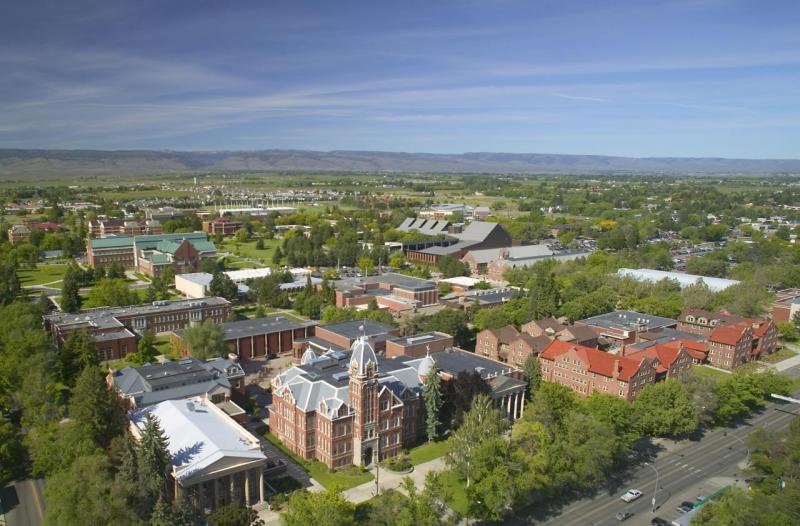
 Two members of Central Washington University’s Center for Diversity and Social Justice (CDSJ) are in Wenatchee presenting specialized cultural competency training to about 150 AmeriCorps participants.
“Cultural competency gives people the needed tools and skills to effectively communicate and interact, without prejudice, with people from diverse backgrounds,†explains Veronica Gomez-Vilchis, a CWU diversity officer, who is helping facilitate the training. “It’s not just focusing on a single culture; you’re looking at different aspects of identities.â€
Katrina Whitney, CDSJ diversity officer, who will also lead sections of the training, adds, “We all make mistakes, but when you learn the foundation of knowing what to say—and what not to say—you have the ability to improve your communication to create a safer environment for those you interact with.â€
The challenge is understanding that there can be important differences and distinctions in communicating with people who even come from the same culture. When that goes unrecognized, stereotypes can result.
“We may believe that everybody in one type of community is the same,†Whitney says. “But, within social group memberships, there’s as much diversity as there are individuals that identify as part of that community.â€
Such differences, and how they’re perceived, can change by state, or even regionally, across the United States.
“We may intend one thing, but we really have to be conscious of how it affects the person we are speaking with,†Whitney adds.
Verbal and nonverbal communication are being addressed during the CWU training, which is being held during four, 90-minute sessions.
The state’s Office of Superintendent of Public Instruction sought out CWU to provide those sessions for the AmeriCorps recruits, who are part of Washington Reading Corps. Those recruits will work to improve reading abilities of kindergarten through sixth-grade students across the state, who come from a wide variety of cultural, ethnic, and socio-economic backgrounds.
“I want them [the instructors] to keep in mind the child’s identity and how that can influence their ability to read and/or engage them to read,†Gomez-Vilchis notes. “The literature that they are choosing must connect with the children and be reflective of their world.â€
Whitney adds, “They can have the best intentions for a child’s reading ability but, if they’re not aware of the child’s lived experiences, it could, instead, decrease a child’s interest and engagement levels.â€
Eventually, what the AmeriCorps volunteers learn will have return benefits for CWU when their reading students reach college.
“These kids will wind up in higher ed,†Gomez-Vilchis acknowledges. “So we need to give them the tools now so that, when they get here, they can be successful.â€
Media contact: Robert Lowery, director of Radio Services and Integrated Communications, 509-963-1487, loweryr@cwu.edu
October 8, 2015
CWU News
Arts and Humanities Month continues to build momentum
October 21, 2026 by David Leder
New position at CWU-Des Moines aimed at improving student experiences
October 21, 2026 by David Leder