Washoe’s story featured on BBC international broadcast
- October 19, 2026
- Rune Torgersen
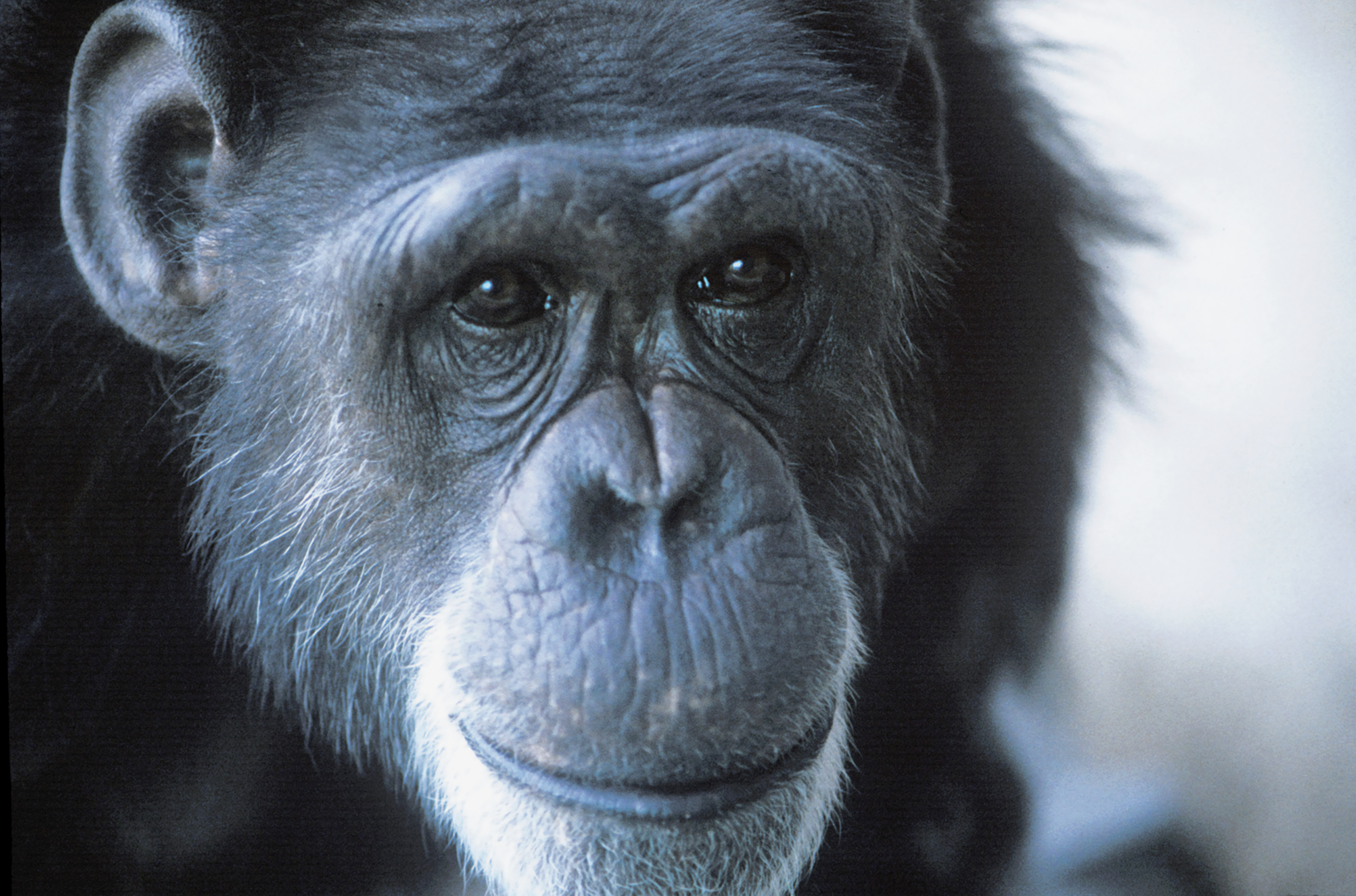
At the heart of the globally recognized Central Washington University Primatology program’s success lies the story of one extraordinary chimpanzee and the humans who cared for her.
The story of Washoe has been told at CWU many times over, due to its significance in our understanding of humanity’s closest living primate relative. Last week, the remarkable tale of how Washoe learned American Sign Language (ASL) and taught it to other chimps was shared with the world via the BBC World Service’s Witness History program, hosted by Jane Wilkinson.
Roger Fouts, a former CWU Psychology professor and guardian of Washoe, joined her in the study for a deep dive into the research that changed his life, as well as the global conversation around chimpanzee psychology and language.
“At the time, there were a lot of people that had claimed that chimps couldn’t do it, that humans were the only animals capable of language,” Fouts told Wilkinson. “This little chimp was proving them wrong.”
Fouts first met Washoe while applying for graduate assistantships in experimental psychology at the University of Nevada. He had just done what he felt was a poor job in the interview for the position, and he was taken to be introduced to Washoe as a sort of a consolation prize. The bond was near-instant, and it was obvious enough to outweigh the lackluster interview.
“I could see an adult human sitting on the grass, and then next to them, it looked like a small child in a sweatshirt,” Fouts said in the interview. “But when the child saw us, she started running to us quadrupedally, using her knuckles. Of course, this was Washoe, and she jumped over the fence and directly into my arms and gave me a big hug. I needed a hug, I think, more than anything at that time.”
Fouts eventually took over the Washoe experiment, and he and his wife Deborah co-founded the Chimpanzee and Human Communication Institute (CHCI) at CWU to continue studying chimpanzees’ ability to learn and use ASL. When Washoe passed in 2007, she had incorporated nearly 400 unique signs into her vocabulary and passed a significant portion of them on to her adopted family, Moja, Loulis, Tatu, and Dar.
In reflecting on the work at CHCI, Fouts said he is grateful for the knowledge Washoe shared with him, which he documented in his book Next of Kin. He also realizes that the experiment is one that should never be repeated.
“Looking back on it, we would never do a project like that again, especially because of what we know from Washoe,” he told Wilkinson. “What we should be doing is protecting them in their habitats and leaving them alone.”
The CHCI closed for good in 2013, and the chimpanzees have either passed on or moved to the Fauna Foundation sanctuary in Quebec, Canada, to live out their lives in peace. The experience taught Fouts, and anyone else fortunate enough to have met Washoe and her family, that the bonds we share extend far beyond what we think of as humanity.
“I realized that what I’ve been taught about humans being special wasn’t true at all, and that we’re connected,” he told the BBC. “We’re all relatives.”CWU News
CWU Trustees to meet October 22 in Ellensburg
October 16, 2026 by Marketing and Communications
Community voices help CWU launch $75 million Futures Campaign
October 14, 2026 by Michele Graaff