Finding home: Kara Gabriel’s journey to CWU
- January 5, 2026
- Staci Sleigh-Layman

Home, for some people, is not a fixed point on a map. It’s a feeling. A sense of belonging that takes time to cultivate.
CWU Psychology Professor Kara Gabriel can relate to the journey of finding her true home. It was as winding as the mountain trails she loves to bike, shaped by academic pursuits, family ties, and a deep connection to place.
Kara’s path to CWU was anything but direct. Like many in academia, she moved frequently, following opportunities and research positions that shaped her career. Originally from what she calls “the American Midwest,” she grew up in Wisconsin and Minnesota, before beginning her academic journey at the University of Wisconsin-Madison.
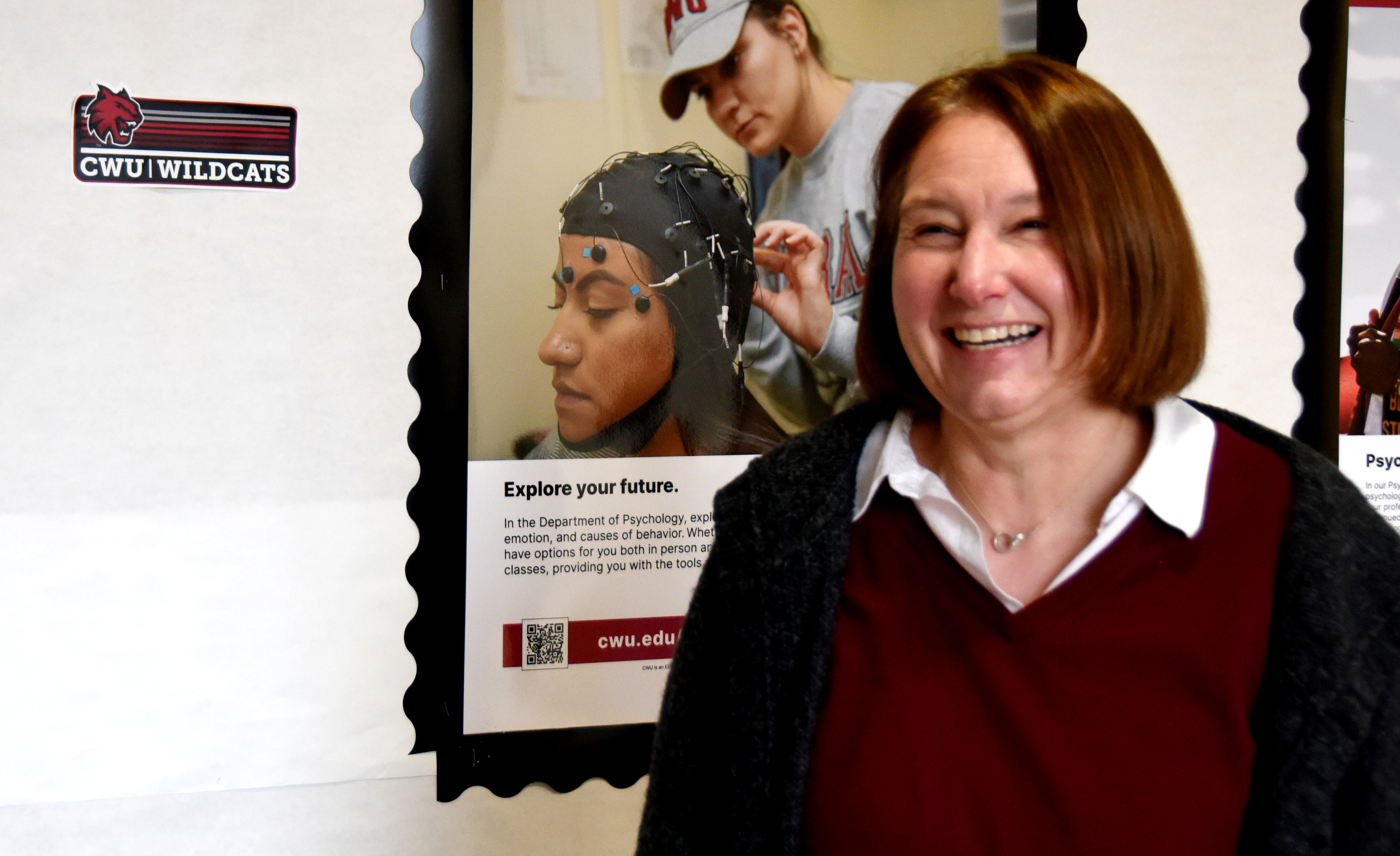
The road was not without challenges, however. She dropped out of high school, later earning a GED and attending community college before transferring to UW-Madison.
“I worked in the agricultural industry for a couple of years and soon realized that I didn’t want to do that for the rest of my life,” Kara said. “My path to higher education doesn’t look like a lot of other people’s, but I think that has helped me realize that everyone here at Central also has had a different path.”
Kara’s pursuit of a PhD led her across the continent. From her initial stop in British Columbia, she moved to Boston for a research associate position at Harvard, where she found the environment to be driven more by power and prestige than by intellectual collaboration.
Seeking a place more aligned with her values, she relocated to Oregon Health and Science University for another research role, before eventually taking a faculty position at California State University, East Bay.
It was in California that she met her future husband, who proposed on top of Mount Whitney after a grueling three-day backpacking trip. While the moment was filled with joy, it also sparked a practical realization for Kara: the Bay Area was not a sustainable home. They wanted space, a community, and a backyard for their dog.
Drawn to the Northwest
With their families having relocated to the Pacific Northwest — hers in Vancouver, Washington, and her husband’s in British Columbia — Washington became the natural next step.
When an opening at CWU arose in 2007, two aspects immediately stood out: the Psychology department was housed within the College of the Sciences, reinforcing the discipline’s scientific rigor, and there were graduate programs that would allow for deeper academic mentorship. Both factors made CWU a compelling place for Kara to build her future.
“I remember when I was interviewing for this position and I was asked, ‘What would you bring to Central?’” she said. “My answer was more about what I could do to help contribute to science. And I feel like what I contribute is being able to help undergrads appreciate and understand science so they can become contributors themselves. The same is true for graduate students. So, just being part of that science lineage is what really stood out to me when I decided to come to Central.”
Beyond the professional appeal, Ellensburg itself felt right. It was a town where she and her husband could put down roots, where the community was welcoming, and where she could grow both personally and professionally.
The decision to move was solidified by the realization that, unlike at her previous institution, she wouldn’t be pressured into a leadership role before she was ready. The department, then led by a relatively new chair, gave her space to develop her career without the immediate expectation of administrative responsibilities.
The Meaning of Community
Ellensburg became more than just a professional landing spot for Kara; it became home. The town’s blend of charm and genuine warmth created a sense of place that extended beyond the university. In her words, “there’s a unique thread that binds the people of Ellensburg, both liberal and conservative values, long-standing local families, and newcomers drawn by the same intangible feeling of belonging.”
Her own family, while not in town, remains close-by. Her mother moved to Oregon after her father’s passing, preferring a milder climate for gardening and proximity to a larger metropolitan area. Yet, through nightly FaceTime calls, they maintain a strong connection.
Her sister, a librarian at Southern Oregon University in Ashland, shares a similarly independent yet deeply connected family philosophy — both child-free by choice, but surrounded by lifelong friends who have become family in their own right.
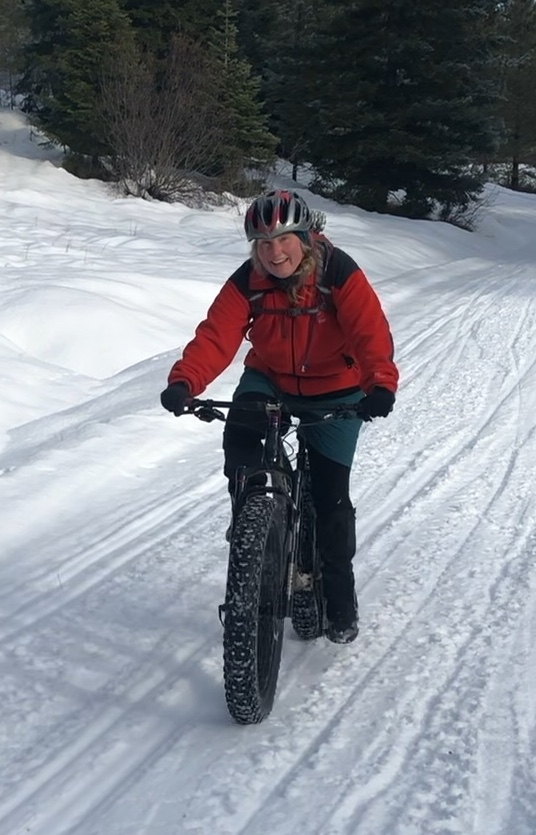
If academia brought Kara to Ellensburg, it was the outdoors that kept her here. An avid biker and kayaker, she has explored trails from Whistler, B.C., to New Zealand, always seeking new adventures.
Biking, with its mix of endurance and exhilaration, has replaced backpacking as a preferred activity, though her love for wild landscapes remains. From fat-tire biking in the snow to summer trail riding in Sage Hills, she finds solace and connection in movement.
“Mountain biking, for us, is about getting outside of our own heads and being able to experience the physical nature of it all,” Kara said. “You’re connected to the bicycle, but you’re also trying to read the trail and understand how you’re going to move through that physical space. It’s very different than what I do in my office from day to day.”
Kara’s love of exploration extends beyond biking. Each year, she and a close friend from Oregon, now an American citizen, travel to the United Kingdom to walk one of the country’s famed long-distance trails.
There, she has learned to embrace the word “squelchy” — both a favorite and least favorite word — perfectly capturing the experience of slogging through damp English countryside.
The Power of Authenticity
Perhaps the greatest impact Kara has made at CWU is not just in her academic contributions, but in her approach to human connection. She values authenticity and kindness, something that became especially clear when a former student nominated her for a mentorship award.
At a dinner event, the student reminded her of a brief but pivotal conversation years prior — a moment of understanding that had convinced the student to stay in school and ultimately pursue a career as a therapist. What had been just 15 minutes of listening and problem-solving for the professor had been a life-changing event for the student.
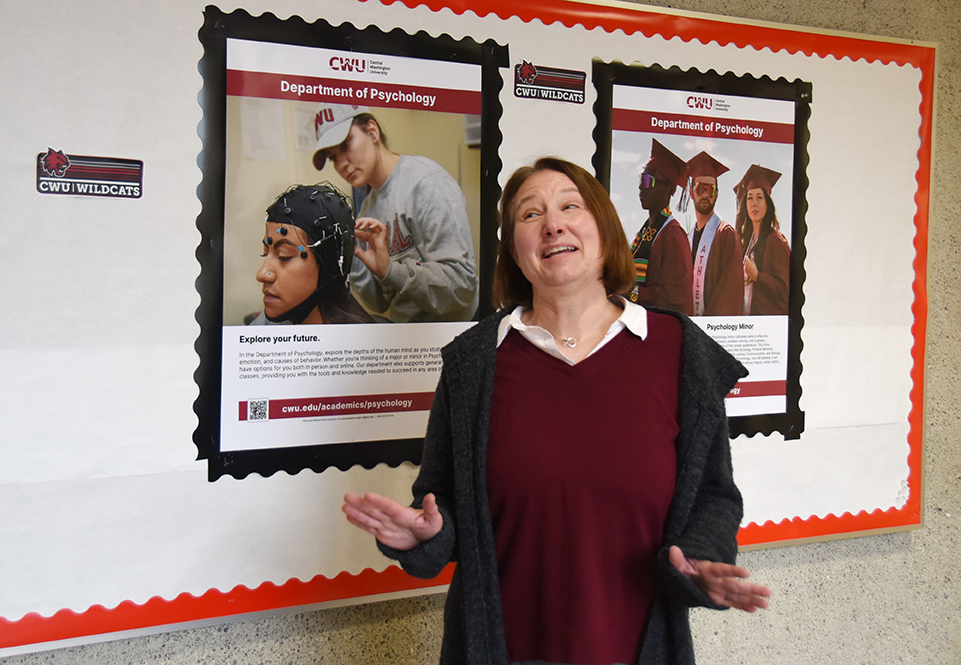
This philosophy of putting kindness into the world extends beyond the classroom. In Kara’s role as president of United Faculty of Center (UFC), she prides herself on finding ways to best support faculty members in difficult situations. These small, human moments — of answering the phone, of having a conversation, of making time — are the interactions she believes truly matter.
“For me, it’s about being there for people so they can feel heard and have someone to turn to for feedback or support, or anything else,” Kara said. “I think we lost some of that during the pandemic, and it’s something I am trying to bring back — that human touch of trying to relate to other people and understand what they’re going through.”
Her reflections on faculty life at CWU have raised important questions. While tenure provides academic staff with a sense of stability after years of uncertainty, she wonders about those who have arrived more recently. What has encouraged them to stay? Housing prices have skyrocketed, and yet, faculty remain. The pull of community, the balance of opportunity and livability, and the ability to put down roots all seem to be at play.
The contrast between faculty and staff experiences is also striking. While faculty achieve stability after achieving tenure, staff can spend decades at the university without the same assurances. It is a system that raises larger questions about equity and security in academia.
“I see inequities in the system that leave staff feeling undervalued compared to faculty,” she said. “Staff are essential to supporting students, but at the moment, we don’t quantify their contributions in the same way we do with tenure on the faculty side.”
For faculty, finding home is often a conscious choice rather than an inevitable outcome. The peripatetic (Kara’s word) nature of academia means that professors must leave family behind, chase opportunities across the country, and redefine their sense of place time and again.
In Ellensburg, she has found a place where she can stay, build, and contribute. While the pull of the Pacific Northwest was strong, it was ultimately the people — both within and beyond the university — that made this community feel like home.
In the end, home is not just where you live, but where you choose to invest your time, your kindness, and your energy. And for Kara Gabriel, that place is CWU.
“For me, Ellensburg and Central is my family,” she said. “It’s a family made up of friends, colleagues, and community members who care about students and care about other people. Family doesn’t have to be about blood; it’s just as much about those shared experiences. And that’s what I have found here over the past 18 years.”
•••••
Author Staci Sleigh-Layman is the former Associate Vice President of Human Resources, who retired from CWU in August 2025. She completed a series of CWU employee features last year, and they are running periodically on Central Today.
CWU News
Arts and Humanities Month continues to build momentum
October 21, 2026 by David Leder
New position at CWU-Des Moines aimed at improving student experiences
October 21, 2026 by David Leder