Joey Bryant has built resilience through instability
- December 3, 2025
- Staci Sleigh-Layman
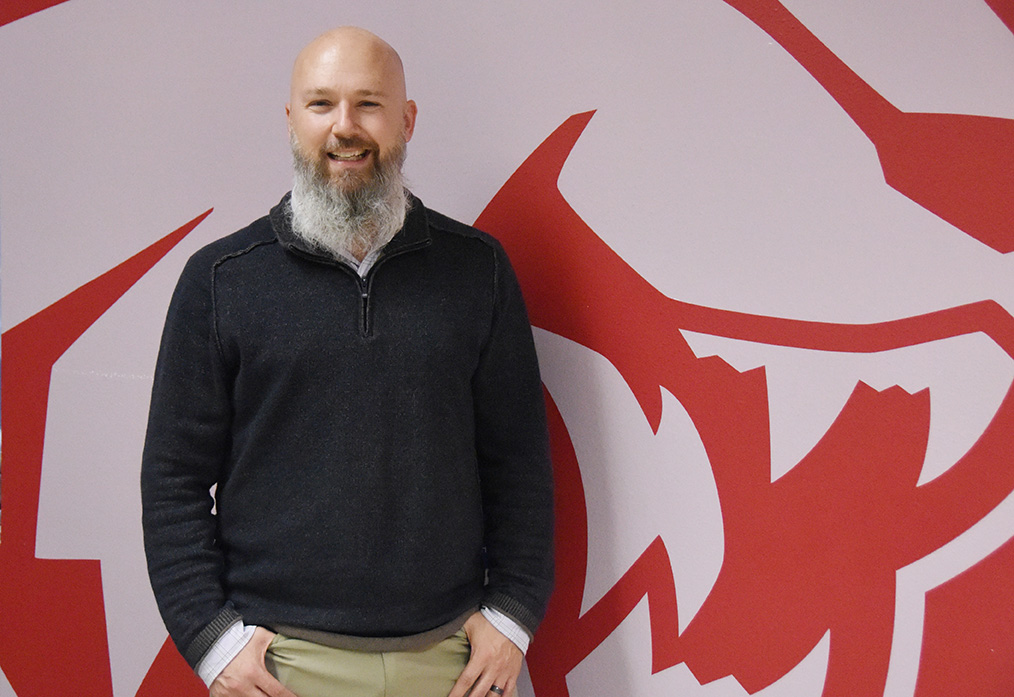
Joey Bryant’s early life was marked by constant upheaval, but resilience became his quiet companion long before he even knew the meaning of the word.
Born at Good Samaritan Hospital in Puyallup, the co-director of Human Resources at CWU entered a family history steeped in youth and complexity: he was the first-born child to two teenage parents, each of whom had also been born to teen parents.
Generations of young, struggling families set a pattern of lives started too soon and shaped by necessity rather than choice. From the very beginning, movement and uncertainty shaped Joey’s world. His parents divorced before he entered kindergarten, setting in motion years of relocations and disrupted schooling.
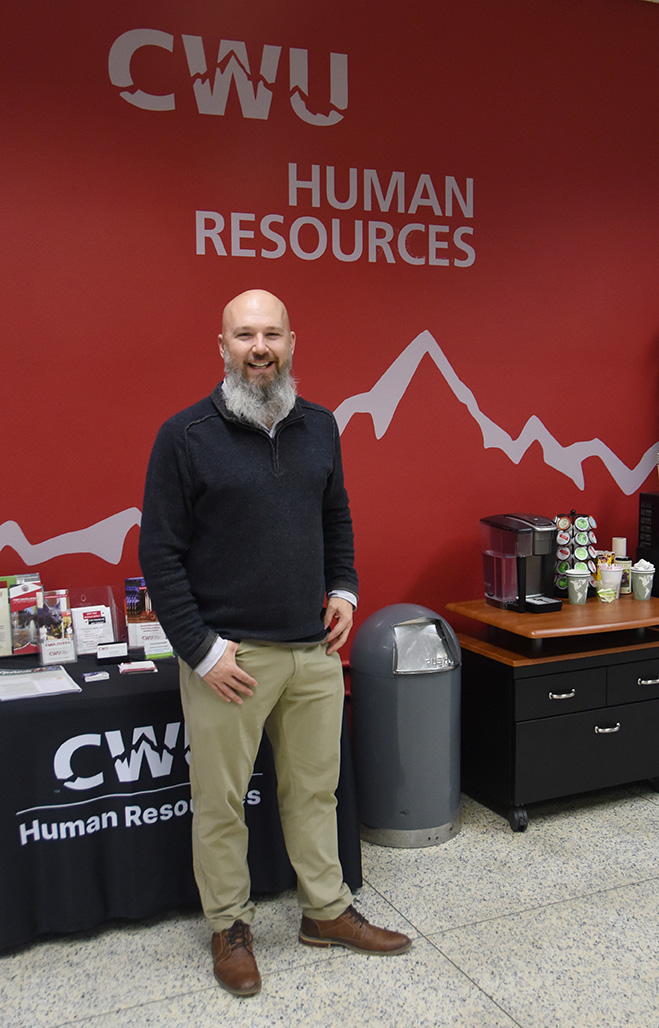
“I just went with the flow,” Joey reflects, looking back on his childhood with a perspective shaped by maturity and parenthood.
At the time, the chaos seemed normal: apartment hopping, short stints living with grandparents, and even periods living out of a car.
The landscape of Joey’s childhood stretched from the streets of Puyallup to tiny towns like Pe Ell, Dryad, and Doty — places so small their populations could be counted in dozens. Many of the residents were his own relatives. Sometimes he lived near the coast, in places like Ocean Shores; other times, he found himself in rural stretches where logging trucks roared down empty highways. School was a blur, a revolving door of teachers and classmates, as Joey tried to piece together some semblance of continuity.
Unknown to him during those years was the depth of turmoil underlying the family’s constant moves: his father’s involvement with drugs, illegal activities, and ultimately a life that collided harshly with the criminal justice system.
One Memorial Day weekend, when Joey was just 11, police arrived at the family’s home as they were preparing for a camping trip. His father was arrested on multiple charges, including drug offenses and sexual assault. Overnight, the thin thread of stability Joey knew had been snapped. He and his younger brother returned to Puyallup to live with their grandmother, while court battles over their custody stretched out over years. Joey became a ward of the state, untethered except for the steadfast presence of his grandparents.
Visits to McNeil Island to see his father became a weekend ritual for Joey, stretching into his teenage years. Yet even through the heartache and confusion, he adapted, pressing forward in a life where consistency was a luxury he could not afford.
Resilience became less of a choice than a necessity.
The custody battles were intense and complicated, involving his mother — now living in California — and both sides of his family. For a brief time, Joey even lived in Vallejo, California, before being returned to Washington by court order.
Eventually, his brother stayed in California with their mother, while Joey remained in Washington with their grandparents. Despite these upheavals, Joey found stability where he could: in the steadfast love of his grandmother and step-grandfather, in the routines of school, and in the small triumphs of daily life.
Football, wrestling, and soccer became more than just activities; they were anchors of security and sources of pride. In student government, he found a sense of purpose and belonging that often eluded him at home. The chaos around him was something he accepted as fact, even as it left invisible marks.
“By the time my dad got out, he was only 36 years old,” Joey recalls.
For a time, it seemed the cycle might finally be broken. His father seemed to have turned his life around, earning certificates while incarcerated and eventually securing a job as a contractor for Microsoft. While his early adult life had been marred by poor choices, prison had given his father the opportunity to pursue education and certification programs.
His mother, too, found moments of stability, earning her GED after dropping out of high school following Joey’s birth. But recovery, like resilience, was an ongoing, complicated journey. Both parents continued to wrestle with addiction in various forms, with varying periods of sobriety.
Both parents battled substance abuse throughout their lives, and relapse was never far behind. Joey, raised with a deep familiarity of AA meetings and recovery culture from as young as 4 years old, understood both the fragility of recovery and the strength it took to try again after falling.
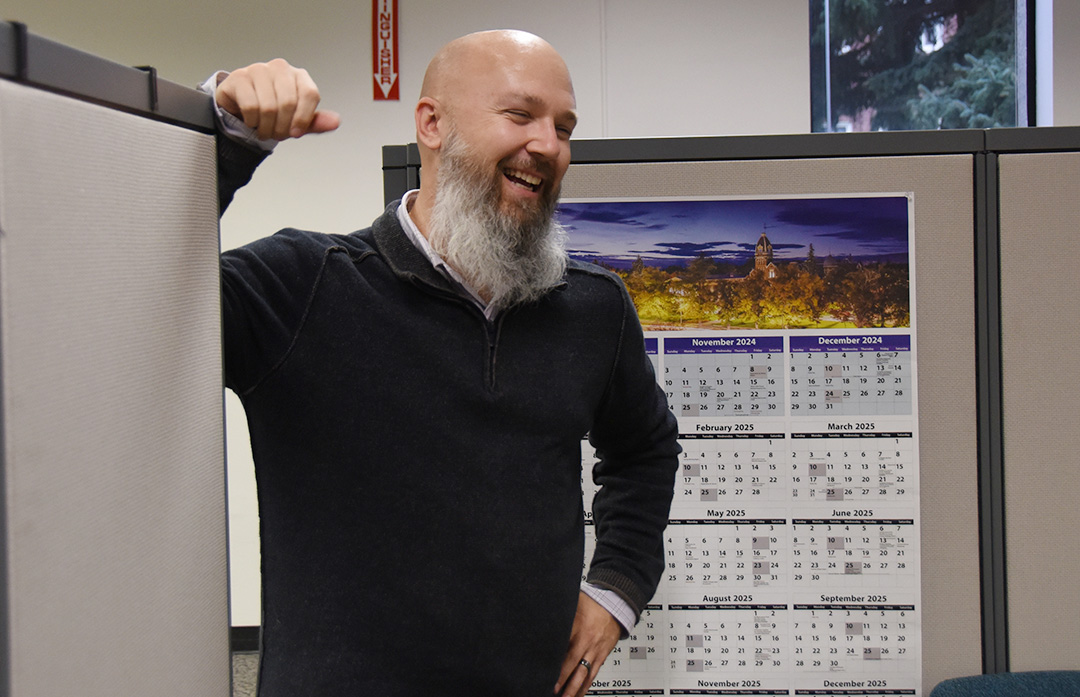
But Joey’s journey through adversity was not only external. His path to self-discovery was equally complex. Growing up in a conservative, rural environment with no vocabulary for identities beyond the binary, Joey struggled to understand his own sexuality. Pansexuality —being attracted to people regardless of gender — was not a concept he had words for as a child or teen. It wasn’t until college that he found the language, and the community, to describe his experiences more accurately.
The losses Joey experienced in adulthood would test him further. In 2016, his step-grandfather, who had been a critical figure in his life, passed away after complications from surgery. The grief of losing such a foundational support set off a cascade of heartbreak. His father relapsed and died less than a year later, in May 2017. Just months after that, Joey’s stepfather — another figure of quiet support — lost his battle with cancer.
Layered atop personal loss, Joey’s marriage was also unraveling during this period. It was a season of grief and transition — a reckoning with identity, belonging, and survival.
His journey of self-discovery didn’t end there. As an adult, working and raising his own family, Joey sought a better understanding of the anxiety and sensory experiences that had been a constant backdrop to his life.
A formal diagnosis of generalized anxiety disorder was not a surprise, but the diagnosis of autism spectrum disorder offered profound clarity. It recontextualized years of feeling different or overwhelmed and highlighted how far he had come, often without the support systems that others tend to take for granted.
Throughout his life, Joey Bryant has weathered instability with quiet fortitude. His resilience is not the dramatic, cinematic kind; it’s the real-life version: showing up, holding space for grief and healing, carving a life out of broken pieces.
His story is a reminder that adversity does not preclude growth, and instability does not erase the possibility of building something lasting.
In many ways, Joey’s life reflects a profound lesson: resilience is not about untouched triumph, but about surviving — and sometimes thriving — in the aftermath of upheaval. It is about adapting to impossible situations without losing hope for something better.
Joey’s life today with his wife, Lacy, three children (ages 2 to 15), and a recent job change at CWU, is far from simple, but it is rich with awareness, empathy, and strength hard-earned through decades of instability, discovery, and loss.
He has found ways to create stability where there once was none, and to build identity and community where isolation once reigned. He carries forward the lessons of a complicated childhood, the wisdom of self-acceptance, and the hope that resilience, though forged in hardship, can be a foundation for a life lived on one’s own terms.
•••••
Author Staci Sleigh-Layman is the former Associate Vice President of Human Resources, who retired from CWU in August. She completed a series of CWU employee features earlier this year, and they are running periodically on Central Today.
CWU News

Arts and Humanities Month continues to build momentum
October 21, 2026 by David Leder
New position at CWU-Des Moines aimed at improving student experiences
October 21, 2026 by David Leder