CWU students build experience, community connections at Thorp Mill
- August 6, 2025
- Rune Torgersen
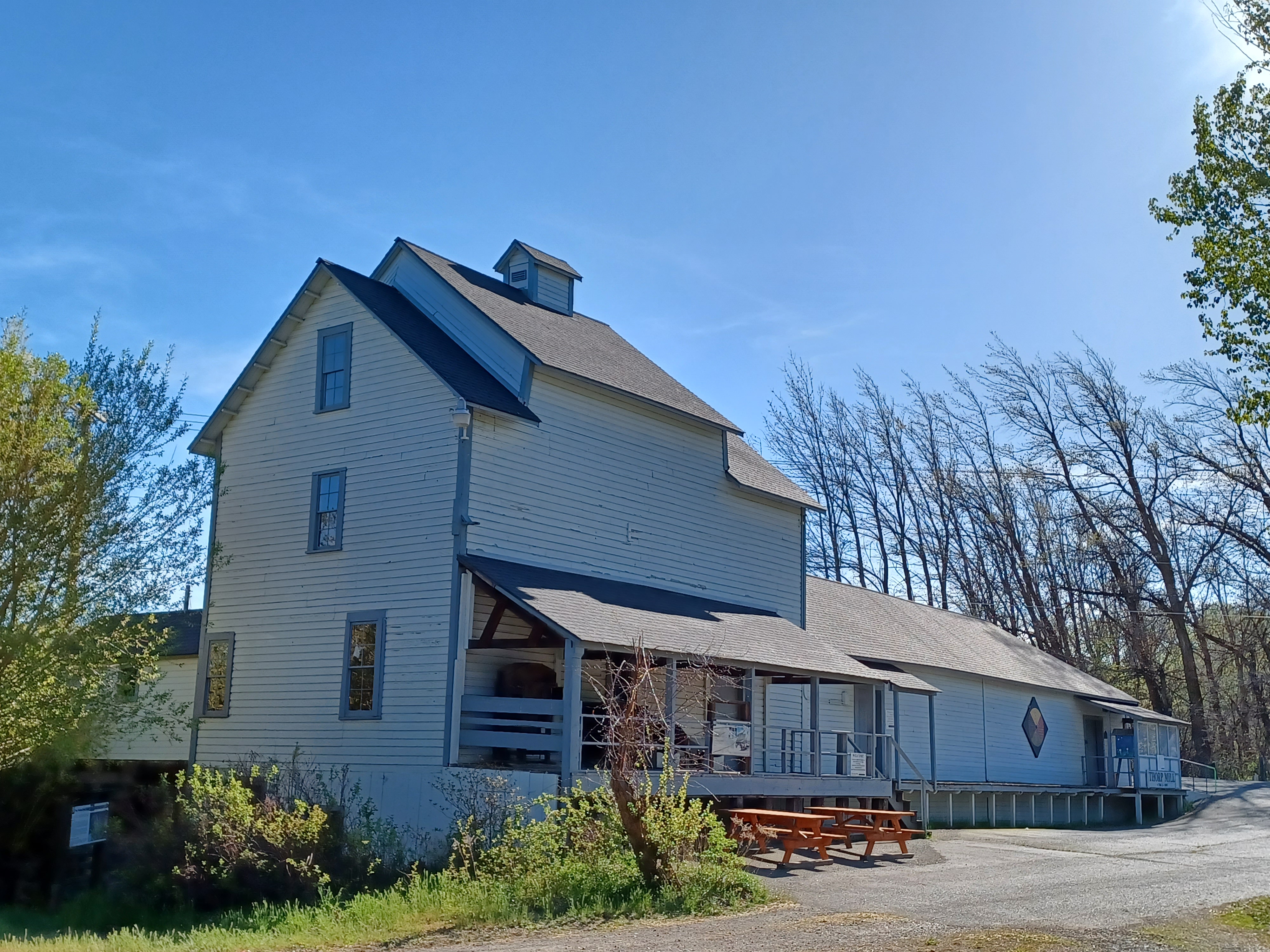
Just ten miles down the road from Ellensburg lies the city of Thorp, one of the oldest settlements in the Kittitas Valley.
The unassuming small town is home to the Thorp Mill, a well-preserved relic of the area’s early agricultural industry, now serving as a museum as well as a training ground for a variety of Central Washington University students seeking experience in their fields.
CWU Professor of Geology Lisa Ely serves on the Thorp Mill board and has seen firsthand the impact that working there has had on students.
“Because it’s a small place with a small board, students get the experience of doing everything involved in working with a nonprofit and a museum,” she said. “Grants, displays, tours, all at once, where you’d get a bit more pigeonholed working at a bigger place.”
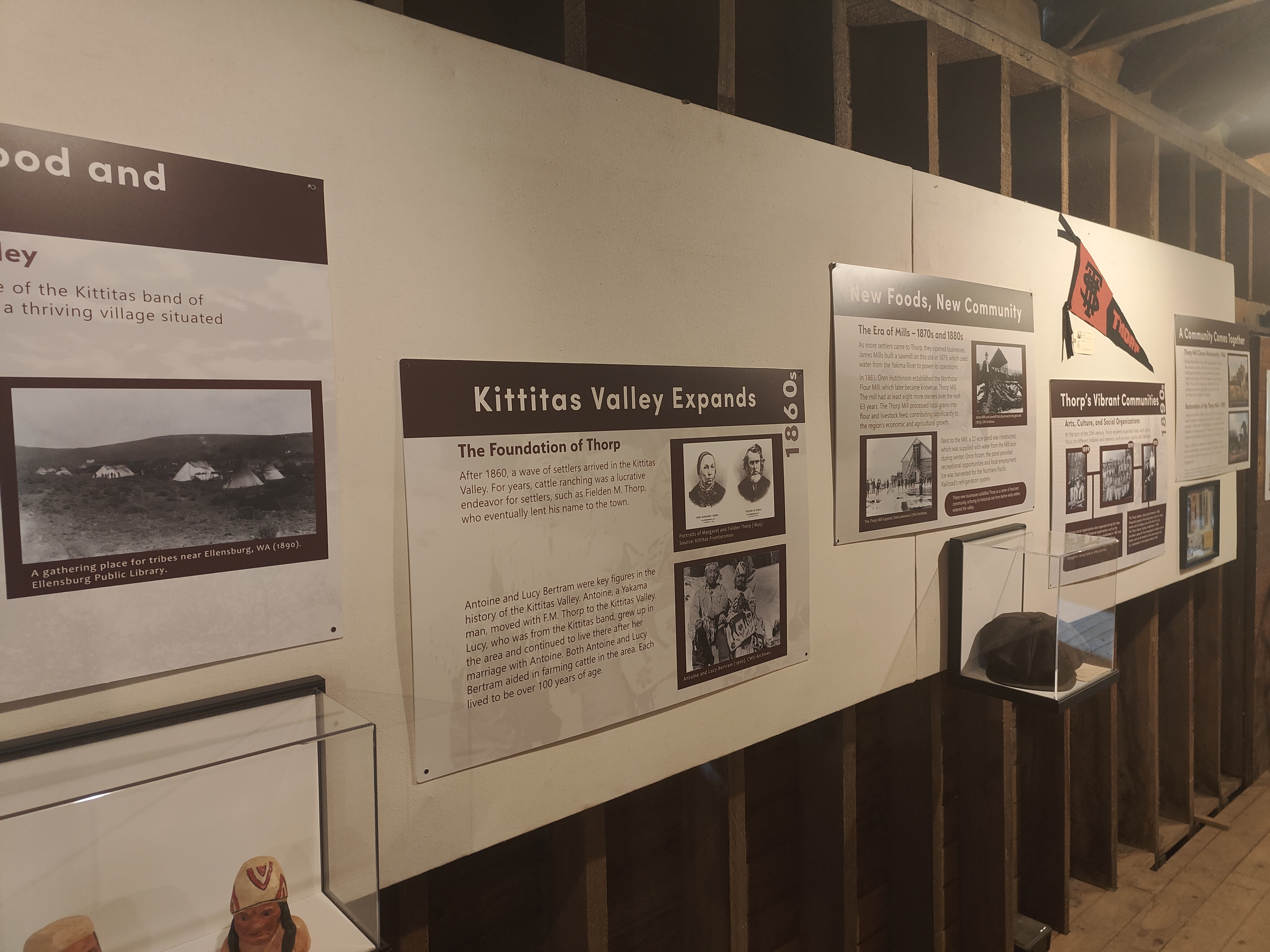
Each year, the Thorp Mill takes on graduate assistants from CWU, who fulfill all sorts of roles around the museum, from curating displays to leading tours and conducting maintenance on the building. Last year, Cultural and Environmental Resources Management (CERM) graduate Becca Mitre put together a display featuring a timeline of the mill’s history, expanding her own skillset and capacity in the process.
“I’m kind of an introverted person, but the GA position really challenged me to get out into the community and work with a lot of different organizations,” she said. “In putting together my timeline, I learned about the history of the valley and the tribes who were already using the land before the mill was built. Whether you’re an undergrad or going through grad school, it is so important to just throw yourself out there and do as much as you can to get out of your comfort zone while you’re in school.”
Mitre spent two years as a graduate assistant at the mill and she came to see her coworkers and the place itself as an outlet as much as an educational experience.
“I learned a lot and built relationships with so many people, which was really important to me,” she said. “When grad school got hard, just seeing the people at the Thorp Mill and working with them made my day so much better.”
Fellow CERM graduate Tiernan VanSuetendal (’24) has been working as a docent for the museum for the last two summers and has found that the extensive responsibilities of being employed at a small museum has supplemented his education in more ways than one.
“There’s a lot of freedom here because you’re not just set on doing one thing,” he said. “It’s all the perks and challenges of a small museum, so the people who work there get to do everything, which I love, because I get to give tours and also be outside doing yard work and building maintenance. It’s a well-rounded, holistic position.”
As he looks for positions at museums in the pacific northwest, VanSuetendal knows that his horizons have been expanded by the time he’s spent at the Thorp Mill.
“It has given me great experience and insight for my job hunt,” he said. “It was what I needed to feel comfortable in a museum setting, and to know that I can thrive and contribute in that environment.”
Having graduated with her bachelor’s degree in social services this June, Rebekah Figueroa never imagined her next step would be an internship with a museum. To her surprise, the experience has lent real-world credentials to her passion for education.
“The board that runs the museum is very good at getting people from different backgrounds involved with the place,” she said. “I thought that maybe it wouldn’t work out because I’m not a history major, but thanks to them, I got to build on my experience and prepare myself for my next position as a paraeducator.”
With the next in her career solidified, Figueroa appreciated the opportunity to ply her trade by educating visiting groups of students on how the mill once functioned, through handmade popsicle stick models of its inner workings.
“Being able to see miniature versions of the machines really helped the students understand how the building worked,” she said. “I really like working with children, and this experience has given me more chances to do so.”
Thorp Mill’s unique position as a historical landmark for the valley, as well as a partner in education with CWU, enables it to educate visitors about the history of the community surrounding them, while giving its students a comprehensive experience in museum studies, education, communication, and a whole host of other subjects critical to the successful operation of a small but mighty museum.
According to VanSuetendael, it’s museums like this one that keep us in touch with our past in a way that is both necessary and highly localized.
“When you have the opportunity to stop and appreciate the history and culture that’s around you, your world expands,” he said. “It is a privilege that places like this exist; that we get to look back into the past of the people who lived here. It’s a special kind of magic, and it only takes a second to stop and take a look around.”
The historical Thorp Mill building and museum is open to the public for free tours from June through August on Fridays and Sundays 11 a.m.- 4 .m., and Saturdays 10 a.m. - 4 p.m. The exterior interpretive walking tour (also designed by a CWU student) is open year-round.
CWU News
Arts and Humanities Month continues to build momentum
October 21, 2026 by David Leder
New position at CWU-Des Moines aimed at improving student experiences
October 21, 2026 by David Leder