CWU researchers work alongside nutrition alumni to publish influential study
- July 19, 2024
- David Leder
Three Central Washington University faculty members teamed up with two CWU nutrition alumni to accomplish a major feat this spring when their research paper was published in the Journal of the American Heart Association (JAHA).
The paper, titled “Hypertension Prevalence and Related Risk Factors Among Mexican American Adults Are Increasing: National Health and Nutrition Examination Survey 1999 to 2018,” appeared on the AHA Journals website May 31.
Having the study published in a widely respected national scientific journal represents a significant accomplishment for longtime nutrition and dietetics Professor Dr. David Gee and his fellow researchers.
“This is definitely a feather in my cap,” said Gee, who co-authored the paper with CWU colleagues Dr. Nicole Stendell-Hollis and Dr. Dominic Klyve, and Central alumnae Dr. Kathaleen Briggs Early (’97) and Sandra Valencia (’17 and ’18). “This represents a high point in my career in terms of research. It’s nice to finish my career on such a positive note.”
Gee officially retired last month after a 43-year career with CWU, but he plans to continue working in an advisory role.

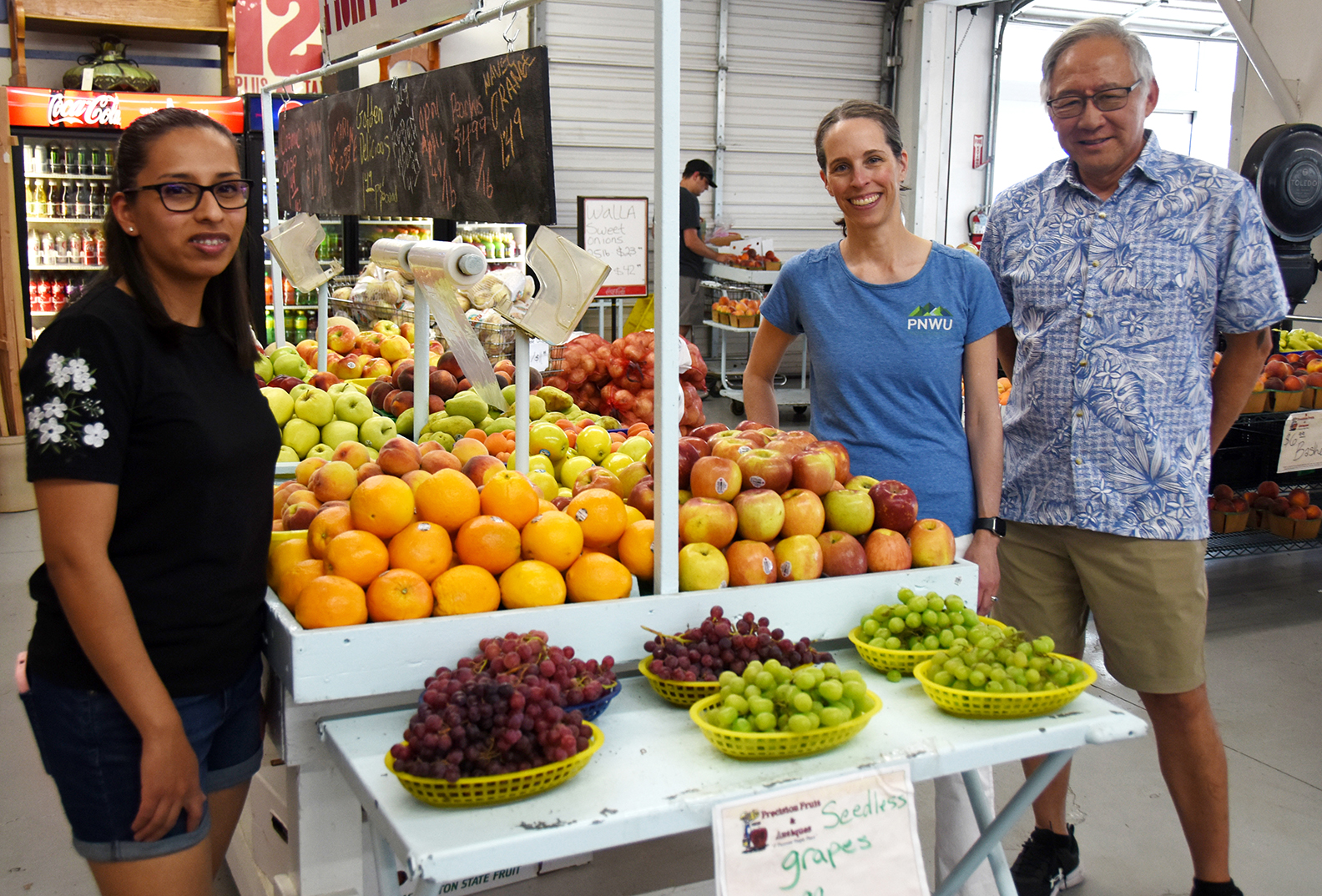
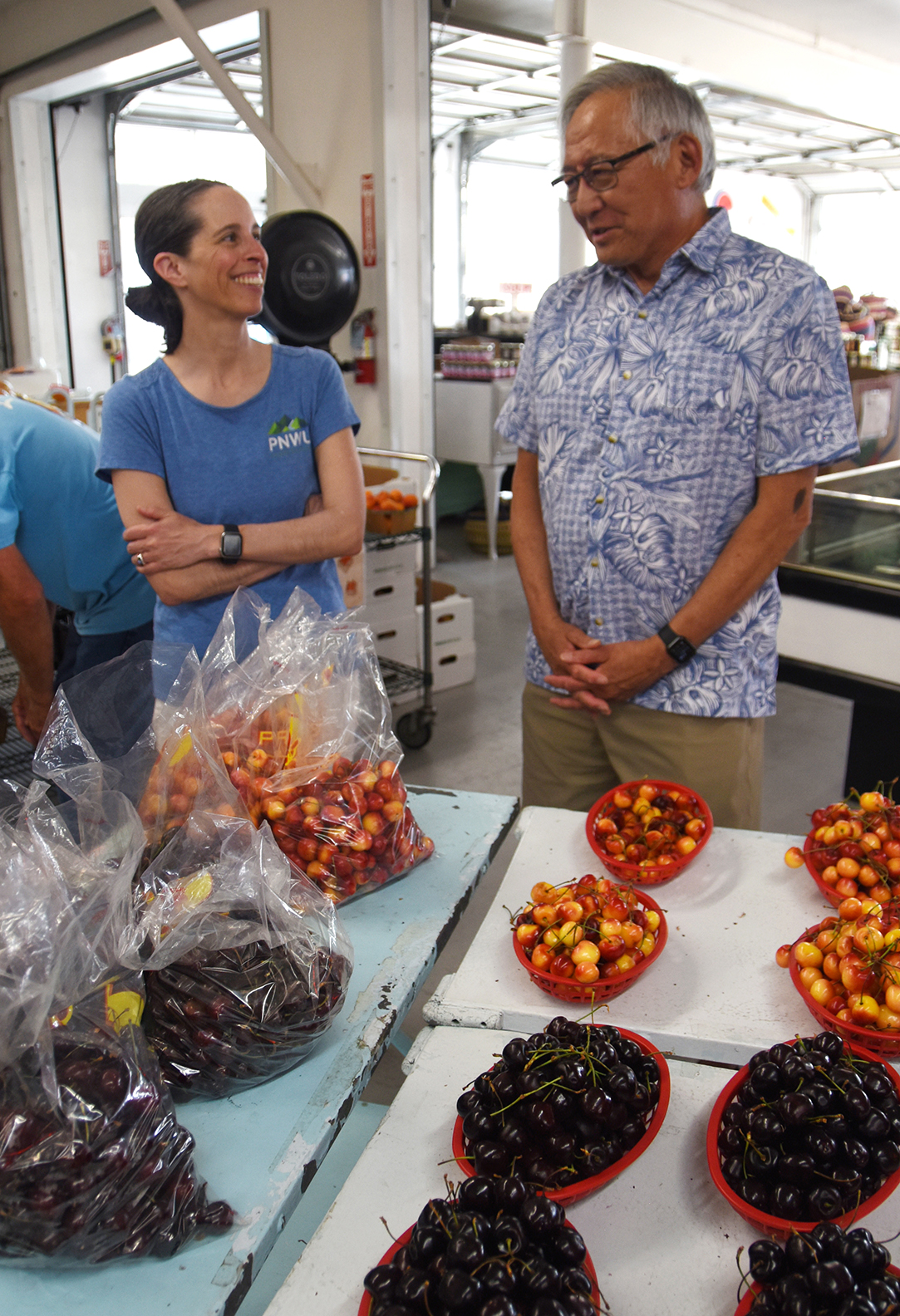
CWU Professor David Gee met up with CWU Nutrition alumni Sandra Valencia (left) and Kathaleen Briggs Early (center) at a fruit stand in Selah this month to celebrate their recently published study in the Journal of the American Heart Association.
Briggs Early received her BS in nutrition and dietetics at Central before earning a PhD at Washington State University. She has worked as a faculty member in the college of medicine at Pacific Northwest University of Health Sciences in Yakima since 2007, and she echoed Gee’s feeling of accomplishment after seeing her work published in the prestigious JAHA.
“I’m especially proud of this publication because Dr. Gee is the first person I ever did research with,” said Briggs Early, a former McNair Scholar at CWU. “He was kind enough to mentor me on my undergraduate research project, and nearly 30 years later, everything has come full circle. It’s a really special moment for me to have my work published alongside one of my mentors.”
Stendell-Hollis (nutrition), Klyve (mathematics), and Gee began working on the project in 2018, using the National Health and Nutrition Examination Survey (NHANES) to accumulate and analyze the data. The AHA research paper was based on Valencia’s master’s degree thesis, which sought to explore the factors associated with an increased prevalence of high blood pressure in the adult Mexican American population.
“I had just finished my dietetic internship, working with the Mexican American population in a community health care setting,” said Valencia, who worked as a nutritionist at Yakima Neighborhood Health Services until earlier this year. “I knew I wanted to get a master’s degree, but I also wanted to look at data trends of the Mexican American population. As a Mexican American myself, I have a family history of hypertension, so this project motivated me to initiate this research project.”
Valencia added that she feels honored to have worked with Drs. Gee, Stendell-Hollis, and Klyve during her master’s program at Central. She expressed gratitude to the team for all of the hard work they put into the project, and for going the extra mile to get it published.
“Thank you to Dr. Briggs Early and Dr. Gee for seeing the potential of this work, and for giving it the extra push it needed to get published,” she said.

After combing through nearly 20 years of NHANES data, the research team discovered that the prevalence of high blood pressure in the non-Hispanic White adult population has remained unchanged since 1999.
“One of the key findings was that the age-adjusted prevalence of high blood pressure is rising, and is now higher in adult Mexican Americans than in the non-Hispanic White population,” Gee said.
Briggs Early joined the project last year and was able to introduce additional NHANES data to the study, helping increase the sample size and adding in smoking, which is an important risk factor for hypertension.
“The reviewers felt that we needed to include some other social determinants of health besides diet, including smoking, rate of exercise, income-to-poverty ratios, and educational levels,” Briggs Early said.
According to the study, these individuals were at a lower risk of hypertension than those who have adopted more American behaviors. The research showed that the more acculturated Mexican American adults are, the greater risk they have of developing high blood pressure.
Most notably, the most highly acculturated Mexican American adults were 44% more likely to have high blood pressure than the least acculturated members of that population.
“As they adopt more Western behaviors, their risk for high blood pressure tends to go up,” Briggs Early said.
Gee added that changes to certain risk factors — such as aging, growing obesity prevalence, increasing abdominal obesity, and an increasing rate of acculturation — might help explain the rise in hypertension in the Mexican American adult population.
“Finding ways to promote more traditional lifestyle and eating habits for Mexican American adults could be a beneficial approach to reducing risk of high blood pressure in this population,” he said.
Gee and Briggs Early noted that the extensive NHANES database — funded by the federal government — gathers health information on 5,000 Americans per year. NHANES uses a complex sampling design to provide a representative snapshot of the American public, and scientists have been accumulating data about the Mexican American adult population since 1999.
“They collect a lot of data, and it’s all tremendously high-quality data,” Gee said. “You just have to know how to use it. We have been introducing NHANES to our graduate students more and more every year, which has yielded a number of important research projects like this one.”
“NHANES gives us an educational way of teaching our students about research,” Briggs Early added. “The database provides us with access to tons of high-quality data sets about specific populations, and instead of having to come up with hundreds of thousands of dollars in funding, it’s all paid for by the federal government. They spend a lot of money to collect this data and make it available to us; it’s up to us to make use of it.”
CWU News

Arts and Humanities Month continues to build momentum
October 21, 2026 by David Leder
New position at CWU-Des Moines aimed at improving student experiences
October 21, 2026 by David Leder