Hands-on, High-impact
- May 29, 2024
- Rune Torgersen
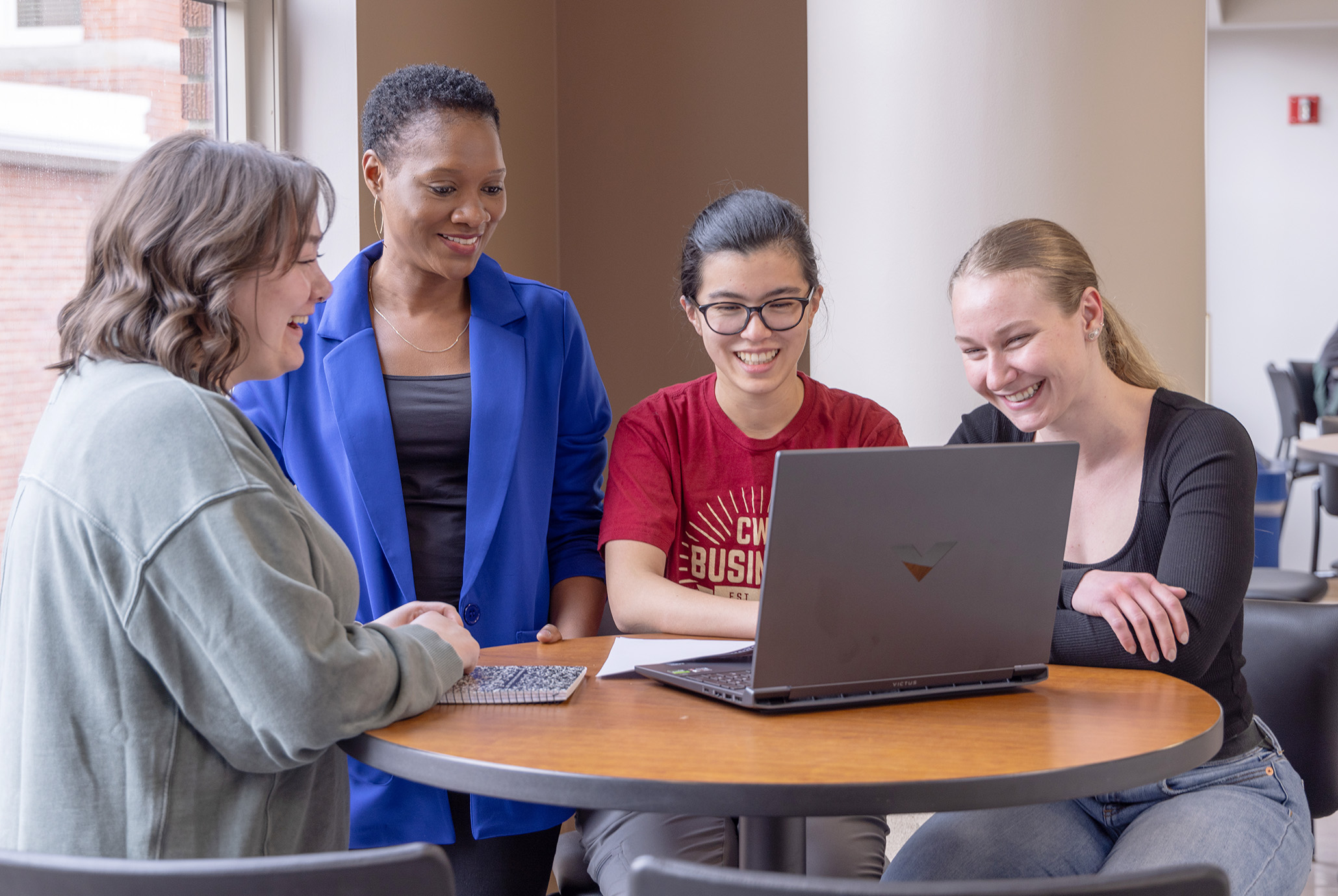
College of Business students enter the workforce well-trained and versatile
In the ever-changing world of business, the knowledge found in textbooks can only carry a college graduate so far.
The pre-scripted scenarios and controlled environments found in the classroom lay an excellent foundation of knowledge, but classroom learning nevertheless needs to be supplemented by real-world experiences. Students need experiential learning opportunities to help them develop into the well-rounded business professionals that the shifting economic landscape of today demands.
In the CWU College of Business, we rise to meet this need on a variety of fronts, from internships to in-class consultation work to undergraduate research and beyond. Here’s a look at how our faculty, staff, and industry partners go the extra mile to deliver for our students.
Testing their skills in real-world situations
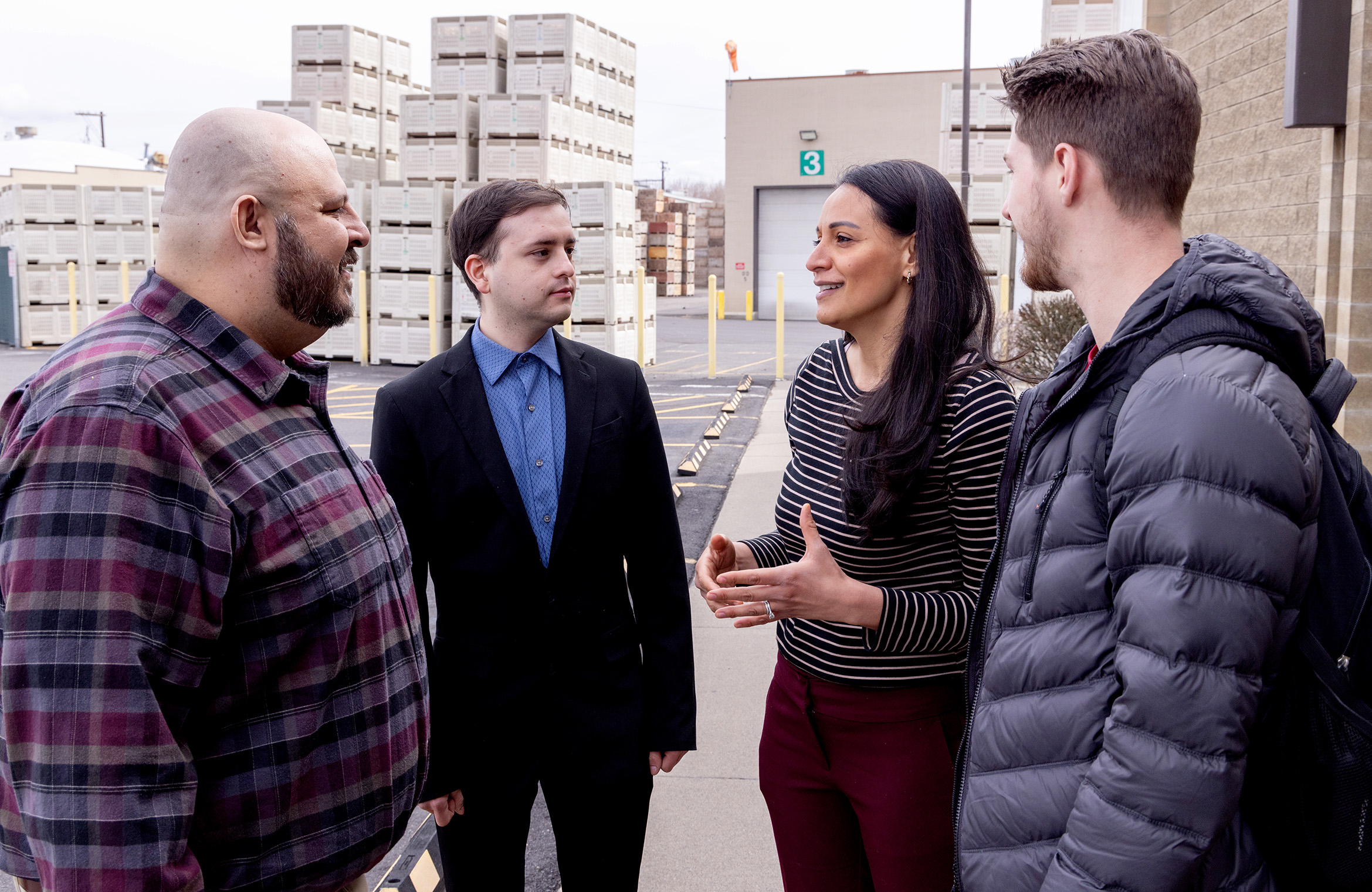
In Ana Tonseth’s Lean Six Sigma Practicum class, students are given the opportunity to spend 10 weeks working with real companies, offering consultation services and honing their production management skills in the process.
Tonseth, a senior lecturer of finance and supply chain management, reaches out to the College of Business’ extensive network of industry partners before each quarter, asking them about the issues they’re facing and where a dedicated team of student workers might be able to alleviate those shortfalls.
“I tell my students that, while I’m coaching them through the project, the ones they have to impress are their clients,” she said. “Throughout the project, things may come up that we didn’t plan on, which helps students develop the flexibility they’ll need in the real world.”
Lean Six Sigma is an approach to production management in which any use of resources that doesn’t create value for the customer is considered waste. A paradigm like that might seem daunting to implement at first, but Tonseth sees her students engage in the work with pride, especially after having the opportunity to practice in a real-life scenario.
“One of the main benefits of doing this work is the confidence that students get when they finish it,” she said. “They learn how to approach managers as well as front-line workers, and how to overcome the frustration that comes with things not going according to plan.”
Professor of Management Sayantani Mukherjee runs a similar program for her digital marketing students. Working in collaboration with Google Ads (formerly AdWords), Mukherjee finds nonprofit and small business clients for her students to assist in marketing to the digital space.
“Working with real clients is one of the fundamental pillars of our program,” said Mukherjee, who helped develop the digital marketing minor after joining CWU in 2013. “This way, they get vast exposure to what real life looks like outside the structure of a classroom, along with all the ambiguity and opportunities for problem-solving that it presents.”
Students bring their effort and creativity to the table through programs like these, ensuring a win-win situation for themselves and their clients.
“Our students are just awesome,” Mukherjee said. “They demonstrate so much resilience and ambition when they put their minds to it, and I’m glad to help provide them with opportunities to do so. We ask them to show up in a big way, and they always do.”
Industry connections opens doors after graduation
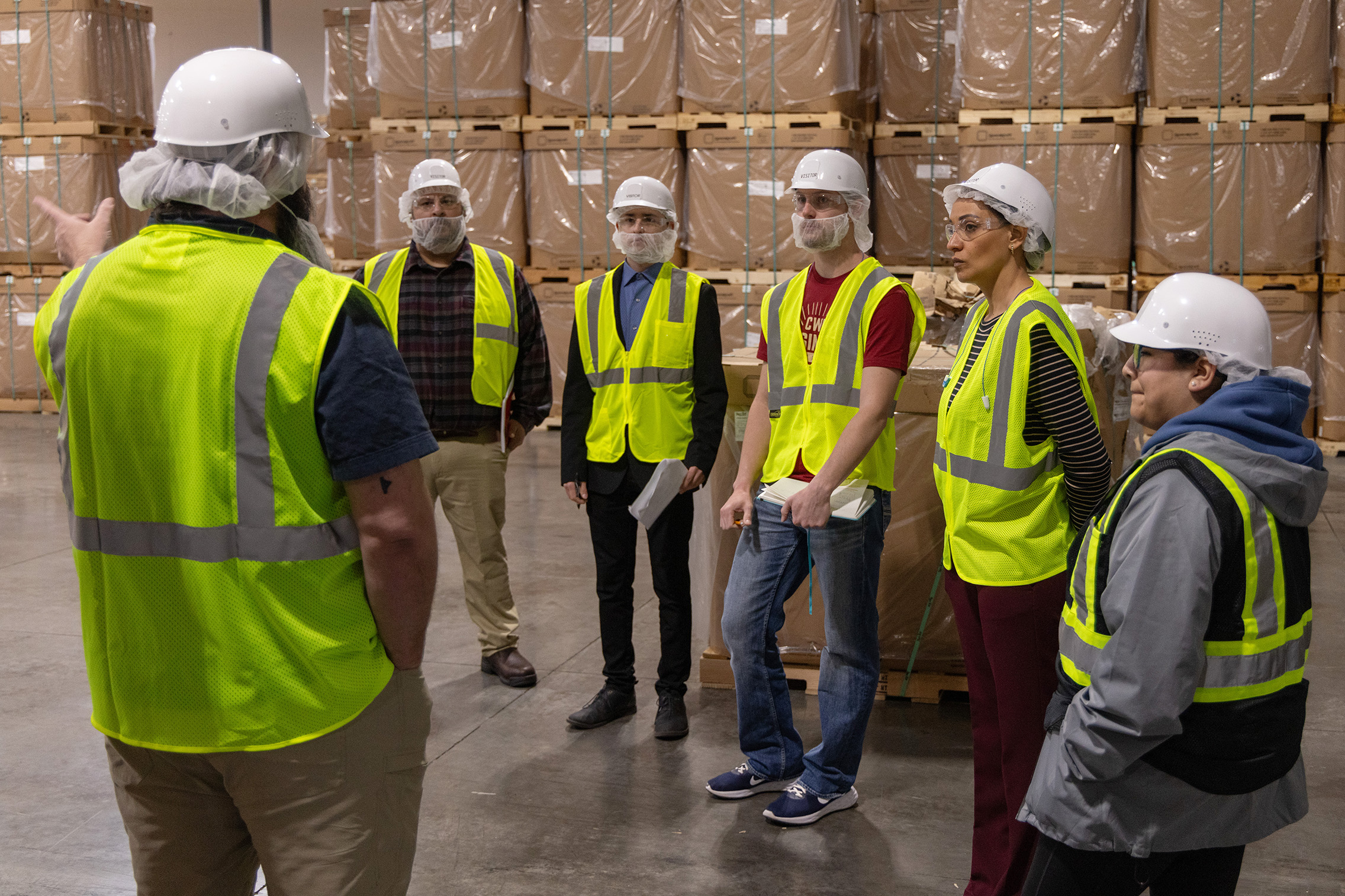
When Tara Lee (’20) first applied for her internship with Tree Top, she never suspected that, as a supply chain management major, her future might be found in farming.
“I never saw myself going into agriculture, but everything I did at Tree Top tied directly into my education,” she said. “It showed me that my skills are applicable in many more situations than I was expecting. My managers gave me the freedom I needed to complete some cost-saving projects and really flex my expertise.”
Lee unearthed a new passion for her studies after her internship, realizing that the experience had equipped her with more tools to apply in the classroom, as well as in the field.
“It made me more informed, and guided me in terms of what I wanted to get out of my classes,” she said. “Instead of just taking the class and moving on to the next, I found myself approaching school with more intentionality and direction, now that I knew what I needed to learn to succeed.”
After receiving her degree, Lee returned to Tree Top, where she quickly rose to the position of production supervisor after only a month and a half. She says the connections and impressions she made over the course of her internship laid the groundwork for her immediate growth as a full-time professional.
“I didn’t even need to apply,” Lee said. “My former supervisor reached out to me to see if I had plans after graduation and asked me to come back. That was a huge relief, right in the middle of the early-pandemic job market.”
Senior Daizie Jones found similar value in her internship with Boeing. Thanks to a personal connection, as well as CWU’s long-standing relationship with the company, Jones was able to
work alongside seasoned industry veterans to develop the flying machines of the future, all while putting her studies to the test.
“It’s scary, because anything can happen, but it’s also exhilarating to try new things and rely on my education and instincts to see me through,” said Jones, a supply chain management major. “My class work and extracurriculars have prepared me, and the connections I’ve made here at CWU have taught me how to ask the right people the right questions.”
Following her graduation in the spring, Jones is headed back to Boeing to pick up where she left off, ensuring smooth production for the single largest exporter in the United States.
Faculty leaves lasting impression through guidance, support
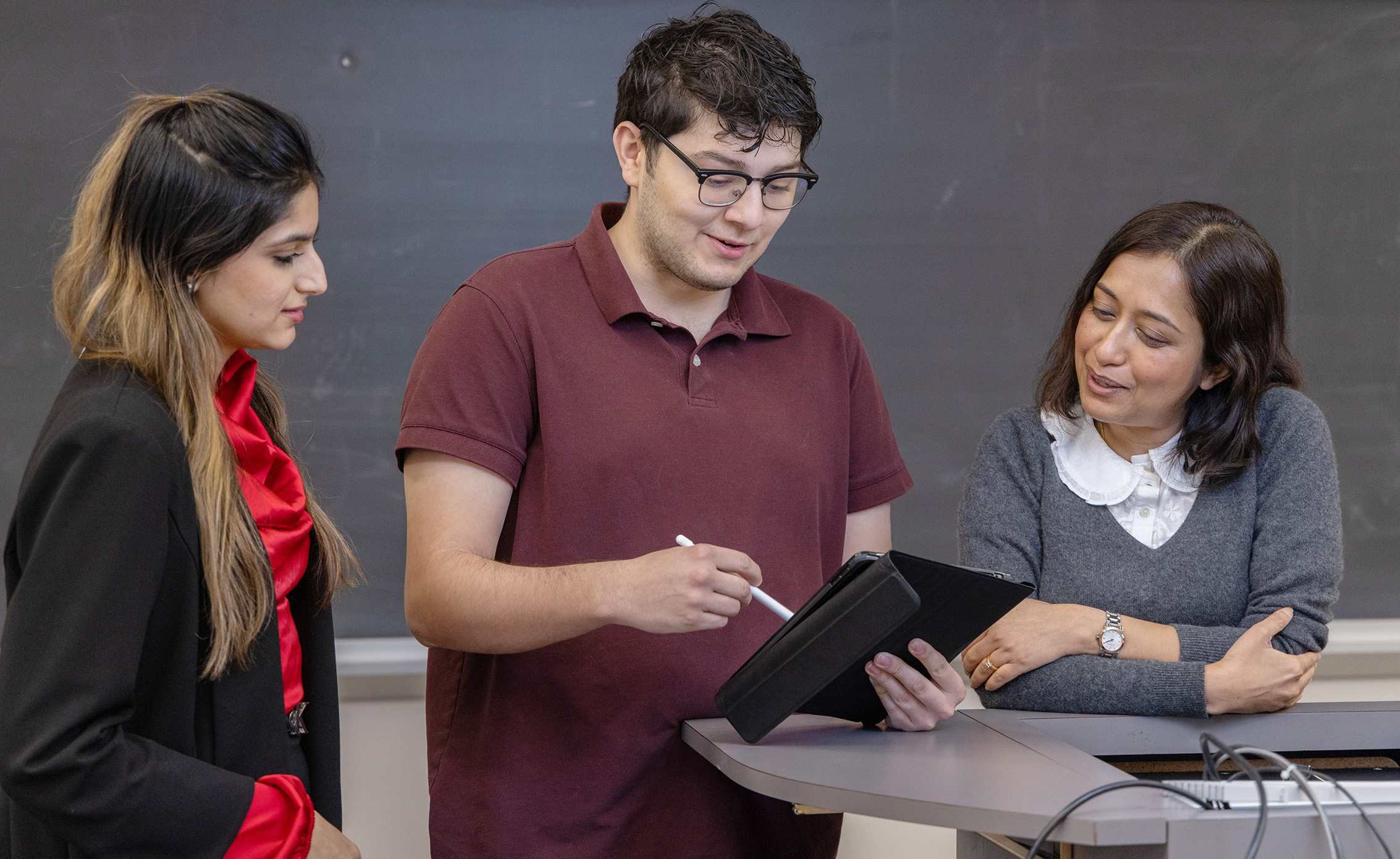
One thing unites all of the high-impact, hands-on opportunities that the College of Business offers: mentorship.
Jones is able to work alongside her peers, benefiting from engaged faculty members who know when to back off, and when to step in.
“It’s a great experience where they chime in once in a while if I have questions, but otherwise they leave me to succeed on my own,” Jones said. “I know they’re there if I need them, and that has helped me keep going.”
Lee agreed, attributing her professional success to the guidance she received alongside her formal education.
“The hands-on work you do as a student is incredibly important, but so is the mentorship you receive,” she said. “Thanks to my faculty mentors at CWU, I graduated ready to take on the world.”
The bridge between knowledge and experience, fact and function, is an engaged teacher who’s willing to take the time to get to know students and work with them to achieve their goals. Assistant Professor of Economics Tennecia Dacass, a first-generation student, sees this as a continuous cycle of mutual support, paving the way for the next generation of business professionals.
“I am a product of faculty investing time in students, and I also know that working with students can push my own research forward. When we support each other, everybody wins.”
Undergrad research opportunities give students an edge
While getting students directly involved with the businesses they might one day work for after graduation is a fantastic way to prepare them for the work ahead, encouraging them to invest in moving their field forward takes a different approach.
To this end, Dacass has made a point of involving undergraduate students in research projects to facilitate this buy-in. This approach also shows them that the applications of their education is limited only by their imagination.
“My passion for working with students is very much inspired by my own experience,” Dacass said. “As a first-generation college student myself, I was always eager to accept my professors’ invitations to join them on one project or another, and it really helped me see all the different opportunities that my degree would present me with. Coming to Central, I knew that I wanted to take advantage of the culture here to pass on that experience to my own students.”
Dacass came to CWU in 2019 after hearing about the small class sizes and emphasis on connections between students and faculty. Seeking to capitalize on this dynamic, she brought a group of students together to develop a Student Price Index, a means of measuring the cost of studying based on the prices of good students were most likely to buy.
The group presented their findings at SOURCE in 2021, and the students gained a new sense of their own capacity in the process.
“For students to be able to present their work—not as a class project, but as a legitimate body of research—that’s very empowering for them,” Dacass said. “It’s theirs, they’re the creators, and they were able to take what they’d created and use it to build relationships and interpersonal skillsets that will be very important to them in their careers.”
Economics alumnus Zach Dowdy (’21) worked with Dacass on the Student Price Index, and he helped present the team’s findings. Since graduation, he has found that the people skills and capacity for adaptation he acquired through the work has stuck with him. It also has enriched his approach to his co-workers and his profession.
“The opportunity to do research prepares you for the messiness of the real world in a way nothing else can,” he said. “Crunching numbers for an entire year, then seeing the single resulting number finally come out of the calculations, is incredibly satisfying. And that’s a thrill I still chase.”
Dowdy continues to work with Dacass in an unofficial capacity, currently collaborating with her on a paper examining the student debt crisis.
••••••
This story appears in the latest edition of Voyage Magazine. The annual College of Business publication came out in April 2024.
CWU News
Arts and Humanities Month continues to build momentum
October 21, 2026 by David Leder
New position at CWU-Des Moines aimed at improving student experiences
October 21, 2026 by David Leder