2018 CWU alum leverages passion for oceanography into NSF research award
- June 14, 2023
- David Leder
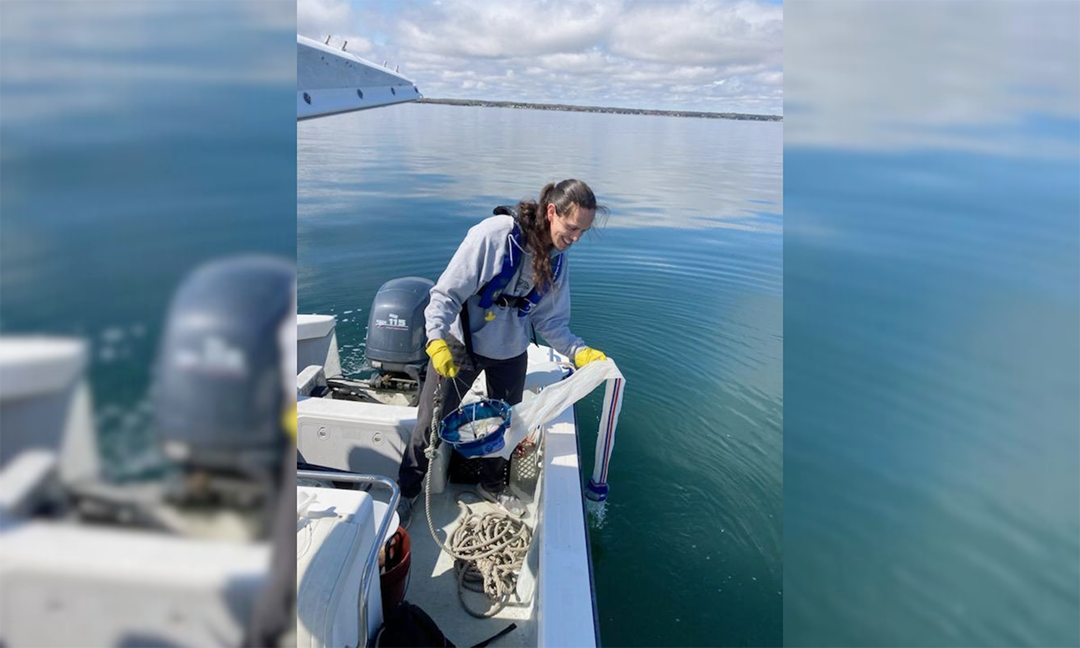
Some college graduates know exactly what they want to do when they complete their degree. Others need a little extra time to figure things out.
For Bryan Plankenhorn, it took three years doing odds and ends-from habitat restoration work to a brief stint at Whole Foods-to discover his true calling. Now, the 2018 Central Washington University graduate is on the fast track to earning a PhD in oceanography and a master's in marine affairs at the University of Rhode Island (URI).
"Working at the grocery store during the pandemic provided me with a lot of insight about what I really wanted to do," said Plankenhorn, a former SOLVER and McNair Scholar who earned bachelor's degrees in chemistry and biomedicine at Central. "I really missed the science, so I enrolled in a geographical information systems (GIS) certificate program at the UW."
Through the GIS program, Plankenhorn spent nine months studying the effects of harmful algal blooms on other marine life along the California coastline. He found the literature to be "fascinating" and learned how to visualize data sets on a computer screen, which gave him the foundational knowledge he needed to take the leap to grad school.
And although Plankenhorn chose not to pursue a career as a GIS specialist, his habitat restoration work and GIS program experience gave him some clarity about what he wanted to pursue for a career.
"That experience made me realize what I really wanted to do," he said. "So, I took the skills I learned at CWU and decided to go back into the STEM fields."
Just as Plankenhorn had hoped, the graduate program at URI has given him everything he wanted and more. His advisor, Bethany Jenkins, has taken him under her wing, tying her molecular research methods to oceanography in search of broader applications for the findings.
Together, they are learning to detect newly forming algal blooms and determining whether they may be harmful to shellfish and other marine life.
"We are looking at the RNA and chemical compounds that are being produced and trying to figure out if they indicate the presence of a new algal bloom," Plankenhorn said. "I had no idea I would be using coursework from my biomedicine degree in my oceanography research, but I'm glad it has worked out that way. I feel like my background has really helped."
Plankenhorn found a way to raise the bar even higher this spring, earning a Graduate Research Fellowship Program (GRFP) grant from the National Science Foundation (NSF). He will continue his work with Jenkins throughout the course of his PhD program-which has about three years left-but the grant will provide him with three years of funding that Jenkins and URI no longer need to cover.
Needless to say, he isn't taking his selection lightly.
"This is a very selective group, and not many people get this opportunity," Plankenhorn said of the GRFP, regarded as the most prestigious award offered to STEM graduate students in the U.S. "I have definitely put in a lot of work to get to this point, and in some ways, it still doesn't seem real. I just feel very honored to have been chosen."
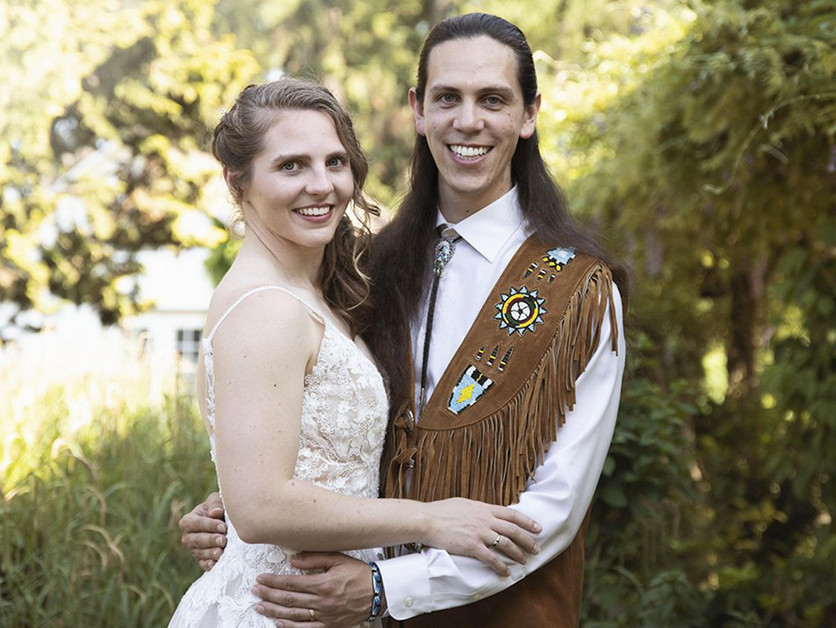
Well-rounded experience
URI has been instrumental in Plankenhorn's development as a scientist, but the institution has also helped him grow as a person through its extensive diversity, equity, and inclusion (DEI) initiatives.
Over the past two years, he has taken an active role with various Native American student organizations on campus, finding new ways to celebrate his indigenous roots.
"I've been learning a lot about my tribe, as well as other nations, through my work with the student groups," said Plankenhorn, a member of the Port Gamble S'Klallam tribe who grew up in Belfair, Washington.
"I have also done some DEI workshops that focus on Native American data sovereignty, how to write land acknowledgement statements, and more. But most of all, I've been trying to advocate for indigenous people in the STEM fields. There aren't that many of us-especially in oceanography-and we need to get out there and share our stories."
When Plankenhorn first arrived at URI in 2021, he was presented with a first-year diversity fellowship from the graduate school dean, and honor given to one student every year who shows an interest in increasing DEI awareness while pursuing a graduate degree.
Plankenhorn was a natural fit for the fellowship because he sees himself as a pioneer-someone who can inspire other Native American scientists and be a mentor to first- and second-year undergraduate students who don't know what lies ahead in their careers.
"I want to blaze a path and provide markers for other indigenous students to follow so they don't get lost," he said. "Becoming a scientist is really challenging, and you need to put in a lot of work. But I have found that all of the hard work is worthwhile. I just want to help others like me take what they are learning and apply it to their own communities."
While Plankenhorn's passion for his Native American heritage came into full focus at URI, he remembers the seeds being planted during his time at CWU. Through the McNair Scholars and SOLVER programs, he met other aspiring Indigenous and Hispanic scientists who also wanted to help their own communities.
His experiences in Ellensburg helped him realize that he did have something special to offer the world. Five years after graduating from CWU, he is living out those dreams.
"The faculty at Central is so incredible, and they provided me with all of the resources and skills that got me to where I am today," Plankenhorn said, pointing to Drs. Allison Scoville and Audrey Huerta, who invited him to participate in the SOLVER program; Dr. Lucinda Carnell, who encouraged him to apply for the McNair program; and Dr. Tim Sorey, who provided him with endless mentoring and support.
"My professors really opened my mind to what opportunities are out there, and I can't thank them enough."
CWU News
New position at CWU-Des Moines aimed at improving student experiences
October 21, 2026 by David Leder
New faculty help advance CWU Construction Management’s record of success
October 21, 2026 by Rune Torgersen