Darci Snowden
Professor
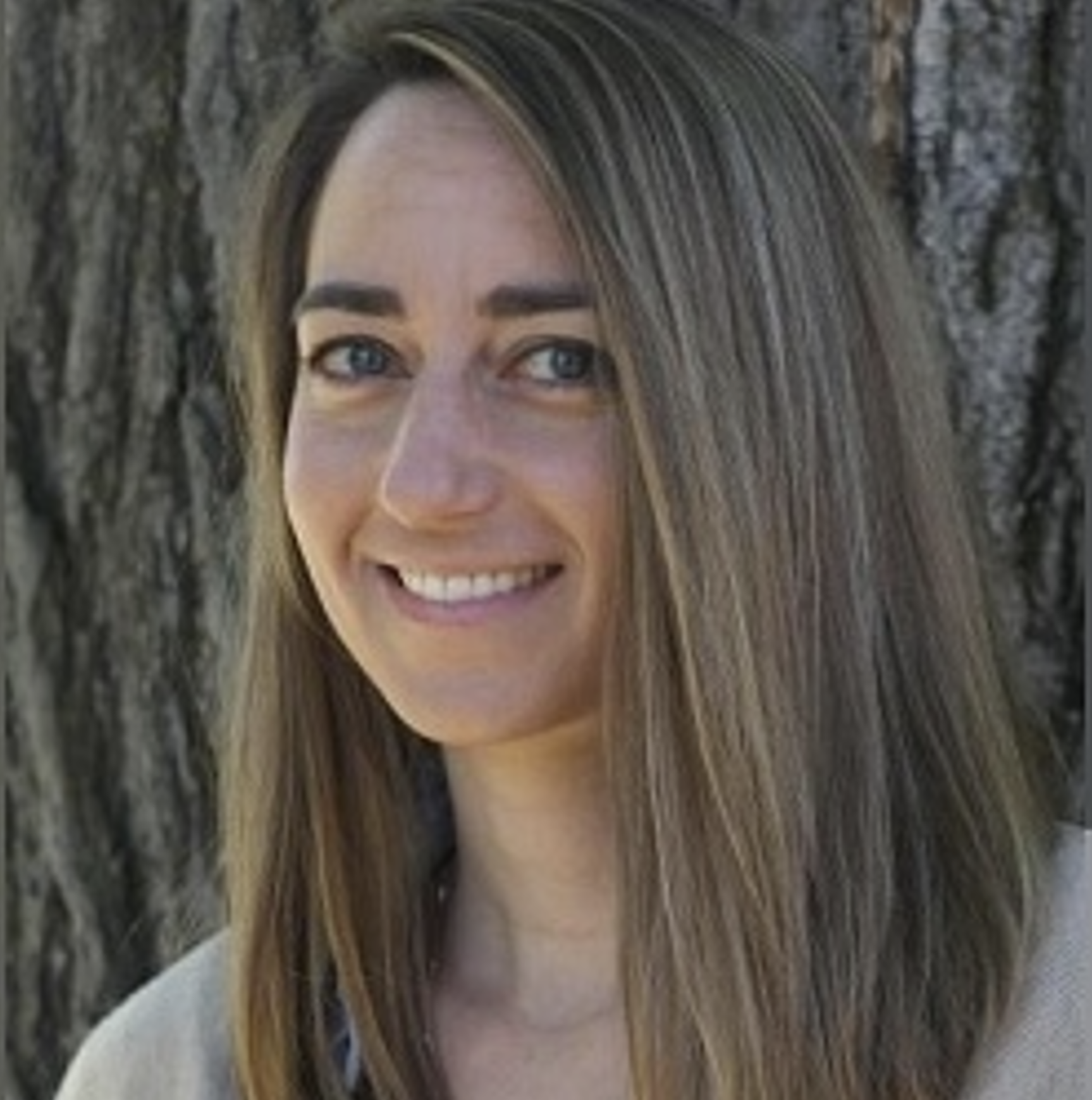
Professional Overview
Since earning her Ph.D. in Geophysics in 2010, Dr. Snowden took a postdoctoral position at the Lunar and Planetary Laboratory, where she continued her research on Titan’s upper atmosphere. She then joined CWU, where, alongside her teaching duties, she has remained actively involved in NASA science. She served as a Participating Scientist on the Cassini Mission until its conclusion in 2017. Additionally, she regularly serves on NASA review panels and helps organize scientific meetings.
Dr. Snowden shares her love of all things NASA with CWU students and the public by leading CWU's membership in the Washington Space Grant Consortium and directing the NASA Science Activation Team known as the Northwest Earth and Space Sciences Pathways. This initiative engages tens of thousands of students and educators across the country in NASA science and engineering. She also leads annual STEM academies for high school students at CWU.
Academic Achievements
Education
- B.S., Physics, Harvey Mudd College, 2004
- Ph.D., Geophysics, University of Washington, 2010
- Graduate Certificate in Astrobiology, University of Washington, 2010
Awards
- Central Washington University President’s Diversity Award, 2023
- SOURCE Mentor of the Year (nominated), 2017, 2020
- NASA Early Career Fellowship, 2013
Research Highlights
Dr. Snowden's research encompasses numerical modeling and data analysis in planetary aeronomy and space physics. She has developed several numerical models, including a 3D multifluid model, electron precipitation models, and models for ion precipitation and electron bounce periods. Her models have been validated with Cassini data. Dr. Snowden also analyzes spacecraft data, notably from INMS, and has examined Titan's upper atmosphere using temperature profiles from Cassini flybys. She has highlighted the role of atmospheric waves in Titan's thermosphere and estimated magnetospheric energy sources using plasma and magnetic field data from Cassini.
Professional Experience
- Director/PI, Northwest Earth and Space Sciences Pathways (NESSP) NASA Science Activation Team (Jan 2022-present)
- Associate Professor, Department of Physics, Central Washington University (September 2020- Present)
- Assistant Professor, Department of Physics, Central Washington University (September 2014- September 2020)
- Lecturer, Department of Physics, Central Washington University (September 2013 - September 2014)
- Research Assistant, Lunar and Planetary Laboratory, University of Arizona, Tucson, AZ (November 2010-August 2013)
- Graduate Research and Teaching Assistant, Department of Earth and Space Sciences, University of Washington, Seattle, A (September 2004-October 2010)
Publications
Bertucci, C., Edberg, N., Regoli, L., & Snowden, D. (in press). Magnetic and plasma environment. In Titan After Cassini-Huygens (Ch. 5). COSPAR Book Series.
Nixon, C., Abshire, J., Ashton, A., Barnes, J. W., Carrasco, N., Choukroun, M., … Snowden, D., & Zhang, X. (2021). The Science Case for a Titan Flagship-class Orbiter with Probes. Bulletin of the AAS, 53(4).
Snowden, D., & Higgins, A. (2021). A Monte Carlo model of energy deposition, ionization, and sputtering due to thermal ion precipitation into Titan's upper atmosphere. Icarus, 354, 113929. https://doi.org/10.1016/j.icarus.2020.113929.
Snowden, D., Smith, M., Jimson, J., & Higgins, A. (2018). Energy Deposition and Ion Production from Thermal Oxygen Ion Precipitation during Cassini’s T57 flyby. Icarus, 305, 186-197.
Snowden, D., & Yelle, R. V. (2014). The global precipitation of magnetospheric electrons into Titan's upper atmosphere. Icarus, 243, 1-15. https://doi.org/10.1016/j.icarus.2014.08.027.
Snowden, D., & Yelle, R. V. (2013). The Thermal Structure of Titan’s Upper Atmosphere, II: Energetics. Icarus, 228, 64-77. https://doi.org/10.1016/j.icarus.2013.08.027.
Snowden, D., Yelle, R. V., Cui, J., Wahlund, J.-E., Agren, K., & Edberg, N. (2013). The Thermal Structure of Titan’s Upper Atmosphere, I: Temperature profiles from Cassini INMS observations. Icarus, 226, 552-582. https://doi.org/10.1016/j.icarus.2013.06.006
Snowden, D., Yelle, R. V., Galand, M., Coates, A., Jones, G., Wellbrock, A., & Lavvas, P. (2013). Auroral electron precipitation and flux tube erosion in Titan’s upper atmosphere. Icarus, 226, 186-204. https://doi.org/10.1016/j.icarus.2013.05.021
Yelle, R. V., Snowden, D., & Muller-Wodarg, I. C. F. (2013). Titan’s Upper Atmosphere: Thermal Structure, Dynamics, and Energetics. In I. Muller-Wodarg, C. Griffith, E. Lellouch, & T. Cravens (Eds.), Titan: Interior, Surface, Atmosphere, and Space Environment. Cambridge Planetary Science.
Snowden, D., & Winglee, R. (2013). 3D multi-fluid simulations of Titan’s interaction with Saturn’s magnetosphere: Comparisons with Cassini’s T55 flyby. Journal of Geophysical Research: Space Physics, 118, 10.1002/jgra.50392.
Snowden, D., Winglee, R., & Kidder, A. (2011). Titan at the edge 2: A global simulation of Titan exiting and reentering Saturn’s magnetosphere at 13:16 Saturn local time. Journal of Geophysical Research: Space Physics, 116, A08230. https://doi.org/10.1029/2011JA016436.
Snowden, D., Winglee, R., & Kidder, A. (2011). Titan at the edge 1: Titan’s interaction with Saturn’s magnetosphere in the prenoon sector. Journal of Geophysical Research: Space Physics, 116, A08229. https://doi.org/10.1029/2011JA016435.
Courses Taught
Dr. Snowden has taught over 13 different courses at CWU, spanning from introductory physics series to upper-division courses. She has expertise in electrodynamics, geophysics, astrobiology, space sciences, and computational physics.
Dr. Snowden has developed innovative courses such as "Gateway to Space," a hands-on, project-based class where students design, test, and build experiments launched on high-altitude balloons reaching altitudes over 100,000 feet. Another notable course is "Astrobiology: Origins and Search for Life in the Universe," an online interdisciplinary course that explores life's origins and the potential for life in our solar system and beyond. Additionally, she regularly teaches courses in Computational Physics, Electrodynamics, Physics Inquiry, and the Calculus-based physics series.
Dr. Snowden also mentors and advises student clubs and research students. She is the advisor for the Central Washington University Rocketry Club, which participates in the NASA Student Launch Competition, and has led student teams in two NASA National Eclipse Balloon Projects. She also mentors research students working on projects in computational planetary science, rocketry, and high-altitude balloon instrumentation.
Diversity and Inclusivity
Dr. Snowden, as the director of the Northwest Earth and Space Science Pathways (NESSP) NASA Science Activation Team, is committed to providing equitable and inclusive STEM opportunities. NESSP programs have engaged thousands of rural, tribal, and historically underrepresented students in NASA-related science and engineering projects, while also supplying STEM resources and training to educators in these communities. Dr. Snowden has also pursued professional development in culturally responsive pedagogy to enhance the effectiveness and engagement of these STEM opportunities.
More about Dr. Snowden
In her free time, Dr. Snowden enjoys exploring the mountains. She can be found skiing in the winter and hiking or mountain biking in the summer.
Contact
Discovery Hall 339